He resigned after 30 years. Then his employer moved the end date
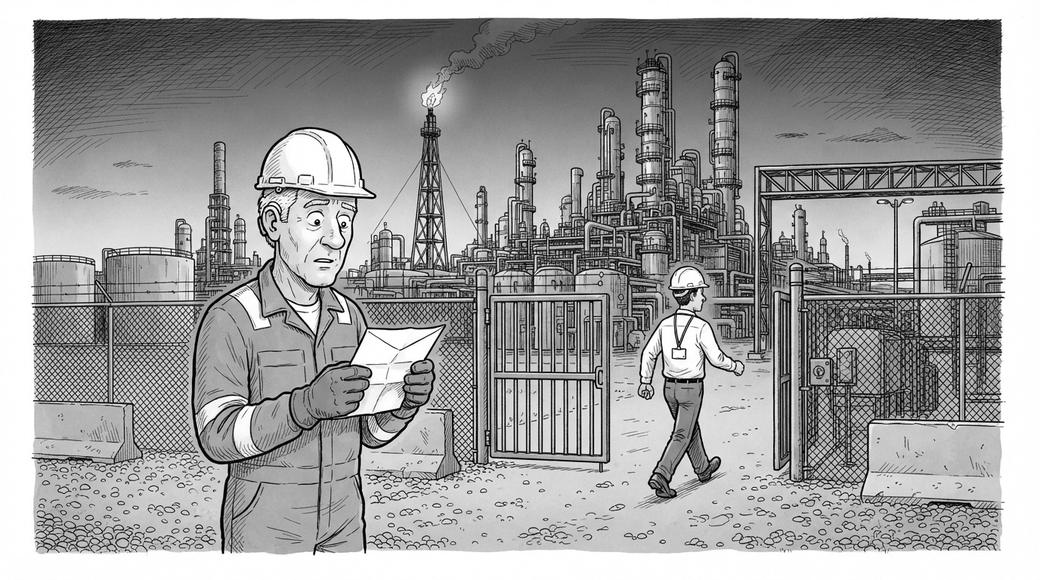
Christopher Barton started at the Geelong refinery in 1989, when it was run by Shell, and rose to shift team leader. By 2019 he had significant hearing loss, accepted as an injury suffered in the course of his work, and he was struggling with his hearing aids in the noise of the plant. On 20 June 2019 he emailed his resignation, naming 12 June 2020 as his last day, so that he could use his long service and annual leave first. The company accepted the resignation and approved leave until 13 March 2020.
In October 2019, saying his health and personal circumstances had changed, he asked to withdraw the resignation. The company refused. It handed him a letter ending his employment on 31 December 2019, more than five months before the date he had chosen, and later cancelled the leave it had approved after that date.
Commissioner Lee found the resignation was unconditional, so the company did not have to let him take it back. But by bringing the date forward, the company itself ended his employment, and it conceded that it had no valid reason to do so. The evidence about why 31 December had been chosen was 'most unsatisfactory', and pointed only to the company's own administrative convenience. As for the leave, either the company knew it had been approved and disregarded it, or it did not know, 'which is inexcusable'.
Mr Barton was 58, had an unblemished record, and was finding it very hard to get work. Reinstatement was not appropriate, because he had chosen to leave in June 2020 anyway. His lost pay up to that date came to $105,200, so he was awarded the maximum compensation then allowed: $74,350. Money that his union workmates had voted to pay him while the case ran was not deducted.
A resignation usually cannot be taken back once it is given. But if your employer then cuts your notice short without a good reason, that can be a dismissal, and an unfair one.
The compensation cap is indexed every 1 July. $74,350, half the high income threshold, was the most that could be awarded for dismissals between 1 July 2019 and 30 June 2020.
A published decision of the Fair Work Commission, retold in plain English. Lawcaptain did not act in this case. Every outcome depends on its own facts. General information, not legal advice about your situation.
Dismissed? Know what your case is worth.
The Employment Case Review checks your facts against real decisions like this one.
For employees in the Fair Work system. Employed by a WA sole trader, partnership, State agency or council? The review isn't for you — see the WA state system.
Unfair dismissal
 Keystroke data from her laptop ended a career of almost 18 yearsFair Work Commission · 21 July 2023Read the case study
 Fooled by an email scammer, the bank manager got her job backFair Work Commission · 4 January 2021Read the case study
 A Christmas Eve Facebook post cost a mine worker his jobFair Work Commission · 5 June 2018Read the case study