HomeEmployment lawGeneral protections
Fair Work Act 2009 (Cth) · Part 3-1

Punished for speaking up? The law asks why.

It is unlawful for an employer to sack, demote or otherwise punish you because you made a complaint, used a workplace right, joined a union, took sick leave, or because of who you are. Once you show the basic facts, your employer has to prove its reason was not the unlawful one.

For employees in the Fair Work system. Employed by a WA sole trader, partnership, State agency or council? The review isn't for you — see the WA state system.

21 daysto lodge if you were dismissed
Your employerhas to prove the reason was not a prohibited one
No capon compensation, which can include hurt and distress
A woman stands in a meeting to raise a concern while a manager folds his arms

Time limit 21 days from the day your dismissal took effect to lodge a general protections application with the Fair Work Commission. If it does not settle and a certificate issues, you then have 14 days from the certificate to start in court. Not dismissed? The 21-day limit does not apply, but the time limit for a court claim is not straightforward — get advice rather than wait.

The general protections in Part 3-1 of the Fair Work Act 2009 (Cth) stop an employer from taking adverse action against you — dismissing you, cutting your hours, demoting you, or treating you worse than others — for a reason the law prohibits. Unlike unfair dismissal, the question is not whether your employer was fair. It is why it acted. There is no minimum period of employment, no income threshold, and you do not have to have lost your job. This page sets out the rules; if you want the short, story-first version, start with Sacked for speaking up?.

What the law protects

A claim needs a protected reason. Unfairness on its own — even serious unfairness — is not one. These are the reasons the Act protects.

Read moreShow less
The reasonWhat it coversSection
A workplace rightBeing entitled to something under a law, award or enterprise agreement (leave, pay, safety); being able to start or take part in a process under a workplace law; being able to make a complaint or inquiry about your employment. It covers having the right, using it, proposing to use it, and action taken to stop you using it.ss 340–341
Industrial activityBeing, or not being, a union member or officer, and taking part (or refusing to take part) in lawful union activity.ss 346–347
A protected attributeRace, colour, sex, sexual orientation, breastfeeding, gender identity, intersex status, age, physical or mental disability, marital status, family or carer's responsibilities, subjection to family and domestic violence, pregnancy, religion, political opinion, national extraction or social origin.s 351
Temporary absence through illness or injuryBeing dismissed because you were off sick or injured, if the absence is of a kind the regulations protect.s 352

What counts as adverse action

For an employee, adverse action means dismissing you, injuring you in your employment, altering your position to your prejudice (fewer shifts, a demotion, duties taken away, less job security), or discriminating between you and other employees. A threat to do any of these counts too. It also covers refusing to employ a job applicant, or offering them worse terms. Simply starting an investigation or a disciplinary process is not adverse action on its own — it depends on what is done and why.

Complaints: not every grievance counts

Complaining about your employment is protected, but not every grievance is a complaint in law. In practice each communication is tested separately, on four points:

  1. Was it actually made? A dated email settles this. A conversation your employer denies becomes a contest of credibility.
  2. Was it a complaint or an inquiry? A complaint expresses a genuine grievance and seeks something to be done about it. An inquiry is a request for information. A bare observation or a request for help may be neither.
  3. Was it about your own employment? Your pay, hours, safety or treatment — not a colleague's, and not general frustration with how the business is run.
  4. Were you able to make it? The Full Federal Court has said the ability to complain has to come from somewhere — your contract, an award or agreement, a statute, a grievance procedure, or the general law. That source is read broadly, but it has to exist.

Two things do not matter: whether the complaint was right, and whether the entitlement you complained about actually existed. A genuine complaint about a bonus you were wrong about is still a complaint. And a complaint made to your employer counts — it does not have to go to an outside body.

Sick leave and s 352

Section 352 protects you from dismissal while you are temporarily absent through illness or injury, if you gave your employer a medical certificate or statutory declaration within 24 hours of the absence starting (or a longer period that was reasonable), or otherwise gave the evidence your award, agreement or the Act requires. The protection generally falls away once the absence runs past three months, or your absences total more than three months in 12 months, unless you are on paid personal leave for the whole of it. Being dismissed during an absence is not unlawful in itself — the absence has to be the reason.

Personal attributes and the exceptions

Section 351 has three exceptions. Action is not caught if it is not unlawful under the anti-discrimination law of the place where it happened; if it is taken because of the inherent requirements of the particular job; or, in limited cases, if it is taken in good faith by a religious institution. Inherent requirements are the essentials of the particular position, not a roster or an administrative preference. Unlike disability discrimination law, s 351 does not itself require reasonable adjustments.
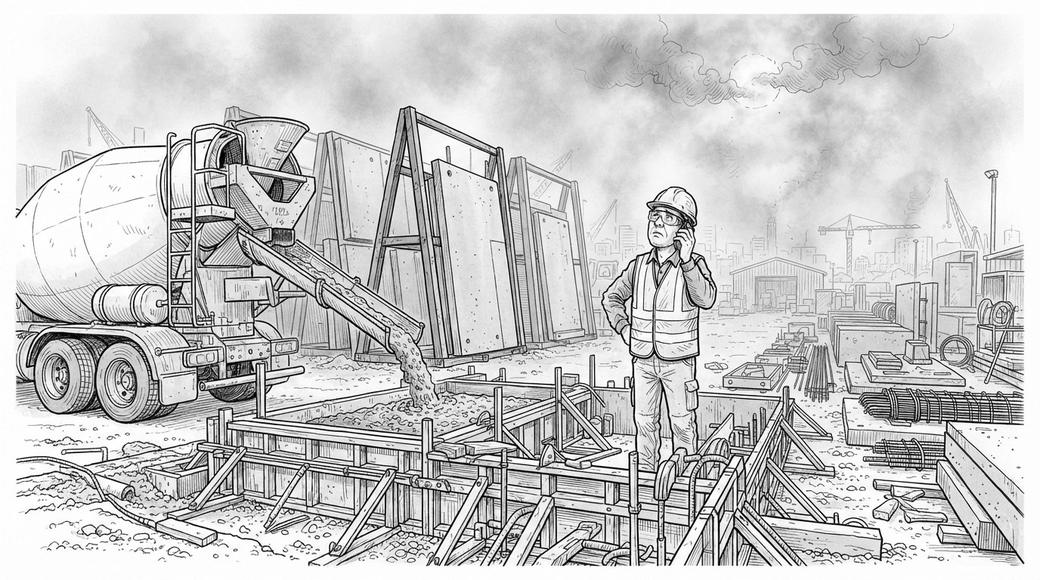
A worker in a hard hat makes a phone call beside a fresh concrete pour in a precast yard dimmed by smoke haze.
Case study
Reinstated and $37,347 compensationFederal Court of Australia · 6 July 2020

Safety rep sacked after calling WorkSafe wins reinstatement

A concrete factory worker was elected safety rep and rang WorkSafe the same day. A month later he was picked for 'redundancy' using a score sheet the court found was a contrivance.

Read the full storyShow less

Paul Hes had worked for nearly eight years at Melbourne Precast, a precast concrete factory in Carrum Downs, Victoria. On 18 February 2020 the yard workers elected him their health and safety representative. Later that day he rang WorkSafe about how management had handled a day of bushfire smoke in January, and what he called a failure to consult on safety.

The director, Mr Pichler, was told of the complaint. The same day his consultants emailed him about "the safety rep who is 'running off' to WorkSafe". On 21 February he sent all staff a notice naming Mr Hes among people who "seem to not care" about the company's survival.

On 13 March Mr Pichler announced two or three redundancies. On 20 March he called Mr Hes in, called him a poor performer and showed him a score sheet giving him 19 out of 30.

The construction union, the CFMMEU, sued alongside him in the Federal Court. The company then had to prove the dismissal was not for the reasons alleged.

It could not. Mr Pichler swore Mr Hes had the second-lowest score; a worker who scored 18 kept his job. The judge found the sheet was a contrivance to hide the real reason, that Mr Pichler's account "defies belief", and that Mr Hes's work had never been criticised. He was sacked for his safety role and WorkSafe complaints, in breach of s 340. The company also broke its enterprise agreement by failing to consult, and Mr Pichler was personally liable.

On 21 August 2020 the court ordered the company to give Mr Hes his job back with no break in service, and to pay $23,631.15 in lost wages and $3,716.03 in superannuation. On 14 September 2020 it added $10,000 for hurt and humiliation, and penalties of $50,000 against the company and $10,000 against Mr Pichler, payable to the union.

What it means for you

If you are chosen for redundancy soon after raising safety concerns or contacting a regulator, it is worth asking how the selection was made and keeping a copy of any document you are shown.

The reverse onus — and what it means in practice

Section 361 is the feature that makes this claim different. If you allege your employer acted for a prohibited reason, the law presumes that it did unless your employer proves otherwise, on the balance of probabilities. Section 360 adds that the prohibited reason only has to be one of the reasons — if it was a substantial and operative reason, that is enough, even alongside legitimate ones.

Read moreShow less

What you still have to prove

The presumption covers only the reason. You must prove the rest as facts: that you had the workplace right or attribute, and that the adverse action happened. A claim built on the presumption alone fails at that first step.

What your employer has to do

  • Call the decision-maker. The question is what was actually in the mind of the person who decided — and of anyone whose input materially shaped the decision. Without their evidence it is generally extremely difficult to displace the presumption.
  • Be believed. An honest-sounding denial is not automatically enough. It is weighed against the documents, the timing and everything else.
  • Show a real, separate reason. Documented performance or conduct concerns that pre-date your complaint, leave or disclosure are the usual answer.

Calling it a redundancy does not end the inquiry either. The question is still why you were selected or why the role went. A genuine restructure affecting a whole group is usually a strong answer; a "redundancy" that lands on the one person who just complained is not.

Dismissed, or not dismissed: two different paths

If you were dismissed (s 365)If you were not dismissed (s 372)
Time limit21 days from the dismissal taking effect; later only in exceptional circumstancesNo 21-day limit — but get advice on the time limit for a court claim before you wait
First stepForm F8 to the Fair Work CommissionEither apply to the Commission, or go straight to court
At the CommissionA private conference to try to settle it. If it does not resolve, the Commission issues a certificateA conference only if your employer agrees to take part (s 374)
Going to courtWithin 14 days of the certificate (the court can allow longer), to the Federal Circuit and Family Court or the Federal Court. Or, if both sides agree, the Commission can arbitrate insteadNo certificate needed

The F8 application fee is $92.70 from 1 July 2026, and it can be waived for serious hardship. The Commission's job at the conference is to help the parties settle. It cannot decide the claim unless both sides consent to arbitration. If it thinks a court case would have no reasonable prospect of success, it must tell the parties so.

Rows of office workers read the same email on their screens while a woman stands alone by a project board covered in sticky notes, looking at her phone.
Case study
Claim dismissedFederal Court of Australia · 22 June 2021

Removal announced to 423 colleagues, then dismissed

A bank manager who had raised a long list of concerns was removed from her role, announced to hundreds of colleagues, and then dismissed. The court accepted the bank's evidence that her complaints played no part.

Read the full storyShow less

Ms Wong managed National Australia Bank's internet banking platform from July 2015. From early 2016 she raised many concerns with her managers: about staffing, about colleagues' work, and about rising costs on a large payments project. On 21 March 2017 she was removed from her role. That afternoon an email announcing her replacement went to 423 NAB employees. On 11 May 2017 the bank dismissed her.

She sued under s 340 of the Fair Work Act, saying the bank acted because of 19 complaints and two inquiries she had made. The court accepted that all three steps were adverse action, including the email, because some colleagues thought less of her after reading it.

Not every concern counted. NAB accepted that 11 of her complaints and inquiries were protected. Of the rest, the judge found two were reports and suggestions rather than complaints. The others did not concern any right or entitlement she held, so on the law as the judge applied it they were not workplace rights.

The case turned on why the bank acted. The general manager who made both decisions, Ms MacLeod, did not know about the earlier complaints when she removed Ms Wong. The judge accepted her stated reasons: the platform's performance and Ms Wong's behaviour. Ms MacLeod dismissed her, the judge found, because Ms Wong had not engaged with those concerns, not because her later emails were complaints. Ms Wong's direct manager did know of the complaints, but the judge found him a very impressive witness who genuinely held critical views of her. Whether those views were fair was not the question.

A defamation claim over the email also failed. The court found the email did not suggest misconduct or incompetence, and was in any event protected by qualified privilege. The application was dismissed.

What it means for you

If you lose your job after raising concerns, the court asks why the decision-maker acted, not whether the decision was fair. It is worth keeping a record of what you raised, with whom and when, because who knew about it can decide the case.

Her appeal was dismissed by the Full Court of the Federal Court on 8 September 2022 (Wong v National Australia Bank Limited [2022] FCAFC 155). The Full Court held that her direct manager's reasons should have been treated as part of the bank's reasons, but upheld the finding that he was not motivated by her complaints.

General protections or unfair dismissal? You generally get one

If you were dismissed, both claims may look open. Section 725 of the Act stops you running more than one claim about the same dismissal. Lodging one blocks the others for as long as it is on foot — that is, until it is withdrawn or fails because the Commission or court has no jurisdiction. The rule covers:

Read moreShow less
  • an unfair dismissal application (s 394)
  • a general protections dismissal application to the Commission, or a general protections court application
  • an unlawful termination application (s 773)
  • a complaint or application about the dismissal under another law — including a discrimination complaint to the Australian Human Rights Commission or a state anti-discrimination body (s 732)

An unfair dismissal claim that fails because the Commission finds a genuine redundancy does not block a later claim. But the forms are not interchangeable: the Commission cannot convert an unfair dismissal application into a general protections one, or the other way round.

Unfair dismissalGeneral protections
The questionWas it harsh, unjust or unreasonable?Was it for a prohibited reason?
Minimum service6 months (12 with a small business)None
Income thresholdApplies unless award or agreement coveredNone
Who proves whyYouYour employer
CompensationCapped; no hurt and distressNo cap; hurt and distress available
PenaltiesNoYes, including against individuals involved
Who decidesThe CommissionA court (or the Commission, if both agree)

Broadly: if you can point to a protected reason — a complaint, a leave request, a safety issue, your union role, something personal about you — general protections is usually the stronger claim. If the reason was not unlawful but the reason was weak or the process was unfair, unfair dismissal fits better, and it is quicker and cheaper to run. General protections ends in court if it does not settle, which takes more time and evidence. In both jurisdictions each side usually pays its own legal costs (s 570 in court).

What a court can order

  • Compensation with no cap, for loss caused by the contravention. It is not confined to lost wages: it can include hurt, distress and humiliation, and damage to your reputation and future job prospects, though amounts for distress are kept within reasonable limits. You still have to prove your loss, and what you earn in a new job, and your efforts to find one, can be taken into account.
  • Reinstatement — your job back — and orders to stop or undo the conduct, including urgent injunctions.
  • Civil penalties against the employer, aimed at deterrence. They are separate from, and in addition to, compensation.
Read moreShow less

Managers can be personally liable

Under s 550, anyone involved in a contravention — who aided it, induced it, or was knowingly concerned in it — is treated as having contravened it themselves. That can include the manager who made the call, an HR officer, or a director. The reverse onus does not usually help here: you must prove that the individual actually knew the essential facts that made the conduct unlawful.

Coercion and sham contracting

Part 3-1 reaches beyond adverse action. Two protections come up often enough to know about.

Read moreShow less

Coercion (s 343). No one may organise, take or threaten action with intent to coerce you to use, not use, or use in a particular way, a workplace right. Two things must be shown: an intent to leave you no real choice, and pressure that is unlawful, illegitimate or unconscionable. Ordinary persuasion is not enough. A related rule (s 344) stops an employer putting undue influence or pressure on you to agree to certain things, such as a flexibility arrangement or a deduction from pay. Knowingly or recklessly misrepresenting your workplace rights to you is also prohibited (s 345).

Sham contracting (ss 357–359). An employer must not tell you that you are an independent contractor when you are really an employee, must not dismiss or threaten to dismiss you in order to re-engage you as a contractor doing the same work, and must not knowingly mislead you to get you to sign up as a contractor. Since 27 February 2024, an employer defending a misrepresentation claim has to prove it reasonably believed the arrangement was a genuine contract for services, judged partly by the size and nature of its business. Whether you are an employee is itself decided on the real substance of the relationship, not just the label in the contract (s 15AA).

If you work in Western Australia

If your employer is a company (a Pty Ltd trading business), you are almost certainly in the national system and everything on this page applies. But the general protections depend on the employer being a corporation or another entity the Commonwealth can regulate, so they are generally not available against a WA sole trader, partnership or other unincorporated employer, or against the WA State public sector. Whether they reach a WA local government that is itself a trading corporation is unresolved.

Read moreShow less

State-system employees have different protections: damaging action under the Industrial Relations Act 1979 (WA) for employment complaints and inquiries, and the Equal Opportunity Act for discrimination. The federal unlawful termination claim (s 772) also still reaches them if they were dismissed for a prohibited reason such as union activity, a temporary illness or a protected attribute — on a 21-day clock. See damaging action in the WA state system.
$99 inc GST · two to three days

How Lawcaptain helps

  • A written case review for $99, if you were dismissed. Tell us what happened; we test whether a protected reason is in play, whether your complaint qualifies in law, and whether general protections or unfair dismissal is the better claim.
  • The deadline, worked out for you. We work out the day your dismissal took effect and the date your 21 days run out.
  • A frank view of your case — whether it looks strong, arguable or weak, a realistic range, and what your employer is likely to argue about its reason.
  • Not dismissed? The case review covers dismissals only. If you have been demoted, had your hours cut or been threatened, call us for a free discussion.

For employees in the Fair Work system. Employed by a WA sole trader, partnership, State agency or council? The review isn't for you — see the WA state system.

Case studies

More cases like yours.

Real decisions of the Fair Work Commission and the courts, retold in plain English from the published judgments. Lawcaptain did not act in these cases.

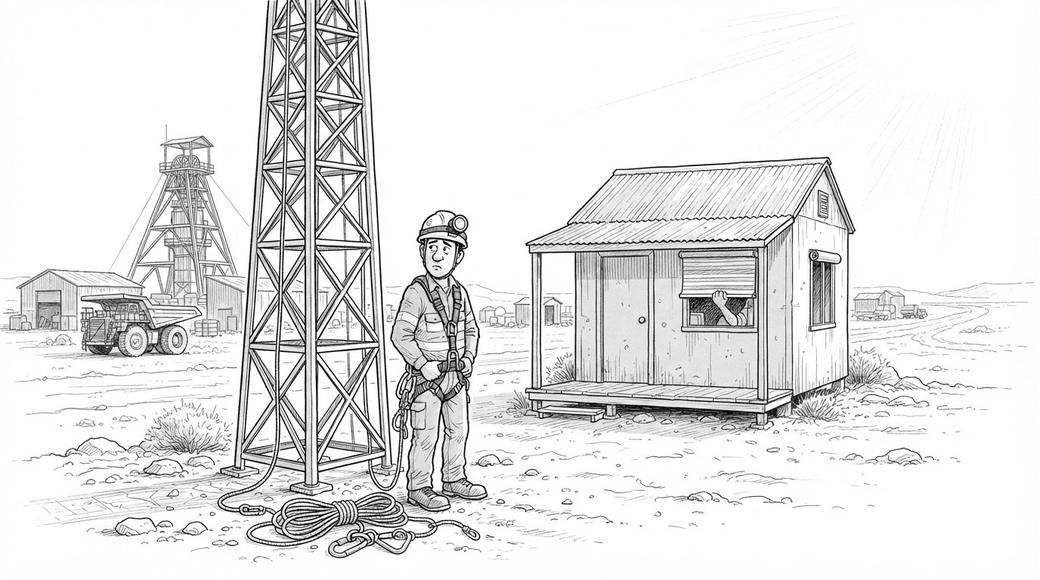
A trainee in a rescue helmet and harness at the foot of a rope-rescue tower at a mine, looking back towards a site office with its blind pulled down.
$25,929.42 compensation and $67,500 penalty, plus lost payFederal Circuit and Family Court of Australia (Division 2) · 9 December 2025

Sacked after telling workmates they did not have to sign a pay cut

A new environmental adviser at a gold mine told two colleagues they did not have to sign contracts that cut their pay. Within weeks he was dismissed on probation, and the court found that talk was part of the reason.

Read the full storyShow less

Mr Fox started as a Senior Environmental Advisor at NQM's Pajingo gold mine on 31 July 2023, on six months' probation. He had moved to Townsville for the job. He also joined the mine's emergency response team, which meant blocks of rescue training and, once qualified, an allowance of $6,000 a year.

In late October and early November 2023, two colleagues told him they had been offered new contracts that would lower their pay. To one he said, "If you're not happy with it don't sign it." To the other, "If you don't want to sign it, don't." On 7 November his manager put him on a "reserve list" for further emergency response training. He asked HR for help and offered to train in his own time. The manager said no.

On 17 November he was stood down. At a show cause meeting, HR said colleagues had made statements that he had tried to coerce them into not signing. He was dismissed on 27 November 2023, told he had failed his probation.

Mr Fox claimed he was sacked for exercising workplace rights, in breach of s 340. The court agreed. Talking with colleagues about pay is protected by s 333B, and his complaints about the training were protected too. That meant the company had to prove those were not among its reasons. It could not. No performance concerns had been raised with him before the show cause letter, and in cross-examination the manager agreed the pay talk and the training complaints were critical to his decision. The court did not accept his later attempt to take that back. The company also owed Mr Fox $884.17 in unpaid wages.

In June 2026 the court ordered NQM to pay Mr Fox $20,000 for non-economic loss, $5,929.42 to move his belongings back to Sydney, five months' lost pay plus interest (for the parties to calculate), and $67,500 in penalties, payable to him.

What it means for you

If you are dismissed soon after discussing pay with colleagues, or after asking about something your employer had agreed to, it is worth getting advice about a general protections claim.

The remedy orders of 16 June 2026 were stayed for 28 days so that the company could apply to the Federal Court if it wished. An appeal was possible; these are the amounts the court ordered, not amounts known to have been paid.

An empty witness box in a courtroom, with a lawyer glancing at it and a nurse watching from the gallery.
$22,000 compensation and $8,000 penaltyFederal Circuit and Family Court of Australia (Division 2) · 18 September 2024

Dismissed nurse wins because a key manager did not testify at trial

A nurse practitioner who complained of bullying was dismissed after a long injury absence. The hospital could not prove her complaint played no part, because the manager who set the dismissal in motion did not give evidence at the trial.

Read the full storyShow less

Ms Palfreyman was the aged care nurse practitioner at Alfred Health, a Victorian public hospital, from 28 September 2015. She worked in an outreach team giving acute care to elderly people at home and in aged care. In late November 2018 she lodged a workers' compensation claim for anxiety she put down to bullying in her team, and on 30 November 2018 she stopped work. In February 2019 she made a written bullying complaint. An external investigator found some of her allegations substantiated.

She never went back. Her doctors certified that she could work as a nurse practitioner, but not in that team, and later that she could work with full duties outside Alfred Health. Her workers' compensation payments stopped on 22 May 2021 after 130 weeks. On 8 September 2021 the hospital dismissed her on the ground of medical incapacity.

She claimed the dismissal was because of her complaint and her rights under workplace safety law. The hospital had to prove its real reasons. The court accepted that the senior managers who approved the dismissal acted for benign reasons. But the process began with a recommendation from the director of nursing, and the hospital had no evidence from her at the trial. Its request to file her evidence on the first day of trial was refused. Without it, the court could only speculate about her reasons, and that was not enough. The court found the hospital breached s 340(1). A separate claim that it broke the enterprise agreement by failing to get her back to work failed.

At a later hearing on remedy, the court found her dismissal for incapacity was inevitable at about the same time, so she lost no wages. She sought $200,000 for hurt and distress. The court awarded $22,000, plus interest, and ordered an $8,000 penalty paid to her. It found the breach was not deliberate and refused to make a declaration.

What it means for you

If you are dismissed after making a complaint, your employer has to prove the complaint was not part of its reasons, and that usually means evidence from everyone who shaped the decision. Winning on that point does not always mean lost wages, though: if the job would have ended anyway, compensation may be limited to the hurt and distress.

Show more case studies (3)Show fewer
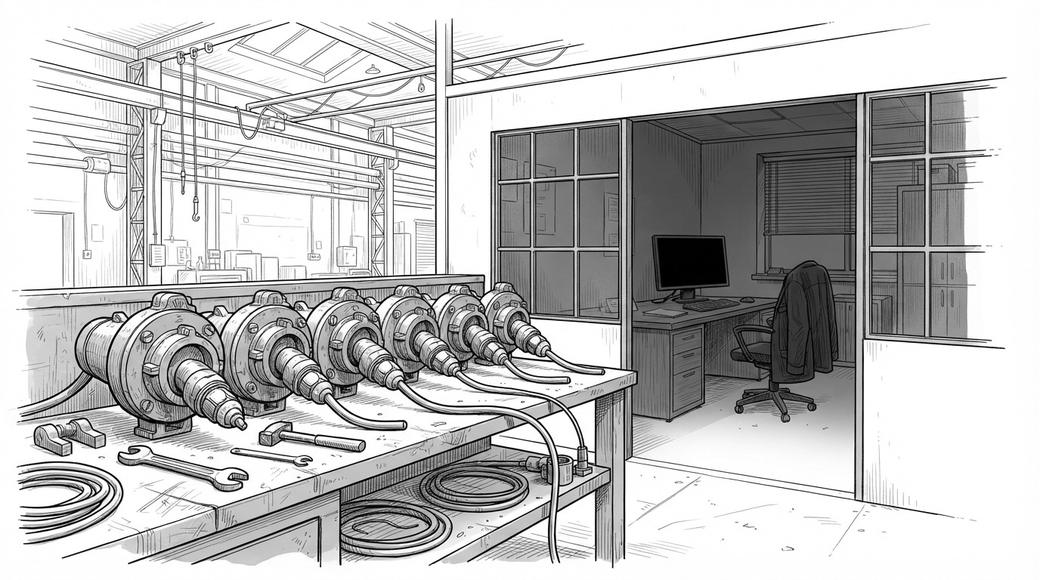
Heavy cable plugs on a workshop bench, with an empty office and a dark computer screen behind them.
$84,724 compensation and $51,282 penaltiesFederal Circuit and Family Court of Australia (Division 2) · 2 August 2024

A planned redundancy, rushed forward after sick leave

A general manager told his new boss that a workplace conflict was harming his health. After sick leave and a workers compensation claim, a redundancy planned for mid-2022 was brought forward.

Read the full storyShow less

Neal Farragher was general manager of CouplerCo, a PBE Rutherford Mining division at Tomago, NSW, that makes couplers, the plugs for medium voltage electrical cables. He started in October 2018. In 2021 tensions grew between him and the office manager. On 15 October 2021 he told the new managing director, David Meyn, that the issues were affecting his physical and mental health.

He spent the next week off on a doctor's certificate, during which his server access was restricted. Back on 25 October, he asked for mediation. The court found Mr Meyn effectively refused it and instead raised redundancy. From 1 November Mr Farragher was off unwell again. On 5 November a letter warned that the company would treat him as having abandoned his job if he did not report for duty on Monday. That afternoon he lodged a workers compensation claim.

The company had planned since August 2021 to make his role redundant in June 2022. On 8 November Mr Meyn told a colleague they needed to ‘push on’ with the restructure. Mr Farragher's employment ended on 5 January 2022.

The company said it was a planned redundancy. The court found it had been deliberately brought forward, and the company could not prove that his complaint, his personal leave and his workers compensation claim were not reasons for it. That breached s 340; dismissing him partly for his October sick leave breached s 352. The judge found Mr Meyn's evidence that the insurer had cleared the move untruthful, and held him personally involved.

A later judgment awarded $34,724.44 for lost pay to June 2022 and $50,000 for hurt and distress. Future loss was refused: he would almost certainly have been made redundant in June 2022 anyway, and the medical evidence did not tie his later illness to the dismissal itself. Penalties of $39,960 against the company and $11,322 against Mr Meyn were ordered to be paid to Mr Farragher.

What it means for you

If a restructure suddenly speeds up after you raise a complaint, take sick leave or make a workers compensation claim, it is worth getting advice. A redundancy planned in advance does not let an employer bring it forward for a prohibited reason.

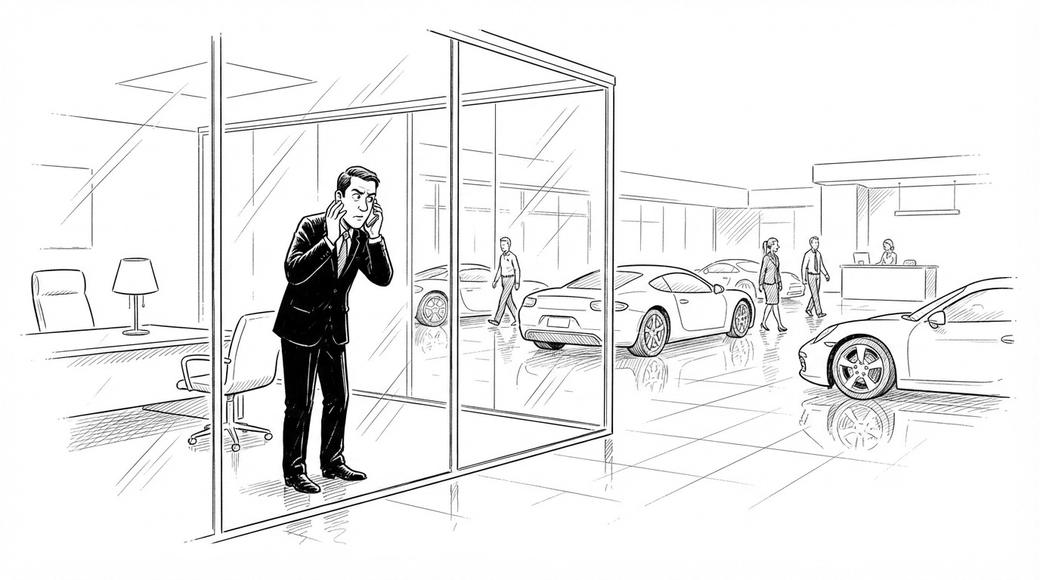
A manager in a glass office beside a car showroom speaks secretly into his phone while staff outside carry on, unaware.
Claim dismissedFederal Circuit and Family Court of Australia (Division 2) · 25 March 2022

Dealership boss sacked for telling the car brand about a stand-down

A Porsche dealership's general manager said he was stood down and sacked because he had complained about his CEO. The court found the real reason was that he told the car brand's Australian distributor about a possible shutdown before it was announced.

Read the full storyShow less

Mr Green became general manager of Porsche Centre Brighton, a Melbourne dealership in the PM Group, in July 2018. From about October 2019, he said, the group's CEO bullied and intimidated him in meetings. He complained several times to the group's HR manager.

In March 2020, as COVID-19 arrived, the CEO recommended standing staff down. On 27 March 2020 the board stood down the entire workforce, Mr Green included, for six weeks. The CEO wanted staff to hear the news from management first. On 26 or 27 March, Mr Green rang a senior manager at Porsche Cars Australia, the brand's Australian distributor, and told him the business might be shut down. When the CEO heard about the call he opened an investigation, and on 30 March 2020 he dismissed Mr Green with immediate effect for disclosing confidential information.

Mr Green sued under the general protections. The court accepted that his complaints to HR were workplace rights, and that the stand-down and the dismissal were adverse action. Under s 361, the company then had to prove its real reasons.

It did. The court found the CEO direct but not aggressive, and believed him when he said he did not know about the complaints. The CEO alone decided to dismiss Mr Green. An outside HR adviser who helped him was not called as a witness, but the court found she was only an adviser, not a decision-maker. The information was confidential and not yet public, and Mr Green had been warned before about sharing information with Porsche. A less senior employee who disclosed information got only a warning, but the court accepted that trust in a senior manager mattered more. The stand-down covered every employee for COVID business reasons, and Mr Green accepted he was not its target.

Because breaching confidentiality was serious misconduct under his contract, he was not owed notice either. All his claims were dismissed.

What it means for you

Complaining about how you are treated is protected, but it does not shield you from action taken for a separate, genuine reason such as misconduct. If you are dismissed soon after complaining, it is worth looking closely at who made the decision and what reasons they can prove.

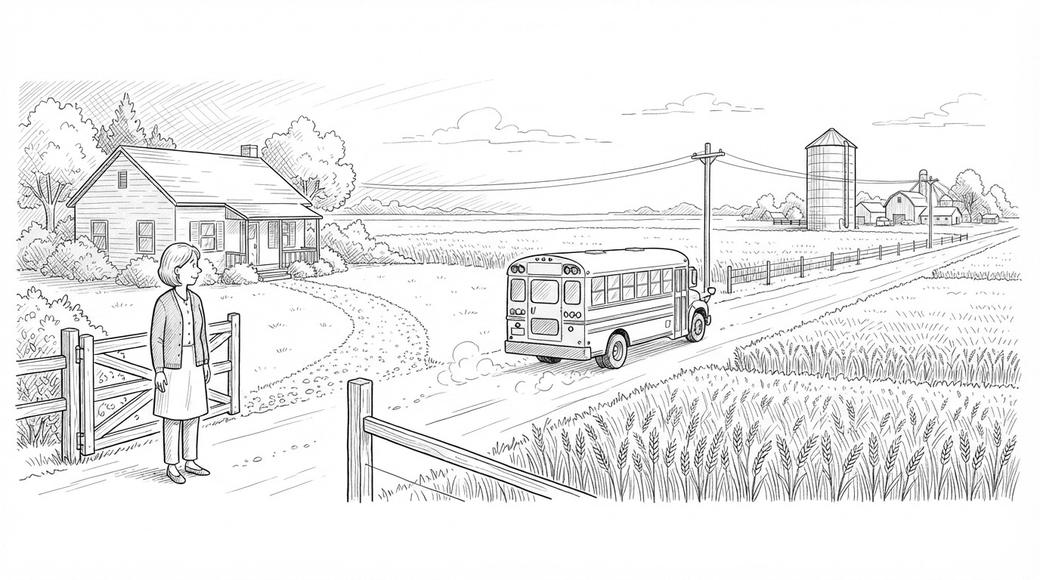
A woman stands at her country front gate watching the school bus she used to keep at home being driven away.
$60,000 penalties, $10,299 back pay and $5,000 damagesFederal Circuit Court of Australia · 19 June 2020

Taken off her school bus run after asking for a pay rise

A country school bus driver asked for back pay and payslips. Within weeks she was taken off the run she had driven for years, and the court found that was unlawful.

Read the full storyShow less

Elaine Bell had driven the school bus between Ouyen and Hattah, on and off, since about 1989. The bus was kept at her home. When Ouyen Hotel Pty Ltd took over the run in 2012, she kept running it much as she always had. She never received a payslip.

In February 2017 the run was made longer. On 9 May 2018 Ms Bell wrote to the company's director asking for a pay increase, back pay and monthly payslips. The director's answer was to take her off the run. The bus was collected from her in June and she was offered a different run, which she did not want. On 3 August 2018 she told him she could not keep working for him.

She brought a general protections claim. The company's main defence was that she had simply resigned. Judge Burchardt found that asking for more pay and for payslips was a workplace right, and the company had to prove it acted for some other reason. It could not. The judge was "entirely satisfied" that the director meant to change her circumstances to her detriment because of her complaint. Removing her from the run was adverse action under s 340.

The judge also found that taking away a job she had held for so long left her no real alternative but to resign. That was a repudiation of her contract and a forced resignation. She also proved she had been underpaid under the award, and that no payslips were ever given. A coercion claim and a claim for a year's lost income failed.

In a second judgment in September 2020, the court ordered the company to pay her $10,299 in unpaid wages, $5,000 for hurt and distress caused by the director's offensive conduct towards her after she left and interest. It also imposed $60,000 in penalties for the three breaches and ordered that they be paid to Ms Bell.

What it means for you

If you are moved off your usual work soon after asking about your pay or payslips, it is worth getting advice. Leaving because of that treatment is not necessarily the same as choosing to resign.

The company's main defence was that Ms Bell resigned. Since 7 July 2026, under Act No. 62 of 2026, an alleged dismissal is enough for a general protections dismissal claim to get through the Fair Work Commission stage, so a dispute about whether a worker resigned no longer blocks that step.

Leading cases

The decisions that set the rules.

The High Court held that "because" means the actual reasons of the decision-maker, found as a fact — not an objective or unconscious test. Reliable evidence from the decision-maker can discharge the reverse onus, and without it that is generally extremely difficult.

Confirmed Barclay: the question is the reasoning the decision-maker actually used. That conduct can be described as protected activity does not by itself make the employer's action unlawful, and a court is not bound to accept the decision-maker's account if other evidence contradicts it.

Show all leading cases (4)Show fewer

Adverse action taken to prevent employees exercising a workplace right is unlawful even if the right is not yet presently held — the protection reaches future rights as well as current ones.

Being "able to" complain about your employment needs an identifiable source, but that source is broad: a contract, a grievance right, a statute or the general law, including the right to complain about a breach of your employment contract.

A complaint is an expression of discontent seeking consideration, redress or relief, judged by substance rather than form, and it can be made to the employer itself. Where several complaints are alleged, the employer must disprove each one as a reason.

An employer that genuinely believed an employee was not really sick, and dismissed the employee for that, did not dismiss because of the sick leave or the absence. The decision-maker's actual belief, even if mistaken, is what counts.

Questions

The things people ask.

How long do I have to make a general protections claim?

If you were dismissed, 21 days from the day the dismissal took effect, counted in calendar days. A late application is accepted only in exceptional circumstances. If you were not dismissed, the 21-day limit does not apply, but the time limit for a court claim is not straightforward, so get advice rather than wait.

Do I need to have worked there for six months?

No. Unlike unfair dismissal, general protections has no minimum period of employment and no income threshold. A person sacked in their first week, or on probation, can bring a claim if the reason was a prohibited one.

My employer says it was about my performance. Is that the end of it?

No. Your employer has to prove the prohibited reason played no substantial and operative part, usually through the evidence of the person who decided. Documented performance concerns that pre-date your complaint or leave help your employer; concerns that appear only afterwards, or reasons that keep changing, help you.

Can I claim unfair dismissal and general protections at the same time?

Not for the same dismissal. Section 725 bars a second claim while the first is on foot, and that includes a discrimination complaint to the Australian Human Rights Commission or a state body. Which claim fits depends on your facts, and the 21 days keep running while you find out the first claim was the wrong one, so consider getting professional advice before you lodge.

I was demoted after making a complaint, but I still have my job. Can I do anything?

Yes. A demotion, a cut in hours or a threat can be adverse action. You can ask the Commission for a conference (your employer has to agree to attend) or go straight to court. There is no 21-day limit, but the time limit for a court claim is not straightforward, so consider getting professional advice early, while the evidence is fresh.

Can I sue my manager personally?

Possibly. Under s 550 a person knowingly involved in the contravention is treated as having contravened it, so a manager, HR officer or director can be named. You have to prove they actually knew the essential facts, and the reverse onus does not usually help you there.

Does my complaint have to be in writing?

No, but it helps a great deal. A spoken complaint that your employer denies becomes a contest about whose account is believed. If you complained verbally, write down now what you said, to whom, when and who else was there.

General information about Australian employment law, not legal advice about your situation. Updated September 2026.