Can you claim? Four gates before fairness
Before the Commission looks at whether your dismissal was fair, you have to clear a set of threshold questions. Fail one and the merits are never examined, however badly you were treated.
Read moreShow less
1. Were you dismissed?
Dismissal means your employment ended at the employer's initiative. That includes being forced to resign because the employer's conduct left you no real choice. A genuine resignation, or the ordinary end of a genuine fixed-term contract, is not a dismissal.
2. Have you worked there long enough?
| Your employer | Minimum employment period |
|---|---|
| Small business — fewer than 15 employees | 12 months |
| Everyone else | 6 months |
The headcount includes regular casuals and employees of associated entities, so a business that feels small may not be one in law.
3. Are you covered by an award, an agreement, or under the threshold?
You need one of these: a modern award covers your job, an enterprise agreement applies to you, or you earn less than the high income threshold — $190,100 from 1 July 2026, superannuation excluded. The threshold is indexed every 1 July, and the figure that counts is the one in force on the day you were dismissed. Check it on the Fair Work Commission's website.
4. Was it a genuine redundancy, or did the small business code apply?
A genuine redundancy is not unfair dismissal. It is genuine only if the job itself was no longer needed, the employer consulted as its award or agreement required, and redeployment within the business was not reasonable. A small business that followed the Small Business Fair Dismissal Code is also protected. The Commission must decide both before it looks at fairness, and in practice the evidence for each comes from the employer.
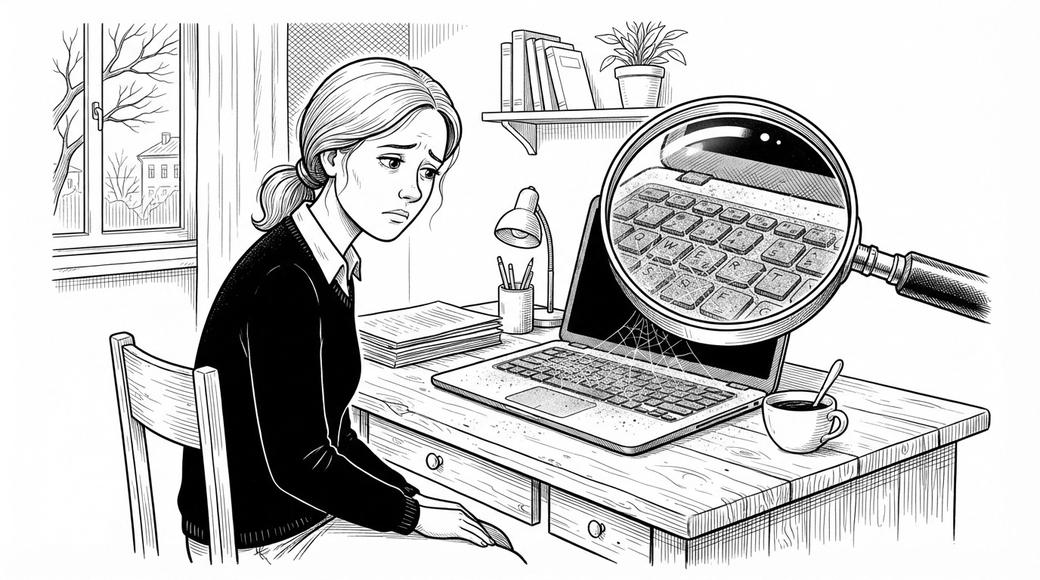
Keystroke data from her laptop ended a career of almost 18 years
Read the full storyShow less
Suzie Cheikho joined Insurance Australia Group in May 2005. Her work included lodging documents with the financial regulator, ASIC, and it all had to be done on her company laptop. Her managers had raised concerns during that year: a letter setting out their expectations in June, a missed lodgement that, her manager said, led to a fine from ASIC, a formal written warning in November and, in December, a performance improvement plan.
As part of that plan, the insurer reviewed her laptop activity from 1 October to 16 December 2022. It reported that she had not worked her rostered hours on 44 of 49 working days and had done no work at all on four of them. In October alone there were 117 working hours with no keystrokes. Her monthly average ranged from about 35 to 80 keystrokes an hour. She was dismissed on 20 February 2023.
Ms Cheikho said she doubted the data, and that she had sometimes used other devices. In her written response to the insurer she also said she had been going through personal issues that had affected her mental health and, she believed, her work.
Deputy President Roberts found that there were 'extended periods' when she was not working as required. Her job could only be done on the laptop and the company network, and although she had access to the insurer's systems after the allegations were put to her, she did not show what work she had actually done. That was misconduct, and a valid reason for dismissal. She had been told of the concerns, met the insurer with a union support person, and given two chances to respond in writing.
Her long and satisfactory service counted in her favour, and the Deputy President accepted that the problems behind her disconnection from work were 'serious and real'. It was not enough. The dismissal was not harsh, unjust or unreasonable, and her application was dismissed.
Activity data from a work laptop can be enough to prove you were not working, even after many years of good service. If your health is affecting your work, it is worth raising it early rather than waiting until an investigation has started.
What makes a dismissal unfair
The Commission must consider each of the matters in s 387 of the Fair Work Act. In practice they fall into two questions.
Read moreShow less
Was there a valid reason?
A valid reason is one that is sound, defensible or well founded — related to your capacity or your conduct, including its effect on the safety and welfare of other employees. The Commission decides for itself whether the conduct happened. It does not simply accept what the employer believed.
Was the process fair?
- Were you told the reason before the decision was made?
- Did you get a real opportunity to respond?
- Did the employer unreasonably refuse to let you bring a support person to discussions about dismissal?
- If it was about performance, were you warned first?
- Does the size of the business, and whether it has HR staff, explain any shortcomings in the process?
Then anything else relevant — your length of service, your record, how others were treated for the same conduct, and the effect of the dismissal on you. A valid reason can still be outweighed by a process that was badly unfair, and a flawed process does not always make a dismissal for serious misconduct unfair.
What you can get
Reinstatement — your job back — is the primary remedy in the Act: the Commission can order compensation only if it is satisfied reinstatement is inappropriate. In practice reinstatement is not often ordered, and most successful claims end in compensation.
Read moreShow less
| How it works | |
|---|---|
| Compensation | Assessed on what you would have earned had you not been dismissed, less what you have earned since, discounted for contingencies. Capped at the lesser of 26 weeks' pay and $95,050. |
| Hurt and distress | Not compensable. The cap and the formula are about lost earnings only. |
| Your own conduct | Compensation must be reduced where your misconduct contributed to the dismissal. |
| Looking for work | You are expected to look for other work. Failing to mitigate reduces the award. |
Most claims never reach a hearing. The Commission usually lists a conciliation conference first, and many settle there, often for a sum of money, an agreed reference or a changed reason for leaving on the record, in exchange for a release.
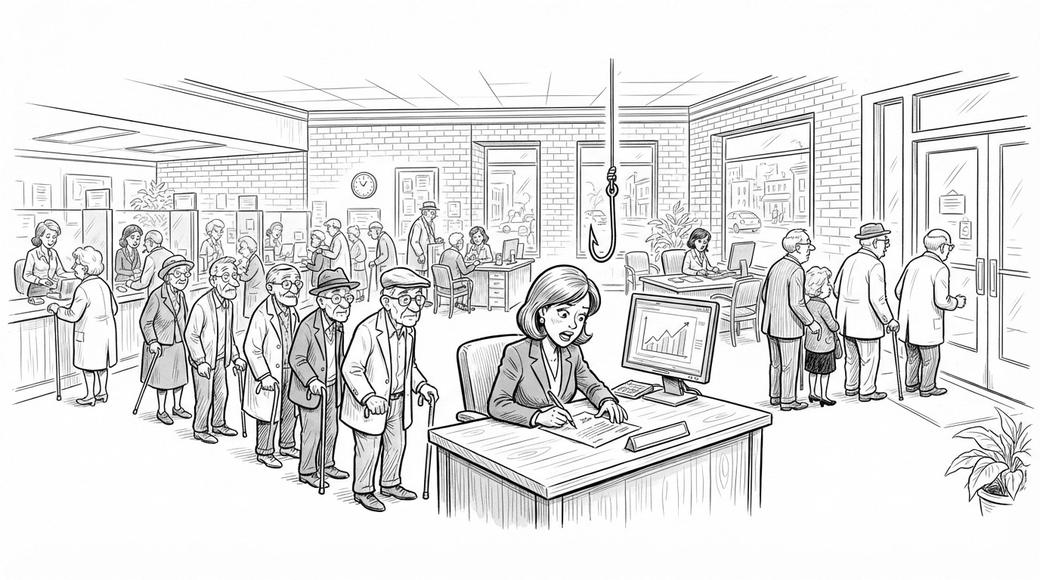
Fooled by an email scammer, the bank manager got her job back
Read the full storyShow less
Kylie Smith had been promoted from customer service officer to branch manager at the Bank of Queensland in Nambour. In the first weeks of the COVID-19 pandemic the branch was busy and short of staff, it had no lender, and she was about to go on leave. She was asked to finish a kind of loan she had never handled: a builder's final $37,500 construction payment.
On 1 April 2020, emails in the customer's email chain asked her to hold the payment because he was 'missing on some payments', and then to pay it into a Commonwealth Bank account instead. They came from a fraudster. She wrote the new account details onto a form the customer had signed in 2018, had a colleague who had not prepared the form sign as its 'preparer', authorised the payment herself, and did not phone the customer. The bank lost about $30,000. It dismissed her on 8 May 2020.
Deputy President Asbury found that she had missed red flags and come 'close to crossing the line between carelessness and negligence', but had not crossed it. Her failure to follow procedure was not wilful. She had not been trained for this kind of fraud, the fake emails were not strikingly odd and their hidden technical tells were apparent only in hindsight, the branch was under real pressure, and the bank had contributed: the pre-signed form should never have existed. Her remorse was genuine. Dismissal was not a sound response, so there was no valid reason for it.
Nor was she told the real reason, her manager's loss of trust in her, so she could not answer it. In a separate decision on 19 April 2021, the Deputy President ordered the bank to reinstate her as Nambour branch manager and to pay her lost wages of $48,282.83 plus $6,200.36 in superannuation. Meanwhile she had retrained, and was working in aged care on $23.09 an hour.
An honest mistake, even a costly one, is not automatically a valid reason for dismissal. The Commission looks at your training, the pressure you were under, what the employer itself contributed, and your record.
The remedy was decided separately: [Smith v Bank of Queensland Ltd [2021] FWC 2060](https://www.austlii.edu.au/cgi-bin/viewdoc/au/cases/cth/FWC/2021/2060.html) (19 April 2021).
What happens after you lodge
- Lodge Form F2 with the Fair Work Commission within 21 days. There is a filing fee, which can be waived for serious hardship.
- The employer responds, usually within 7 days of being served with your application, and may raise a jurisdictional objection — for example that you were not dismissed, or that it was a genuine redundancy.
- Conciliation, by phone or video, with a Commission conciliator. It is confidential, and many matters settle here.
- If it does not settle, the matter goes to a Commission member for a conference or a hearing, and a decision.