What you are owed when you're made redundant
Redundancy pay
Under the National Employment Standards (NES), the minimum entitlements every national system employee has, you are entitled to redundancy pay when your employer ends your employment because it no longer needs your job done by anyone (s 119). It is also payable if the business becomes insolvent or bankrupt. It is paid at your base rate of pay for ordinary hours, which leaves out loadings, penalty rates, allowances, overtime and bonuses.
Read moreShow less
| Continuous service when your employment ends | Redundancy pay |
|---|---|
| Less than 1 year | None |
| 1 year, less than 2 | 4 weeks |
| 2 years, less than 3 | 6 weeks |
| 3 years, less than 4 | 7 weeks |
| 4 years, less than 5 | 8 weeks |
| 5 years, less than 6 | 10 weeks |
| 6 years, less than 7 | 11 weeks |
| 7 years, less than 8 | 13 weeks |
| 8 years, less than 9 | 14 weeks |
| 9 years, less than 10 | 16 weeks |
| 10 years or more | 12 weeks |
The drop at 10 years is not a typo; it is how the Act is written. Your award, enterprise agreement or contract may give you more than the NES, so check each of them.
Who does not get NES redundancy pay
- Employees of a small business, meaning fewer than 15 employees, counting associated entities, when notice was given or immediately before the dismissal, whichever came first (s 121). There is an exception where the business became small by shedding staff in the six months before it went into liquidation or bankruptcy.
- Casual employees, and casual service does not count toward the scale (ss 119, 123).
- Employees on a genuine fixed-term, specified-task or seasonal contract. This exclusion does not apply if a substantial reason for the arrangement was to avoid paying redundancy (s 123).
- Employees dismissed for serious misconduct, and apprentices (s 123).
- Employees whose employment ends because of the ordinary and customary turnover of labour (s 119).
When the amount can be reduced
If your employer finds you other acceptable employment, or genuinely cannot afford to pay, it can apply to the Fair Work Commission to reduce your redundancy pay, even to nil (s 120). The reduction happens only if the Commission orders it; your employer cannot just decide to pay less. Separately, if the business is sold and the new owner offers you a job on substantially similar, no less favourable terms that recognises your service, turning that offer down can mean no redundancy pay from the old employer (s 122). The Commission can step in if that result would be unfair to you.
Notice
Separately from redundancy pay, you are entitled to written notice of the day your employment ends, or payment in lieu (s 117):
| Continuous service | Minimum notice |
|---|---|
| 1 year or less | 1 week |
| More than 1 year, up to 3 years | 2 weeks |
| More than 3 years, up to 5 years | 3 weeks |
| More than 5 years | 4 weeks |
Add one week if you are over 45 and have at least two years' service. Payment in lieu is calculated at your full rate of pay for the hours you would have worked in the notice period.
Accrued leave
Untaken annual leave must be paid out when your employment ends, at the rate you would have been paid if you had taken it (s 90). Long service leave mostly comes from state and territory law. In Western Australia it is 8⅔ weeks after 10 years, and pro rata from 7 years if employment ends for any reason other than serious misconduct. None of this is a bonus your employer is choosing to give you. It is owed regardless.
Fifteen years as the first salesman, then an Uber home
Read the full storyShow less
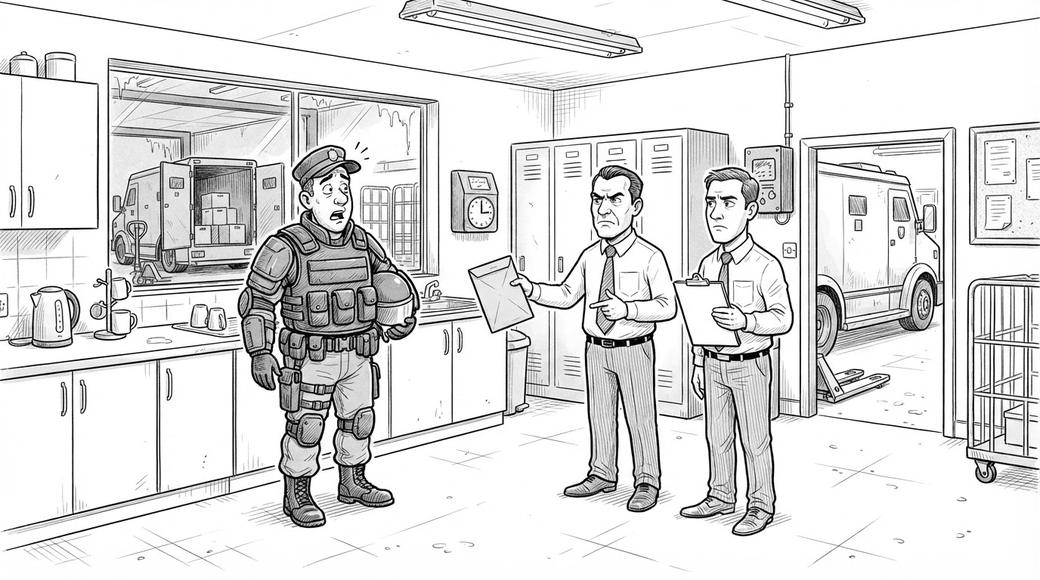
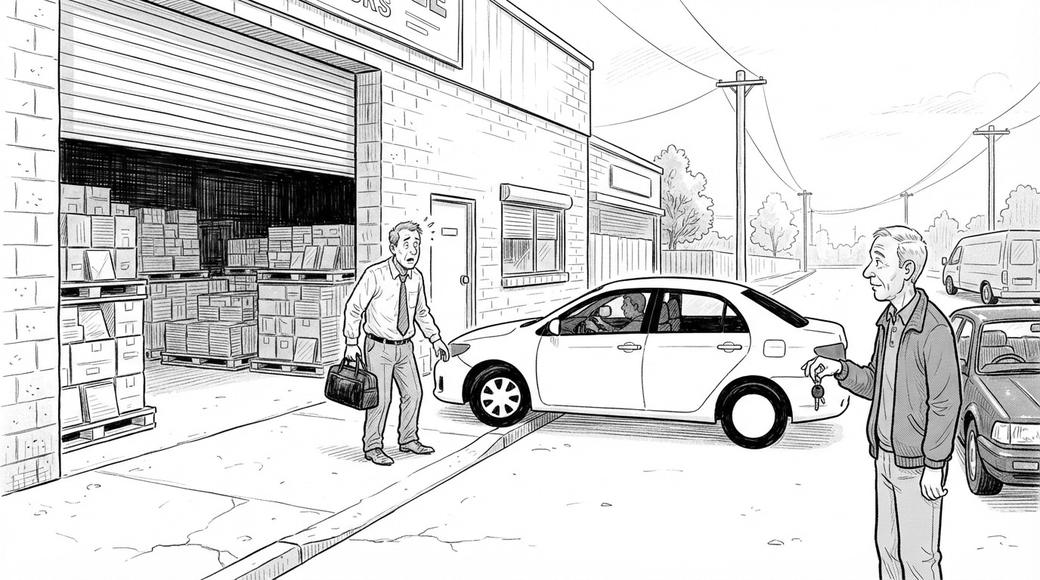
Carson Zhang sold imported tiles for Orientile, a business with nine employees. He was its first sales representative and had been there almost 15 years. On the morning of 28 February 2025 the owner, Mr Gao, decided that slow sales meant the business could not afford three sales reps. Mr Zhang was called into a meeting and told he was the one going.
The meeting opened with the news and moved straight to what he would be paid. He was asked to clear his things out of the company car and hand over the keys, and Mr Gao arranged an Uber to take him home. He was paid five weeks' wages in lieu of notice and his leave, but was given no written notice.
Mr Zhang claimed unfair dismissal. Orientile said it was a genuine redundancy. Mr Gao called the meeting a "consultation session", but he accepted he had not read the award's consultation clause until he was preparing his response to the claim.
The Deputy President found there had been no consultation, so the dismissal was not a "genuine redundancy" in the legal sense, and it was unfair. He ordered Orientile to pay $31,652.93 in compensation, plus superannuation. The Full Bench described that award as covering four weeks for the consultation that should have happened and a further 12 weeks' pay recognising his long service and the loss of his livelihood. Orientile appealed, arguing among other things that a business its size should not be held to the strict consultation rules in its award.
The Full Bench dismissed the appeal. Small businesses are not exempt from award consultation, it said, and partial or "technical" compliance is not enough. Here the failure was not merely procedural: "it was non-existent". It also noted that Mr Gao signed a small business checklist declaring he had consulted, but only after Mr Zhang had filed his claim.
A small employer still has to follow the consultation clause in your award before making you redundant. If you were simply told your job was gone, with no real chance to put your side, the redundancy may not be "genuine" and you may be able to challenge it.
This case is about whether the redundancy was genuine for unfair dismissal purposes, not about redundancy pay. Employers with fewer than 15 employees (counting associated entities) generally do not have to pay redundancy pay under the National Employment Standards (s 121), and the Commission noted that s 119 did not apply to Orientile. There is an exception where the business became small by shedding staff in the six months before it went into liquidation or bankruptcy.
When is a redundancy genuine?
For unfair dismissal, s 389 of the Fair Work Act sets a three-part test. All three must hold, and if they do, the unfair dismissal claim stops there. The Commission does not go on to ask whether the dismissal was harsh, unjust or unreasonable.
Read moreShow less
1. Your job is no longer needed by anyone
The employer must no longer require your job to be performed by anyone because of changes in its operational requirements, such as a downturn, a restructure, new technology, or a more efficient way of organising the work. Your job means the functions and duties you actually performed, not your title. The question is whether that job survived the change.
- Spreading your duties among the people who remain can still be a genuine redundancy, if your job as a whole no longer exists.
- If someone else is now doing substantially the same job, it may not be genuine.
- The Commission does not second-guess whether the business decision was wise or fair. It does ask whether it was really made for operational reasons, and not for an ulterior motive.
2. Your employer consulted, if it had to
Enterprise agreements must contain a consultation term (s 205), and many modern awards have one too. Once the employer has made a definite decision to make major changes likely to have significant effects on employees, including terminations, it must tell those affected. It must discuss the changes, their likely effects and ways to reduce them, give information in writing, and promptly consider what you raise. The discussion comes after the decision is made but before it is carried out.
If an award or agreement required consultation and it did not happen properly, the redundancy is not genuine for s 389. That does not automatically make the dismissal unfair. It opens the door to the ordinary unfairness assessment, where the reason and the process are weighed. Even a single redundancy in a small business may be a major change.
3. You could not reasonably have been redeployed
A redundancy is not genuine if it would have been reasonable, in all the circumstances, to redeploy you within the employer's business or the business of an associated entity, such as a related company in the same group. The question is asked as at the time of your dismissal.
- The relevant factors include the nature of any available work, the qualifications it required, your skills and experience, where it was, and what it paid.
- A role does not have to be equivalent. A part-time job, or one at lower pay that you would have accepted, can count.
- It is not limited to an advertised vacancy. The Commission can ask whether it would have been reasonable to rearrange work so that you could keep working.
- If your employer never discussed redeployment with you at all, it will usually be harder for it to show redeployment was not reasonable.
If the redundancy fails any part of the test, your claim goes on to the normal unfairness assessment, where selection, process and effect on you all come into it. See unfair dismissal.
Redundancy used as cover
Sometimes "redundancy" is the label, but something else is the reason: a complaint you made, a question about your pay, parental leave, a workers' compensation claim, an illness. If one of the reasons for your dismissal was something the Act protects, that is adverse action under the general protections, even if a restructure really was happening at the same time.
Read moreShow less
- The employer has to prove its reason. Once you show you had a workplace right (or another protected attribute) and that you were dismissed, the Act presumes the dismissal was for the reason you allege, unless the employer proves otherwise (s 361). That usually means the decision-maker explaining under oath why they chose you.
- Genuine redundancy is not a defence here. A general protections claim does not ask whether the redundancy met s 389. It asks why you were dismissed. A real restructure can still be carried out for a prohibited reason, for example if your complaint decided who was selected.
- There is no minimum service period and no income threshold for a general protections claim.
He said no to a new role and lost 16 weeks' redundancy pay
Read the full storyShow less
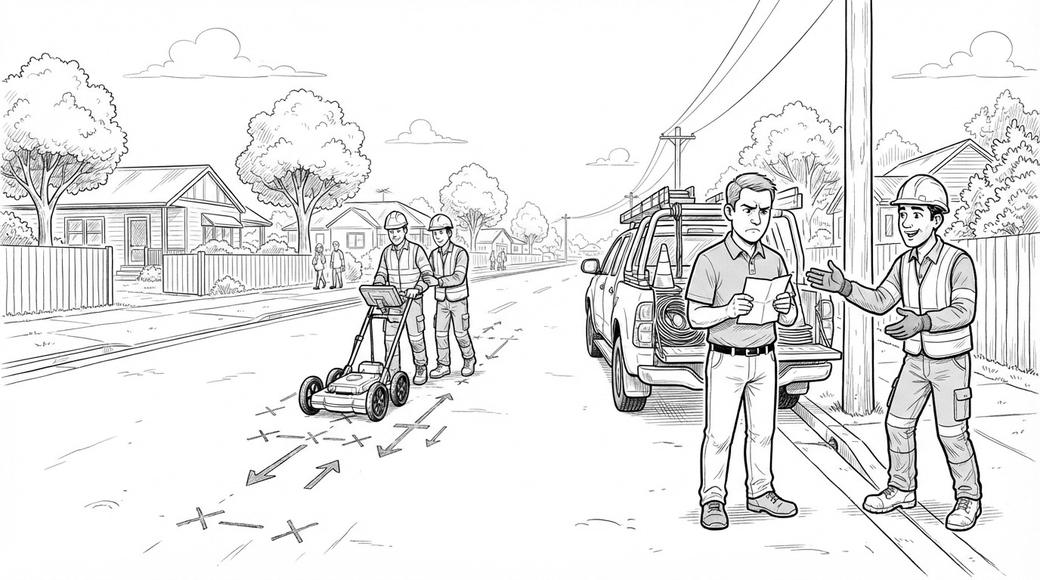
Alexander Jones had worked for Utility Mapping, a business that searches for underground utilities, for almost 10 years. By 2025 he was its Victorian State Manager, based in Melbourne, with eight direct reports, a salary of $157,500, a car allowance and a bonus.
In mid-2025 the company told him his state manager position was redundant and offered him a new National Technical Lead role. The salary, allowances and conditions were the same. At a final meeting on 6 June 2025, after getting legal advice, Mr Jones read a prepared statement declining it as "not a suitable alternative employment". His employment ended. Under the National Employment Standards he would otherwise have been owed 16 weeks' redundancy pay.
The company asked the Commission to reduce that to nil under s 120, which allows a reduction when the employer finds the worker "other acceptable employment". Mr Jones pointed to real differences. The new job was less senior, reported to a less senior manager and had far fewer direct reports. It was likely to mean more interstate travel, and he had two young children. Its bonus targets had not been set.
The Deputy President agreed the role was less senior, but found it was still acceptable. The work was of a like nature, he would not have had to relocate, and the pay was the same. The company genuinely wanted to keep him. Mr Jones was not obliged to take the role or to raise his concerns, the Deputy President said, but in his view Mr Jones "acted hastily", turning the role down on legal advice before the company could deal with his concerns about bonus targets and travel. The safest option, he said, would have been to take the role and look for other work from there. His redundancy pay was reduced from 16 weeks to nil.
If your employer offers you another job when your role is made redundant, think carefully before saying no. Put your concerns to them and give them a chance to answer: turning down an acceptable offer can cost you some or all of your redundancy pay.
Mr Jones sought to appeal. On 6 November 2025 a Full Bench refused permission to appeal, finding no arguable error (Jones v Utility Mapping (Aust) Pty Ltd [2025] FWCFB 255). It also said there was a real question whether the employer had ended his employment at all. Redundancy pay under s 119 is owed only where the employer ends the employment because it no longer needs the job done, and at the appeal hearing Mr Jones's own counsel said the employment ended by agreement. The original decision made no finding on that point.
What to check in your redundancy letter
- The date your employment ends, and whether you are working out notice or being paid in lieu. That date starts the 21 days.
- The redundancy pay figure. Count your complete years of continuous service, check the weeks against the table above, and check the rate. It should be your base rate for ordinary hours, and your award or agreement may say more.
- Notice, including the extra week if you are over 45 with two years' service.
- Accrued annual leave and long service leave, listed separately and paid in full.
- Superannuation on the amounts that attract it. Ask your fund or an accountant which ones do.
- The reason given. Does it describe an operational change, or is it vague? Is someone else still doing your work?
- What consultation happened, and whether it matched your award or agreement.
- Whether other roles were considered, in this business or a related one.
- Anything you are asked to sign. A redundancy letter does not need your signature to take effect. A document that releases claims is a different thing. Read it before signing, and see settlement deed review.
Read moreShow less
If your employer plans to dismiss 15 or more employees for economic, technological, structural or similar reasons, it must also notify Centrelink before carrying out the dismissals (s 530), and notify and consult any union that represents affected employees (s 531).
If you are in the WA state system
If you work in Western Australia for a sole trader, a partnership, an unincorporated business, the State public sector or a local council, you are probably in the WA state system, not the Fair Work system. The rules differ in three important ways:
Read moreShow less
- There is no genuine redundancy exclusion. A genuine redundancy is relevant to whether the dismissal was harsh, oppressive or unfair, but it does not end the claim. The manner of it — the information you were given, consultation, alternatives and selection — can still make it unfair.
- Redundancy pay comes from a WA Commission order, not the NES. The Termination, Change and Redundancy General Order ([2005] WAIRC 01715), made by the WA Industrial Relations Commission and in force since 1 August 2005, covers WA state-system employees. If your employer has 15 or more employees (casuals and part-timers count), it must pay you severance on top of your notice, on the same scale as the NES table above: nothing under 1 year's service, 4 weeks at 1 year rising to 16 weeks at 9 years, and 12 weeks at 10 years or more. It does not apply to casuals, apprentices, trainees, employees on probation or engaged for a fixed term or a specific task, employees with less than a year's service, or a dismissal for serious misconduct. An award, industrial agreement or contract can give you more, and some WA awards require severance from smaller employers too. Unpaid severance can be claimed in the Industrial Magistrates Court within 6 years. The Fair Work Act's minimum notice periods (s 117) still apply to you, through s 759. If you work in the State public sector, redundancy is a separate scheme under the Public Sector Management Act 1994 (WA): see the WA public sector.
- The Minimum Conditions of Employment Act 1993 (WA) s 41 entitles you to be told of the decision as soon as reasonably practicable and to discuss its effects and ways to reduce them. You are also entitled to up to 8 hours' paid leave for job interviews (s 43). The General Order adds to this: before the redundancy, your employer must consult you and give you in writing the reasons, the number and kinds of employees affected and when, and it must notify Centrelink. During notice your employer gives you, you can take up to one day's paid leave in each week of notice to look for other work, and whichever of that and the 8 hours is better for you applies.