
A Lawcaptain story

Thirteen days after she got sick, they made her redundant.

Claire ran a small health practice for five years. Then she got sick, and a redundancy letter arrived. Seven months fighting alone, one week with Lawcaptain, and a mid-five-figure settlement.

Mid-five-figure settlementGeneral protectionsFair Work Commission conciliation
5 min read · Name changed, published with her consent · September 2026
Claire
Mid five figures
settled, against a “final” offer in the low five figures
7 mo → 1 wk
seven months fighting alone, one week with Lawcaptain
75 hrs
at her kitchen table, before she found us
Her story

Five years. Then thirteen days.

For almost five years, Claire ran the business side of a small health practice: the money, the payroll, the hiring, the rosters. Two directors, a team that relied on her, and not one concern raised about her work.

In November 2025 a long-term health condition flared up badly, and her doctor signed her off a month at a time. At the end of January she met the two directors, her hands swollen and shaking, and brought them a plan: hire a stand-in for six to twelve months while she recovered. Fine, they said.

Thirteen days later, a letter. The practice was proposing to make her job redundant. Her work was not disappearing; it was being handed to other people. She was offered two new roles instead, both full-time, both in the office, neither with a salary attached.
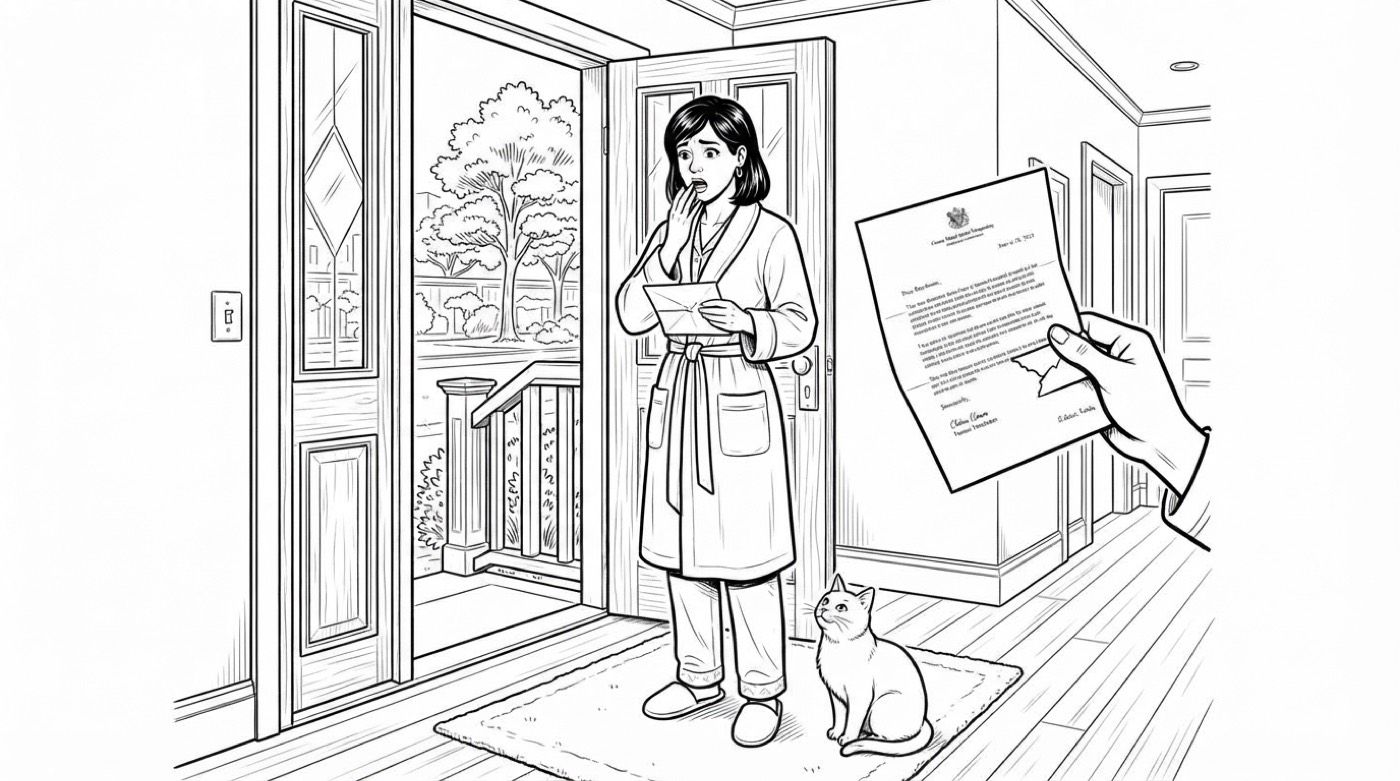
Then a deed: a few thousand dollars to go quietly, and seven days to sign. She did not sign. Over the following weeks the offers crept up, to a low-five-figure sum described as final. Her employment ended in April.

She lodged her own claim with the Fair Work Commission, with a general AI tool open in the next tab. Then the practice filed its written response, and in the middle of the legal language it said the quiet part out loud. Her absence, it wrote, had “provided an opportunity to assess how operational responsibilities were functioning”.

August was the hardest month. Seventy-five hours at her kitchen table: every email, every text, every document from five years, scanned and sorted, and all of it run through ChatGPT, Gemini and NotebookLM. Each one handed her case back tidier and more confident than she had put it in. None of them had read a Fair Work decision.

“It sounded right. But I actually wasn’t sure. It could have been saying anything, and it sounded believable.”Claire

A week before her conciliation she found Lawcaptain, and sent everything she had with one line: I am comfortable being told where my case is weak.

The review

What Claire didn’t know she had.

Her own application relied on one protection in the Fair Work Act 2009 (Cth). The review found three in her facts, and it told her how a case like hers is won.

One set of facts, three protections
Absence through illness. An employer must not dismiss you because you are temporarily absent from work through illness or injury (s 352).
A workplace right. Taking the sick leave you are entitled to is exercising a workplace right. Dismissing you because you did is adverse action (s 340).
Disability. Dismissing someone because of a physical or mental disability is discrimination under the same Act (s 351).
Who has to prove it. Once she shows the dismissal and the protected reason, the employer has to prove that reason played no part (s 361), and one reason among several is enough (s 360). A real business reason does not save them: the High Court decided that against Qantas, which had sound commercial reasons for outsourcing 1,700 jobs and still lost.

It also told her where she was weak. She could not claim lost wages for the months she was unfit to work anyway, and the practice’s loss the year before was its best argument. Neither point touched the heart of her case.

What else it can carry

One set of facts, several claims.

A dismissal like Claire’s rarely raises only one claim. These are the ones that most often come with it.

General information, not advice
Unfair dismissal (s 394). The alternative if the protections do not fit. You choose one or the other, not both.
A redundancy that wasn’t (s 389). If the job still exists, or the employer did not consult as its award or agreement requires, it is not a genuine redundancy.
Disability discrimination. Under the Disability Discrimination Act 1992 (Cth) or your state’s law: a different forum, with different remedies.
Unpaid entitlements. Notice, redundancy pay and leave are often underpaid in a rushed exit.
Breach of contract. A fixed term, a bonus, or a notice period longer than the Act’s minimum.
A decided case, on the public record

What a case like this is worth.

The case most like hers
The case. Shum v Southern Migrant and Refugee Centre (No 4) [2026] FedCFamC2G 853, decided in the Federal Circuit and Family Court three months before Claire’s conciliation.
The facts. A dismissal presented as a redundancy, which the court found had “a distinct air of artificiality about it”, of an employee on certified sick leave. Two individuals were held personally involved alongside the employer.
The result. $35,000 for hurt, humiliation and distress, thirteen weeks’ wages, and $31,860 in penalties against the employer and the two individuals, all ordered paid to her rather than to the Commonwealth.
How the number is built
Lost wages. What you would have earned, less what you earned or could have earned since. You are expected to look for work.
Workers’ compensation. Payments you received for the same period come off.
Hurt, humiliation and distress. Not capped in a general protections claim. This is where Shum’s $35,000 sits.
Penalties. The court can order them paid to you (s 546), and a director personally involved can be liable too (s 550).

Most applications do not end in a payment. About one in six of the unfair dismissal decisions we have examined reached compensation or reinstatement. The review tells you which side of that line you are on.

The conciliation

Sixty minutes.

Because Claire was our first customer, we did one thing more: a four-point opening to read aloud, a first offer with every dollar explained, and a page headed If they say / you say. She read the opening aloud until she did not need the page.

“At least I sound like I know what I’m talking about now. And I’m confident that I do.”Claire, the week before

On the day, by video, she delivered all four points without looking down. When the Commission officer put the practice’s argument to her (a restructure, a loss last year, the risk of a year in court), she knew why a real restructure did not answer her claim.

Four months earlier, the practice’s final offer had been a low-five-figure sum. That afternoon it came back at mid five figures. She did not sign on the spot: both sides should take advice, she said. The deed was reviewed, and the matter settled for a mid-five-figure sum.

“I didn’t get flustered or back away from my position.”Claire, the morning after
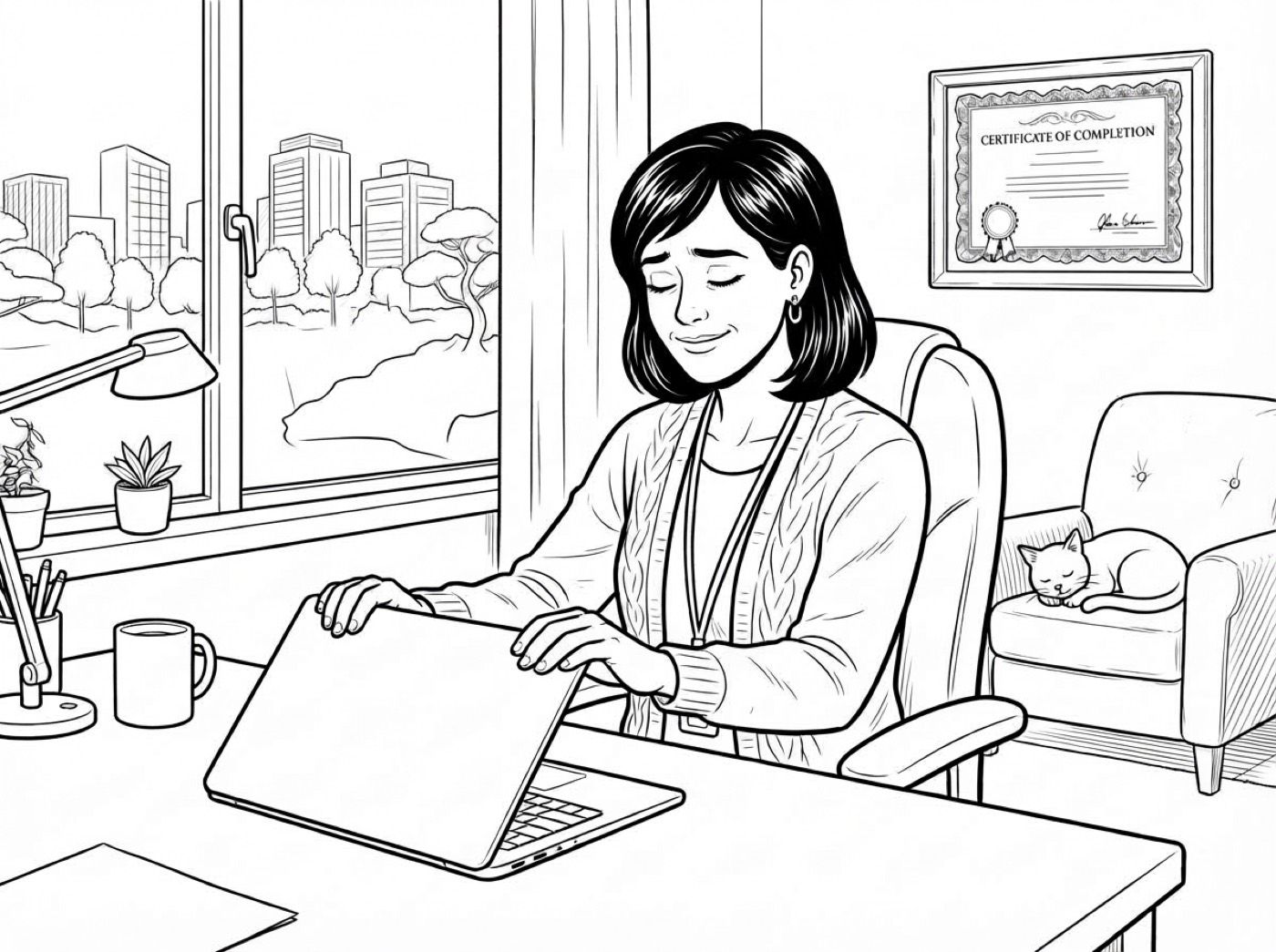
The opening script and the offer ladder are being built into Lawcaptain now.

How it works

Get your report, like Claire.

Three steps
1. Answer a few questions. A few minutes, mostly taps, about your job and how it ended.
2. Pay $99, including GST. One-off, no subscription. Full refund if there's no potential claim for us to investigate.
3. Your report in two to three days. Whether you can claim, which claim and how strong, cases like yours, what you must prove, what they will say, and what to do next.

You check it. No lawyer reads your report before it reaches you, and it is not legal advice. From 20 October 2026 you sign a declaration to the Commission that every fact, case and quote in your application is correct, and the report is written so you can check each one.

Her words

“I’m not a lawyer, so that’s my problem. To me, it makes sense. But that’s where I’m worried.”

“I think they’re hoping that I’m too sick, that I won’t be bothered and I’ll just let it go. But I will not.”

“Probably a lot of people would have just walked away.”

“I finally got to have my say.”

Claire is a real client, and her story and words are published with her consent. Her name has been changed and her employer, location and medical details generalised. Hers was the first employment review, delivered as a practitioner-checked pack for $1,500; at $99 nobody checks yours before delivery. Outcomes depend on the facts of each matter.

Early access

Not a dismissal — or not yet?

We are building reviews for these next. Tell us which you need and leave your email, and we will tell you when it is ready. If you need it this week, tick the box and we will see what we can do.

Find out where you stand — for $99.

A written review of your dismissal case in two to three days. Strengths, weaknesses, what it's worth, what to do next.