What a deed is, and why employers use one
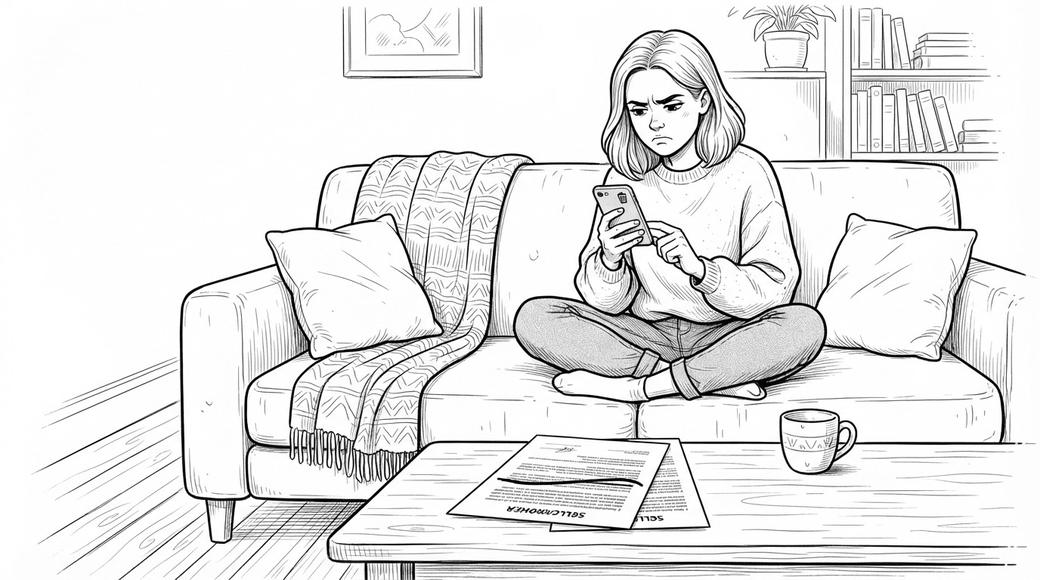
A deed is a formal written promise. Unlike an ordinary contract, it binds without consideration — nobody can later argue that what you received was not enough to support the bargain. That is exactly why employers use one: it is built for finality.
Read moreShow less
- There is no cooling-off period. No Australian law gives you a set time to reconsider and revoke a signed settlement. Once it is signed, it binds.
- Setting it aside later is hard. A court can undo a deed for unconscionable dealing, undue influence or duress, but the bar is high — and the deed will usually contain your own acknowledgement that you signed voluntarily and had the chance to get advice. Take the time before signing, not after.
- The Fair Work Commission cannot enforce it. A deed is a private contract. If the employer does not pay, your remedy is to sue on the deed in a court. The Commission cannot order payment under it, and it cannot revive a claim you have already discontinued.

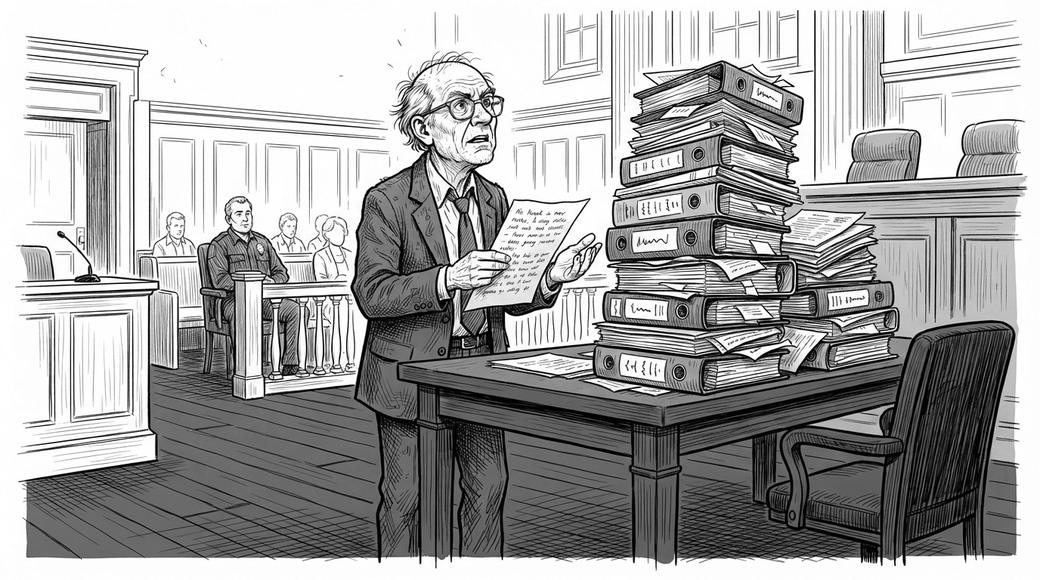
She signed a deed in 2008, then spent a decade trying to undo it
Read the full storyShow less
Sara Rossi was a long-haul flight attendant with Qantas from 1988 until 2003, when she took voluntary redundancy. In 2006 she made a workers' compensation claim for a psychological injury she said was caused by her work. Qantas denied it, and the case was listed for trial in late 2008.
Shortly before a settlement conference, the psychiatrist assessing her for her own lawyers revised his view of how much of her illness was work-related, which put her claim in 'severe peril'. At the conference Qantas offered $50,000. Two days later, after her lawyer read his written advice to her, Qantas raised the offer to $75,000 plus $40,000 for legal costs. With her lawyer and barrister at the conference, she signed a deed releasing Qantas from all claims arising from her employment.
She was distressed that evening and later refused the money. A decade on she lodged a discrimination complaint about her time at Qantas. To pursue it, she first had to have the 2008 deed set aside, and she argued she had lacked the mental capacity to make it.
The Full Court said the test is whether she could have understood the general nature of the deal if it had been explained to her. This deed was simple: she would be paid, the case would end, and she could bring no further claim. 'That is not a complex concept.' The evidence showed she had understood the offer and the psychiatrist's revised view, and had asked about the confidentiality term so she could talk to her family. Even her own expert psychiatrist accepted she could understand the deed's general nature.
The trial judge had accepted she was suffering from depression and felt distress. But being unwell and upset is not the same as being unable to understand what you sign. The appeal was dismissed, with costs.
The test is whether you could understand the general nature of the deed if it were explained to you; feeling unwell, upset or pressured is not enough on its own. If you are unwell or overwhelmed, say so and ask for more time before you sign.
The deed was tested under the Victorian court rules on compromises by a person under a disability; the Full Court said the same principles apply at general law ([31]).
The payment, and how it is described
The payment clause tells you more than the dollar figure. How the sum is characterised — what the deed says it is for — drives its tax treatment, whether superannuation is payable on it, and what happens if the employer's tax treatment turns out to be wrong.
Read moreShow less
The label does not decide the tax
Calling a payment "ex gratia", a "goodwill payment" or "in full and final settlement" does not make it tax free. For tax purposes a payment is what it is actually for. A lump sum paid to settle a claim arising out of the end of your employment is, by default, an employment termination payment (ETP): a payment made because your employment ended, and received within 12 months of it ending.
| Part of the payment | How it is usually treated (2026-27) |
|---|---|
| Employment termination payment | The taxable part is taxed at no more than 32% if you are under 60 on 30 June of the income year you are paid, or 17% if you are 60 or over (both include the 2% Medicare levy), up to a cap. Above the cap it is taxed at 47%. The employer withholds at those rates and any difference is settled in your tax return. The ETP cap is $270,000 for 2026-27. For some payments — pay in lieu of notice or a "golden handshake", for example — a lower $180,000 whole-of-income cap also applies, reduced by your other taxable income that year. A payment that is mainly compensation for a genuine unfair dismissal, harassment or discrimination dispute can be subject to the ETP cap alone. |
| Genuine redundancy payment | A tax-free amount of $13,598 plus $6,801 for each completed year of service (2026-27), with the rest treated as an ETP. Available only where you were actually dismissed because your position was genuinely redundant. |
| Compensation for personal injury | A capital payment for personal injury can fall outside the ETP rules — but generally only for an identified injury (physical injury or a recognised psychiatric illness), and only so far as the amount is reasonable. Hurt, distress and humiliation on their own are not "personal injury". |
| Reimbursement of legal costs | An amount that can be identified as reimbursing your legal costs is not an ETP. If it is not separately identified, the whole sum can be treated as received because your employment ended. |
| Accrued leave, unpaid wages, pay in lieu of notice | Each has its own tax treatment and belongs on its own line, not folded into one gross figure. Unpaid wages and pay in lieu of notice attract superannuation; compensation for the dismissal and general damages do not. |
Two traps sit in that table. First, you cannot have both a resignation and a genuine redundancy. If the deed records that you resigned, the redundancy tax concession is not available — and a settlement of a disputed dismissal cannot be turned into a genuine redundancy payment just because both sides agree to call it one. Second, in an unfair dismissal claim the Commission cannot award compensation for distress at all, so there is much less basis for describing part of a settlement as compensation for hurt than there is in a general protections or discrimination claim.
The tax indemnity
The law puts the obligation to withhold tax on the employer, not on you. A tax indemnity shifts that risk back: if the tax office later decides more should have been withheld, you pay the employer — and some clauses add interest, penalties and the employer's costs on top. Read who carries what, and whether the employer has to show you an actual tax office decision before it can demand anything.
Timing, and instalments
Check when the money is due, where it is paid, and what happens if it is late. A payment spread over instalments turns you from someone with a live claim into an unsecured creditor. And a payment received more than 12 months after your employment ended is generally not an ETP at all: it is taxed as ordinary income at your marginal rate, unless an exception applies — for example where legal action about the payment was started within the 12 months.
The release: what you are giving up
The release is the heart of the deed. It is only as wide as its definition of Claims, and employer-drafted definitions are wide: every claim at law, in equity, under statute or under an award or agreement, known or unknown, arising from the employment, its ending or the proceedings. Read it slowly.
Read moreShow less
- Unknown claims. Courts will read a release in light of what the parties had in mind — but a release that expressly covers claims "whether or not known" will usually be held to mean it. Do not count on a court reading it down later, and do not rely on your own private understanding of what it covers.
- Future claims. A release should be tied to facts that exist when you sign. Watch for wording that reaches claims that have not yet arisen.
- Claims outside work. Check it does not catch claims that have nothing to do with the employment.
- Who you are releasing. Many deeds release not just the employer but related companies, directors, officers, managers, and even the employer's lawyers and insurers. That can end any claim against the individual manager at the centre of your complaint — including a claim that they were personally involved in a Fair Work Act contravention.
- Is it mutual? Compare the employer's release of you word for word with yours. An employer release that carves out anything to do with your alleged "misconduct" can leave the employer free to pursue the very conduct it relied on to dismiss you — while you have given up everything.
Money you are owed anyway
Unpaid wages, accrued annual leave, long service leave, redundancy pay under the National Employment Standards, and unpaid superannuation are owed to you whether or not you settle. A release that sweeps them in for no extra money is a real loss. Check whether the settlement sum is on top of them, and whether the deed says so.
What a release should not touch
- Workers' compensation. In Western Australia, statutory workers' compensation cannot be signed away by private agreement; a settlement of a compensation claim is effective only if it is registered under the Workers' Compensation and Injury Management Act 2023 (WA). A deed that says otherwise invites argument. Look for an express carve-out.
- Superannuation. The superannuation guarantee is a liability to the tax office, and since 1 January 2024 unpaid super can be pursued under the National Employment Standards. Look for an express carve-out.
- Enforcing the deed itself — you must be able to sue if the employer does not pay.
- Reports to regulators. A deed cannot stop you making a protected whistleblower disclosure, and a clause that tries to stop a complaint to the Fair Work Ombudsman or the Commission, or evidence you are required to give, is very unlikely to be enforceable.

Told his job was redundant, he signed an 8-page deal on the spot
Read the full storyShow less
Ran Zheng had been Factory Director at UA Holdings since 1 September 2018, running the day-to-day operations of its production facility. On 4 March 2025 he met the general manager and the HR director and was told his job was being made redundant. In that same meeting he signed an eight-page 'Redundancy Agreement', which offered a more favourable package: severance pay and a golden handshake on top of his accrued entitlements.
The document worked like a deed of release. He released the company from all claims about his employment, his contract and its ending, and acknowledged he had had the opportunity to get legal advice and signed voluntarily. Two days later he emailed, saying the agreement was invalid because the figures were wrong, and asked to renegotiate. He then lodged an unfair dismissal claim.
Mr Zheng said he had been caught off guard and was in a 'trance' or state of shock. He said English is not his first language, he had no real chance to get legal advice, and he assumed a 'Redundancy Agreement' dealt only with his redundancy. The Commission accepted he was likely taken by surprise. But he did not ask for time, did not challenge the document that day, and kept the money he was paid. He later reviewed it at home with his wife.
The Commission found the agreement was binding and covered his dismissal; the company's later corrections only increased his payment. Whether he signed under duress or without real understanding was a question for a court, not the Commission, and he had never asked a court to set the agreement aside. His claim was dismissed.
You do not have to sign anything in the meeting where you are told your job is going; ask for time, take the document away and get advice. Once it is signed and the money is kept, the Commission is likely to treat your claims as settled.
Confidentiality, non-disparagement and clawback
Confidentiality
Check what is confidential. A clause over "the terms of this deed" protects the sum, the tax treatment and the statement of service — not the fact that you had a dispute or that it settled. A clause over "the existence of this deed", "the circumstances giving rise to the dispute" or "the proceedings" is far wider. Then check the list of people you may still tell: your partner and immediate family, your lawyer, accountant and financial adviser, the ATO, Centrelink, your doctor or psychologist, your insurer, and anyone the law requires. If the deed is silent on how your employment ended, a strict clause can make even explaining a gap in your résumé a technical breach.
Read moreShow less
Non-disparagement
A non-disparagement clause stops you saying anything that puts the employer — and often its group, directors and staff — in a poor light. Three things surprise people:
- Truth is not a defence. It is a contract, not defamation. Unless the clause says so, a statement that is true, fair comment, or a repeat of something already public can still be a breach. Tone decides it.
- Leaving out names does not help. The employer will recognise itself.
- Is it mutual? An employer promise only to "not authorise" disparaging statements does little. Check whether the employer's side reaches its directors and managers, or only the company.
Watch the reach words too: "directly or indirectly", "cause or permit", "procure". They can catch something you help someone else write or say.
Clawback and liquidated damages
Some deeds make you repay the whole settlement sum, or a fixed amount, if you breach confidentiality or non-disparagement. A sum out of all proportion to the employer's legitimate interests is a penalty and unenforceable — but you would have to fight that argument after receiving a demand. Treat any clawback as a serious clause.
How your exit is recorded
For many people this matters more than the money. It decides what you can tell the next employer.
Read moreShow less
- Resignation or termination. A deed can record that you resigned. Check the date matches, that internal and external records will be updated, and that the characterisation fits the tax treatment of the payment.
- Statement of service. A factual document — your role, duties and dates. There is no statutory right to one, so if it is agreed, what it will say and when you will get it depend on the deed. One annexed in final form with a delivery date settles both; "a form to be agreed" is an argument waiting to happen.
- Reference. An opinion about your performance. No employer has to give one; if it is promised, it must be in the deed.
- Reference checks. Who will answer calls from prospective employers, and what will they say?
- An agreed statement. Words either side may use about how the employment ended.
The clauses at the back
Substantive terms hide in the warranties and "general" clauses. Read every sub-paragraph.
Read moreShow less
- Return of property. Usually fine — but not as a warranty you cannot truthfully give. If you hold payslips, your contract, emails or documents filed in your claim, a promise that you have kept nothing is untrue the moment you sign it.
- Warranties and acknowledgements. You may be asked to confirm the recitals are true (check they are not the employer's version of disputed facts), that you have no other claims (not true if a workers' compensation claim is on foot), and that you have had legal advice. These close off later challenges to the deed.
- Continuing obligations and restraints. A clause saying you remain bound by your employment contract needs the contract beside it. If the contract had no restraint of trade, check the deed does not create one. If the contract did have one, restating it in the deed gives the employer a fresh promise, freshly paid for, which can make it harder to challenge.
- No re-employment. A promise not to work for the employer again. Check whether it covers a whole corporate group, how long it lasts, and whether it catches working on the employer's site through a labour hire firm or contractor.
- Indemnities. Beyond tax, some deeds make you cover the employer's losses or costs if you breach. Read what triggers it and how far it reaches.
- Set-off. A clause letting the employer count past over-award pay against other entitlements can undermine the very entitlements you kept out of the release.
- Signing. In Western Australia an individual's deed must be signed and witnessed by someone who is not a party. Electronic signing does not work for a deed that must be witnessed, which is why WA deeds are usually signed in wet ink with a witness present. Deeds drafted interstate often leave out the witness line and name another state's law.
Timing traps
- The 21 days do not stop for negotiations. If you were dismissed and have not lodged a claim, the time limit is running while the employer "prepares a deed".
- The certificate clock. In a general protections dismissal claim that does not settle at the Commission, you have 14 days from the certificate to go to court. A deal that collapses late in those 14 days leaves almost no time.
- Discontinuing before you are paid carries a risk. Filing a notice of discontinuance (Form F50) ends your Commission claim for good. If you discontinue and the employer then does not pay, the claim cannot be revived, a fresh claim would be out of time, and you are left suing on the deed as a debt. Check whether the deed makes you discontinue before the money arrives.
- There is no cooling-off. Pressure to sign on the day — especially straight after a conciliation, while you are upset — is worth resisting. Ask for time to read the whole document.
Read moreShow less
Questions to ask before you sign
- Is my time limit still running, and have I protected it?
- What is the payment called, how is it split, and what will I actually receive after tax? Has my accountant confirmed it?
- Is the settlement on top of my wages, leave and super — and does the deed say so?
- Who am I releasing, and does the employer release me on the same terms?
- Are workers' compensation, superannuation and my right to enforce the deed carved out?
- What exactly is confidential, and who can I still tell?
- Is non-disparagement mutual, and does it allow a truthful account of my employment?
- Is there a clawback, a tax indemnity or any other indemnity on me?
- Does the deed record how my employment ended in the words I want, and is the statement of service attached?
- Is every promise made in negotiation written into the deed?
- Does it add or restate a restraint, or stop me working for the employer's group?
- When is the money paid, and do I have to discontinue my claim before it arrives?
- Can I truthfully give every warranty it asks of me?
If you cannot answer every one of those from the document in front of you, the deed needs a closer read before it is signed.