HomeEmployment lawDiscrimination
Fair Work Act s 351 · Anti-discrimination Acts

Treated differently because of who you are? The law protects you.

It's unlawful for an employer to sack you, sideline you or refuse to hire you because of your pregnancy, a disability, your age, your race or your caring responsibilities. There are two separate legal routes, and the one you pick first can close the other.

21 daysto lodge a Fair Work claim if you were dismissed
24 monthsafter the conduct, the AHRC can decline your complaint
No capon Fair Work or federal court compensation, including hurt and distress
A pregnant worker across the desk from a manager closing a folder

Time limit 21 days from the day a dismissal took effect to lodge a Fair Work general protections claim. For an anti-discrimination complaint, 12 months to the WA Equal Opportunity Commissioner (later only with good cause), and the Australian Human Rights Commission can terminate a complaint lodged more than 24 months after the conduct. If the AHRC closes your complaint, you then have 60 days to go to court.

Discrimination at work means being treated worse because of a personal attribute — your sex, pregnancy, age, race, a disability, your family or caring responsibilities, and others the law lists. It doesn't have to end in dismissal: being passed over, having your hours cut, being refused a job or being made redundant for that reason can all count. Two sets of laws cover it. The Fair Work Act general protections (mainly s 351) and the anti-discrimination Acts — four federal Acts run through the Australian Human Rights Commission, plus a state Act in every state (in Western Australia, the Equal Opportunity Act 1984). They have different tests, time limits, remedies and costs rules, and in most cases you have to choose one.

Two routes, side by side

Fair Work general protectionsFederal Acts (through the AHRC)WA Equal Opportunity Act
Time limit21 days if dismissed. No 21-day limit if you're still employedComplaint can be terminated if lodged more than 24 months after the conduct; 60 days to court after termination12 months; later only on good cause
First stepIf dismissed, Form F8 and a Commission conference. If not, an optional conference or straight to courtComplaint to the AHRC, which investigates and tries conciliationComplaint to the Commissioner for Equal Opportunity, which investigates and tries conciliation
Who decidesFederal Circuit and Family Court or Federal CourtFederal Circuit and Family Court or Federal Court; leave may be needed, depending on why the complaint was terminatedState Administrative Tribunal (no fee)
The reasonPresumed: the employer must prove it did not act for the protected reason (s 361)The attribute only has to be one of the reasons, not the main oneThe attribute only has to be one of the reasons, not the main one
CompensationNo cap; can include hurt and distressNo statutory capUp to $40,000 (as at September 2026)
CostsEach side usually pays its own; costs only for vexatious or unreasonable conduct (s 570)A successful applicant gets costs; a losing applicant pays only in limited cases (s 46PSA)No fee to have the tribunal hear it (s 107(5))

The anti-discrimination Acts apply whether you're in the national Fair Work system or a state system. The Fair Work route depends on who your employer is — see the callout below if you work in WA for a sole trader, partnership, State department or council.
A tired but determined nurse holding a folder of notes at an empty nurses’ station beside an oxygen trolley.
Case study
Over $320,000 compensation plus $60,000 penaltiesFederal Court of Australia · 25 August 2023

Nurse complained about her treatment, then was sacked

A registered nurse with more than nine years at an aged care home raised formal complaints about how she and residents were being treated. Weeks later she was sacked and reported to the nursing regulator.

Read the full storyShow less

Wei Han, known at work as Casey, had been a registered nurse at St Basil’s aged care home in Lakemba, Sydney, for over nine years. She is Chinese. From mid-2019 her workload rose by about 40%, and, she said, she began complaining that she was overworked, unsupported and treated differently from a group of Filipino co-workers.

In August 2019 she called a colleague “a bitch” in what she said was a joke that misfired, and in September she was given a first and final warning. The court later found the warning did not breach the Fair Work Act. Ms Han kept raising concerns, including formal complaints in December 2019 that a colleague was targeting her and that others had refused to help her with residents.

Instead of investigating those complaints, the court found, the general manager turned them against her. Ms Han was called to an “outcomes meeting” with no clue what it was about, and on 23 January 2020 she was dismissed, accused of poor clinical care and of asking an unqualified team leader to give a resident oxygen. The home also complained about her to the nursing regulator, which closed the matter with no further action.

Ms Han ran the trial herself. Under the Fair Work Act’s reverse onus (s 361), St Basil’s had to prove its reasons were innocent. Justice Rares found it could not. There was no rule stopping team leaders giving oxygen, there was no objective basis for the concerns about her care, and the general manager’s “investigation” was, in his words, “a trumped up attack”. The dismissal was found to be because of Ms Han’s complaints and her race.

In May 2025 a second judge ordered St Basil’s to pay $175,000 for past lost earnings, $61,559.62 for future loss, $75,000 in general damages and $10,000 for future treatment, plus penalties of $60,000 paid to Ms Han herself.

What it means for you

If you are disciplined soon after making complaints at work, keep copies of your complaints and of every letter you receive. In a Fair Work general protections claim, the employer has to prove the real reason for what it did.

Compensation and penalties were set in Han v St Basil’s Homes (No 2) [2025] FCA 448 (6 May 2025). Interest and costs were left to be decided separately.

The Fair Work route: adverse action under s 351

Section 351 of the Fair Work Act 2009 (Cth) says an employer must not take adverse action against an employee, or a prospective employee, because of their:

Read moreShow less

Adverse action is defined in s 342. Against an employee it means dismissing you, injuring you in your employment, altering your position to your prejudice, or discriminating between you and other employees. Against a job applicant it means refusing to employ you, or offering worse terms. Threatening any of these counts too.

The reverse onus

Once you show that you have the attribute and that the adverse action happened, the law presumes the employer acted for the prohibited reason unless it proves otherwise (s 361). The prohibited reason only has to be one of the reasons (s 360), but it must have been a substantial and operative one. In practice the employer has to call the person who actually made the decision to explain, on oath, why they did it. The court is looking for that person's real reasons, not what a reasonable employer might have thought.

The exceptions in s 351(2)

  • Inherent requirements. Action taken because of the inherent requirements of the particular position — the things the job can't be done without — is not unlawful.
  • Not unlawful under anti-discrimination law. Section 351 does not apply if the action was not unlawful under any anti-discrimination law in force where it happened. That's why a claim based on social origin, which the federal Acts don't cover, can fail.
  • Religious institutions. Staff of a religious institution, where the action is taken in good faith to avoid injury to the religious susceptibilities of its adherents.

How the claim runs

If you were dismissed, lodge Form F8 with the Fair Work Commission within 21 days. The Commission holds a conference; if it doesn't settle, it issues a certificate and you can go to court. If you're still employed, there is no 21-day limit. You can ask the Commission for a conference, which goes ahead only if the employer agrees, or go straight to court. The time limit for that court claim is not settled, so consider getting professional advice about it early.

A court can order compensation for your loss with no cap — including hurt, distress and humiliation beyond the ordinary upset of losing a job — plus reinstatement and civil penalties against the employer. See general protections for the complaint and workplace-right side of the same Part.

The anti-discrimination route

The federal Acts are the Sex Discrimination Act 1984, the Racial Discrimination Act 1975, the Disability Discrimination Act 1992 and the Age Discrimination Act 2004. Between them, they make it unlawful to discriminate in hiring, in the terms of your job, in access to promotion, transfer and training, by dismissing you, or by subjecting you to any other detriment. The WA Equal Opportunity Act 1984 covers similar ground, and some the federal Acts don't, such as religious or political conviction.

Read moreShow less

Direct and indirect discrimination

  • Direct discrimination is being treated less favourably than someone without your attribute would be treated in the same or materially similar circumstances. Example: being overlooked for a promotion because you're pregnant.
  • Indirect discrimination is a rule or practice that looks neutral but disadvantages people with your attribute, and isn't reasonable in the circumstances. Example: a full-time-only rule, or a redundancy method that falls hardest on one group. The employer has to prove the rule was reasonable (Sex Discrimination Act s 7C; Disability Discrimination Act s 6(4); Age Discrimination Act s 15).

The attribute doesn't have to be the main reason. Under the federal Acts and the WA Act it's enough that it was one of the reasons, whether or not it was the dominant or a substantial one (for example Disability Discrimination Act s 10, Age Discrimination Act s 16, Equal Opportunity Act s 5). The s 361 presumption is a Fair Work Act rule. These Acts put specific burdens on the employer instead, such as proving that a rule was reasonable or that an exception applies (Equal Opportunity Act s 123).

The federal process

  1. Complain in writing to the Australian Human Rights Commission. It can help you put the complaint into writing.
  2. Investigation and conciliation. The Commission looks into the complaint and tries to resolve it by agreement.
  3. Termination. If the complaint can't be resolved, the President terminates it and gives you a notice. A complaint lodged more than 24 months after the conduct can be terminated for that reason alone.
  4. Court. You have 60 days from the date of the notice to apply to the Federal Court or the Federal Circuit and Family Court. Depending on why the complaint was terminated, you may need the court's leave. The court can award damages, order re-employment and make other orders to redress your loss.

The WA process

Complain to the Commissioner for Equal Opportunity within 12 months. A later complaint is accepted only if you show good cause. The Commissioner investigates and tries conciliation, where lawyers appear only with permission. A complaint that doesn't resolve goes to the State Administrative Tribunal. If the Commissioner dismisses your complaint instead, you have 21 days to require it to be referred to the tribunal. The tribunal can award damages for loss or damage of up to $40,000, which is not indexed. The WA Act applies to everyone working in WA, whichever industrial system you're in. Outside WA, your own state's anti-discrimination Act sets its own time limit and tribunal.
A white-haired man in a suit on a train platform, reading his phone with sinking shoulders, a new briefcase at his feet.
Case study
Claim dismissedFederal Circuit Court of Australia · 5 February 2021

Job offer withdrawn just after his passport showed he was 71

He won the job, sent his passport as asked, and the offer was withdrawn days later. The timing looked damning, but the court found for the employer.

Read the full storyShow less

In July 2019 Lance Heather was offered a job as a business development manager with Hikvision, a supplier of video surveillance equipment. As part of the paperwork he sent a copy of his passport. It showed he was 71. The very next day the chief executive decided to withdraw the offer, and Mr Heather was told on 5 July 2019.

Mr Heather claimed the offer was pulled because of his age, contrary to s 351 of the Fair Work Act. Hikvision accepted that refusing to employ him was adverse action against a prospective employee, and that the reverse onus applied, so it had to prove age played no part.

The chief executive said he never saw the passport and did not know Mr Heather’s age. The HR manager admitted she noticed it but said she did not pass it on, and IT records showed the email was not forwarded. Hikvision’s explanation was a change of plan: its mid-year review showed Victorian sales falling, so it dropped its push into large corporate and government clients and moved an existing staff member into the role.

Mr Heather’s lawyers attacked that story hard. There was no strategy document, key witnesses were not called, and Hikvision had wrongly told the Fair Work Commission the offer was only conditional. Judge Riley called it “a very finely balanced case”.

What decided it was what Hikvision did next. Eighteen months later it had three business development managers, all working with entry and mid-level clients, and none chasing the big clients Mr Heather was hired for. If age had been the reason, the judge reasoned, it would have hired someone younger to do that job. The timing alone did not prove that one thing caused the other. The claim was dismissed.

What it means for you

If an offer is withdrawn soon after your age comes to light, the law presumes age was a reason. But an employer can rebut that with convincing evidence of a genuine change of plan, and what it does afterwards often decides the case.

Disability, injury and reasonable adjustments

This is where the two routes differ most.

Read moreShow less
  • The Disability Discrimination Act defines disability broadly. It covers physical and mental conditions, illness and disease, past and future disabilities, a disability someone imputes to you, and behaviour that is a symptom of the disability.
  • It requires reasonable adjustments. Failing to make reasonable adjustments can itself be discrimination (ss 5(2) and 6(2)). An adjustment is reasonable unless it would impose unjustifiable hardship on the employer.
  • Its inherent requirements exception looks at adjustments. It applies only if you couldn't do the inherent requirements of the work even with reasonable adjustments (s 21A), taking account of your training, experience and past performance. That is an objective test, unlike s 351, where it turns on the decision-maker's reasons.
  • Section 351 has no adjustments duty. A claim framed as a failure to adjust still has to prove the failure was adverse action taken because of the disability. The weight of Fair Work authority also says you must actually have the disability; being wrongly thought to have one is probably not enough.
  • Section 351's inherent requirements test turns on the employer's reasons. An honest belief that you couldn't do the job can be enough, even if it was mistaken.

Two other protections often sit alongside a disability claim. Section 352 of the Fair Work Act prohibits dismissal because you're temporarily absent through illness or injury. It's limited to absences of up to three months in a 12-month period, properly evidenced (usually by a medical certificate). In WA, the Workers Compensation and Injury Management Act 2023 (WA) says an employer must not dismiss an injured worker solely or mainly because of their incapacity in the 12 months from when the injury first leaves them unable to work, and must give 28 days' notice before dismissing them for any reason in that period (ss 166, 168).

The situations that come up most

Pregnancy, and coming back from parental leave

Pregnancy is listed in s 351. The Sex Discrimination Act also covers potential pregnancy (such as being thought likely to become pregnant) and breastfeeding. A role can still be genuinely made redundant while you're on leave. But if your pregnancy or caring responsibilities were a reason for choosing you, it can be unlawful. If you're returning from parental leave, you can make a written request to work part-time under s 65, and in some cases a refusal of that request may itself be discrimination because of family responsibilities.

Read moreShow less

A medical condition or injury

Watch for decisions made while you're off work, being "managed out" after you disclose a diagnosis, or a refusal to consider adjustments. Keep your medical certificates, your requests and the employer's replies. Whether the condition affects an inherent requirement of the job is usually the central question.

Age, especially in a restructure

Selecting older workers for redundancy, or dismissing someone because they reached an age the employer has set, can be age discrimination. A neutral-looking selection method can also be indirect discrimination if it falls unfairly on one group. The High Court found this in a "last on, first off" redundancy (there, against women). Age can sometimes be an inherent requirement of a particular job — see Christie below.

Carer's responsibilities and flexible work

If you have 12 months' service (regular casuals can qualify too) and you're pregnant, a parent of a school-age or younger child, a carer, 55 or older, have a disability or are experiencing family and domestic violence, you can request flexible working arrangements in writing (s 65). The employer must respond in writing within 21 days. It can refuse only after discussing the request with you and genuinely trying to reach agreement, having regard to the consequences for you, and only on reasonable business grounds (s 65A). Disputes can go to the Fair Work Commission (ss 65B–65C). WA state-system employees have a similar right under the Minimum Conditions of Employment Act 1993 (WA), with disputes going to the WA Industrial Relations Commission. Being treated worse because of your caring responsibilities is covered by s 351, by the Sex Discrimination Act, and by the WA Act's family responsibility ground.

Choosing where to go: you usually get one shot

The Fair Work Act stops you running two claims about the same thing.

Read moreShow less
  • About a dismissal: you can't pursue more than one of a general protections claim, an unfair dismissal claim, an unlawful termination claim, or a complaint under another law — including an AHRC or Equal Opportunity complaint — about the same dismissal (ss 725–732). Generally only withdrawing a claim, or having it fail for want of jurisdiction, reopens the others. An AHRC complaint that you later amend to cover the dismissal counts from the date you amend it.
  • About conduct short of dismissal: you can't make a general protections court application while an AHRC or anti-discrimination complaint about the same conduct is on foot, and the reverse also applies (s 734).

The routes differ on the time limit you're still inside, the cap, who has to prove the reason, and the costs risk, so consider getting professional advice on which one fits before you lodge anything. In a Fair Work court case, costs are ordered against you only if you brought the case vexatiously or without reasonable cause, or acted unreasonably (s 570). In a federal discrimination case begun after an AHRC termination, a successful applicant must be awarded costs, and a losing applicant pays only in limited cases (Australian Human Rights Commission Act s 46PSA). One of those cases is where the employer has no significant power advantage and no significantly greater resources.

What to do now

  • Write the timeline. When you disclosed the pregnancy, diagnosis or caring need, who knew, and what changed afterwards. The sequence is often the strongest evidence you have.
  • Keep the documents. Emails, texts, rosters and pay records from before and after, performance reviews, your adjustment or flexibility requests and the answers.
  • Find a comparison. How was someone without your attribute treated in the same situation?
  • Identify the decision-maker and what they knew about your attribute.
  • Check the clock today. If you've been dismissed, the 21 days may be the one that decides everything.
Free discussion · no obligation

Talk to us.

Call 1300 967 552, or leave your details and we will call you.

Case studies

More cases like yours.

Real decisions of the Fair Work Commission and the courts, retold in plain English from the published judgments. Lawcaptain did not act in these cases.

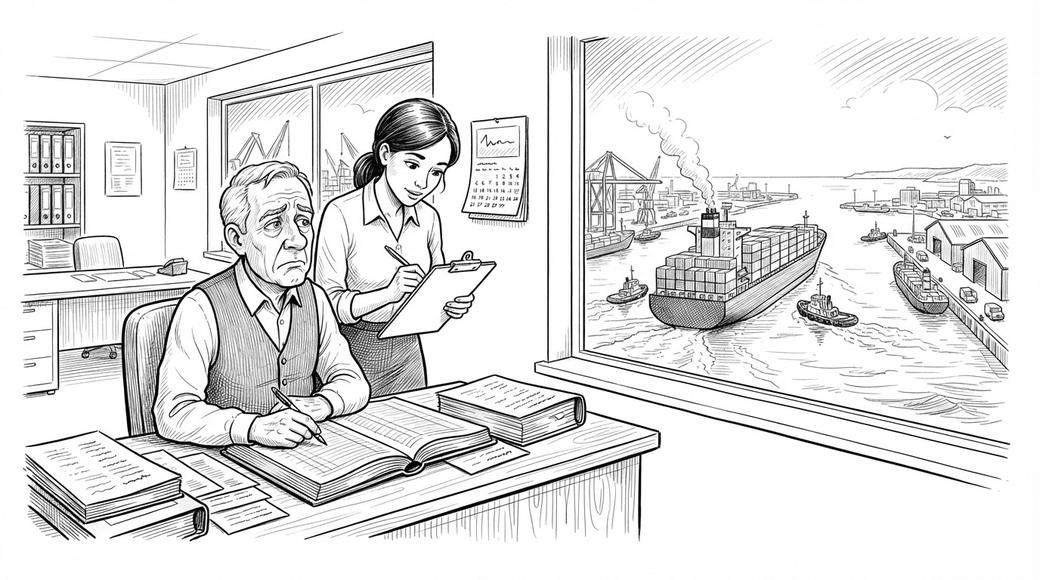
A grey-haired accountant being shadowed by a younger colleague, gazing out at a departing container ship.
$232,215.56 damages plus interestFederal Court of Australia · 4 May 2023

Told to train his replacement at 68, he won more on appeal

A shipping company’s chief accountant had already named his retirement date. The company wanted him on a fixed-term contract, training the person lined up to take his job. He won at trial, but the real result came on appeal.

Read the full storyShow less

Alex Gutierrez had worked for MUR Shipping in Sydney since 2003 and was its chief accountant. He had told the company he planned to retire in September 2019, when he turned 70. In April 2018 the company hired an accountant from its Dubai office into an administrative role, expecting her to take over his job when he retired.

On 19 July 2018, after a board meeting, the managing director told Mr Gutierrez the company wanted to replace his ongoing contract with a fixed-term one and have him train her. He said that was illegal. On 1 August 2018 his lawyers wrote that he treated his employment as over.

At trial, Judge Driver found this was age discrimination under the Age Discrimination Act 2004. His own word on when he would retire was not accepted, and he was “demeaned” by being asked to train his replacement. But the judge held he chose to resign when there was no need to, found only a “mild” adjustment disorder, and awarded $20,000 and an apology.

Mr Gutierrez appealed. Justice Burley found the trial judge had not properly dealt with the unchallenged evidence of a psychiatrist, who said he could not work until his condition resolved. His claim that he had been forced out still failed. But the discrimination was “plainly enough a cause” of his inability to work, so he could recover his lost earnings even though he had resigned.

General damages were raised from $20,000 to $90,000, and in June 2023 the court added $142,215.56 for lost earnings up to his planned retirement, plus interest.

What it means for you

Being nudged out because of your age can be unlawful even if you are never formally sacked. If the treatment leaves you unable to work, medical evidence of that can make the difference to what you recover.

The trial decision is Gutierrez v MUR Shipping Australia Pty Limited [2021] FedCFamC2G 56 (1 December 2021). Economic loss was fixed in Gutierrez v MUR Shipping Australia Pty Limited (No 2) [2023] FCA 567 (1 June 2023).

A young mother checking a feverish toddler’s temperature while on the phone, her work blazer hanging on the door.
$4,223.75 compensation plus $10,800 penaltyFederal Circuit Court of Australia · 13 December 2018

Sacked the day she stayed home with a sick child

A trainee real estate agent with two toddlers was pushed onto two weeks’ unpaid leave when her son had a fever, then dismissed when she called in again with a sick child. The owner later agreed that, had she come in that day, she would not have been sacked.

Read the full storyShow less

Kerry Tahi started as a trainee salesperson at QMT Realty in south-east Queensland on 30 May 2016. Her two children were then 11 months and 21 months old. Her hours were soon changed, and in late July they were cut to 15 a week.

On 4 August 2016 she left early to collect her son, who had a fever. When she rang the next day, the owner told her, or suggested, depending on whose account is believed, to take two weeks off, unpaid. The court accepted that the children were well by the following Monday. The court found the leave was the owner’s idea and that Ms Tahi had no real say.

On 1 September 2016 she rang to say one of her children was ill and she could not come in. She was dismissed that day. Under cross-examination the owner agreed that if Ms Tahi had come to work that day, there would have been no need to dismiss her.

Ms Tahi represented herself, and she did not win on every point. Judge Jarrett found she sometimes claimed more hours than she worked, and that the July cut to her hours was made for other reasons, including doubts about her timesheets and a downturn in the business, not because of her children. But as a casual she still had a right to unpaid carer’s leave, and her children really were sick each time. The forced unpaid leave and the dismissal were both found to be because of her family responsibilities, in breach of s 351 of the Fair Work Act.

She was awarded $4,223.75 for lost wages but nothing for hurt feelings. The employer was then ordered to pay a $10,800 penalty to her, and its bid to make her pay its legal costs was dismissed.

What it means for you

Even casual employees can take unpaid carer’s leave to look after a sick child. Being forced onto unpaid leave, or dismissed, because you have caring responsibilities can breach the Fair Work Act.

The penalty was set in Tahi v Oxican Pty Ltd (No.2) [2018] FCCA 3904 (21 December 2018). The employer’s costs application was dismissed in Tahi v Oxican Pty Ltd (No.3) [2019] FCCA 426 (1 March 2019). The compensation figure was corrected from $5,040.95 to $4,223.75 after judgment.

Show more case studies (4)Show fewer
A young mother with a baby in a sling showing her phone to a puzzled cashier at a burger counter.
Claim dismissedFederal Circuit and Family Court of Australia · 23 March 2026

She went off to have her baby and was recorded as resigned

A pregnant burger-store worker left with a card, vouchers and a “see you in 6 months”. Months later she found she had been recorded as resigned. The court agreed she had been dismissed, but not because of her pregnancy.

Read the full storyShow less

Alyssa Silcock was five months pregnant when she started as a part-time crew member at Burger Urge’s Forster store in May 2024. She told her managers she would take about six months off after the birth and come back. Before she left, the team gave her a card wishing her “Enjoy your time off”, and the store manager texted “I’ll see you in 6 months hopefully”. Her last shift was on 27 August 2024.

In November her staff discount and staff login stopped working. In December the company’s HR told her it had “registered your resignation” and sent her an offboarding checklist. She had never resigned, and she had never seen the form. The store manager admitted making the mark next to Ms Silcock’s name, and the judge did not accept her explanation for it.

Judge Doust found Ms Silcock had not resigned, so processing her as a resignation was a dismissal. Under s 351 of the Fair Work Act the employer then had to prove that her pregnancy and family responsibilities were not reasons for it.

It did. The store manager had been in the job only a few weeks, got “unhelpful advice” from above, and was found to be “out of her depth”. Whether it was a “misunderstanding” or expedience, she was not acting because of the pregnancy, and she had shown no animus. The judge said the employer’s handling “left a great deal to be desired” and that Ms Silcock’s sense of betrayal was “entirely justified”.

Her other claims failed too. With under 12 months’ service she had no legal right to unpaid parental leave, so taking time off was not a protected “workplace right”. The claim was dismissed.

What it means for you

Unpaid parental leave is a legal right only after 12 months’ service. If you have less, get any leave arrangement confirmed in writing. In a discrimination claim the court asks why the employer acted, not only whether it acted badly.

A mother waving as two young children climb out of her car at a school drop-off zone at dawn, a laptop bag on the seat.
Flexible work request granted by orderFair Work Commission · 20 October 2025

Bank ordered to let a mother keep working from home

A long-serving Westpac employee asked to keep working from home so she could do school runs for her two young children. The bank said no, and the Fair Work Commission ordered it to say yes.

Read the full storyShow less

Karlene Chandler has worked for Westpac since 2002, part-time in its mortgage operations team. For years she had worked mostly from home. Then Westpac’s hybrid policy required her to attend a corporate office two days a week, about two hours’ travel from her children’s school. She does the drop-offs and pick-ups for her two six-year-olds.

On 17 January 2025 she made a formal flexible-work request under s 65 of the Fair Work Act to work from home. Westpac missed the 21-day deadline to reply, refused without reasons, and when pressed, a senior manager emailed that “working from home is no substitution for childcare”. She offered to work two days a week at the local Bowral branch instead. Westpac said no.

This is not a discrimination claim. It is the flexible-work right in the National Employment Standards, and since 2023 the Fair Work Commission can arbitrate a refusal. Deputy President Roberts found Westpac had not followed the required steps. It refused before discussing the request, did not genuinely try to reach agreement, and did not consider the consequences for her.

Nor did it have reasonable business grounds. Team huddles and training already ran online, her work “can be performed completely remotely”, and she and her team had performed “at a very high level”. Westpac argued that her home and school were her own choices and that her partner could help more. The Commission accepted the first point in part but found her partner’s work hours made that unrealistic, and that refusing would be “seriously prejudicial” to her family.

Westpac’s argument that its enterprise agreement stopped such an order was rejected. The Commission ordered Westpac to grant her request.

What it means for you

If your employer refuses a flexible-work request, it must discuss it with you, genuinely try to agree, consider the impact on you and show reasonable business grounds. A refusal can now be taken to the Fair Work Commission.

The Commission can arbitrate refused requests made on or after 6 June 2023, under changes made by the Secure Jobs, Better Pay Act 2022. The order itself was published separately from the decision.

A mechanic with a scarred forearm holding an envelope outside a half-closed workshop roller door.
$44,000 damages including interestFederal Circuit and Family Court of Australia · 2 August 2023

Doctors cleared him to work, but the workshop kept him out

A diesel mechanic broke his forearm outside work. His doctors said he could return, but his small employer insisted he be 100% fit first, and the court found that was disability discrimination.

Read the full storyShow less

Mark Panazzolo, a qualified heavy vehicle diesel mechanic, joined Don’s Auto, a small family-run workshop in Adelaide, in July 2019. In October 2020 he was injured outside work and broke his left forearm, which needed surgery. By February 2021 a hospital orthopaedic doctor wrote that he could return to work at full capacity.

The owners wanted a full clearance. A physiotherapist they engaged found he could return “in a restricted manner”, avoiding heavy sustained gripping and carrying no more than 22.7 kg occasionally, with physio and a review in six to eight weeks. The workshop read that as a no, said he must pay for the physio himself, and its trade association wrote that because the injury was not work-related there was no obligation to provide suitable duties. With no income he could not afford the physio. In August 2021 he resigned.

He sued under the Disability Discrimination Act 1992, which requires employers to make reasonable adjustments for a disability unless doing so would cause unjustifiable hardship. Judge Brown held the Act applied even though the injury had nothing to do with work. He found the workshop had put the burden on Mr Panazzolo “to establish, to its satisfaction, that he was no longer disabled”, and he doubted the owner’s claim, raised for the first time at the hearing, that he had offered to pay for physio.

Only fairly modest adjustments were needed, and even for a small “mum and dad” business they were not an unjustifiable hardship. The judge described the workshop’s approach as “clumsy rather than malicious; ill-informed rather than calculated”.

He awarded $10,000 for hurt and distress, $30,000 for lost wages and $4,000 interest. Lost wages were limited because his later unemployment was not the workshop’s fault.

What it means for you

An injury or illness that has nothing to do with work can still be a disability. If you can return with some limits, your employer generally has to consider reasonable adjustments rather than insist you are 100% fit.

A woman holding a toddler at the locked glass door of a food warehouse, lunch bag in hand, looking bewildered.
$2,000 for hurt; $18,300 penalties to the CommonwealthFederal Court of Australia · 20 August 2020

Her return from parental leave was cancelled at the last minute

A sales executive had a return-to-work date agreed in writing. When she told her employer she was pregnant again, she was told her unpaid leave had been “extended” until her second baby arrived.

Read the full storyShow less

Lindsey Aragon worked as a sales executive for Austrend, a gourmet food distributor, from 2013. She went on parental leave in July 2015. When she asked to come back two days a week, she was told it was full-time or nothing. So she nominated 4 April 2016 to return full-time, and the company replied that she was “most welcome to join duty”.

In March 2016 she told the company she was pregnant again and confirmed she was coming back. Her follow-up emails went largely unanswered until 1 April 2016, when the director wrote that her unpaid leave had been extended until she delivered her second baby. She replied that she had never asked for that. That evening a second email denied any agreement, insisted on a medical certificate, referred to “poor performance” and told her not to contact staff before 12 April.

The Fair Work Ombudsman took the company to court. Austrend admitted refusing to let her return because of her sex and pregnancy, in breach of s 351 of the Fair Work Act, and its director admitted being involved. Justice Banks-Smith noted the company admitted the medical certificate demand was unlawful. It also emerged that the evening email had been drafted by the director’s friend overseas and sent without the director reading it.

By July 2016 Ms Aragon had been paid her wages from 4 April and had agreed to resign, so the court awarded compensation only for hurt and distress: $2,000. It found she was left in the dark and then met with “unnecessarily harsh, threatening and combative language”. Penalties were $15,500 for the company and $2,800 for the director, paid to the Commonwealth, and the company had to train its managers.

As the judge put it: “Making matters so difficult for a person seeking to return to work from parental leave simply should not happen in this day and age.”

What it means for you

You have a right to return to your job after unpaid parental leave. An employer cannot quietly “extend” your leave because you are pregnant again, and the Fair Work Ombudsman can take an employer to court over it.

The contravention was admitted, so the court decided only the penalties and orders. For requests made on or after 6 June 2023, a refused flexible-work request, such as a request to return part-time after parental leave, can be taken to the Fair Work Commission for arbitration. Maximum penalties have also risen since 2016.

Leading cases

The decisions that set the rules.

A union case under the same Part of the Fair Work Act, and the test courts apply under s 351. The question is the decision-maker's actual reason, found as a fact rather than judged objectively, and believable evidence from the decision-maker can rebut the presumption.

The Full Federal Court on s 351 and disability. "Disability" includes its symptoms and manifestations, and the inherent requirements exception can apply where the employer honestly, even if mistakenly, believed the employee could not perform the job's inherent requirements.

Show all leading cases (4)Show fewer

Not an employment case, but the leading High Court decision on the comparator in disability discrimination: a person without the disability who behaved in the same way. The Disability Discrimination Act now also treats a failure to make reasonable adjustments as discrimination, and says needing adjustments does not make the circumstances materially different.

Decided before the Fair Work Act. Dismissing someone on reaching an age the employer has fixed is ordinarily dismissal because of age. But being under 60 was held to be an inherent requirement of a pilot's job, because overseas rules barred older pilots from flying into certain airports.

Indirect sex discrimination in redundancy selection. A "last on, first off" method disadvantaged women, who had been recruited more recently. A neutral-looking restructure rule can be unlawful.

Damages for hurt and humiliation in a discrimination case (here, sexual harassment) must reflect the community's current understanding of that harm, not outdated awards.

Questions

The things people ask.

Do I have to be sacked to make a discrimination claim?

No. Being refused a job, demoted, denied training or promotion, having your hours cut or being given worse conditions can all be discrimination. Dismissal matters mainly because it starts the 21-day Fair Work clock.

How long do I have?

If you were dismissed and want to use the Fair Work general protections, 21 days. For a complaint to the WA Equal Opportunity Commissioner, 12 months, and later only with good cause. The Australian Human Rights Commission can terminate a complaint lodged more than 24 months after the conduct, and after termination you have 60 days to go to court.

Can I claim under the Fair Work Act and complain to the Human Rights Commission?

Usually not about the same dismissal or the same conduct. The Fair Work Act bars a second claim while the first is on foot, unless the first is withdrawn or fails for want of jurisdiction. Which forum fits depends on your facts, so consider getting professional advice before you lodge anything.

Does my employer have to make adjustments for my disability or injury?

Under the Disability Discrimination Act, yes: failing to make reasonable adjustments can be discrimination unless they would impose unjustifiable hardship. The Fair Work general protections don't impose that duty directly, which is one reason the choice of route matters for disability claims.

Can I be made redundant while I'm on parental leave?

A genuine redundancy can happen while you're on leave. But if your pregnancy or your caring responsibilities were a reason for choosing you, that can be unlawful. Under the general protections, the employer has to prove it wasn't.

Can I get compensation for the stress it caused?

Yes, in the Fair Work general protections and in the federal courts after an AHRC complaint, where compensation can include hurt, distress and humiliation and has no cap. In WA's State Administrative Tribunal, damages for loss or damage are capped at $40,000. Unfair dismissal, by contrast, does not compensate for hurt at all.

What if I'm a WA state-system employee?

The WA Equal Opportunity Act and the federal Acts through the AHRC both apply to you. If you were dismissed, Fair Work unlawful termination under s 772 is usually your Fair Work route, with a 21-day limit. See the WA state system pages for what else applies.

General information about Australian employment law, not legal advice about your situation. Updated September 2026.