What counts as sexual harassment
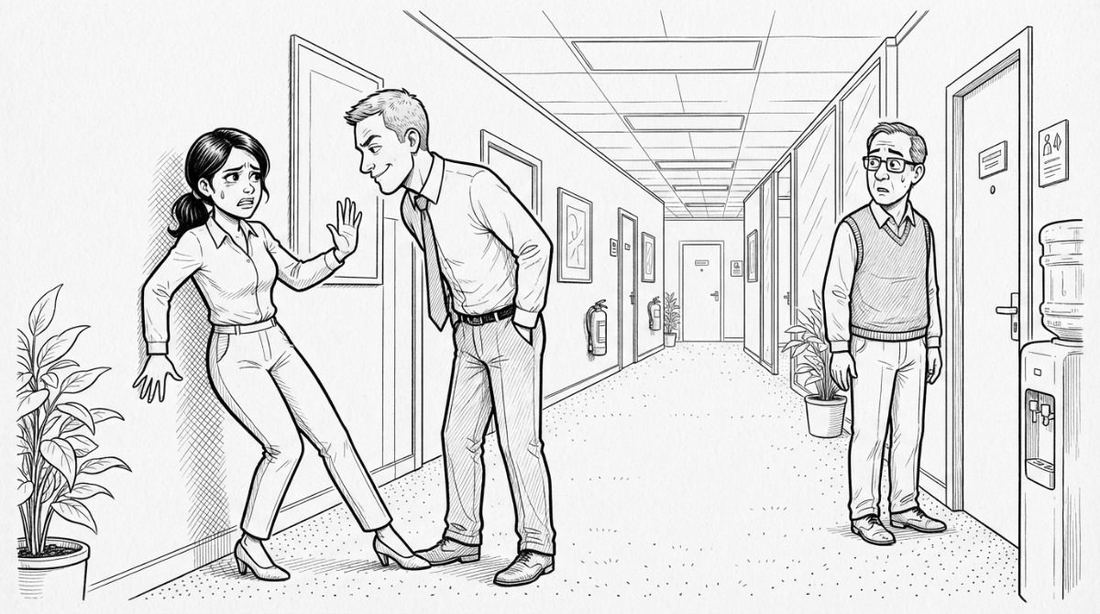
The Fair Work Act uses the Sex Discrimination Act's definition (s 12 of the Fair Work Act, picking up s 28A of the Sex Discrimination Act). A person sexually harasses you if they make an unwelcome sexual advance or an unwelcome request for sexual favours, or engage in other unwelcome conduct of a sexual nature towards you, in circumstances where a reasonable person would have anticipated the possibility that you would be offended, humiliated or intimidated.
Read moreShow less
Courts break that into three questions:
- Was the conduct sexual? A sexual advance, a request for sexual favours, or other conduct of a sexual nature — which includes a statement of a sexual nature, spoken or written, made to you or in your presence.
- Was it unwelcome to you? This turns on your own attitude to the conduct at the time, not on what the other person intended.
- Would a reasonable person have anticipated you might be offended, humiliated or intimidated? All the circumstances count, including your sex, age, sexual orientation, gender identity, race and any disability, and the relationship between you and the other person — for example, whether they were your manager.
Unlike bullying, there is no need for repetition. A single incident can be sexual harassment.
In connection with work
Section 527D protects a worker in a business or undertaking — an employee, contractor, subcontractor, outworker, apprentice, trainee, student on work experience or volunteer — a person seeking to become a worker, and a person running a business. The harassment must happen in connection with you being one of those. That can reach beyond the workplace itself, but the courts have not yet worked out exactly where its limits are.
Two related wrongs under the Sex Discrimination Act
- Harassment on the ground of sex — unwelcome conduct of a demeaning nature because of your sex (s 28AA). It does not have to be sexual.
- A hostile workplace environment — conduct in a workplace that a reasonable person would have anticipated could make it offensive, intimidating or humiliating to people of your sex (s 28M). The conduct does not have to be directed at you.
The Fair Work Act picks up only the definition of sexual harassment. If your complaint is about sex-based harassment or a hostile environment that is not sexual harassment, the Sex Discrimination Act route through the Australian Human Rights Commission is the one that fits.
Drunk on the company-booked flight to site: her sacking stood
Read the full storyShow less
Evelyn Josey had worked as a fly-in fly-out production technician at the Daunia mine in Queensland since March 2019, on $130,192 a year. The Commission accepted she had been a dedicated and loyal employee. She said that after a long relationship ended in 2021 she turned to alcohol to cope, and that by mid-2023 she had an alcohol problem and was struggling with her mental health.
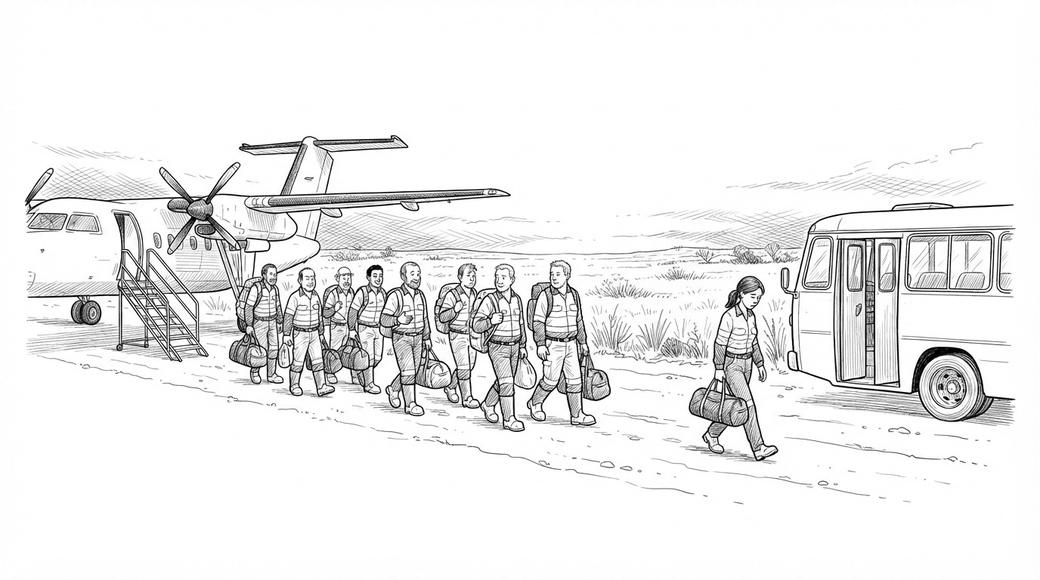
On 18 July 2023 she arrived at Brisbane Airport for her flight to Moranbah, to start her roster. By her own account she was extremely intoxicated, and she kept drinking in the airline lounge. Two male co-workers later complained: one about unwanted touching in the lounge, the other about unwanted touching of a sexual nature on the flight the company had booked, when she sat next to him. He said he felt trapped in his seat, stayed still and hoped it would stop. Afterwards he worried about having to sit next to her on the way to work.
The next morning she told her supervisor she was not fit to work, took about five weeks of leave for treatment, and has been sober since. After an investigation, the company found the lounge conduct was harassment and the conduct on the flight was sexual harassment, and dismissed her on 21 December 2023.
She claimed unfair dismissal. She said she had been asleep on the plane, and that the lounge was outside work hours. Commissioner Durham preferred the consistent accounts of the other witnesses: her own memory was clouded by how much she had drunk. She would not have been at the airport at all but for her rostered shift. This was not strangers on a bus but “two co-workers undertaking work related travel”. Her intoxication “does not and cannot excuse it”.
The Commission found a valid reason, a fair process and no unfairness, and dismissed her claim. It also commended her efforts to get sober.
Harassment on the way to work, in an airport lounge, on a work flight or at a work event, can still be connected with work. If it happens to you there, you can report it in the same way as anything that happens on site.
Who is responsible
The person who harassed you is personally liable. So, usually, is their employer. Under s 527E of the Fair Work Act, if an employee or agent harasses someone in connection with their employment or duties, the employer is treated as having done it too — unless the employer proves it took all reasonable steps to prevent it. The Sex Discrimination Act has the same rule (s 106).
Read moreShow less
That puts the employer's own conduct in issue: its policies, training, how it handled earlier complaints, and what it did when yours came in. An employer that did little to prevent harassment will struggle to rely on the defence.
The employer's positive duty
Separately, s 47C of the Sex Discrimination Act puts every employer and person conducting a business under a positive duty to take reasonable and proportionate measures to eliminate, as far as possible, sexual harassment, sex-based harassment, hostile workplace environments and related victimisation — by its own staff and agents, and by others such as customers and clients towards its workers. What is reasonable depends on the size, nature and resources of the business. The Australian Human Rights Commission enforces the duty: it can inquire into an employer's compliance and issue compliance notices. Your own complaint is about the harassment you suffered, but an employer's failure to meet the duty is part of the picture.
The Fair Work Commission route
You, or a union entitled to represent you, can apply to the Fair Work Commission under s 527F. The application can ask for either or both of two things.
Read moreShow less
1. A stop sexual harassment order
The Commission must start dealing with it within 14 days (s 527J). It can make any order it considers appropriate to prevent further harassment — but it cannot order anyone to pay money, and it can only make an order if there is a risk the harassment will continue. As with bullying, that usually means the order is only available while you are still working with the person.
2. Dealing with the dispute — the path to compensation
- Conciliation. The Commission deals with the dispute by mediation, conciliation, a recommendation or an opinion. Conferences are held in private (s 527R).
- Certificate. If all reasonable attempts to resolve it fail, the Commission issues a certificate. If it thinks the claim has no reasonable prospect of success, it must tell the parties so.
- Arbitration — only if both sides agree. Within 60 days of the certificate, you and the respondent can jointly agree to the Commission arbitrating. It can then order compensation, an amount for lost pay, or steps to redress your loss (s 527S). Anyone who does not agree is removed as a party. Agreeing to arbitrate generally means you cannot then go to court against that respondent (s 734A).
- Or court. Otherwise you can apply to the Federal Court or the Federal Circuit and Family Court within 60 days of the certificate (s 527T). The court can award compensation for loss you suffered because of the harassment, and impose civil penalties. If you urgently need an interim injunction, you can go to court without a certificate.
The Commission can dismiss an application made more than 24 months after the last incident (s 527G). It is a discretion, not an automatic bar — but do not rely on it being exercised in your favour.
She complained of harassment, then her boss accused her of theft
Read the full storyShow less
Fiona Taylor joined Grew & Co, a small Sydney fine-jewellery business, in January 2018 and became its production manager. She shared an office with the owner and sole director, Simon Grew, reported directly to him, and felt she had found her dream job. There was no human resources person: any problem had to be raised with Mr Grew.
In January 2020 he told her he had developed feelings for her. She said she did not feel the same way, and before a work trip she wrote to him to set boundaries. In June 2020, after driving her home, he raised it again; on her account, he asked whether they were “going to become something”. The next morning she had to pull off the road, crying uncontrollably. By August she had stopped going to work.
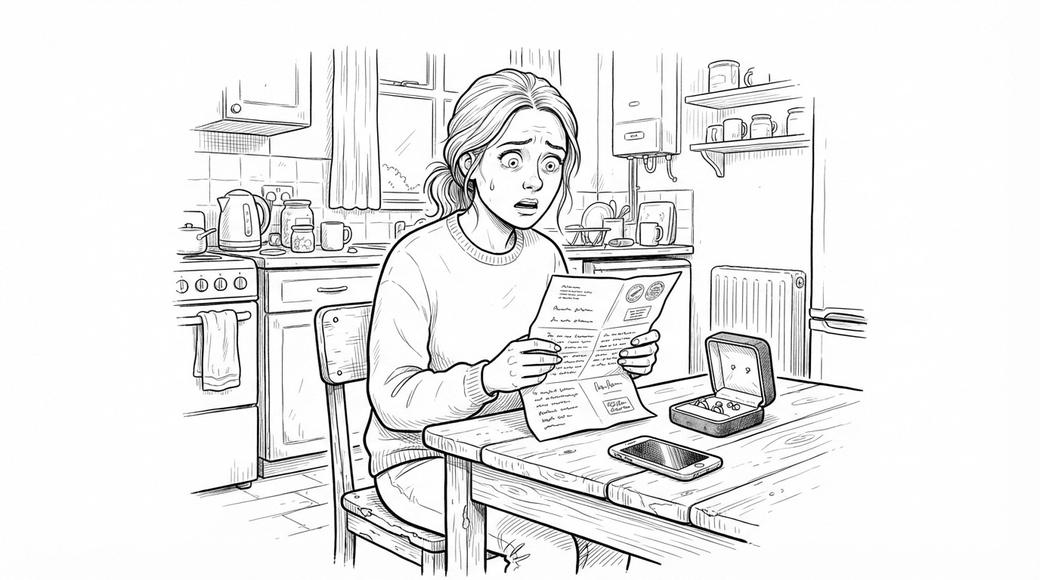
Through her lawyers she complained of sexual harassment, then complained to the Australian Human Rights Commission. His lawyers’ letters, sent while she was still an employee on leave, demanded jewellery and other items back as company property and called her claim frivolous and vexatious. His reply to that complaint accused her of theft and said he would go to the police if the items were not returned.
Justice Katzmann found that Mr Grew’s many gifts were not sexual harassment, as a reasonable person would not have expected them to offend her. But unwanted physical contact in July 2019, the January declaration and the June conversation were. He “was not respectful of boundaries”, and he knew he held power over her. The accusation of theft and the threat of police were “a vindictive act”, taken largely in retribution for her complaint. That was unlawful victimisation.
She was awarded $140,000 for the harassment, $40,000 for the victimisation and $15,000 in aggravated damages for the intimidating response, plus lost earnings, superannuation and treatment costs. She resigned in 2022 and found work with a jeweller in Queensland.
A declaration of love from a boss can be sexual harassment even when nothing explicit is said. An employer that hits back at a complaint with threats, demands or accusations can be liable again, separately, for victimisation.
The conduct happened in 2018–2020 and the claim was brought under the Sex Discrimination Act, which still applies. Since then employers have also had a positive duty to prevent sexual harassment (Sex Discrimination Act s 47C, from 13 December 2022), and the Fair Work Act has prohibited it since 6 March 2023.
The Australian Human Rights Commission route
The alternative is a complaint to the Australian Human Rights Commission (AHRC) under the Sex Discrimination Act. The AHRC investigates and tries to conciliate. It may end a complaint lodged more than 24 months after the conduct (AHRC Act s 46PH(1)(b)) — again a discretion — and it must end one it considers has no reasonable prospect of settling.
Read moreShow less
Once the AHRC ends your complaint and issues a termination notice, you have 60 days to apply to the Federal Court or the Federal Circuit and Family Court (s 46PO(2)). You need the court's permission to apply unless the AHRC ended the complaint because there was no reasonable prospect of settling it, or because it raised an issue of public importance (s 46PO(3A)) — so a complaint ended as out of time needs the court's leave. The court decides whether the conduct was unlawful and assesses compensation. Awards for hurt and humiliation in sexual harassment cases are expected to reflect current community standards, not the lower ranges of the past.
Choosing a route
| Fair Work Commission | Australian Human Rights Commission | |
|---|---|---|
| The law | Fair Work Act Part 3-5A | Sex Discrimination Act |
| Stop order while it is happening | Yes — a stop sexual harassment order | No stand-alone stop order |
| First step | Conciliation at the FWC | Investigation and conciliation at the AHRC |
| If it does not settle | Arbitration if both sides agree, otherwise court within 60 days of the certificate | Court within 60 days of the termination notice, sometimes only with the court's leave |
| Money | Compensation at arbitration or in court; civil penalties in court | Compensation in court |
| Costs in court | Each side usually pays its own, unless a claim is vexatious or a party acts unreasonably (s 570) | If you win, the respondent generally pays your costs; if you lose, you are generally protected from paying theirs (s 46PSA) |
| Late applications | FWC may dismiss an application made 24 months after the last incident | AHRC may end a complaint lodged 24 months after the conduct |
Read moreShow less
You generally cannot use both for the same conduct. Under s 734B of the Fair Work Act, once you have made an AHRC complaint (or a complaint under a state anti-discrimination law), you cannot make a Fair Work dispute application or a court application about the same conduct, and the reverse also applies — unless the first one was withdrawn or failed for want of jurisdiction. There is one exception worth knowing: an application to the Fair Work Commission that asks only for a stop order is not caught, so you can seek an order to stop the harassment while an AHRC complaint is running.
If you were dismissed, the choice matters even more. A discrimination complaint about the dismissal itself can close off the Fair Work dismissal claims — unfair dismissal and general protections — for that dismissal (ss 725 and 732). Consider getting professional advice on which claim fits before you lodge anything.
If you were punished for complaining
Retaliation is a separate wrong. Under the Sex Discrimination Act it is victimisation to subject someone, or threaten to subject them, to any detriment because they complained, gave information, or alleged that someone had acted unlawfully (s 47A). Under the Fair Work Act, an employee's right to make a complaint about their employment is a workplace right, and adverse action because of it — demotion, cut shifts, dismissal — breaches the general protections (ss 340–341).
Read moreShow less
If the retaliation was a dismissal, the general protections limit is 21 days from the day it took effect. See general protections.
What to do now
- Write down what happened as soon as you can — dates, words, who was there — and keep messages and screenshots somewhere other than a work device.
- Tell someone you trust, and see your GP if it is affecting you. Contemporaneous records are strong evidence.
- Report it internally if it is safe to. It puts the employer on notice of conduct it has a duty to deal with, and creates a record.
- Note the dates. At the Fair Work Commission the 24 months run from the last incident; at the AHRC, earlier incidents in a series can fall outside 24 months even if the latest one does not.
- Think about the forum before you lodge. The first complaint you make can decide which routes stay open, so consider getting professional advice on where to go.