He earned the money and did most chores, yet the split ended near even
- Together
- 13 years, de facto
- Children
- One, aged 16
- Net pool
- About $618,000
- Split
- 52.5% him / 47.5% her
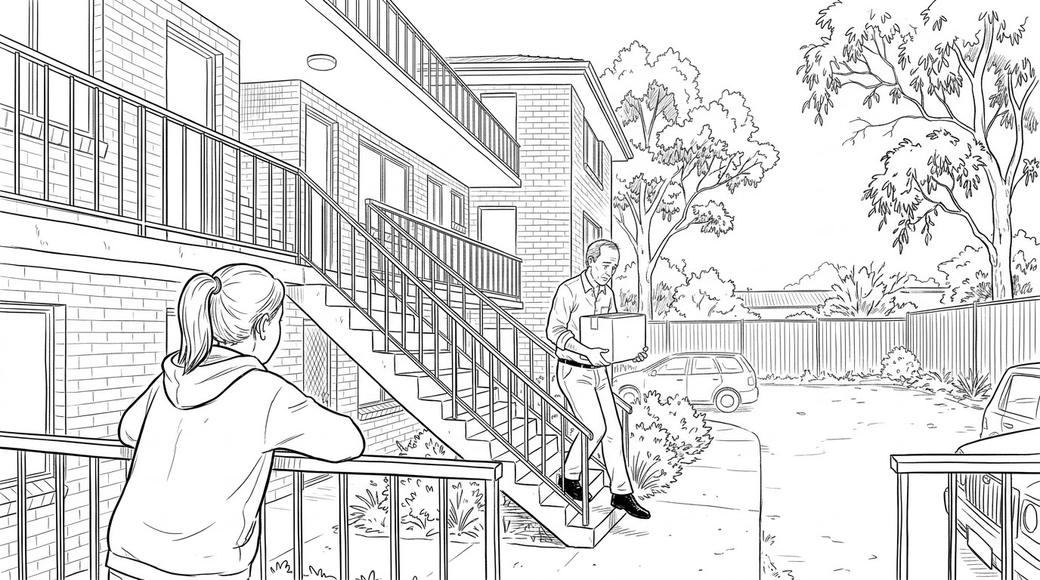
Mr Hainsworth and Ms Pardue lived together in New South Wales from about late 2006 until July 2020. They did not marry, and had one daughter, then 16, who lived with her mother after they separated. He worked full time as a public servant. She did not work in paid employment during the relationship. She had been injured in accidents in 2005 and 2006 and believed she could not work, though there was no medical evidence supporting that, and she received compensation payments until 2012.
The judge found he had also done most of the household duties, except while their daughter was small and while he recovered from a serious accident in 2012, when she probably did more. The judge found her care at home had helped him build his super. He had brought about $100,000 of super into the relationship, and part of the proceeds of an earlier property went into the deposit on their home.
Their pool was $618,095 net, and most of it was his super: $442,318, against her $5,876. Their home was worth $428,000 but carried a $304,006 loan, and he had credit card debts. He wanted 67.5% of the assets other than super. She asked for 60% overall.
Judge Newbrun assessed contributions at 62.5% to him and 37.5% to her. Then the court looked ahead. She was 39, had been out of paid work for over 18 years, had almost no super and would have to rehouse herself and their daughter when the home was sold. He was 52 and still employed, on light duties, earning $2,505 a week gross. The judge made a 10% adjustment in her favour, which brought the result to 52.5% to him and 47.5% to her.
The home is sold and his debts paid from the proceeds. A super split gives her $210,101 from his fund, and she is to receive $36,518 from the sale and the car she drives. He was also ordered to pay her spousal maintenance of $32 a week for 18 months, all that was left of his income after his expected expenses.
Contributions can favour the earner and the final split can still end up close to half. When one partner holds almost all the super and the other has been out of work for years, a super split is often how the gap is closed.
Decided before the Family Law Amendment Act 2024 took effect on 10 June 2025. For de facto couples the steps are now written into s 90SM(3)–(5) of the Family Law Act 1975 (Cth), and the current and future circumstances (the future-needs factors, formerly drawn from s 90SF(3)) are listed in s 90SM(5); the approach is largely the same.
A published decision of the Federal Circuit and Family Court of Australia (Division 2), retold in plain English. Lawcaptain did not act in this case. Every outcome depends on its own facts. General information about Australian family law, not legal advice about your situation.
Sort out your own property split.
Agreed on a split? Make it binding with consent orders. Call 1300 967 552, or get an instant quote online.
Equal & everyday splits
 A Perth de facto couple: his head start was worth 5% after 17 yearsTogether17 years, de factoChildrenThreeNet poolAbout $597,000Split55% him / 45% herFamily Court of Western Australia · 8 March 2019Read the case study
 She earned more, but everything except super was split 50/50TogetherAbout 15 years, de factoChildrenTwo, aged 12 and 9Net poolAbout $485,000 + superSplit50/50 of propertyFederal Circuit Court of Australia · 7 May 2020Read the case study
 They logged every house payment, and still split 50/50TogetherAbout 9 years, marriedChildrenNoneNet poolAbout $1.33 millionSplit50% eachFederal Circuit and Family Court of Australia (Division 2) · 31 January 2023Read the case study