For now, three recruiters keep their jobs but must not chase clients
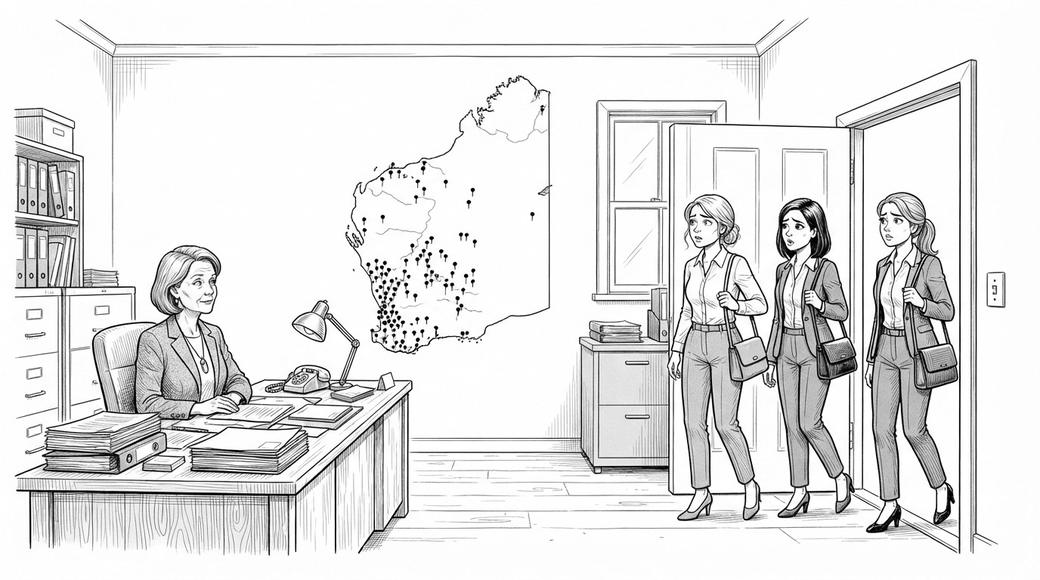
Talent Konnects supplies workers such as chefs, utility workers and security guards to hospitality and mining clients in Western Australia. Its largest client, Compass Group, brought in about 80% of its revenue. Account managers Ms Marvelli, Ms Glas and Ms Randall, the agency said, looked after its biggest accounts. In early 2022 all three resigned and went to Collar Group, a competitor run by a former colleague of the agency's founder. Their contracts barred them, for six months, from working for any competing business and from approaching the agency's clients and staff.
The agency said the women had its rates and candidate details and were its only contacts with its three key clients. The women said they had dealt with some of the same clients in earlier jobs, were not using the agency's information, and would each lose tens of thousands of dollars in wages and commission if barred from working. There was no direct evidence that any of them had misused information or approached clients.
Justice Tottle split the clauses. The agency was entitled to some protection of its goodwill, but a six-month ban on working for any competitor was arguably too long, and its case on that point was limited. Stopping the women working at Collar Group would in practice decide the whole case, and could not stop Collar Group competing for the same clients anyway. The narrower promises not to chase clients and staff were different: there the agency's case was strong, and the women said they had no intention of breaking them.
The court made interim orders only, not a final decision. The women could keep working at Collar Group, but until July or August 2022 they must not solicit Compass Group, Australian Camp Services or Cater Care, entice away the agency's staff, or disclose its confidential information. The judge noted that their objection would have carried more weight had they offered undertakings early.
A restraint clause is often several promises in one. A court may refuse to stop you working for a competitor yet still hold you to a narrower promise not to chase your old clients or colleagues, so read each part separately and take the narrow ones seriously.
This was an interim decision; the court did not decide the case finally. The orders ran only until 13 July, 15 August and 18 August 2022, depending on the employee.
A published decision of the Supreme Court of Western Australia, retold in plain English. Lawcaptain did not act in this case. Every outcome depends on its own facts. General information, not legal advice about your situation.
Talk to us.
Call 1300 967 552, or leave your details and we will call you.
Restraints and confidentiality
 A $28,860-a-year sales assistant, sued over her phone contactsFederal Court of Australia · 28 November 2022Read the case study
 A 17-year insider, a 'Secret Group' chat and a rival businessFederal Court of Australia · 2 July 2021Read the case study
 A CFO's move to Cotton On, and a restraint naming 50 rivalsSupreme Court of Victoria, Court of Appeal · 20 December 2016Read the case study