Fifteen years as the first salesman, then an Uber home
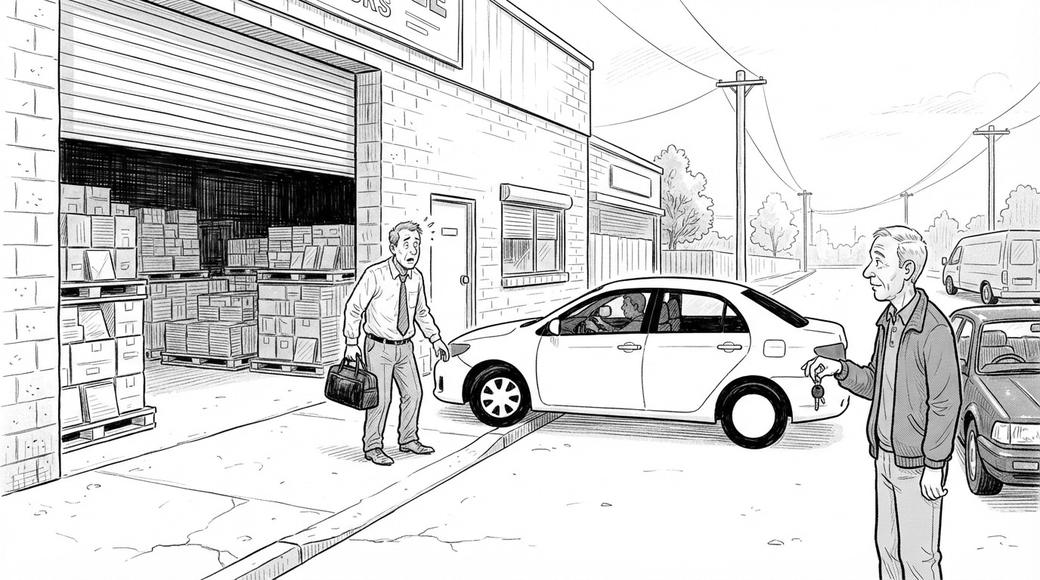
Carson Zhang sold imported tiles for Orientile, a business with nine employees. He was its first sales representative and had been there almost 15 years. On the morning of 28 February 2025 the owner, Mr Gao, decided that slow sales meant the business could not afford three sales reps. Mr Zhang was called into a meeting and told he was the one going.
The meeting opened with the news and moved straight to what he would be paid. He was asked to clear his things out of the company car and hand over the keys, and Mr Gao arranged an Uber to take him home. He was paid five weeks' wages in lieu of notice and his leave, but was given no written notice.
Mr Zhang claimed unfair dismissal. Orientile said it was a genuine redundancy. Mr Gao called the meeting a "consultation session", but he accepted he had not read the award's consultation clause until he was preparing his response to the claim.
The Deputy President found there had been no consultation, so the dismissal was not a "genuine redundancy" in the legal sense, and it was unfair. He ordered Orientile to pay $31,652.93 in compensation, plus superannuation. The Full Bench described that award as covering four weeks for the consultation that should have happened and a further 12 weeks' pay recognising his long service and the loss of his livelihood. Orientile appealed, arguing among other things that a business its size should not be held to the strict consultation rules in its award.
The Full Bench dismissed the appeal. Small businesses are not exempt from award consultation, it said, and partial or "technical" compliance is not enough. Here the failure was not merely procedural: "it was non-existent". It also noted that Mr Gao signed a small business checklist declaring he had consulted, but only after Mr Zhang had filed his claim.
A small employer still has to follow the consultation clause in your award before making you redundant. If you were simply told your job was gone, with no real chance to put your side, the redundancy may not be "genuine" and you may be able to challenge it.
This case is about whether the redundancy was genuine for unfair dismissal purposes, not about redundancy pay. Employers with fewer than 15 employees (counting associated entities) generally do not have to pay redundancy pay under the National Employment Standards (s 121), and the Commission noted that s 119 did not apply to Orientile. There is an exception where the business became small by shedding staff in the six months before it went into liquidation or bankruptcy.
A published decision of the Fair Work Commission (Full Bench), retold in plain English. Lawcaptain did not act in this case. Every outcome depends on its own facts. General information, not legal advice about your situation.
Dismissed? Know what your case is worth.
The Employment Case Review checks your facts against real decisions like this one.
For employees in the Fair Work system. Employed by a WA sole trader, partnership, State agency or council? The review isn't for you — see the WA state system.
Redundancy
 He said no to a new role and lost 16 weeks' redundancy payFair Work Commission · 19 September 2025Read the case study
 One armoured-van guard picked from 70, and no one could say whyFair Work Commission · 18 December 2018Read the case study
 A store refit, four redundancies, and the one who applied for a vacancyFair Work Commission · 7 June 2024Read the case study