Where your minimum pay comes from
Your contract is not where the analysis starts. The NES and any award or agreement that applies to you create rights of their own, alongside the contract and independent of it. Your employer can pay you more. It cannot pay you less, and a term of the contract that tries to is simply of no effect.
Read moreShow less
- You cannot sign the minimums away. Award and NES rights cannot be waived, contracted out of, or lost by estoppel, because they come from statute, not from the deal you made.
- Not asking is not forfeiting. An award entitlement is not lost because you never demanded it at the time.
- Being paid above the award does not mean the award does not apply. A generous hourly rate can still fall short once penalty rates and overtime are counted. The exception is a high income employee: an award does not apply while your employer guarantees you annual earnings above the high income threshold.
- If no award covers you, you are still entitled to the national minimum wage — $26.44 an hour, or $1,004.90 for a 38-hour week, from 1 July 2026 — but not to award penalty rates or overtime.
If an enterprise agreement applies to you, it replaces the award for as long as it applies. The agreement's base rate still cannot be lower than the award's.
Cash envelopes, pay-back slips and $15.3 million in penalties
Read the full storyShow less
The Sushi Bay group ran sushi restaurants in New South Wales, the ACT and the Northern Territory. Its four companies had one director and chief executive, Ms Yi Jeong (Rebecca) Shin. The Fair Work Ombudsman sued over the pay of 163 workers, about 73% of the workforce, between 29 February 2016 and 26 January 2020. Most were on temporary visas.
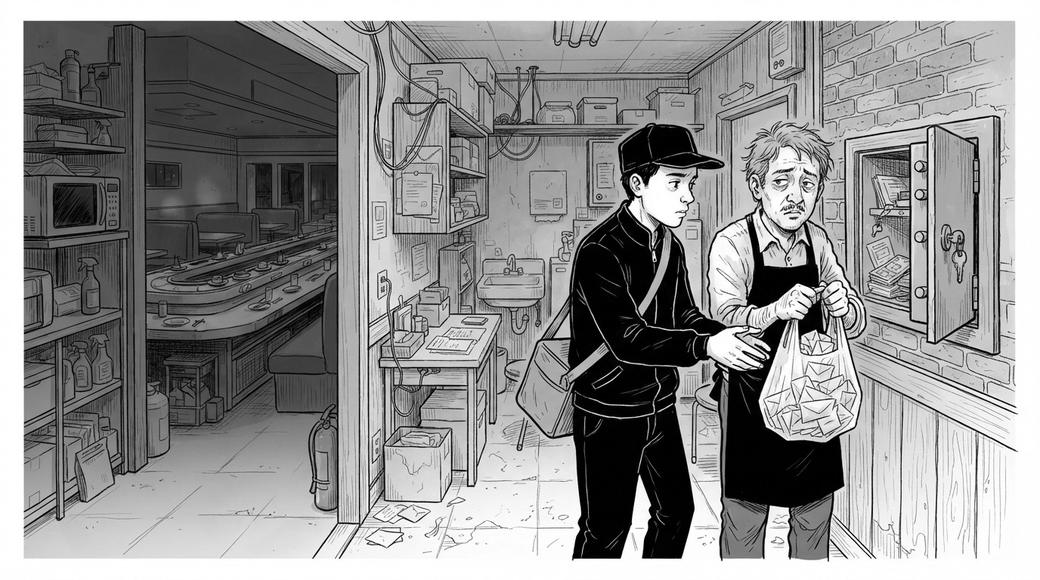
The court found two schemes. Under the "Dual Rate Method", staff were paid award rates by bank transfer for a set number of hours, and the rest in cash at a lower "Sushi Bay Cash Rate". One pay guide listed award rates for a level 1 attendant of $20.06 an hour on weekdays, $25.08 on Saturdays and $30.09 on Sundays, and a cash rate of $15 for all three. Couriers took cash envelopes to the restaurants each fortnight.
Under the "Deduction Method", sponsored 457 visa workers found slips in their envelopes saying how much to pay back. One chef withdrew the cash and put it in the envelope for head office; some repayments went into Ms Shin's personal account. Justice Katzmann found the workers got no benefit, and that, depending on the company for their visas, they were unlikely to have had "any effective choice".
Payroll records showed only the "taxable" hours: 76 in one fortnight for a chef whose actual hours, on the company's own spreadsheet, were 119.5. False records went to Fair Work inspectors. Even after another court penalised Sushi Bay ACT and Ms Shin in 2019, the practices continued.
Underpayments totalled $653,129.97. The court imposed penalties of $3.2 million, $5.8 million, $2.4 million and $2.3 million on the four companies and $1.6 million on Ms Shin. The companies are in liquidation, and the liquidator said they "cannot comply" with orders to repay the workers. The court ordered Ms Shin's penalty to be paid to the Ombudsman and shared among the underpaid workers in proportion to their losses.
If part of your pay arrives in cash, or you are asked to pay any of it back, keep your own record of hours and payments. An employer cannot lawfully make you hand back wages, and a visa sponsorship does not change that.
The four companies are in liquidation. When the penalties were set in August 2024 the court recorded that the employees remained unpaid; the penalty against Ms Shin was ordered to be paid out to them. Since 1 January 2025 deliberately underpaying wages can be a criminal offence under the Fair Work Act (s 327A), but that law is not retrospective and did not apply to this conduct. The liability findings are in [Fair Work Ombudsman v Sushi Bay Pty Ltd (in liq) (No 2) [2024] FCA 76](https://www.austlii.edu.au/cgi-bin/viewdoc/au/cases/cth/FCA/2024/76.html).
Award coverage and classification — where the big money is
Two questions decide your base rate. Which award covers you? And which classification level within it fits your job? Get either wrong and every hour you worked is paid at the wrong rate, which is why misclassification produces the largest underpayments.
Read moreShow less
- It turns on the real job, not the title. Coverage and classification follow the principal purpose of your employment — the nature of the work and the circumstances in which it is done — not a stopwatch count of time on each task, and not what the contract calls you.
- The test is objective. Your employer's failure to tell you your classification does not decide it, and neither does your own view of what the job involved. The question is what the work actually required.
- It is judged at the time. If your role grew, the classification that applied earlier may not be the one that applied later.
- A perfect fit is not needed. A classification applies if enough of its features fairly describe the typical duties and skills of your role.
Some senior managerial and professional roles sit outside award coverage altogether because of their nature or seniority. That exclusion is narrow, and the Commission has said employers of low-skilled manual workers should be slow to treat them as award-free.
Penalty rates, overtime, allowances and casual loading
| Entitlement | What decides it | The common trap |
|---|---|---|
| Penalty rates | Your award or agreement — weekends, public holidays, evenings, shiftwork | An hourly rate described as covering penalties that, added up week by week, does not |
| Overtime | Hours beyond the ordinary hours the award sets, not the hours in your contract | Overtime must be authorised, but authorisation can be implied — an employer who knew and let you work it can be liable. Some awards require an express direction |
| Allowances | The award: travel, meals, uniforms, on-call, higher duties and more | Under some awards, higher duties is payable for time spent on the higher work whether or not you did it to the standard |
| Leave | The NES and the award | A higher "all-in" rate paid instead of annual leave does not discharge the leave; untaken annual leave must be paid out when you leave, however the job ended |
| Unpaid time | Whether the time was work under the award and the general law | A meal break you cannot leave the premises for, or be unavailable during, may not be a genuine unpaid break |
Read moreShow less
Casuals
Since 26 August 2024 you are a casual only if there is no firm advance commitment to continuing and indefinite work, judged on the real substance of the arrangement, and you are entitled to a casual loading or casual rate — and once engaged as a casual you stay one until your status formally changes, for example by converting to permanent employment. Casuals are paid a loading instead of paid leave and some other entitlements; on the national minimum wage it is 25%. If you were called casual but were really permanent, you can claim the entitlements you missed, but the court can reduce what you recover for leave and similar entitlements by the identifiable casual loading you were paid, or an appropriate part of it (s 545A).
Buy your own truck or lose your job: decades later, still contractors
Read the full storyShow less
Mr Jamsek and Mr Whitby left school at 14 and 15. In 1977 they started with a lighting company, and from 1980 they drove its delivery trucks. Until late 1985 or early 1986, everyone agreed, they were employees.
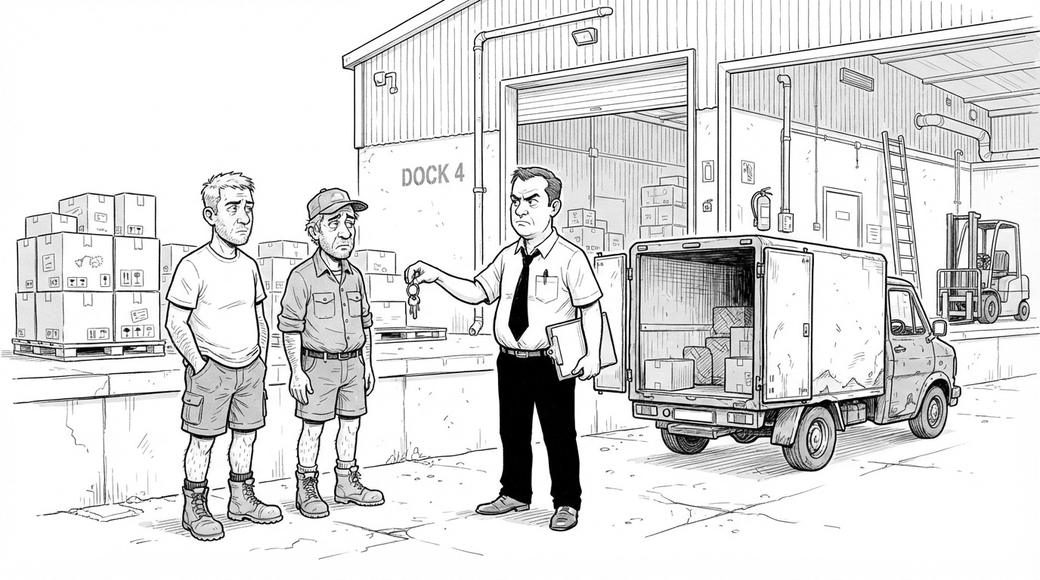
In late 1985 Mr Jamsek and another driver asked for a pay rise. The company refused, and offered its drivers the chance to "become contractors" by buying their own trucks. They were told: "If you don't agree to become contractors, we can't guarantee you a job going forward." On their accountant's advice each man set up a partnership with his wife. The partnerships bought trucks for $15,000 and $21,000, signed delivery contracts and invoiced the company, later charging GST.
They delivered for the company until the arrangement ended in 2017, then sued for the entitlements of employees, including under the Fair Work Act and for long service leave. The trial judge held they were contractors. The Full Court of the Federal Court disagreed. It looked at how the relationship had worked over the decades and at the company's superior bargaining power.
The High Court allowed the company's appeal. No one claimed the contracts were a sham, so their written terms decided the character of the relationship. That the company had the upper hand when they were made "did not alter the meaning and effect of the contract". The contracts were with the partnerships, which owned the trucks, paid their running costs and operated them. As two judges put it, where the work depends on "a substantial item of mechanical equipment" supplied by the worker, "the personal is overshadowed by the mechanical".
A separate question, whether the drivers counted as employees under a wider definition in the superannuation guarantee law, was sent back to the Full Court. In March 2023 it held that they were not employees under that definition either. For Fair Work Act claims, Parliament has since changed the test.
Signing a contractor agreement can decide your rights, so get advice before agreeing to switch from employee to contractor. Since August 2024 the Fair Work Act also looks at how the work is really done, not only at the contract.
Overtaken in part by statute. From 26 August 2024, s 15AA of the Fair Work Act 2009 (Cth) requires the employee-or-contractor question to be decided by the real substance, practical reality and true nature of the relationship, including how the contract was actually performed. The contract-first approach applied here no longer governs that question for Fair Work Act purposes. The companion case decided the same day, CFMMEU v Personnel Contracting [2022] HCA 1, went the other way for a labour-hire worker. The superannuation question sent back by the High Court was decided against the drivers in [Jamsek v ZG Operations Australia Pty Ltd (No 3) [2023] FCAFC 48](https://www.austlii.edu.au/cgi-bin/viewdoc/au/cases/cth/FCAFC/2023/48.html).
"But I'm on a salary" — set-off and annualised pay
The most common defence to a wage claim is that the salary or above-award rate already covered everything. That is a real defence, but a narrower one than employers assume. The question is whether the money actually paid did the job the award required, in each pay period.
Read moreShow less
- The payment's purpose must match the entitlement. A higher wage can discharge the award wage, because it is paid for the same thing. A clothing allowance, a results-based commission or a non-cash benefit usually cannot.
- Designated money stays designated. A payment tied to one entitlement — ordinary hours, say — cannot later be redirected to cover overtime or a different debt, unless it was attributed that way at the time it was paid.
- It is generally tested pay period by pay period. A salary that exceeds the award over a whole year can still breach an award requiring the entitlements to be paid in each pay period, and whether a surplus in one period can make up a shortfall in another is not settled. A fixed salary safely covers fluctuating award entitlements only if it is enough in every period.
- Annualised salary clauses carry their own safeguards. Where an award allows an annualised salary, it typically requires the arrangement in writing, records of hours worked, a reconciliation, and payment of any shortfall. A bare promise that the salary is "no less than the award" is not enough.
Unpaid superannuation — a different road
The superannuation guarantee is 12% (from 1 July 2025), and from 1 July 2026 it is calculated on your qualifying earnings each payday rather than quarterly. But super works differently from wages, and it trips people up.
Read moreShow less
- The super guarantee legislation gives you no right to sue. It imposes a charge on the employer, payable to the Commissioner of Taxation, and only the Tax Office can recover it. The route is a report to the ATO.
- The exception is your award or agreement. Where an award or enterprise agreement term itself requires the employer to contribute, a failure is a contravention of that term, and you can enforce it under the Fair Work Act like any other entitlement.
- It does not fit the small claims procedure unless it is an amount owed under the Fair Work Act or a fair work instrument, such as that award or agreement term.
Records, pay slips, and what happens when they are missing
Your employer must keep prescribed records for each employee for 7 years — hours, overtime, pay, leave — and give you a pay slip within one working day of paying you (ss 535–536). You, or a former employee, can ask for a copy of your records. If they are kept where you worked, the employer must make a copy available within 3 business days or post one within 14 days (reg 3.42).
Read moreShow less
The reverse onus — s 557C
Where the employer was required to keep a record or give a pay slip about a matter and did not, and you make an allegation about that matter — the hours you worked, say — the employer has to disprove it. That is a true legal burden: if the employer cannot disprove your allegation on the balance of probabilities, the claim is upheld. The policy is that an employer should not profit from its own failure to keep records.
It has limits worth knowing before you rely on it:
- It does not cover classification, because employers are not required to record it.
- It applies from 15 September 2017, not to earlier periods, and not to purely contractual claims.
- You still have to show the record-keeping failure — and, where the complaint is that records are inaccurate, that you worked different hours.
- It does not apply if the employer has a reasonable excuse for not keeping the record.
So your own evidence still matters. Rosters, texts arranging shifts, diary notes, photos of timesheets, and bank statements showing what landed all help, and a specific reconstruction beats a vague one.
Where to claim
| Route | What it can do | What to know |
|---|---|---|
| Ask in writing | Fixes clear errors fast, and asks for your records at the same time | Puts the employer on notice; does not stop the 6-year clock |
| Fair Work Ombudsman | Free. Inspectors can investigate, demand documents, issue compliance notices and bring court proceedings | The Ombudsman decides what to pursue; it does not act as your lawyer |
| Small claims — a magistrates court (in WA, the Industrial Magistrates Court) or the Federal Circuit and Family Court | Orders payment of up to $100,000 (plus interest), informally and without strict rules of evidence | No penalties; lawyers only with the court's leave; the losing employer can be ordered to repay your filing fees |
| Full proceedings — Federal Circuit and Family Court or Federal Court | Back pay, interest, compensation, and civil penalties; orders against people other than the employer | Slower and more formal, but with costs protection |
Read moreShow less
The Fair Work Commission cannot order back pay — money claims belong in a court. In WA, a national system employee can also bring a Fair Work Act claim in the Industrial Magistrates Court, but that court cannot order anyone other than the employer to pay the amounts owed; a claim for the money against a director has to go to a federal court.
Costs protection — s 570
In Fair Work Act court proceedings each side ordinarily pays its own legal costs, win or lose. The exceptions are narrow but real: a claim brought vexatiously or without reasonable cause, an unreasonable act or omission that caused the other side costs — which can include unreasonably refusing a reasonable settlement offer — or unreasonably refusing to take part in a related matter before the Commission.
Interest can be added to the amount ordered, and on application the court must award it unless there is good cause not to. Settling is always possible. A settlement deed can compromise a genuine dispute about what you are owed, but it cannot be used to sign away your minimum entitlements in advance. Have one checked before you sign — see settlement deed review.
When the employer cannot, or will not, pay
People involved can be personally liable — s 550
A person involved in a contravention is treated as having committed it: someone who aided, abetted, counselled or procured it, induced it, or was knowingly concerned in it. That can reach a director or manager. They must have intentionally participated knowing the essential facts — that you worked those hours, say, and were not paid for them. They need not have known the conduct was unlawful. Whether they must also have known the award applied is not yet settled by an appeal court. Franchisors and holding companies can be liable for a franchisee's or subsidiary's underpayments in some circumstances (s 558B).
Read moreShow less
Insolvency — the Fair Entitlements Guarantee
If your employer becomes insolvent, the money is not necessarily gone. In a company's winding up, employee entitlements — wages, superannuation, leave and retrenchment payments — rank ahead of ordinary unsecured creditors. If the employer goes into liquidation or bankruptcy and your employment has ended, the Commonwealth's Fair Entitlements Guarantee can also cover unpaid wages, annual leave, long service leave, pay in lieu of notice and redundancy pay. It is a separate scheme with its own eligibility rules, and a claim against an involved director may still be worth pursuing alongside it.
Wage theft is now a crime
Since 1 January 2025, an employer who intentionally fails to pay an amount required under the Fair Work Act or an award or agreement commits a criminal offence (s 327A). Only the Commonwealth Director of Public Prosecutions or the Australian Federal Police can prosecute it, so it is not a route you run yourself, and the Fair Work Ombudsman must not refer a small business for prosecution if it is satisfied the business complied with the Voluntary Small Business Wage Compliance Code (s 327B). Your own claim for the money runs separately, through the routes above.