Back to court 18 months later, and stopped at the first step
- Together
- Married 2011 to 2019
- Children
- Two sons, 12 and 9
- Result
- Final orders unchanged
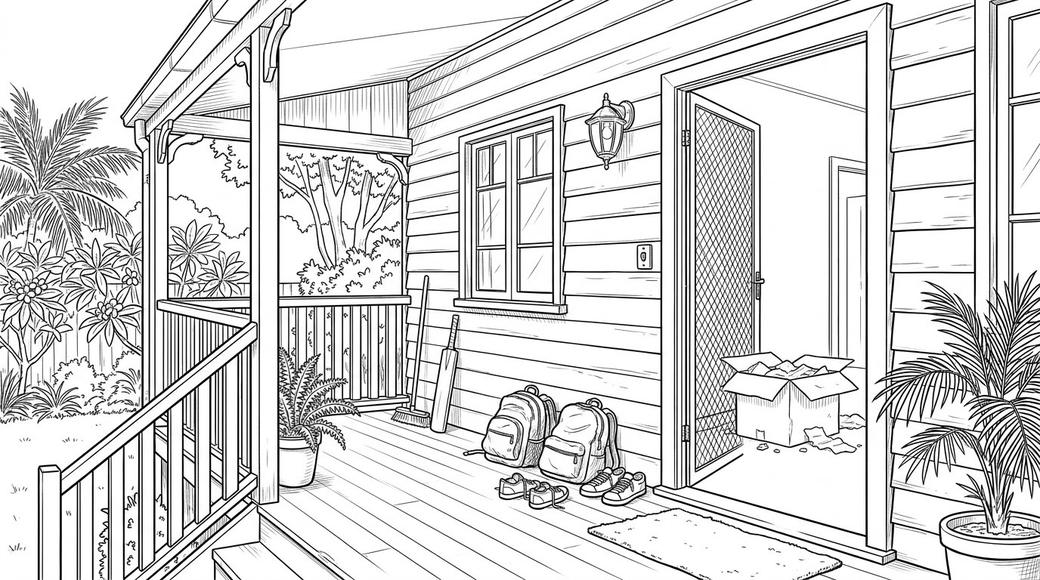
Ms and Mr Benjamin married in 2011 and separated in 2019. In April 2022, after a mediation, they agreed final orders: their two sons would live with each of them for equal time, and share parental responsibility.
Eighteen months later Ms Benjamin went back to court. She wanted the boys to live with her and see their father every second weekend, and she wanted to make the major decisions alone. She pointed to what had changed: Mr Benjamin had new partners and had moved house, his work took him away so his family helped with the boys, and both boys were struggling with their behaviour at school.
Since 6 May 2024, s 65DAAA of the Family Law Act 1975 (Cth) writes down the old rule in Rice v Asplund. A court must not reconsider final parenting orders unless it has considered whether there has been a significant change of circumstances and is satisfied that reconsidering them is in the children's best interests. Judge Bertone heard that question first, on its own. Without a significant change, that is the end of the matter.
The judge found none. New relationships and a move to another suburb of the same city were not significant changes for the boys. The father's work travel was not new, and the mother knew of it when she agreed to the orders. Both parents had agreed to the boys getting professional help, and nothing in the orders stood in the way. The family report, written by one of three experts the mother put forward, found the boys were not fearful of their father, and each said he wanted to keep the equal-time arrangement. The judge refused the mother's request to test that report further, noting she had got the report she asked for.
"Change is a part of life," the judge wrote, and not every change is significant. It is against children's interests to have "a perennial football match between parents". The application was dismissed and the orders stayed as they were. A later order, made in her absence, required her to pay his costs, fixed at $11,725.
Final parenting orders are meant to last. To reopen them you first need a significant change in circumstances, not just the ordinary changes of family life or a change of heart, and you need to show the children would benefit from a fresh look.
The $11,725 costs order was made later, in Ms Benjamin's absence. Her appeal against it was dismissed on 31 October 2025 in Benjamin & Benjamin [2025] FedCFamC1A 199, because she should first have asked the trial court to set it aside. The appeal judge noted she could still do that, so the costs order may not be the last word.
A published decision of the Federal Circuit and Family Court of Australia (Division 2), retold in plain English. Lawcaptain did not act in this case. Every outcome depends on its own facts. General information about Australian family law, not legal advice about your situation.
Sort out your own property split.
Agreed on a split? Make it binding with consent orders. Call 1300 967 552, or get an instant quote online.
Parenting
 A father's long roster, a son who wanted more, and a slower build-upTogetherAbout 11 years, marriedChildrenOne son, aged 10ResultFather's time increasedFederal Circuit and Family Court of Australia (Division 2) · 30 October 2025Read the case study
 Moving home to Perth with two daughters who disagreedTogetherMarried 2010 to 2015ChildrenTwo daughters, 13 and 11ResultAllowed to move to PerthFederal Circuit and Family Court of Australia (Division 2) · 28 January 2025Read the case study
 Week-about stayed, but the mother got every big decisionTogetherMarried 2012 to 2021ChildrenOne son, aged 12ResultWeek-about; mother decidesFederal Circuit and Family Court of Australia (Division 2) · 21 March 2025Read the case study