Week-about stayed, but the mother got every big decision
- Together
- Married 2012 to 2021
- Children
- One son, aged 12
- Result
- Week-about; mother decides
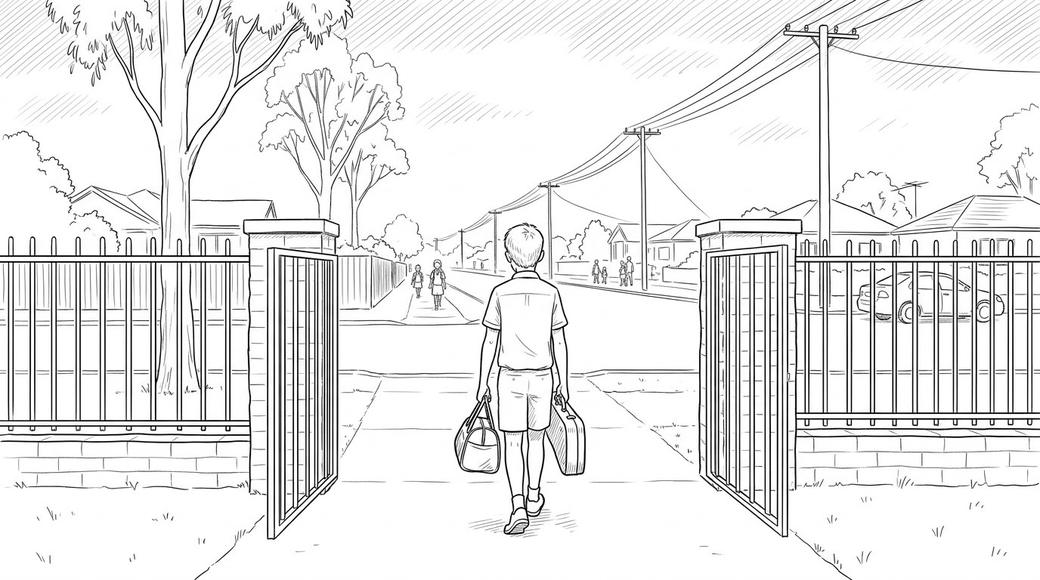
Ms and Mr Callisto married in 2012 and separated in 2021, when their only son was eight. Things began amicably, then fell apart. In December 2022 Mr Callisto stopped the boy seeing his mother for three months, saying a child psychologist should assess the boy first. After she went to court, consent orders rebuilt her time to week-about by October 2023.
By the 2025 trial the boy was 12. Ms Callisto asked that he live mainly with her and see his father four nights a fortnight. Mr Callisto, the independent children's lawyer and the single expert all supported keeping week-about. So, consistently, did the boy, who said he liked it because it was "equal and fair".
Judge Murdoch was critical of the father. He conceded that withholding the boy "was not well thought through", and the judge accepted that the boy was likely never at significant risk with his mother. He admitted telling his son several times he wanted equal time, despite an order not to discuss the case with him, and copied the boy's psychologist and the expert into emails the judge found patronising and undermining. Ms Callisto had at times acted on impulse too, but had since reflected and shown insight, and the judge found she had the greater parenting capacity.
Under s 60CC of the Family Law Act 1975 (Cth), the real question was what would protect the boy from his parents' conflict. His wish, the expert accepted, was really for his parents to stop fighting. The judge found that if his time with his father were cut, the father was likely to undermine the change by showing the boy his unhappiness, and the conflict would grow. The judge accepted this outcome "rewards 'bad behaviour'" by the father, but said the court's job is not to punish a parent.
So week-about stayed. But the parents could not decide together, so the judge gave Ms Callisto sole decision-making responsibility for all major long-term issues, such as the boy's schooling and health. Mr Callisto had conceded that if one parent had that role, it should be her.
Keeping a child from the other parent, or drawing a child into the dispute, can count heavily against you even if the time arrangement does not change. The court asks what will shield the child from conflict, and it can decide time and decision-making differently.
A published decision of the Federal Circuit and Family Court of Australia (Division 2), retold in plain English. Lawcaptain did not act in this case. Every outcome depends on its own facts. General information about Australian family law, not legal advice about your situation.
Sort out your own property split.
Agreed on a split? Make it binding with consent orders. Call 1300 967 552, or get an instant quote online.
Parenting
 Back to court 18 months later, and stopped at the first stepTogetherMarried 2011 to 2019ChildrenTwo sons, 12 and 9ResultFinal orders unchangedFederal Circuit and Family Court of Australia (Division 2) · 5 February 2025Read the case study
 A father's long roster, a son who wanted more, and a slower build-upTogetherAbout 11 years, marriedChildrenOne son, aged 10ResultFather's time increasedFederal Circuit and Family Court of Australia (Division 2) · 30 October 2025Read the case study
 Moving home to Perth with two daughters who disagreedTogetherMarried 2010 to 2015ChildrenTwo daughters, 13 and 11ResultAllowed to move to PerthFederal Circuit and Family Court of Australia (Division 2) · 28 January 2025Read the case study