Her disability payout bought the house, and she kept it
- Together
- About 8 years, de facto
- Children
- None together
- Net pool
- About $652,000
- Split
- 77.2% her / 22.8% him
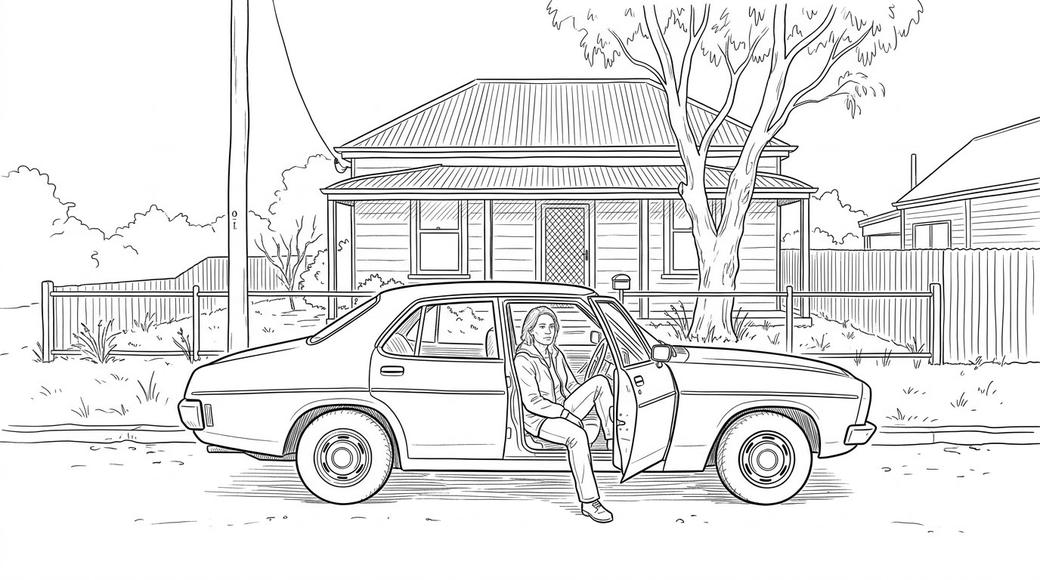
Mr Earlman and Ms Blazena lived together in regional Victoria for about eight years from 2013. They had no children together. Neither brought much to the relationship apart from his superannuation of $86,575. He was a tradesperson earning about $140,000 a year, but his job was made redundant in 2014 and he stopped full-time work in 2015.
In 2016 Ms Blazena was diagnosed with a serious illness and never worked again. Mr Earlman became her carer and received a carer's pension. In late 2019 and early 2020 she received a total and permanent disablement (TPD) payment of about $700,000. It paid for everything they came to own: a house they renovated and sold, then the home she still lives in, and two vehicles. At the trial in 2023 the pool was $651,728: her home ($465,000), the vehicles, and his superannuation of $142,028.
They agreed that she would keep the home and that he would keep his superannuation and one vehicle. The fight was over a car worth $38,200. Judge Champion found the TPD payment was overwhelmingly Ms Blazena's contribution, but it was not set aside from the pool. Mr Earlman had contributed to it through his broader contributions to the relationship, and the judge gave due weight to his years as her carer. The judge assessed contributions at 75:25 in her favour.
Then the judge looked at the future. Ms Blazena, aged 48, can never work and depends on the house and the car. Mr Earlman is in relatively good health and could expect about another decade of work, although he had no secure housing. The judge's preliminary view was that a further 5% to her, or 80:20, was warranted, while warning against counting the payout twice. Because almost everything Mr Earlman would keep was superannuation he could not yet touch, the judge settled a little short of that. Standing back, Ms Blazena kept the home and the disputed car, leaving her 77.2% ($503,200) and him 22.8% ($148,528).
A disability or injury payout received during a relationship is usually treated as a contribution of the person who received it, often a heavy one, but it is not automatically kept out of the pool. The other partner's care and other contributions still count.
Decided before the Family Law Amendment Act 2024 took effect on 10 June 2025. The reform wrote the court's existing steps into the Act and did not change the approach to a payout like this one.
A published decision of the Federal Circuit and Family Court of Australia (Division 2), retold in plain English. Lawcaptain did not act in this case. Every outcome depends on its own facts. General information about Australian family law, not legal advice about your situation.
Sort out your own property split.
Agreed on a split? Make it binding with consent orders. Call 1300 967 552, or get an instant quote online.
Inheritances, gifts & windfalls
 His father's money: a loan to repay, or a gift?TogetherAbout 11 years, marriedNet poolAbout $139,000Split53% him / 47% herFederal Circuit Court of Australia · 8 May 2020Read the case study
 She brought in $718,000 and an inheritance. He left with 17.5%TogetherAbout 11½ years, de factoChildrenNone togetherNet poolAbout $320,000 plus superSplit82.5% her / 17.5% himFederal Circuit Court of Australia · 3 July 2019Read the case study
 Her late inheritance counted, and so did what he tookTogether17 years, married in 2015ChildrenNone togetherNet poolAbout $738,000 plus superSplit75% her / 25% himFederal Circuit and Family Court of Australia (Division 2) · 25 May 2023Read the case study