His father's money: a loan to repay, or a gift?
- Together
- About 11 years, married
- Net pool
- About $139,000
- Split
- 53% him / 47% her
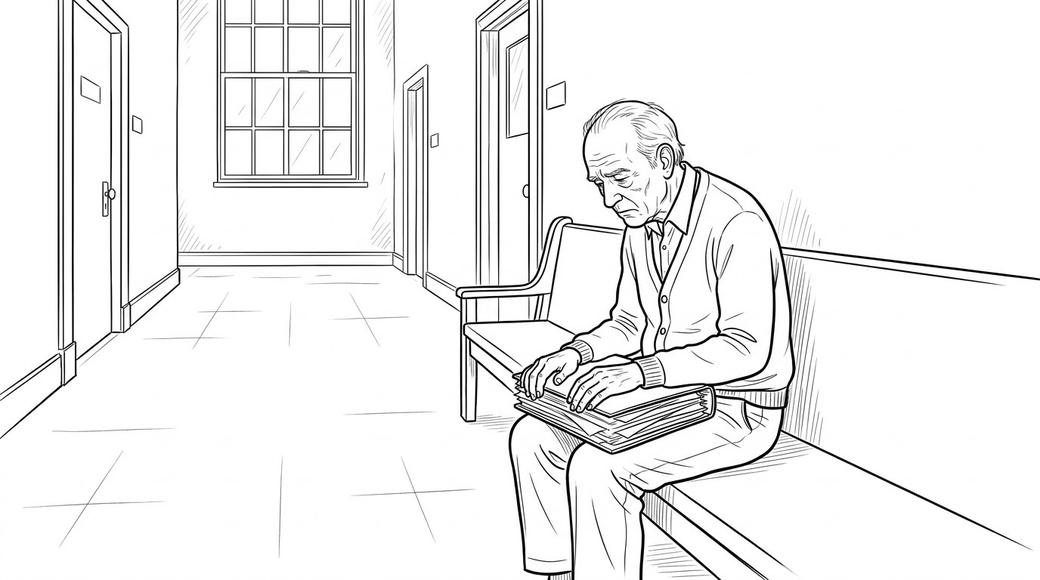
Mr Atwal and Ms Dani married in India in 2007, moved to Australia in 2013 and separated in 2018. In 2016 they bought land in Victoria and built a home on it. By the time of the trial the home had been sold, leaving $114,527.90. With a car (less its loan), a small investment and their superannuation, the net pool was $138,837.90.
Most of the hearing was about money from his father. From about 2014 his father sent the couple payments, starting with $50,000, to help them settle in Australia, buy the home and meet living and medical costs. Mr Atwal and his father, who travelled from India to give evidence, said these were loans. The father's lawyers had sent a demand for $144,425, which Mr Atwal received about a week before the separation. If it was a loan, that debt would come off a very small pool.
Judge Blake found it was not a loan. There was no written agreement, no clear term about repayment or interest, and no demand until the marriage was ending. It was doubtful the couple could repay, and their application for car finance listed no loan from his father. The judge said this was a case where money was advanced because a close relative needed a hand, as often happens in families. If anything, the payments were gifts.
That did not mean the money was ignored. The father had given it because Mr Atwal was his son, so the judge treated it as Mr Atwal's contribution, worth at least $144,425. Ms Dani had worked, carried most of the homemaking, and she or her family had paid for the wedding. The judge rejected her claims that he held land and bank accounts in India, and loans she said she owed, for lack of evidence. Both were 39, healthy and on similar incomes. The judge made a slight adjustment for the father's money: 53% to Mr Atwal and 47% to Ms Dani. He kept the car he used for work and his superannuation, and the sale proceeds were split $58,274.09 to him and $56,253.81 to her.
Money from parents is not treated as a loan just because the family later calls it one. Without a written agreement, clear repayment terms or repayments, a court may treat it as a gift to the child of the parent who gave it, which still counts as that person's contribution.
Decided before the Family Law Amendment Act 2024 took effect on 10 June 2025. The reform wrote the existing steps into the Act and did not change how a court decides whether family money was a loan or a gift.
A published decision of the Federal Circuit Court of Australia, retold in plain English. Lawcaptain did not act in this case. Every outcome depends on its own facts. General information about Australian family law, not legal advice about your situation.
Sort out your own property split.
Agreed on a split? Make it binding with consent orders. Call 1300 967 552, or get an instant quote online.
Inheritances, gifts & windfalls
 Her disability payout bought the house, and she kept itTogetherAbout 8 years, de factoChildrenNone togetherNet poolAbout $652,000Split77.2% her / 22.8% himFederal Circuit and Family Court of Australia (Division 2) · 27 July 2023Read the case study
 She brought in $718,000 and an inheritance. He left with 17.5%TogetherAbout 11½ years, de factoChildrenNone togetherNet poolAbout $320,000 plus superSplit82.5% her / 17.5% himFederal Circuit Court of Australia · 3 July 2019Read the case study
 Her late inheritance counted, and so did what he tookTogether17 years, married in 2015ChildrenNone togetherNet poolAbout $738,000 plus superSplit75% her / 25% himFederal Circuit and Family Court of Australia (Division 2) · 25 May 2023Read the case study