Full-time care, a casual job, and 75% of the property outside super
- Together
- 15 years, married
- Children
- Two, with their mother
- Net pool
- $520,547 outside super
- Split
- 75% her / 25% him
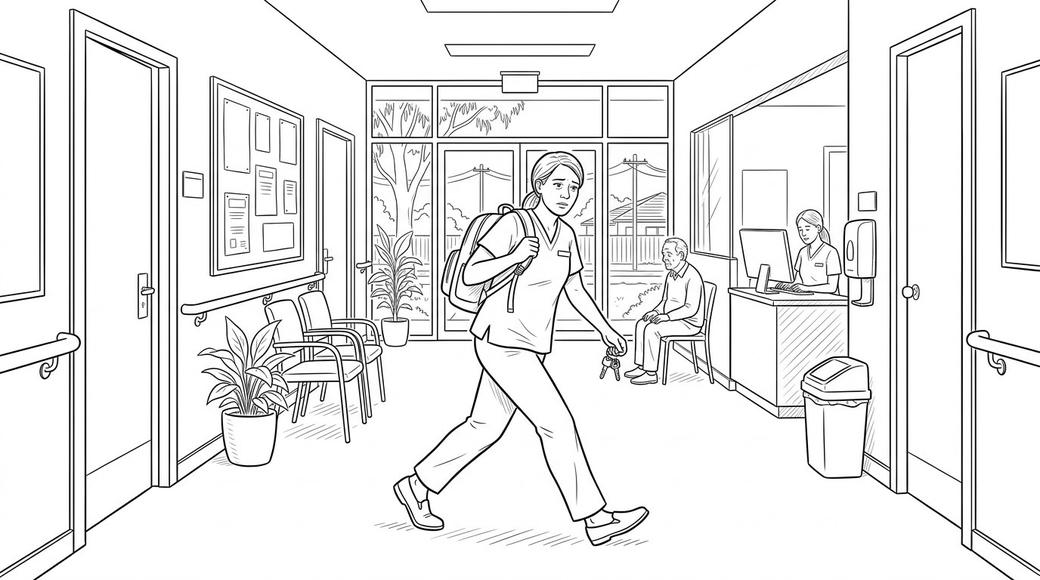
Ms and Mr Parkes began living together in 2006, married in 2015 and separated on 21 November 2021. Their two sons, now 17 and 11, have lived with their mother since separation, and their father had not spent time with them since December 2022. He works full time on a salary of at least $210,000 a year, with rent income and employer-provided housing and a car. She works casually, 15 to 25 hours a week, earning around $30,000.
By trial they had agreed on most things. The property outside super was worth $520,547 net, mostly the proceeds of a jointly owned property sold in late 2023. They agreed their contributions were equal and that their super should be shared so each held $124,399. The fight was over the future. Her counsel argued for at least 70% to her; his argued for an adjustment of 10% to 20%.
Judge Turnbull accepted that, with full-time care of the children and no support, she could not work more hours for now, and that even if she did the very large income gap would barely narrow. The judge noted that he spent $500 a week on entertainment and hobbies and $200 on holidays while criticising her household budget. Weighing her care of the children, the income gap and his work benefits, the judge made a 25% adjustment. That went beyond the 70% figure both counsel had used, which her counsel had called a minimum. She was entitled to $390,410.25 and he to $130,136.75, which meant $340,410.25 of the sale proceeds went to her. Each kept super of $124,399.
She also asked for spousal maintenance of $485 a week, or a $40,000 lump sum. Although he could afford it, the claim was dismissed: with about $300,000 she could invest, she could meet her own needs.
Equal contributions are only the first step. Where one parent has the children full time and the other earns far more, the adjustment for the future can be large, and a generous property order can make spousal maintenance unnecessary.
Decided before 10 June 2025, when these future-needs matters were found in s 79(4)(e) and s 75(2) of the Family Law Act 1975 (Cth). The amended Act now lists them as current and future circumstances in s 79(5), largely to the same effect.
A published decision of the Federal Circuit and Family Court of Australia (Division 2), retold in plain English. Lawcaptain did not act in this case. Every outcome depends on its own facts. General information about Australian family law, not legal advice about your situation.
Sort out your own property split.
Agreed on a split? Make it binding with consent orders. Call 1300 967 552, or get an instant quote online.
Relationships with children
 He brought in property and bought a business: 57.5% to himTogether2002 to 2016, one breakChildrenTwoNet poolAbout $949,000 with superSplit57.5% him / 42.5% herFederal Circuit and Family Court of Australia (Division 2) · 22 September 2023Read the case study
 On a pension with the children, he was awarded 80% outside superTogetherAbout 15 years, marriedChildrenTwo, with their fatherNet pool$171,250 outside superSplit80% him / 20% herFederal Circuit and Family Court of Australia (Division 2) · 28 October 2025Read the case study
 An inheritance, a $257,000 pool and the family dogTogetherAbout 10 years, de factoChildrenTwo, with their motherNet pool$257,152 outside superSplit60% her / 40% himFederal Circuit and Family Court of Australia (Division 2) · 6 September 2024Read the case study