She brought the house, he paid and renovated: 70/30 after four years
- Together
- About 4 years, de facto
- Children
- One together
- Net pool
- About $540,000
- Split
- 70% her / 30% him
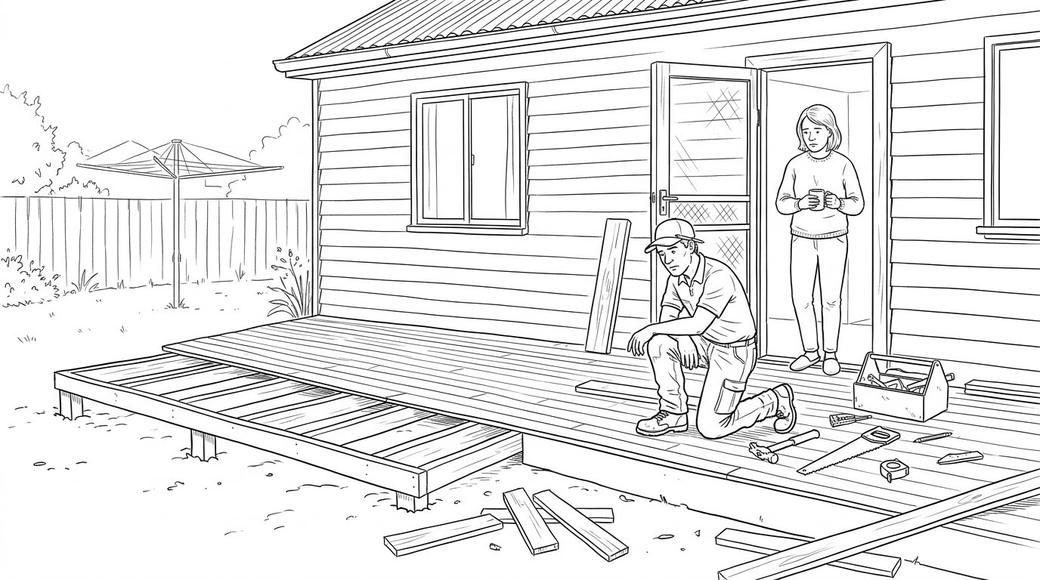
Ms Belkin and Mr Ming lived together as a de facto couple from early 2014 until March 2018, about four years. They had a child in 2017, and her son from an earlier relationship lived with them. When the relationship began she owned a house with about $46,000 of equity. He was a tradesman with his own business. Using the equity in her house, they bought a second property together, which was later sold for little more than its debts.
By the trial her house was worth $710,000. After separation she had borrowed against it to pay her legal fees and a car deposit, and she agreed that $145,500 of that should be added back to the pool. The judge found a net pool of $540,058, including both parties' super. She asked for 80%. He asked for half, pointing to his mortgage payments and his work on the houses.
Judge Turnbull found that both had made important financial contributions. The payments recorded as rent were in fact contributions to the mortgage and household costs. He had done most of the skilled renovation work on both properties and spent an $8,000 inheritance on the family. She had worked until their child was born, kept the books for his business and was the main carer. But her house was of central importance, because it grew quickly in value and was used to buy the second property. Contributions were assessed at 65% to her and 35% to him.
The judge added 5% for her, because she was the primary carer, he owed her unpaid child support and he had greater earning capacity. The judge also weighed points in his favour, including his support of her son, such as $10,300 towards school fees, and her disposal of some of his belongings after separation.
The result was 70% to her and 30% to him. She could keep the house if she paid him $120,256.40 within 60 days. If she could not, he could take it over, and if neither could, it would be sold.
Bringing a home into a short relationship counts for a lot, especially when it grows in value. But a partner who pays towards the mortgage and improves the property will still receive a real share.
This case was decided before 10 June 2025, when amendments to the Family Law Act 1975 (Cth) set out the steps of a property case in the Act. The approach the judge took is largely the one the Act now sets out.
A published decision of the Federal Circuit and Family Court of Australia (Division 2), retold in plain English. Lawcaptain did not act in this case. Every outcome depends on its own facts. General information about Australian family law, not legal advice about your situation.
Sort out your own property split.
Agreed on a split? Make it binding with consent orders. Call 1300 967 552, or get an instant quote online.
Short relationships
 A $150,000 pool, a gambling problem, and who keeps the dogTogether4 to 5 years, de factoChildrenNoneNet poolAbout $152,000Split82% her / 18% himFederal Circuit and Family Court of Australia (Division 2) · 5 August 2022Read the case study
 They kept their money separate, so the court made no orderTogetherOver 4 years, de factoChildrenNone togetherNet poolAbout $1.6 millionResultHer claim dismissedFederal Circuit and Family Court of Australia (Division 2) · 4 July 2022Read the case study
 Under three years, a toddler, and his house bought before they metTogetherUnder 3 years, de factoChildrenOne, aged 3Net poolAbout $924,000Split15% her / 85% himFederal Circuit and Family Court of Australia (Division 2) · 24 December 2025Read the case study