Hidden money and years of fear: 100% of the known pool to her
- Together
- About 26 years, married
- Children
- Four, youngest with her
- Net pool
- $2.6 million (known)
- Split
- 100% her / 0% him
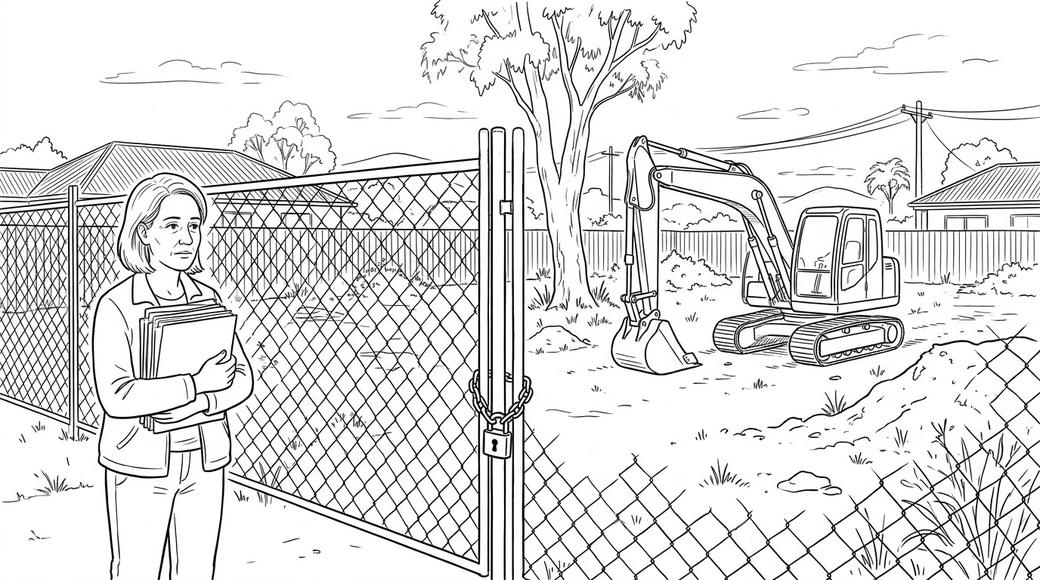
Ms Ruann and Mr Pervez married in 1995 and separated on 1 December 2021, after about 26 years. They had four children, and the youngest still lives with her. He was the family's only income earner and ran a construction business. She cared for the children. By the trial, the main asset was his company, which owned a share in a development site and was valued at $2,235,591.
Judge Monahan found that the husband's failure to disclose his finances was "egregious and flagrant". The evening before an interim hearing, he had transferred 99 of his 100 shares in that company to a business associate. Against court orders, he put his building company into liquidation and moved its business to a company run by his brother. He kept about $1 million from the sale of a second property they had owned and never showed where it went. He also owned an overseas property he had not disclosed.
The judge accepted the wife's evidence of violence and financial control during the marriage, including keeping her short of money for the household. The family had lived "in a state of constant fear and anxiety". That made her contributions significantly more arduous. With her greater contributions since separation as well, contributions were assessed at 55% to her and 45% to him.
Then came the future. She will care for their youngest child, who needs a high level of care, probably into adulthood. He had undisclosed income and support from his family, and the judge found that the money and property in his sole control, which could not be traced, were on the evidence as much as, or more than, she would receive. The judge added 45% for these factors, giving her 100% of the known pool of $2,607,653.83. He was ordered to pay her $2,442,153, or the development site would be sold.
He appealed. In December 2025 Justice Austin dismissed the appeal. An adjustment that large "would very often be considered extraordinary", he said, but numerous plausible reasons had been given for it.
A party who hides money or ignores court orders risks the court making every finding it reasonably can against them. Here that meant the other spouse received all of the property the court could find.
The trial took place in November 2024, so the court applied the Family Law Act 1975 (Cth) as it stood before the amendments of 10 June 2025. Family violence is now an express consideration in property cases, and the appeal court noted that "add-backs" of money already spent or given away are no longer used under the amended Act. They were consistent with the law at the time of this trial.
A published decision of the Federal Circuit and Family Court of Australia (Division 2), retold in plain English. Lawcaptain did not act in this case. Every outcome depends on its own facts. General information about Australian family law, not legal advice about your situation.
Sort out your own property split.
Agreed on a split? Make it binding with consent orders. Call 1300 967 552, or get an instant quote online.
Unusual outcomes
 Years past the deadline, she still got 100% of the poolTogetherAbout 10 years, de factoChildrenThree, living with herNet poolAbout $618,000Split100% her / 0% himFederal Circuit Court of Australia · 24 December 2020Read the case study
 He redrew $622,500 and stayed away from court: 80% to herTogetherAbout 12 years, de factoChildrenOne son, living with herNet poolAbout $2.84 millionSplit80% her / 20% himFederal Circuit and Family Court of Australia (Division 1) · 15 September 2021Read the case study
 Her capital bought the business, his work rebuilt it: 83/17TogetherAbout 8 years, de factoChildrenEach had children beforeNet poolAbout $8.2 millionSplit83% her / 17% himFederal Circuit and Family Court of Australia (Division 2) · 28 April 2023Read the case study