He dissipated over $500,000, then died: her 90% restored on appeal
- Together
- About 15 years, de facto
- Children
- None together
- Split
- 90% her / 10% his estate
- Result
- $155,000 to his estate
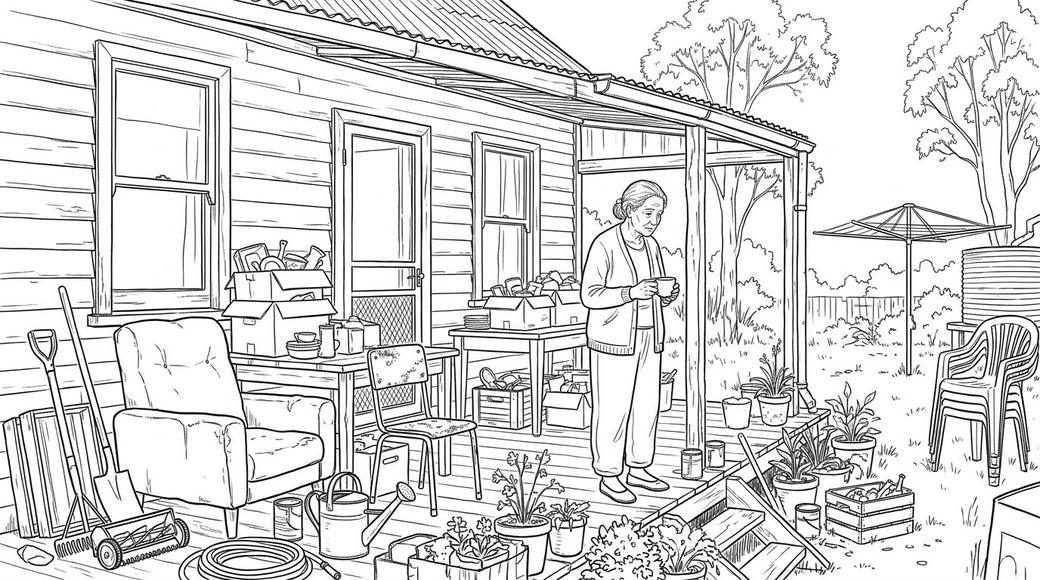
Ms Hatch and Mr Madsen, who were the same age, met in 2004 in their early fifties, moved in together in 2006 and separated in November 2019, ending a relationship of about 15 years. They had no children together; he had four children from earlier relationships. In 2006 they bought a home together, each putting in $250,000. In 2008 her father died and left her $1.3 million, much of which went into her super. In 2015 he was diagnosed with a terminal illness.
In February 2020 he changed his will to leave everything to his children. She started property proceedings in April 2020. By the time he died in 2021 he had sold almost everything he owned except his share of the home, and had disposed of the proceeds, more than $500,000. His estate carried on the case.
The trial judge assessed contributions at 70% to her and 30% to him. Much of his renovation work on the home was found to be incomplete and poorly done, and his auction purchases were described as "junk". The judge added 10% for future factors and another 10% for the assets he had dissipated before his death: 90/10. But she then cut the wife's share to 84%. At 10%, his estate would receive about $155,000, well below the $250,000 he had put into the home, and an 84/16 split meant his four children would each receive "a modest but reasonable inheritance". The wife was to pay his estate $250,000 for his share of the home.
The wife appealed, and the estate conceded the appeal should be allowed. Justice Tree held that the children's inheritance was an irrelevant consideration in a property case, and that his $250,000 had already been counted in the 70/30 assessment. Given that he had dissipated more than $500,000 after separation, there was nothing unjust in his estate receiving only $155,000. The judge restored the 90/10 division and cut the payment from $250,000 to $155,000, with the wife keeping the home.
Spending or giving away assets after separation can count heavily against a party, even after their death. A property case divides property between the two partners; what the other partner's heirs will inherit is not a reason to change the split.
This case was decided before 10 June 2025. Under the amended Family Law Act 1975 (Cth), wastage is now an express consideration. The trial judgment ([2022] FedCFamC2F 1418) was not available to us, so this account is drawn from the appeal judgment, which sets out the trial judge's findings.
A published decision of the Federal Circuit and Family Court of Australia (Division 1) Appellate Jurisdiction, retold in plain English. Lawcaptain did not act in this case. Every outcome depends on its own facts. General information about Australian family law, not legal advice about your situation.
Sort out your own property split.
Agreed on a split? Make it binding with consent orders. Call 1300 967 552, or get an instant quote online.
Unusual outcomes
 Years past the deadline, she still got 100% of the poolTogetherAbout 10 years, de factoChildrenThree, living with herNet poolAbout $618,000Split100% her / 0% himFederal Circuit Court of Australia · 24 December 2020Read the case study
 He redrew $622,500 and stayed away from court: 80% to herTogetherAbout 12 years, de factoChildrenOne son, living with herNet poolAbout $2.84 millionSplit80% her / 20% himFederal Circuit and Family Court of Australia (Division 1) · 15 September 2021Read the case study
 Her capital bought the business, his work rebuilt it: 83/17TogetherAbout 8 years, de factoChildrenEach had children beforeNet poolAbout $8.2 millionSplit83% her / 17% himFederal Circuit and Family Court of Australia (Division 2) · 28 April 2023Read the case study