His gambling cost about $155,000, and the house split moved her way
- Together
- About 16 years, married
- Children
- Two, now adults
- Net pool
- $649,000 plus super
- Split
- 67.5% her / 32.5% him
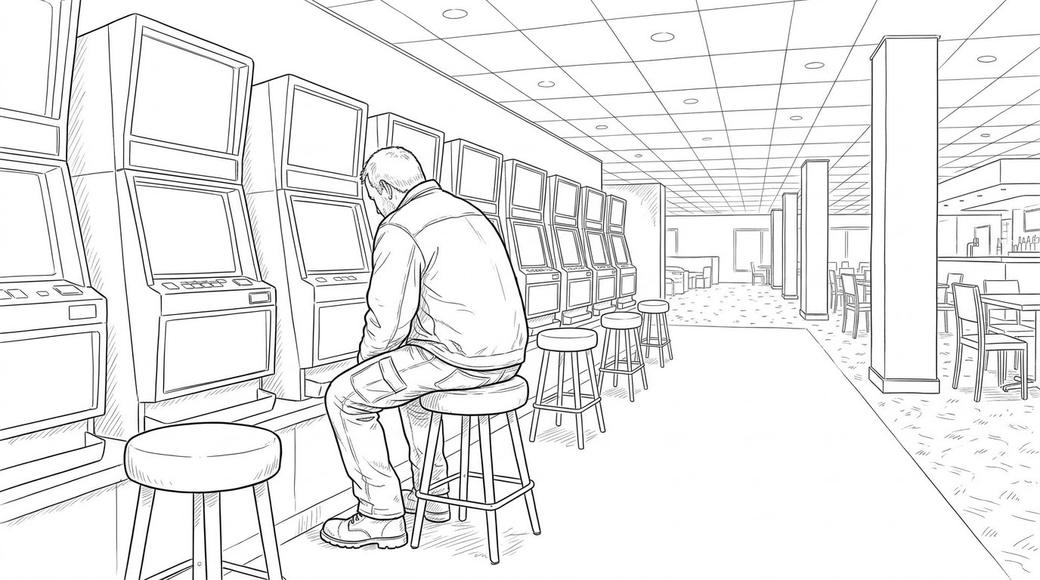
Mr Giang and Ms Tram married in 1998 and separated in 2014. Both worked in factories, and they raised two children who are now adults. Their main asset was the family home in New South Wales, bought in 2001 and worth $650,000 at trial, with only $4,000 left on the mortgage. Ms Tram managed the money and gave Mr Giang about $200 a week for his own expenses.
Mr Giang gambled. In 2004 he owed about $30,000 on credit cards and personal loans, and the couple increased the mortgage to pay it off. He took out more personal loans in 2008, 2012 and 2014, and between 2012 and 2014 he withdrew at least $78,719 from their joint account for gambling. Relying on bank records rather than either party's memory, Judge Newbrun put his gambling spending at about $155,627, or about $191 a week across the relationship.
Seven years after the separation, the case came to trial. Mr Giang wanted 35% of the house. Ms Tram offered him $40,000. The judge kept superannuation separate, with each keeping their own: $87,000 for her and $40,000 for him. The non-super pool was $649,000.
On contributions, the judge found Ms Tram ahead at 60% to 40%. She did far more of the homemaking and parenting, and she alone had paid the mortgage and kept up the house since separation. The judge then found the gambling was unreasonable for a family on these wages and amounted to wastage. But for it, the mortgage would probably have been paid off by the separation and she would have saved more since. Allowing for a modest amount of reasonable spending on gambling, and for his weaker financial position, the judge added 7.5% for Ms Tram.
The result was 67.5% to Ms Tram and 32.5% to Mr Giang. She could keep the house by paying him $208,925 within two months, although the judge thought she probably could not raise that sum. If she did not pay, the house would be sold and the proceeds divided the same way.
Gambling is not automatically wastage, but heavy losses that are out of proportion to a family's income can shift the split. Bank statements are what prove it, more than anyone's recollection.
Decided before the property amendments of 10 June 2025, using the wastage principle through s 75(2)(o). The Act now names material wastage as a factor in s 79(5)(d).
A published decision of the Federal Circuit and Family Court of Australia (Division 2), retold in plain English. Lawcaptain did not act in this case. Every outcome depends on its own facts. General information about Australian family law, not legal advice about your situation.
Sort out your own property split.
Agreed on a split? Make it binding with consent orders. Call 1300 967 552, or get an instant quote online.
Debts, spending & hidden assets
 He said he owed $440,000, mostly to family. The court left it outTogetherDe facto, from 2004ChildrenThree, living with herNet poolAbout $628,000Split58% her / 42% himFederal Circuit and Family Court of Australia (Division 2) · 29 March 2023Read the case study
 He traded shares on borrowed money, so he bore the lossesTogetherOver 20 years, de factoChildrenTwo, now adultsNet poolAbout $180,000SplitAll to her bar his toolsFederal Circuit and Family Court of Australia (Division 2) · 9 May 2022Read the case study
 $2 million went through his hands. She was awarded 82.5% of the restTogetherAbout 22 years, marriedChildrenThree, now adultsNet poolAbout $1.22 millionSplit82.5% her / 17.5% himFederal Circuit and Family Court of Australia (Division 2) · 15 December 2025Read the case study