He traded shares on borrowed money, so he bore the losses
- Together
- Over 20 years, de facto
- Children
- Two, now adults
- Net pool
- About $180,000
- Split
- All to her bar his tools
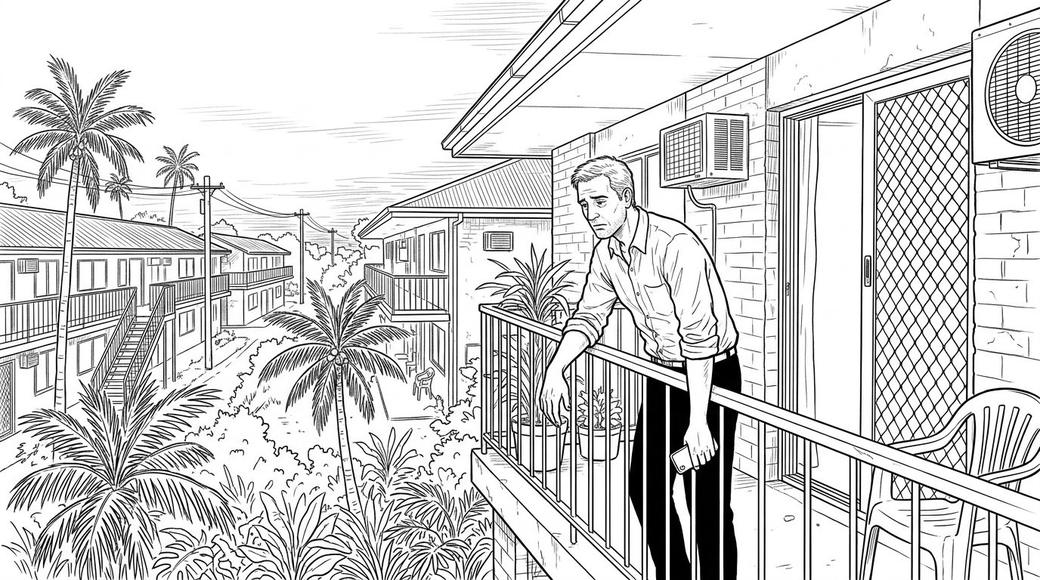
Ms Heng and Mr Xiang lived together from 1998 until July 2019 and raised two children, now adults. She worked in customer service and earned about $69,000 a year. He was a salesperson on about $112,000. Over the years they built up a portfolio of residential units in and around Darwin, but by the trial the debts were almost equal to the value of the properties. He said they had been caught by a downturn in the Darwin market.
A $400,000 line of credit had been taken out to buy real estate. Mr Xiang used it to buy shares, many of them speculative, without consulting Ms Heng. When he lost his job around the time of the separation, he could not pay the interest. The shares were sold during the 2020 market slump, and his losses came to $364,071. About $83,000 was still owing on the line of credit at trial.
The agreed balance sheet showed assets of $1,906,643 and debts of $1,726,506, leaving about $180,000. Each also had superannuation of a little over $60,000. Ms Heng asked for all of the net property. Mr Xiang asked for an equal split.
Judge Young found their contributions were about equal, apart from the share losses. Applying the principle that a party who acts recklessly with the couple's assets may have to carry the loss alone, the judge found Mr Xiang's share trading speculative, imprudent and reckless. Ms Heng was not blameless, because she did not ask how the line of credit was being used, but the overwhelming responsibility was his. Without the losses, the net assets would have been about $580,000, and an equal share would have been about $290,000 each. Because the remaining $180,000 was less than the losses, the judge treated Ms Heng as having made 100% of the contribution to it.
The remaining units were to be sold and the net proceeds paid to Ms Heng. She took over the line of credit debt of about $83,000. Each kept their own superannuation, car and personal effects, and Mr Xiang kept his tools.
Ordinary investment losses are usually shared. Losses from reckless dealing with joint money, such as speculating with borrowed funds without telling your partner, can be left with the person who caused them.
Decided before the property amendments of 10 June 2025. The Act now names material wastage as a factor in de facto property cases (s 90SM(5)(d)), which fits the same reasoning.
A published decision of the Federal Circuit and Family Court of Australia (Division 2), retold in plain English. Lawcaptain did not act in this case. Every outcome depends on its own facts. General information about Australian family law, not legal advice about your situation.
Sort out your own property split.
Agreed on a split? Make it binding with consent orders. Call 1300 967 552, or get an instant quote online.
Debts, spending & hidden assets
 He said he owed $440,000, mostly to family. The court left it outTogetherDe facto, from 2004ChildrenThree, living with herNet poolAbout $628,000Split58% her / 42% himFederal Circuit and Family Court of Australia (Division 2) · 29 March 2023Read the case study
 His gambling cost about $155,000, and the house split moved her wayTogetherAbout 16 years, marriedChildrenTwo, now adultsNet pool$649,000 plus superSplit67.5% her / 32.5% himFederal Circuit and Family Court of Australia (Division 2) · 8 October 2021Read the case study
 $2 million went through his hands. She was awarded 82.5% of the restTogetherAbout 22 years, marriedChildrenThree, now adultsNet poolAbout $1.22 millionSplit82.5% her / 17.5% himFederal Circuit and Family Court of Australia (Division 2) · 15 December 2025Read the case study