She said their money was separate for 20 years. He was awarded 35%
- Together
- About 20 years, de facto
- Children
- None together
- Net pool
- About $2.7m, incl. super
- Split
- 65% her / 35% him
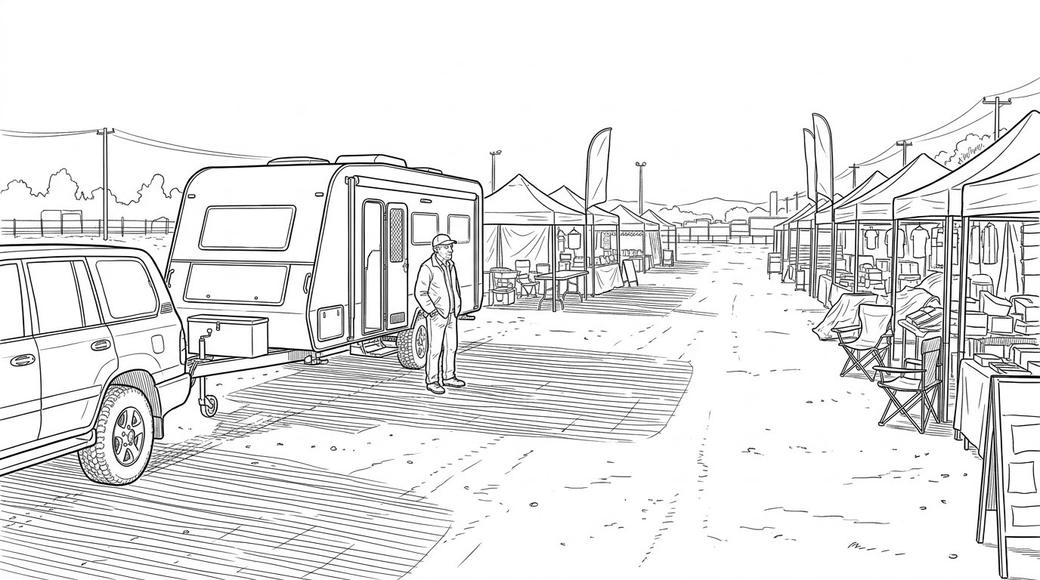
Mr Abbott and Ms Dale lived together from 2004 until early 2024, a de facto relationship of about 20 years with no children together. By trial he was 74 and she was 70. When they met she owned a house and had about $45,000 in super. He was a transport worker on a modest wage, with about $159,000 in super and little else.
They ran a food truck and then, from 2009, a business selling outdoor products at caravan and camping shows, travelling in a caravan bought with his super. While they were away, her house was let as a short-stay rental. In 2014 they bought a second property in Queensland in joint names.
She reluctantly accepted a relationship only from 2009 to 2022, said their money had always been kept separate, and argued that no order should be made, which would have left her with 81.4% of the pool. He asked for 40%.
Judge Jenkins found they were a couple from 2004. They had never had a joint personal account, but they paid everyday expenses from the business account, which the judge said amounted to the same thing. There is no right to a property division, the judge accepted, but over 20 years their finances had become intermingled. His super now existed as a caravan worth $86,000, while her house had equity of $1.5 million and her super had grown to over $200,000. Leaving things as they were would not be just and equitable.
Weighing what each brought in and built, the judge assessed contributions at 63% to her. She was given 1% more for the property money and business funds he had used since separation, and another 1% because, after separation, he had committed family violence, including a report to the council the judge found was designed to hurt her rental income.
On a pool of $2,700,275, she was awarded 65%, about $1,755,000, and he 35%, about $945,000. He kept the caravan, his vehicles and his share of the Queensland sale money; she was ordered to pay him $445,968.25 and was expected to keep her home.
Keeping separate bank accounts does not stop a long de facto relationship being treated as a shared financial life. What each person brought in still counts, but so does the way money was used together over the years.
Decided after the property reforms of 10 June 2025, under s 90SM as amended, which expressly lists the effect of family violence on each party's current and future circumstances.
A published decision of the Federal Circuit and Family Court of Australia (Division 2), retold in plain English. Lawcaptain did not act in this case. Every outcome depends on its own facts. General information about Australian family law, not legal advice about your situation.
Sort out your own property split.
Agreed on a split? Make it binding with consent orders. Call 1300 967 552, or get an instant quote online.
Long relationships
 A 38-year marriage, a controlling husband and 67.5% for the wifeTogether38 years, marriedChildrenTwo, both adultsNet poolAbout $5.48m, incl. superSplit67.5% her / 32.5% himFederal Circuit and Family Court of Australia (Division 2) · 11 April 2025Read the case study
 Forty years, one modest home, and a 52/48 split for the older husbandTogetherAbout 40 years, marriedChildrenFour, all adultsNet poolAbout $982,500Split52% him / 48% herFederal Circuit and Family Court of Australia (Division 2) · 19 September 2024Read the case study
 After 41 years, he kept the overseas money and she kept the houseTogether41 years, marriedChildrenTwo, both adultsNet poolJust over $300,000ResultHome and mortgage to herFederal Circuit Court of Australia · 5 August 2020Read the case study