A 38-year marriage, a controlling husband and 67.5% for the wife
- Together
- 38 years, married
- Children
- Two, both adults
- Net pool
- About $5.48m, incl. super
- Split
- 67.5% her / 32.5% him
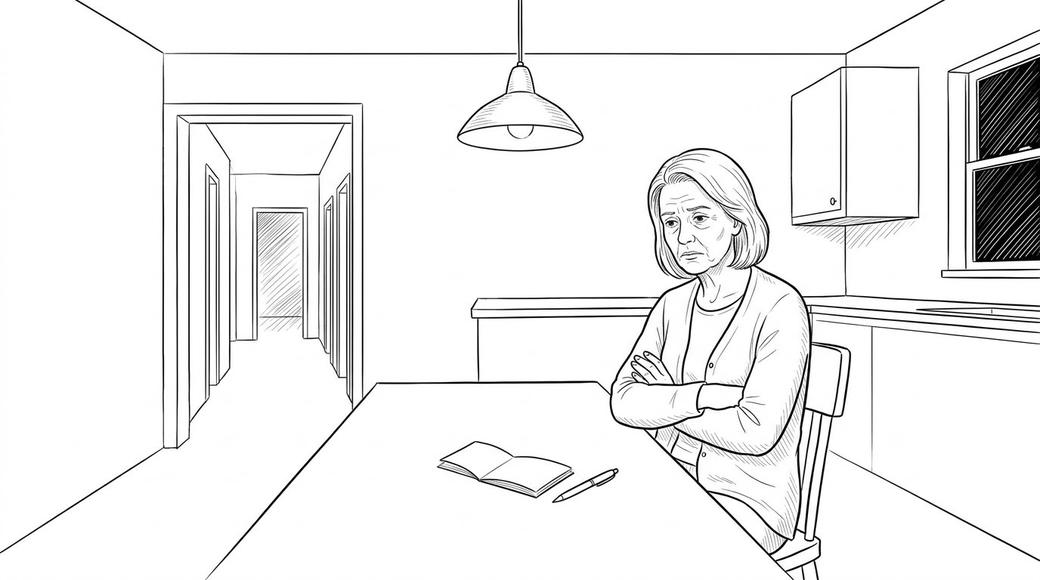
Ms and Mr Zalitis began living together in 1983, married in 1984 and separated in 2021, after 38 years. Neither had anything of value at the start. Both worked in health care. She stayed home with their two children from 1992 to 2001, then returned part-time and now earns about $70,000 a year; he built a private practice run through his own companies. They bought, renovated and sold homes, ending with a dual-occupancy home, a holiday property and a super fund.
After separation he listed the holiday property for auction without telling her, having already paid a holding deposit on a $3.7 million house for himself. He also signed a $535,500 car contract he could not complete, losing a $130,000 deposit. Because he ignored orders to update his companies' accounts, his practice company could not be valued.
She asked for 70%. He offered her 52.5%.
Judge Liveris found that he had engaged in coercive and controlling behaviour during the marriage and after it: waking her at night to sign cheques, making her ask for money and account for her spending, hiding her car keys and monitoring her with cameras. That made her contributions more arduous, so the judge added 5% for her to otherwise equal contributions.
The judge could not be satisfied the pool was complete and chose to err on the side of generosity to her. His sale of the holiday property to fund his new house was found reckless, as was his handling of the super fund, where her recorded interest had fallen to nil. Tax had been charged on trust distributions in her name that she never received, and his true income was likely higher than he had said. He was 68 and still working; she was 62 and planned to retire at 65. That added a further 12.5% for her.
On a pool of about $5,477,000, including super and $43,272 of his legal fees added back, she was awarded 67.5% and he 32.5%. She kept the dual-occupancy home and its loans; he kept his house and the super fund. Her claim for spousal maintenance was dismissed.
In a long marriage, a court can recognise control over money as family violence and adjust for it. A party who will not disclose their finances also risks the court resolving the doubt against them.
Decided on 11 April 2025, before the property reforms of 10 June 2025. The court used the Kennon principle and s 75(2)(o). Since 10 June 2025 the Act expressly requires a court to consider the effect of family violence on contributions and on each party's current and future circumstances, and any material wastage.
A published decision of the Federal Circuit and Family Court of Australia (Division 2), retold in plain English. Lawcaptain did not act in this case. Every outcome depends on its own facts. General information about Australian family law, not legal advice about your situation.
Sort out your own property split.
Agreed on a split? Make it binding with consent orders. Call 1300 967 552, or get an instant quote online.
Long relationships
 She said their money was separate for 20 years. He was awarded 35%TogetherAbout 20 years, de factoChildrenNone togetherNet poolAbout $2.7m, incl. superSplit65% her / 35% himFederal Circuit and Family Court of Australia (Division 2) · 24 December 2025Read the case study
 Forty years, one modest home, and a 52/48 split for the older husbandTogetherAbout 40 years, marriedChildrenFour, all adultsNet poolAbout $982,500Split52% him / 48% herFederal Circuit and Family Court of Australia (Division 2) · 19 September 2024Read the case study
 After 41 years, he kept the overseas money and she kept the houseTogether41 years, marriedChildrenTwo, both adultsNet poolJust over $300,000ResultHome and mortgage to herFederal Circuit Court of Australia · 5 August 2020Read the case study