Under two years together, but she had sold her only property
- Together
- Under 2 years, de facto
- Children
- None
- Net pool
- $185,250
- Split
- 15% her / 85% him
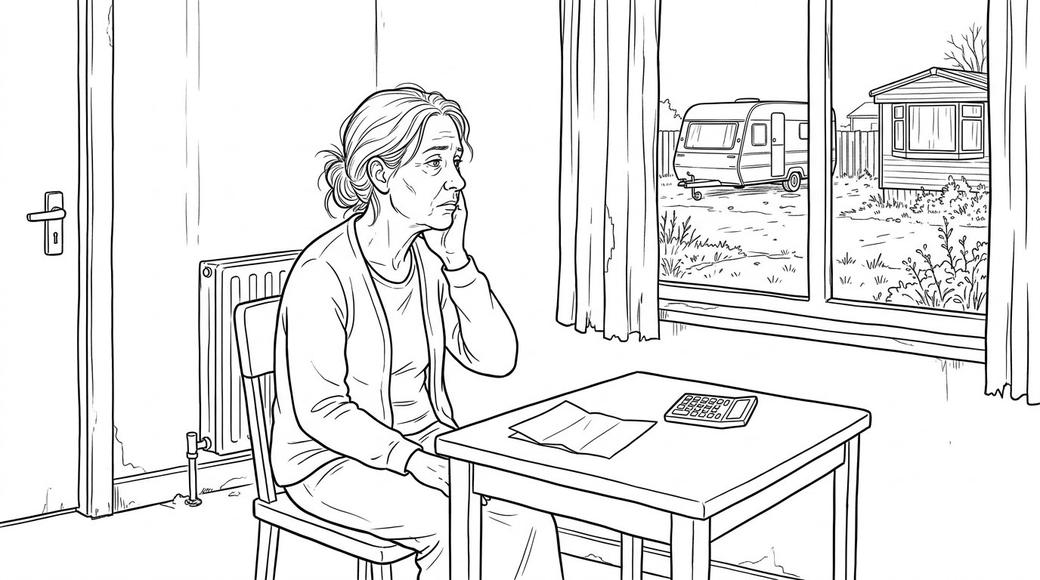
Ms Day and Mr Jacobsen, in their fifties when the case was heard, lived together as a de facto couple from about October 2017 to about August 2019, less than two years. Both were of modest means. He came into the relationship with about $236,000 in cash from an estate, part of a house and some vehicles. Her only significant asset was a small property.
For a de facto couple, the Family Law Act 1975 (Cth) normally requires two years together, or a child, before the court can divide property. Another way in, under s 90SB(c), is to show that the applicant made substantial contributions and that refusing an order would cause her serious injustice. Mr Jacobsen asked the court to dismiss her case on that ground.
Judge Newbrun found that she had sold her property in December 2018 and that the net proceeds of $51,575 were paid to him. He repaid only $10,000. She had also helped clean up the property he bought and cared for their animals. Given how little either of them had, the judge found her contributions were substantial and that it would be a serious injustice to make no order. The court made the declaration.
The judge then took the property each of them held at the end of the relationship, leaving out her old debts and things bought after separation. That came to $185,250: his house, a mobile home, a car, a motorbike, a caravan, and her animals, with each keeping their own super. Most of it had been bought with his pre-relationship cash. Weighing everything, the judge assessed contributions at 15% to her and 85% to him, with no further adjustment for their circumstances.
He was ordered to pay her $27,787 within three months. The two cats and two dogs she had brought into the relationship stayed with him, because he had cared for them alone for almost three years since separation.
A de facto relationship shorter than two years with no child is not always beyond the court's reach. If you put your own money into a short relationship, the court can recognise it, but the share is likely to reflect what each person actually brought in.
This case was decided before 10 June 2025. Amendments to the Family Law Act 1975 (Cth) from that date set out the steps of a property case in the Act and added specific factors for deciding who keeps a companion animal.
A published decision of the Federal Circuit and Family Court of Australia (Division 2), retold in plain English. Lawcaptain did not act in this case. Every outcome depends on its own facts. General information about Australian family law, not legal advice about your situation.
Sort out your own property split.
Agreed on a split? Make it binding with consent orders. Call 1300 967 552, or get an instant quote online.
Short relationships
 She brought the house, he paid and renovated: 70/30 after four yearsTogetherAbout 4 years, de factoChildrenOne togetherNet poolAbout $540,000Split70% her / 30% himFederal Circuit and Family Court of Australia (Division 2) · 18 December 2023Read the case study
 A $150,000 pool, a gambling problem, and who keeps the dogTogether4 to 5 years, de factoChildrenNoneNet poolAbout $152,000Split82% her / 18% himFederal Circuit and Family Court of Australia (Division 2) · 5 August 2022Read the case study
 They kept their money separate, so the court made no orderTogetherOver 4 years, de factoChildrenNone togetherNet poolAbout $1.6 millionResultHer claim dismissedFederal Circuit and Family Court of Australia (Division 2) · 4 July 2022Read the case study