HomeIndustrial hubWA paramedics and ambulance staffBargaining, and what is happening now
Fair Work Act 2009 (Cth) · Fair Work (Registered Organisations) Act 2009 (Cth)

Bargaining for WA paramedics and ambulance staff, and what is happening now.

Who bargains for St John staff, what protected action is possible in an ambulance service, the 2025 round in order, and the public record of the AEAWA’s registration application. No view on any outcome.

30 December 2026by when the parties agreed to start negotiating the next paramedics’ agreement
30 June 2027the paramedics’ agreement reaches its nominal expiry
30 June 2026the communications and patient transport agreements passed nominal expiry
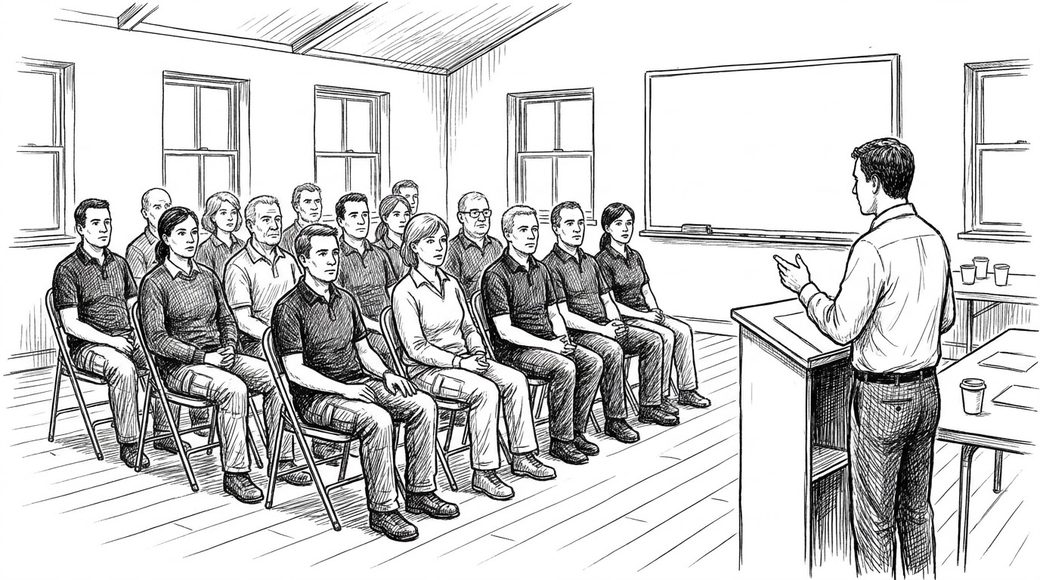
Paramedics and ambulance staff sit in rows listening to a speaker beside a blank whiteboard

Next round By 30 December 2026: the parties to the paramedics’ agreement have agreed to start negotiating its replacement “at least six (6) months prior to the expiry” on 30 June 2027 (AE529705 cl 3.6(a)).

Key dates

DateWhatSource
30 June 2026The communications officers' and patient transport agreements reached their nominal expiry; both continue to operate until replaced or terminatedSt John Ambulance Western Australia Ltd [2024] FWCA 1954; St John Ambulance Western Australia Ltd [2024] FWCA 2064
By 30 December 2026The parties to the paramedics' agreement have agreed to start negotiating its replacement "at least six (6) months prior to the expiry"AE529705 cl 3.6(a)
30 June 2027The paramedics' agreement reaches its nominal expiry; it then continues until terminated or replacedcl 3.5(c)–(d)
30 June 2026What: The communications officers' and patient transport agreements reached their nominal expiry; both continue to operate until replaced or terminated
Source
St John Ambulance Western Australia Ltd [2024] FWCA 1954; St John Ambulance Western Australia Ltd [2024] FWCA 2064
By 30 December 2026What: The parties to the paramedics' agreement have agreed to start negotiating its replacement "at least six (6) months prior to the expiry"
Source
AE529705 cl 3.6(a)
30 June 2027What: The paramedics' agreement reaches its nominal expiry; it then continues until terminated or replaced
Source
cl 3.5(c)–(d)

The short version

St John is a company in the federal system, so its ambulance staff bargain under the Fair Work Act. The registered union that bargains by default for its members, and is covered by the agreements, is the UWU.

Read moreShow less

The AEAWA is not a registered organisation. Under the Act an unregistered body can act in bargaining only for employees who appoint it, or one of its officers, in writing. In the 2025 round it applied for and obtained its own protected action ballot order, but only the UWU is covered by the agreement that resulted.

The current paramedics' agreement runs to 30 June 2027, and the parties have agreed to start negotiating a replacement by 30 December 2026. The communications and patient transport agreements passed their nominal expiry on 30 June 2026.

The AEAWA's application to be registered has been before the FWC since 2023. The Full Federal Court reopened it in May 2026, and the FWC has since given leave to alter three of its rules. On 4 November 2026 it was not registered. This page describes the record only and takes no view on any live matter.

Part A: how bargaining works at St John

Who bargains
  1. The employer.
    1. St John is a bargaining representative for its own agreement (FW Act s 176(1)(a)).
    2. At the start of bargaining it must take all reasonable steps to give each employee a notice of their right to be represented by a bargaining representative (s 173(1)).
  2. Registered unions, by default.
    1. An "employee organisation" is a bargaining representative of an employee who is a member, unless the employee appoints someone else or revokes that status (s 176(1)(b)).
    2. "Employee organisation" means an organisation of employees registered under the Fair Work (Registered Organisations) Act 2009 (Cth) (s 12). For St John's ambulance agreements that is the UWU.
  3. Anyone an employee appoints in writing. "A person is a bargaining representative of an employee who will be covered by the agreement if the employee appoints, in writing, the person as his or her bargaining representative for the agreement" (s 176(1)(c)).
    1. The appointment is per employee and per agreement, takes effect on the day it specifies, and a copy must be given to the employer (s 178(1)–(2)(a)). It can be revoked in writing (s 178A(1)).
    2. An appointed representative must be free from control by, and improper influence from, the employer or another bargaining representative (Fair Work Regulations 2009 reg 2.06).
    3. This is the only way an unregistered body such as the AEAWA, or one of its officers, can be a bargaining representative. The published decisions do not record how it became one in 2025.
  4. What any bargaining representative can do. The Act gives these to "a bargaining representative", registered or not:
    1. apply for bargaining orders to enforce good faith bargaining (s 229);
    2. ask the FWC to deal with a bargaining dispute (s 240);
    3. apply for a protected action ballot order (s 437(1)), but only after the notification time (s 437(2A));
    4. apply for an intractable bargaining declaration (s 234).
  5. What only a registered organisation has.
    1. Default representation of members (s 176(1)(b));
    2. coverage by the agreement, which requires a notice from an "employee organisation" under s 183 and the FWC's note under s 201(2);
    3. entry permits and right of entry (s 512);
    4. the officer extension for organising protected action (s 409(7)); and
    5. standing to sue in its own name on an agreement that applies to it (s 539(2), item 4).
  6. Protection for members of either body.
    1. Adverse action because a person is or is not a member or officer of an "industrial association", or takes part in its lawful activities, is prohibited (ss 346, 347).
    2. An "industrial association" need not be registered (s 12).
    3. The AEAWA's own policy allows membership of both bodies (URP-001).
The agreement and what happens after expiry
  1. The paramedics' agreement covers St John, the UWU "subject to sections 53 and 201(2) of the Fair Work Act", and the employees in the Appendix 1 classifications (cl 3.1). "Union means United Workers Union" (cl 7).
  2. It excludes other laws, awards and orders to the extent permitted by law, except the National Employment Standards and the laws on long service leave, safety, workers' compensation and training (cl 3.3). The award underneath is the Ambulance and Patient Transport Industry Award 2020 (MA000098), the comparator for the better off overall test.
  3. "Once the Agreement passes its nominal expiry date it will continue to operate until terminated or replaced in accordance with the Fair Work Act" (cl 3.5(d)). Pay under an expired agreement does not move by itself.
  4. The promise to start talks by 30 December 2026 is a term the parties agreed (cl 3.6(a)), not a deadline set by the Act.
Protected industrial action and its limits in an ambulance service
  1. Protected action needs a protected action ballot order, a ballot that authorises the action, and written notice to the employer (FW Act ss 409, 414, 437).
  2. The FWC "must" suspend or terminate protected action that "has threatened, is threatening, or would threaten ... to endanger the life, the personal safety or health, or the welfare, of the population or of part of it" (s 424(1)(c)).
    1. It may act on its own initiative or on application by a bargaining representative or the Commonwealth Minister (s 424(2)).
    2. The Act has no list of essential services; this test is the controlling limit for an emergency ambulance service.
  3. In 2025 the UWU's ballot question on stoppages to put campaign messages on ambulances was framed with a promise that members would immediately respond to emergency calls (see Part B).
When bargaining is stuck
  1. Any bargaining representative may ask the FWC to deal with the dispute under s 240. The FWC can mediate, conciliate, express an opinion or make a recommendation; that is how the 2025 round was resolved.
  2. After the s 240 process and the minimum bargaining period, a bargaining representative may apply for an intractable bargaining declaration.
    1. The FWC must be satisfied that it has dealt with the dispute under s 240 and the applicant took part, that there is no reasonable prospect of agreement without a declaration, and that a declaration is reasonable in all the circumstances, "taking into account the views of all the bargaining representatives" (s 235(1)–(2)).
    2. The FWC then makes an intractable bargaining workplace determination (s 269).
Disputes during the life of the agreement

The agreement's dispute procedure ends with a referral to the FWC, which may conciliate and then arbitrate (cl 11(c)–(d)).

  1. At every stage either party may "appoint or be accompanied by a representative of their choice" (cl 11(g)).
  2. The application to the FWC is made by the party to the dispute.
  3. Disputes about discipline and termination are excluded (cl 11); see discipline and dismissal.

Part B: the 2025 paramedics' round, in order

  1. 30 June 2024. The 2021 paramedics' agreement reached its nominal expiry.
    1. St John had issued the notice of employee representational rights on 11 December 2023, and more than 20 bargaining and drafting meetings followed (St John Ambulance Western Australia Ltd and United Workers' Union and Ambulance Employees Association of Western Australia [2025] FWC 1375 at [2]).
    2. The 2021 agreement's nominal expiry had been corrected to 30 June 2024 in 2023 (Application by United Workers' Union [2023] FWC 1475).
  2. 14 March 2025. "St John put a draft enterprise agreement to the workforce for a ballot. This draft agreement was voted down by a majority of the workforce" (St John, UWU and AEAWA [2025] FWC 1375 at [3]).
  3. 24 March 2025. St John applied to the FWC under s 240 for the Commission to deal with a bargaining dispute; four full-day conferences followed (St John, UWU and AEAWA [2025] FWC 1375 at [5]).
  4. 26 and 27 March 2025.
    1. Two protected action ballot orders were made, each on an application made on 25 March 2025:
      1. for the UWU, United Workers' Union v St John Ambulance Western Australia Ltd [2025] FWC 848 (26 March 2025; order PR785573), with the ballot to close on 11 April 2025;
      2. for the AEAWA, Ambulance Employees Association Western Australia Inc. v St John Ambulance Western Australia Ltd [2025] FWC 857 (27 March 2025; order PR785590) at [2] and second [1]–[2], with the ballot to close on 14 April 2025 and, by consent, five working days' notice of action rather than three (second [3]).
    2. In each case St John objected to some proposed questions, the parties agreed amendments at a conference on 26 March 2025, and St John withdrew its objections (UWU v St John [2025] FWC 848 at [2]; AEAWA v St John [2025] FWC 857 at [2]).
    3. The questions are in cl 5 of each order. The UWU's included stoppages of no more than five minutes to put campaign messages on ambulances, framed with a promise that members would immediately respond to emergency calls, and bans on recording patient billing details (PR785573 cl 5, questions 1 and 3).
    4. Both ballots "were endorsed by a majority of the voting cohorts" (St John, UWU and AEAWA [2025] FWC 1375 at [4]). The decisions do not say what action, if any, was then taken.
  5. 14 to 15 May 2025.
    1. At a conference on 14 May 2025 St John put its best offer (St John, UWU and AEAWA [2025] FWC 1375 at [8]), including:
      1. pay rises of 7%, 5% and 5% for Station Officer Grade 3 and below and Paramedic Special Operations, and 9.1%, 5% and 5% for the Critical Care Paramedic and Extended Care Paramedic (CCP/ECP) classification;
      2. a lump sum equal to back pay from the 2021 agreement's expiry;
      3. new minimum breaks between shifts and end-of-shift limits on tasking;
      4. a clause defining performance management, misconduct and serious misconduct, and one on long service leave.
    2. In a recommendation of 15 May 2025 the Commissioner expressed the view that St John "is not in the position to increase its offer due to the constraints of its contract with the WA State Government and the losses St John has incurred to-date" ([2025] FWC 1375 at [10]), and recommended that the offer "be voted up" (at [16]).
    3. Both the UWU and the AEAWA undertook to withdraw any active notices of protected action at 12:00 pm AWST on 16 May 2025 ([2025] FWC 1375 at [15]).
  6. 15 July 2025. The FWC approved the agreement (St John Ambulance Western Australia Ltd [2025] FWCA 2337).
    1. The UWU, "being a bargaining representative for the Agreement", gave notice under s 183 that it wanted to be covered, and the FWC noted that the agreement covers the UWU (at [5]–[6]).
    2. The agreement operates from 22 July 2025 with a nominal expiry of 30 June 2027 (at [7]).

Part C: what is happening now (as at 4 November 2026)

The next paramedics' round

The parties have agreed to commence negotiations for a replacement "at least six (6) months prior to the expiry of this Agreement", which is by 30 December 2026 (AE529705 cl 3.6(a), 3.5(c)). No log of claims was public on 4 November 2026.

The communications and patient transport agreements

The St John Ambulance Western Australia Ltd Communications Officers Enterprise Agreement 2023 (AE524801) and the St John Ambulance Western Australia Ltd. Patient Transport Services Enterprise Agreement 2023 (AE524905) both reached their nominal expiry on 30 June 2026. Both continue to operate until replaced or terminated. No replacement agreement had been approved by 4 November 2026.

The AEAWA's registration application: the record

The AEAWA is an incorporated association. It was incorporated on 31 October 2014 under the Associations Incorporation Act 1987 (WA) and continues under the Associations Incorporation Act 2015 (WA) (Ambulance Employees Association of Western Australia v United Workers' Union [2024] FWCFB 451 at [3]). It is not a registered organisation under the Fair Work (Registered Organisations) Act 2009 (Cth) (RO Act) or the Industrial Relations Act 1979 (WA).

The steps on the public record, in order:

  1. 15 August 2023. The AEAWA applied to the FWC for registration as an association of employees, other than an enterprise association, under RO Act s 18(b) (matter D2023/6) (AEAWA v UWU [2024] FWCFB 451 at [8]). The UWU objected and later applied for the application to be dismissed (at [9]).
  2. 17 June 2024. A Deputy President dismissed the application as having no reasonable prospect of success, holding that the words "other than an enterprise association" in s 19(1) were an "insurmountable impediment" for an association most of whose members work for one employer (Application by Ambulance Employees Association of Western Australia [2024] FWC 1573 at [9]–[10]).
  3. 6 December 2024. A Full Bench granted permission to appeal and dismissed the appeal (AEAWA v UWU [2024] FWCFB 451 at [74]). It held that whether an association is an enterprise association turns on its actual membership, not on who is eligible to join (at [71]).
  4. 8 May 2026. On judicial review, the Full Court of the Federal Court quashed both decisions and ordered the FWC to determine the UWU's summary dismissal application according to law (Ambulance Employees Association of Western Australia Incorporated v United Workers' Union [2026] FCAFC 62, orders 1–3).
    1. The court held that the FWC had misread s 19(1): an enterprise association that is not federally registrable as such may still apply under s 18(b) as an association of employees and be assessed against the s 19 criteria (at [28]–[29], [85]).
    2. In the majority's words, the quashed decisions are "no decisions at all" (Jackson and Dowling JJ at [32]); Snaden J would have quashed only the Full Bench decision.
    3. The court did not register the association or decide whether it meets the s 19(1) criteria.
  5. 13 July 2026. The FWC gave the AEAWA leave under RO Act s 25 to alter its rules 9 and 10 (Application by the Ambulance Employees Association of Western Australia [2026] FWC 2651 at [13]). As the Vice President put it, the consequence of the Full Court's decision "is that the AEAWA is able to become registered as a 'federally registrable association of employees' under s 19 of the RO Act (provided the requirements set out in that section are met)" (at [3]).
  6. 2 September 2026. The FWC gave leave to replace rule 30, the rule on how the AEAWA's rules are altered (Application by the Ambulance Employees Association of Western Australia [2026] FWC 3345 at [12]). The Vice President's view on whether the existing rule failed the RO Act was "necessarily tentative" and was not decided (at [7]).
  7. 4 November 2026. The AEAWA was not on the FWC's list of registered organisations or the WAIRC's, and no FWC decision in D2023/6 later than 2 September 2026 was found.

What the RO Act requires. For an association of employees, s 19(1) sets the criteria the FWC must be satisfied of, including that the association is a genuine association, is free from control by, or improper influence from, an employer or an employers' association, has at least 50 members who are employees, has rules that comply with the Act, and that there is no registered organisation to which its members "could more conveniently belong" and which would more effectively represent them (s 19(1)(j)).

If there is such an organisation, the FWC may still be satisfied if it accepts an undertaking to avoid demarcation disputes (s 19(2)). Whether those requirements are met is for the FWC.

Until registration is granted, if it is, the AEAWA has none of the rights listed in Part A(e).

St John and the State
  1. St John's staff are its own employees. St John is a "contracted health entity" in the WA health system only to the extent it provides health services to the State (Health Services Act 2016 (WA) ss 6, 19(1)(c)).
  2. The State cannot declare St John out of the federal system as it stands: a declaration is available only for a body established for a public purpose by or under a State law, or by the Governor or a Minister, or a local government body (FW Act s 14(2)).

For unions and industrial officers

The same research agent can work through your members' agreement, its history in the Commission, and the decisions on it.

Decided cases

What the Commission and the courts decided.

Published decisions, retold in plain English from the decision itself. Each links to the full text. Lawcaptain did not act in these cases.

Two ballot orders madeFair Work Commission · 27 March 2025

Two protected action ballots for the same paramedics: one by the union, one by the association

In March 2025, with the 2021 paramedics' agreement past its expiry, the UWU and the association each applied for a protected action ballot. St John objected to the questions, a conference produced agreed wording, and the Commission made both orders within two days of the applications.

Read the full storyShow less

The UWU's application was decided in United Workers' Union v St John Ambulance Western Australia Ltd [2025] FWC 848 (United Workers' Union v St John Ambulance Western Australia Ltd T/A St John Ambulance, B2025/503). Each application was made under FW Act s 437 (UWU v St John [2025] FWC 848 at [1]; AEAWA v St John [2025] FWC 857 at [1]). St John objected to questions in each proposed ballot. At a conference on 26 March 2025 the parties agreed amendments, and St John withdrew its objections (UWU v St John [2025] FWC 848 at [2]; AEAWA v St John [2025] FWC 857 at [2]).

Each applicant filed a declaration on the history of bargaining. In each case the Commissioner found a notification time existed and that every requirement of s 443(1) was met (UWU v St John [2025] FWC 848 at [3]-[4]; AEAWA v St John [2025] FWC 857 at [3]).

The two orders differed in their details:

(a) The UWU's ballot was run by Fair Vote Services Pty Ltd and closed on 11 April 2025 (UWU v St John [2025] FWC 848 at [5]-[6]).

(b) The association's ballot was run by Democratic Outcomes Pty Ltd (CiVS) and closed on 14 April 2025 (AEAWA v St John [2025] FWC 857, second [1]-[2]). By consent, the Commission set five working days' written notice of any action, not the usual three, because of "relevant exceptional circumstances" (AEAWA v St John [2025] FWC 857, second [3]). The employees to be balloted were those to be covered who "are represented by the AEAWA, which is the applicant" (PR785590 cl 3).

(c) The association's 15 questions included ten-minute stoppages, writing campaign messages on vehicles, and bans on on-road training, status buttons, Virtual Emergency Department consultations and out-of-hours contact. The two vehicle questions each said members would "immediately respond to 'emergency: life threatening' and 'emergency: non-life threatening calls'" (PR785590 cl 5, questions 4 and 5).

Each decision recorded that an order to attend mediation or conciliation would issue under s 448A (UWU v St John [2025] FWC 848 at [8]; AEAWA v St John [2025] FWC 857, second [5]).

In the decision's words: "By consent, the Commission has specified five (5) working days as the minimum period of written notice required in respect of the proposed industrial action taken by employees arising from the ballot questions in Clause 5 of the Order." (AEAWA v St John [2025] FWC 857, second [3]).

What it means for you

A protected action ballot is run for the bargaining representative that applies, among the employees it represents (PR785590 cl 3). Questions can be settled at a conference with the employer, as here ([2]). An ambulance ballot can carry an emergency-response promise in the question itself and a longer notice period (PR785590 cl 5; AEAWA v St John [2025] FWC 857, second [3]). Neither decision says how many voted or what action was taken.

Outcome: Ballot orders made on both applications (orders PR785590 and PR785573), after St John withdrew its objections to the questions.

A recommendation, not an arbitrationFair Work Commission · 15 May 2025

The Commission's recommendation that ended the 2025 round: 7%, 5% and 5% for most, and a vote

St John's draft agreement was voted down in March 2025, and both the union and the association applied for protected action ballots. St John asked the Commission to help with the bargaining, the ballots went ahead, and after four full-day conferences St John made a best offer, which the Commissioner recommended.

Read the full storyShow less

The bargaining was for an agreement to replace the 2021 paramedics' agreement, which covered about 1,200 employees such as ambulance officers, station managers and officers, and paramedics ([1]). That agreement reached its nominal expiry date on 30 June 2024. St John issued the notice of representational rights on 11 December 2023, and more than 20 bargaining and drafting meetings followed ([2]).

On 14 March 2025 St John put a draft agreement to a ballot of the workforce, and it was voted down by a majority ([3]). Both protected action ballots were endorsed by a majority of those voting ([4]). On 24 March 2025 St John applied under s 240, and four full-day conferences followed ([5]).

Twelve claims were in dispute, including pay, breaks between shifts on the 2/2/4 and 4x4 rosters, the end-of-shift block-out period, community paramedic secondments, a new roster pattern, critical care and extended care paramedic pay, overtime allocation, a performance and conduct framework, a new AP4 classification, long service leave, the consultation committee and back-to-back community paramedic coverage ([6]).

St John's best offer of 14 May 2025 included ([8]):

(a) wages of 7%, 5% and 5%, with the 7% in year 1 for classifications SO3 and below and PSO (higher classifications on the draft agreement's year-1 rates), funded by savings that included cutting ambulance cleaning time from 30 to 15 minutes, a flat night shift rate, flat on-road tutor and working-with-volunteer allowances, and lower trainer and training coordinator allowances;

(b) a backpay lump sum from the 2021 agreement's expiry, based on actual hours and allowances;

(c) 9.1%, 5% and 5% for critical care and extended care paramedics, 20.3% compounded;

(d) breaks between shifts of 11 hours (consecutive days) and 10 hours (consecutive nights) on the 2/2/4 roster, and 10.5 hours on the 4x4;

(e) in the final 15 minutes of a shift only P0 and P1 jobs, and in the final 90 minutes no interfacility transfer over 35 km unless P1; and

(f) community paramedic secondments of two years, extendable by one year and then a further year by agreement, a trial of the new roster, digital overtime rostering, and new clauses on performance management, misconduct and serious misconduct, and on long service leave.

The Commissioner expressed the view that St John was not in a position to increase its offer, because of the constraints of its contract with the WA State Government and its losses to date ([10]). The Commissioner understood that both the UWU and the association would recommend a yes vote ([14]), and both undertook to withdraw any active notices of protected industrial action at 12:00 pm AWST on 16 May 2025 ([15]).

In the decision's words: "I strongly recommend that St John's offer be voted up." ([16]).

What it means for you

A s 240 recommendation is a recommendation: the outcome still depends on the employees' vote ([9], [16]). The new performance, misconduct and serious misconduct clause in the current agreement came out of this round ([6], [8]). The decision does not say what industrial action was taken, beyond referring to active notices and a campaign "on foot for well over 12 months" ([13], [15]).

Outcome: A recommendation under FW Act s 240, not an arbitration: the Commissioner recommended that St John's best offer be voted up, and the Commissioner understood that both the UWU and the association would recommend a yes vote.

Both 2024 decisions quashedFederal Court of Australia, Full Court · 8 May 2026

The association's registration application reopened: the Full Federal Court quashed both 2024 decisions

The association applied in 2023 to become a registered organisation. A Deputy President dismissed the application as having no reasonable prospects of success, and a Full Bench dismissed the appeal, because most members worked for one employer. The Full Federal Court held the Commission had misread the Act and quashed both decisions.

Read the full storyShow less

The association applied for registration on 15 August 2023 as a federally registrable association of employees under RO Act s 18(b) (Ambulance Employees Association of Western Australia v United Workers' Union [2024] FWCFB 451 at [8]). At the Deputy President's hearing all but three of its members worked for St John (AEAWA v UWU [2024] FWCFB 451 at [7]). The UWU applied for the application to be summarily dismissed. A Deputy President dismissed it as having no reasonable prospects of success, and a Full Bench dismissed the association's appeal (Application by the Ambulance Employees Association of Western Australia [2026] FWC 2651 at [2]).

The question was the opening words of RO Act s 19(1), which sets the criteria for "an association (other than an enterprise association) that, under section 18, may apply for registration as an organisation" ([4]). An enterprise association is one most of whose members work in one enterprise. The association accepted it was an enterprise association that was not federally registrable as such ([60]).

The court held:

(a) standing to apply for registration comes only from s 18; ss 19 and 20 set the criteria for granting an application validly made ([63], Snaden J; [12]-[13], Jackson and Dowling JJ);

(b) the Full Bench erred by applying the definition of "enterprise association" in s 19(1) without also applying the qualifying words "that, under section 18, may apply for registration as an organisation" ([29], Jackson and Dowling JJ, agreeing with Snaden J);

(c) so an enterprise association that is not federally registrable as such may still seek to meet the more exacting s 19 criteria as an association of employees ([28], Jackson and Dowling JJ; [85], Snaden J); and

(d) the intervener's wider argument, that the test should look at the categories of people eligible to join rather than the actual members, was rejected ([30], Jackson and Dowling JJ; [95]-[97], Snaden J).

Jackson and Dowling JJ quashed both decisions, which are therefore "no decisions at all", and left the UWU's summary dismissal application to be decided again, unless the parties agreed otherwise ([31]-[34]). Snaden J would have quashed only the Full Bench decision and required the Commission to decide the association's appeal again ([101], [107]). No costs order was made ([35]; [108], Snaden J).

In the decision's words: "Sections 19 and 20 of the Act do not confer standing to make applications for registration. Rather, they identify the criteria that regulate when the FWC must grant applications validly brought before it." ([63] (Snaden J)).

What it means for you

The decision reopened the association's application; it did not register the association or decide whether it meets the s 19(1) criteria (Application by AEAWA [2026] FWC 2651 at [3]). While its application is pending, the association is not a registered organisation and does not have a registered organisation's rights. The 2024 decisions should not be described as a refusal of registration: they were quashed ([32]).

Outcome: Won by the association on judicial review: certiorari quashing the Commission's decisions of 17 June 2024 (Application by Ambulance Employees Association of Western Australia [2024] FWC 1573) and 6 December 2024 (AEAWA v UWU [2024] FWCFB 451), and mandamus requiring the Commission to decide the UWU's summary dismissal application according to law. The court did not register the association.

No award: the union could not enrol themWestern Australian Industrial Relations Commission · 11 December 1989

Decided in 1989, under the WA system: St John's ambulance supervisors could not join the public service union, so there was no award for them

The public service union asked for a first award to cover St John's ambulance superintendents and deputy superintendents. Whether it could depended on whether St John was a government instrumentality. The Commission found it was not, so the union had no coverage and the application failed.

Read the full storyShow less

The Civil Service Association applied for a first award for superintendents and deputy superintendents employed "for the purpose of operating ambulance services in the State of Western Australia" (reasons unnumbered). They worked under a uniform written contract with a code of conduct, reviewed each year (reasons unnumbered). An award could be sought only by a union whose rules let it enrol the employees concerned (reasons unnumbered, citing IR Act s 29).

The union relied on its rule covering employees of an "instrumentality or authority ... acting under the control of or for or on behalf of or in the interest of the State of Western Australia" (reasons unnumbered). The Commissioner held that St John was not one:

(a) what makes a body an instrumentality "is not only that is performs a traditional Governmental function but that it is controlled by or at least answerable to Government", and St John was controlled by its own Council (reasons unnumbered);

(b) State funding of its operating deficit did not make it an instrument of Government, and the 1984-85 change, when the Health Department took over paying the funds, was "little more than an accounting change" (reasons unnumbered); and

(c) a parliamentary committee's inquiry into ambulance services did not make St John an instrumentality (reasons unnumbered).

Nor was St John a "company or corporation" under the union's other rule: "An association does not cease to be an association because it is incorporated" (reasons unnumbered). The supervisory staff were not eligible to be members, "Therefore the application must fail" (reasons unnumbered).

The Commissioner added observations that were not needed for the decision: the superintendents did not want an award, access to the Commission "depends more on union coverage" than on an award, and the intervening hospital salaried officers' union, whose rule excluded those employed by St John "for the purpose of operating first aid or ambulance services", was probably not able to enrol them either (reasons unnumbered).

In the decision's words: "What makes a body an instrumentality or authority for the purposes of the Applicant's Membership Rule is not only that is performs a traditional Governmental function but that it is controlled by or at least answerable to Government." (reasons unnumbered).

What it means for you

Which organisation can act for a group of ambulance staff has always turned on the words of its rules, then as now. The finding that St John was not a government instrumentality was about the incorporated association of 1989; St John is now a company, and its staff are in the federal system.

Outcome: Dismissed: the union could not enrol the employees, so its application for a first award failed.

Show more case studies (2)(2)Show fewer
Questions

The things people ask.

Who negotiates the paramedics' agreement?

St John, and each employee's bargaining representative. A member of the UWU is represented by the UWU by default. Any employee may instead appoint, in writing, another person or body, including an unregistered association, with a copy to St John (FW Act ss 176(1)(b)–(c), 178).

Is the AEAWA a registered union?

No. It is an incorporated association. Its application to be registered under the RO Act was pending on 4 November 2026, and it was not on the FWC's list of registered organisations.

Does the AEAWA's membership count in bargaining?

An unregistered association is not a bargaining representative of its members by default. It represents in bargaining only the employees who appoint it, or one of its officers, in writing (s 176(1)(c)). Membership is still protected from adverse action (ss 346, 347).

Why does the agreement cover only the UWU?

Coverage of a union requires a notice under s 183 from an "employee organisation", which means a registered organisation (s 12), and the FWC's note under s 201(2). The UWU gave that notice (St John Ambulance Western Australia Ltd [2025] FWCA 2337 at [5]–[6]).

Can paramedics take protected industrial action?

Yes, after a protected action ballot order, a successful ballot and notice. But the FWC must suspend or terminate action that threatens to endanger life, personal safety, health or welfare (s 424(1)(c)).

When does bargaining for the next paramedics' agreement start?

The parties have agreed to start at least six months before the 30 June 2027 expiry, so by 30 December 2026 (cl 3.6(a)).

What happens to my pay when an agreement expires?

The agreement keeps operating until it is replaced or terminated (cl 3.5(d)). Pay rises come from a new agreement, or from an intractable bargaining workplace determination if one is made.

What did the Federal Court decide about the AEAWA?

That the FWC had misread s 19(1) of the RO Act, so the AEAWA may apply under s 18(b) and be assessed against the s 19 criteria. It quashed the 2024 decisions. It did not register the AEAWA or decide whether it meets the criteria (Ambulance Employees Association of Western Australia Incorporated v United Workers' Union [2026] FCAFC 62 at [28]–[29], [85]; orders 1–3).

Could St John staff move into the WA industrial system?

Not while St John employs them. St John is a company formed by its members, and the FW Act lets a State declare an employer out of the federal system only if it is a body established for a public purpose by or under a State law, by the Governor or a Minister, or a local government body (s 14(2)).

More for WA paramedics and ambulance staff

We use our software to generate this content with AI assistance. General information about the law, not legal advice. Last checked 4 November 2026.