HomeIndustrial hubWA paramedics and ambulance staffDiscipline, dismissal and registration
AE529705 cl 14 · Fair Work Act 2009 (Cth) · Health Practitioner Regulation National Law

Disciplined or dismissed as a WA paramedic? The clock is 21 days.

The paramedics’ agreement defines misconduct but sets no procedure, and keeps discipline out of its dispute clause. The checks come from the Fair Work Act, within 21 days of a dismissal, and a registration process can run on the same facts.

21 daysto lodge an unfair dismissal claim or a general protections dismissal dispute
6 monthsminimum service before unfair dismissal protection at St John
Nonewarnings the agreement requires before a dismissal (cl 14.3)
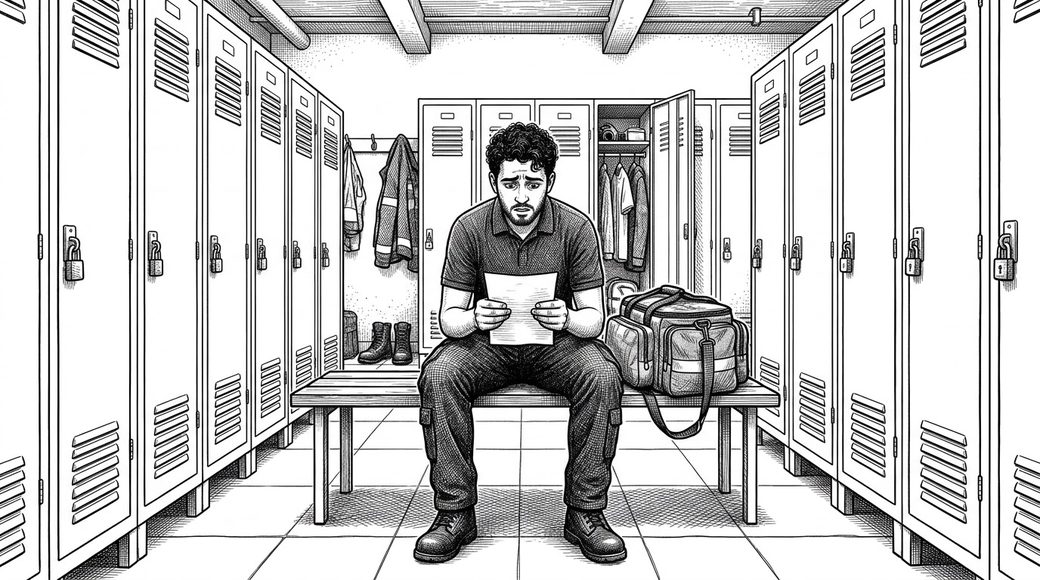
A paramedic sits alone on a bench in the station locker room reading a letter, worried

Time limit 21 days after the dismissal took effect, for an unfair dismissal claim or a general protections dismissal dispute (FW Act s 394(2)(a); s 366(1)(a)). Filing a general protections application first does not pause the unfair dismissal clock.

Key time limits

StepTime limitSource
Unfair dismissal application to the Fair Work Commission (FWC)21 days after the dismissal took effectFW Act s 394(2)(a)
A late unfair dismissal applicationAccepted only in "exceptional circumstances"s 394(3)
General protections dismissal dispute21 days after the dismissal took effectFW Act s 366(1)(a)
Minimum service before unfair dismissal protection6 months (St John is not a small business employer)FW Act ss 382, 383(a)
Paramedicine Board proposes to suspend you or impose conditions as immediate actionThe time stated in the Board's show cause noticeNational Law s 157(1)(b)
Appeal against immediate action that suspends or imposes conditionsThe period stated in the Board's notice of decisionNational Law s 158(2)(d)–(e)
Equal opportunity complaint12 months, or later on good causeEqual Opportunity Act 1984 (WA) s 83(4)–(5)
Unfair dismissal application to the Fair Work Commission (FWC)Time limit: 21 days after the dismissal took effect
Source
FW Act s 394(2)(a)
A late unfair dismissal applicationTime limit: Accepted only in "exceptional circumstances"
Source
s 394(3)
General protections dismissal disputeTime limit: 21 days after the dismissal took effect
Source
FW Act s 366(1)(a)
Minimum service before unfair dismissal protectionTime limit: 6 months (St John is not a small business employer)
Source
FW Act ss 382, 383(a)
Show all 7 rowsShow fewer
Paramedicine Board proposes to suspend you or impose conditions as immediate actionTime limit: The time stated in the Board's show cause notice
Appeal against immediate action that suspends or imposes conditionsTime limit: The period stated in the Board's notice of decision
Source
National Law s 158(2)(d)–(e)
Equal opportunity complaintTime limit: 12 months, or later on good cause

The 21 days run from the day the dismissal took effect, not from any later internal review. Filing a general protections application first does not pause the unfair dismissal clock (see "Choosing between the two claims" below).

The short version

Clause 14 of the paramedics' agreement says what St John treats as a performance problem, misconduct and serious misconduct, and says St John "does not need to issue a warning before ending an Employees employment". It sets no procedure: no investigation steps, no right to see the allegation, no warning ladder and no time limits.

Read moreShow less

Disputes about discipline and termination are also excluded from the agreement's dispute procedure. So the agreement itself gives no way to challenge a disciplinary decision.

The main checks come from the Fair Work Act instead: an unfair dismissal claim, or a general protections claim, each within 21 days of a dismissal. A registered paramedic can also face a separate process under the National Law, run by the Paramedicine Board of Australia and the State Administrative Tribunal (SAT), on the same facts and at the same time.

Which system you are in

The employer decides the system, not the job.

Read moreShow less
  1. St John is a public company, St John Ambulance Western Australia Ltd (ABN Lookup). A national system employer is "a constitutional corporation, so far as it employs, or usually employs, an individual" (FW Act s 14(1)(a)). Its agreements have been made under federal law, and the current ones approved by the FWC.
  2. For a national system employer, the FW Act displaces State industrial laws (s 26), but not State laws on workers' compensation, safety and equal opportunity (s 27(1A)(d), (2)). That is why WA's Industrial Relations Commission and its 28-day unfair dismissal claim do not apply to St John staff, while WA workers' compensation and the WA Criminal Code still do.
  3. St John provides ambulance services to the State under contract.
    1. That makes it a "contracted health entity", and part of the WA health system only to the extent it provides health services to the State (Health Services Act 2016 (WA) ss 6, 19(1)(c)).
    2. Its staff remain its own employees, so the Health Services Act's discipline rules for WA Health staff do not apply to them.

The overview page has the full chooser: WA paramedics and ambulance staff.

What the agreement says about discipline

References in this part are to the paramedics' agreement, AE529705, unless stated.

Clause 14: definitions, not a procedure

Clause 14, "Employee behaviours and disciplinary matters", is new in the 2024 agreement. It came out of the 2025 bargaining, where St John's offer included "A clause to be inserted into the Proposed Agreement that defines performance management; misconduct; and serious misconduct" (St John Ambulance Western Australia Ltd and United Workers' Union and Ambulance Employees Association of Western Australia [2025] FWC 1375 at [8]).

The clause covers four things:

  1. Behaviour.
    1. Employees are expected to keep a workplace free from bullying, harassment, discrimination, victimisation "or any form of disrespectful, discourteous, or intolerant behaviour". Failure "may lead to disciplinary action through a misconduct (or serious misconduct) or a performance pathway" (cl 14.1(a)–(b)).
    2. St John "recognises the distinction between performance issues and misconduct" (cl 14.1(c)).
  2. Performance.
    1. A performance concern is a failure to meet an expected standard. The standards come from the position description, "policies, and procedures (including clinical guidelines)", the agreements, the contract and reasonable and lawful directions (cl 14.2(a)).
    2. "Serious failures to apply due care and skill to your role may amount to misconduct" (cl 14.2(b)).
  3. Warnings.
    1. Under the heading "Preventing Underperformance", St John "should" set expectations in position descriptions, address issues as soon as reasonably practicable and hold regular reviews (cl 14.3(a)).
    2. Then: "St John does not need to issue a warning before ending an Employees employment, but St John agrees that Employees should generally be provided with a chance to fix and performance issues" (cl 14.3(b)).
  4. Misconduct and serious misconduct.
    1. Misconduct "is a breach of conduct requirements, or behavioural standards required by St John", one-off or repeated. The examples include failing to comply with the Code of Conduct or other policies, failing to follow a lawful and reasonable direction, failing to disclose information that may affect capacity for the inherent requirements of the role, abusive language, misusing St John property, and "Failing to exercise due care in the performance of your role to the expected standard" (cl 14.4).
    2. Serious misconduct "involves an Employee deliberately behaving in a way that is inconsistent with continuing their employment". The examples are serious and imminent risk to health and safety or to the employer's reputation or profits, theft, fraud, assault, sexual harassment, and refusing a lawful and reasonable instruction that is part of the job (cl 14.5).
    3. St John may terminate without notice for serious misconduct (cl 46.1). Otherwise notice runs from one to four weeks by length of service, with an extra week for an employee over 45 with two or more years' service (cl 46.2).
What clause 14 leaves out

The clause sets no steps at all. It does not say:

  1. how an allegation is investigated, or by whom;
  2. that you must be told the allegation in writing, or given time to respond;
  3. how many warnings come before dismissal, or when a warning expires;
  4. any time limits.

The agreement also has no suspension or stand-down clause, no drug and alcohol testing clause and no clinical incident or clinical review process. The procedural fairness that does apply comes from the unfair dismissal law (below) and from St John's own policies, which are not part of the agreement.

Discipline is outside the dispute procedure

The dispute procedure covers "any dispute relating to the National Employment Standards or any grievance, dispute or matter which is raised by St John, an Employee or group of Employees, except disputes relating to the termination of an Employee's Employment or disciplinary procedures" (cl 11).

Three consequences follow:

  1. a disciplinary outcome or a termination cannot be taken through the supervisor, head of department and FWC steps in cl 11(a)–(d);
  2. the cl 11(g) right to "appoint or be accompanied by a representative of their choice" applies "At all stages of the procedure set out above", so it does not reach a disciplinary meeting;
  3. whether a dispute about how cl 14 itself is applied counts as a dispute about "disciplinary procedures" has not been decided in any published decision found.

The communications officers' agreement (AE524801) and the patient transport agreement (AE524905) have the same exclusion (AE524801 cl 29; AE524905 cl 36). Neither has a clause like cl 14.

Health assessments and fitness for duty

St John may require a health assessment, at its cost, as a condition of employment, to evaluate fitness for work, or to evaluate a return after extended illness or injury (cl 43(a)). The safeguards are:

  1. the employee nominates the healthcare professional from a choice of two that St John selects from its referral list (cl 43(c));
  2. the employee may ask for a copy of the report (cl 43(d)(i));
  3. the employee may get a second opinion, at their own cost from a practitioner of their choice or at St John's cost from the referral list (cl 43(d)(ii));
  4. the employee may appeal a decision based on the assessment to "the relevant Director for a review of the decision" (cl 43(d)(iii)).

What the Fair Work Act gives you instead

Unfair dismissal
  1. Who can claim.
    1. You must have completed the minimum employment period, which is 6 months for an employer that is not a small business (FW Act ss 382(a), 383(a)), and be covered by an award or agreement or earn under the high income threshold (s 382(b)).
    2. St John's on-road, communications and patient transport staff are covered by agreements.
  2. When. "Within 21 days after the dismissal took effect" (s 394(2)(a)). Later only if the FWC is satisfied there are exceptional circumstances, weighing the reason for the delay, any action taken to dispute the dismissal, prejudice to the employer, the merits and fairness (s 394(3)).
  3. The test. A dismissal is unfair if it was harsh, unjust or unreasonable and not a genuine redundancy (s 385).
  4. The factors the FWC must take into account (s 387):
    1. whether there was a valid reason related to capacity or conduct, including its effect on the safety and welfare of other employees (s 387(a));
    2. whether you were notified of that reason (s 387(b));
    3. whether you were given an opportunity to respond (s 387(c));
    4. any unreasonable refusal to let you have a support person at discussions relating to dismissal (s 387(d));
    5. for unsatisfactory performance, whether you were warned about it before the dismissal (s 387(e));
    6. the size of the employer's enterprise and whether it has human resources specialists, as they bear on the procedure followed (s 387(f)–(g));
    7. any other matter the FWC considers relevant (s 387(h)).
  5. How this meets cl 14. Clause 14.3(b) says no warning is needed before dismissal. Section 387(e) still requires the FWC to consider whether a person dismissed for unsatisfactory performance was warned first, and s 387(b)–(c) still ask whether the person was told the reason and given a chance to respond. The agreement does not displace those factors.
  6. Remedies. Reinstatement is the primary remedy; compensation may be ordered only if reinstatement is inappropriate (s 390(3)).
General protections
  1. An employer must not take adverse action against a person because of a "workplace right" (FW Act s 340).
    1. A workplace right includes being "able to make a complaint or inquiry" in relation to employment (s 341(1)(c)).
    2. For a paramedic, a complaint about ramping, fatigue, crewing or clinical safety can be a workplace right.
  2. Adverse action because a person is, or is not, a member or officer of an "industrial association", or takes part in its lawful activities, is also prohibited (ss 346, 347).
    1. "Industrial association" includes an association of employees "whether formed formally or informally" that has as a purpose the protection and promotion of their employment interests (s 12).
    2. Registration is not required, so membership of either the UWU or the AEAWA is protected.
  3. If the action was taken, the employer must prove it was not for the prohibited reason (s 361).
  4. For a dismissal, the application to the FWC is under s 365 and must be made within 21 days after the dismissal took effect, or later in exceptional circumstances (s 366(1)–(2)). The FWC first deals with it by conference; if that fails it issues a certificate, and the matter can go to arbitration by consent or to court (ss 368–369).
  5. Raising a safety issue is also protected by safety law. Dismissing a worker or altering their position to their detriment is "discriminatory conduct", and engaging in it for a prohibited reason, which includes raising an issue or concern about work health and safety, is prohibited (Work Health and Safety Act 2020 (WA) ss 104, 105, 106(h)).
Choosing between the two claims

You cannot run both claims about the same dismissal at once.

  1. A person who has been dismissed must not make one kind of application if another of the listed kinds applies (FW Act s 725).
  2. A general protections application under s 365 that has not been withdrawn or failed for want of jurisdiction, and has not resulted in a certificate, blocks an unfair dismissal application (s 727).

Filing the other claim first does not stop the 21 days for an unfair dismissal claim running. A Victorian paramedic dismissed under that State's vaccination directions deliberately chose to file a general protections application first, with some legal advice, and applied for unfair dismissal late. The Full Bench said a change of claim is a common reason for delay, but found no error in refusing more time in her case, and refused permission to appeal (Jessica Davis v Ambulance Victoria [2022] FWCFB 131 at [16]–[18], [27]–[28]).

Other routes
  1. Discrimination.
    1. The Equal Opportunity Act 1984 (WA) applies to St John (FW Act s 27(1A)(d)).
    2. It covers, among other grounds, sex and sexual harassment, impairment (with an exception where a person "would be unable to carry out work reasonably required"), age and family responsibility or family status (EO Act ss 11, 24, 35B, 66B, 66Q, 66W).
    3. A complaint is due within 12 months, or later on good cause (s 83(4)–(5)).
    4. The federal discrimination Acts also apply, and the FW Act's protected-attribute ground (s 351) is an alternative.
  2. Enforcing the agreement.
    1. A dispute under the agreement about something other than discipline or termination, for example pay or leave, goes through cl 11.
    2. A dispute first raised after the employment has ended is outside the FWC's dispute jurisdiction: an application by a former St John employee who had worked under the earlier communications officers' agreement (the 2017 agreement) was dismissed on that ground (Rebekah Isaacs v St John Ambulance WA [2022] FWC 1508 at [7]–[8]).
  3. Injury. A dismissal of a worker on workers' compensation is restricted for 12 months from the first incapacity (see workload, safety and injury).

Clinical incidents and your registration

The two processes

A clinical incident can lead to two separate processes:

  1. St John's own process, under cl 14 and its policies. Clause 14 ties clinical performance to misconduct through two examples: "Serious failures to apply due care and skill to your role may amount to misconduct" (cl 14.2(b)), and "Failing to exercise due care in the performance of your role to the expected standard" (cl 14.4(a)(vi)). The agreement sets no clinical review or open disclosure process.
  2. The National Law process, run by the Paramedicine Board of Australia through Ahpra, with the SAT as the tribunal in WA.

The two have different tests, different decision-makers and different outcomes. One does not wait for the other.

Who is registered

Paramedicine is a registered health profession under the Health Practitioner Regulation National Law (Western Australia) (s 5, "health profession", para (ja)). The participation day was 1 December 2018 (Health Practitioner Regulation National Law Regulation (WA) r 41), and "paramedic" is a protected title (National Law s 113).

Ambulance officers, patient transport officers and communications staff who are not registered paramedics are not subject to the National Law.

Since 15 May 2024 WA has applied the National Law with WA modifications through the Health Practitioner Regulation National Law Application Act 2024 (WA), and the SAT is the responsible tribunal (s 19).

Notifications
  1. "Notifiable conduct" means (National Law s 140):
    1. practising while intoxicated by alcohol or drugs;
    2. sexual misconduct in connection with practice;
    3. placing the public at risk of substantial harm because of an impairment;
    4. placing the public at risk of harm by practising "in a way that constitutes a significant departure from accepted professional standards".
  2. An employer that reasonably believes a registered practitioner it employs has behaved in a way that constitutes notifiable conduct "must notify" Ahpra (s 142(1)). St John is bound by this like any employer. Other practitioners have a similar duty (s 141), and anyone may make a voluntary notification (s 144).
  3. In WA a practitioner who forms the belief "in the course of providing health services to" another practitioner has no mandatory duty to notify (s 141(4)(ca), inserted by the Application Act). So a paramedic's own treating doctor or psychiatrist is not under a mandatory duty to report what they learn in treatment. A voluntary notification remains possible.
  4. The agreement pays you as if you had worked when you are required to give evidence or take part in an Ahpra enquiry or matter, unless a St John investigation has made findings of misconduct relating to it (cl 40.17).
Immediate action
  1. The Board may take immediate action if it reasonably believes that, because of the practitioner's health, conduct or performance, the practitioner poses a serious risk to persons and action is necessary to protect public health or safety, or that action is "otherwise in the public interest" (National Law s 156(1)(a), (e)). The Act's example of the public interest ground is a practitioner charged with a serious criminal offence unrelated to practice (s 156(1), example).
  2. Immediate action includes suspension, conditions on registration, accepting an undertaking and accepting surrender of registration (s 155).
  3. Before suspending or imposing conditions, the Board must give notice of the proposed action and invite a submission within the time stated in the notice, and must have regard to any submission made (s 157). The notice and the submission may be written or verbal (s 157(2)).
  4. After deciding, the Board must give written notice stating the action, the reasons, the further action it proposes, that an appeal lies if the action suspends or imposes conditions, and how and within what period to appeal (s 158(2)).
  5. Where the Board reasonably believes a practitioner has behaved in a way that constitutes professional misconduct, it must refer the matter to the SAT, subject to s 193A; the SAT has the powers in s 196 (ss 193, 196). Appeals against appellable decisions lie under s 199.
Medicines

A registered paramedic may administer Schedule 4 and 8 medicines only on a prescriber's direction under r 15(1) or under an applicable structured administration and supply arrangement, may supply them only under such an arrangement, and may possess them only for those purposes (Medicines and Poisons Regulations 2016 (WA) rr 61–62).

The Department of Health's chief executive may impose conditions on, suspend or cancel a professional's authority for, among other things, acting "carelessly, incompetently or improperly" (Medicines and Poisons Act 2014 (WA) ss 28–29), and the decision is reviewable by the SAT (s 33).

So one event, such as a drug discrepancy or a medication error, can run at the same time as St John discipline, an Ahpra notification with possible immediate action, Medicines and Poisons Act action and, in some cases, a prosecution. Each has its own standard and forum.

Drug and alcohol: no clause in the agreement

The paramedics' agreement has no drug and alcohol policy or testing clause. That does not mean nothing applies. These do:

Read moreShow less
  1. The agreement's general conduct terms. Failing to comply with the Code of Conduct or other workplace policies, and failing to follow a lawful and reasonable direction, are listed as misconduct (cl 14.4(a)(i)–(ii)). Whether a particular direction or policy is lawful and reasonable is a question of fact in each case; the agreement does not answer it.
  2. Safety law. While at work a worker must take reasonable care for their own health and safety and that of others, comply so far as reasonably able with reasonable instructions, and cooperate with reasonable health and safety policies that have been notified to workers (WHS Act s 28).
  3. Registration law. Practising "while intoxicated by alcohol or drugs" is notifiable conduct (National Law s 140(a)), which an employer must notify (s 142(1)).
  4. Medicines law. Possession of Schedule 4 and 8 medicines is authorised only for administering or supplying them as the regulations allow (MP Regulations r 62(5)), and action can be taken against the authority (MP Act ss 28–29).
  5. The unfair dismissal test. A dismissal arising from a drug or alcohol allegation is still tested against s 387: valid reason, notice, an opportunity to respond and the other factors.

This guide does not cover St John's own policies on these matters.

Representation in meetings

What each source gives you:

Read moreShow less
  1. The agreement.
    1. A UWU workplace delegate may represent "Eligible Employees" in "disciplinary processes" (cl 13.2(a)(iv)).
    2. Under the agreement's definitions a workplace delegate is an employee elected or appointed as a representative "of Union members", "Union" means the United Workers Union, and eligible employees are members and people eligible to be members "of the delegate's union" (cl 7).
    3. No employee has to be represented by a delegate without their agreement (cl 13.6(c)).
    4. The agreement gives no general right to a support person.
  2. The Fair Work Act. It does not create a right to a support person, but "any unreasonable refusal by the employer to allow the person to have a support person present to assist at any discussions relating to dismissal" is a factor in an unfair dismissal claim (s 387(d)). The Act does not limit who the support person may be.
  3. The AEAWA. It is an incorporated association, not a registered organisation, so it has no right of entry (FW Act s 512) and is not covered by the agreement. Its members are protected from adverse action for being members (ss 346, 347).
  4. Before the FWC.
    1. A person may be represented by a lawyer or paid agent only with the FWC's permission (s 596(1)).
    2. An officer or employee of a registered organisation representing the person is taken not to be a lawyer or paid agent (s 596(4)(b)(i)).
    3. So is a bargaining representative, and an employee or officer of a bargaining representative that is representing the person (s 596(4)(b)(iv), (4)(c)).
    4. The exemption written for unregistered associations covers associations of employers only (s 596(4)(b)(ii)).
    5. Whether an officer of an unregistered employee association needs permission to appear in, for example, an unfair dismissal claim has not been settled by any decision found for this guide.

Your options by situation

SituationMain routeTime limitWhere
Dismissed by St John for misconduct or performanceUnfair dismissal21 days after the dismissal took effectFWC (FW Act s 394)
Dismissed after raising a complaint, a safety concern, or for association membershipGeneral protections dismissal dispute21 daysFWC, then court or arbitration (ss 365–369)
Warned, demoted or disadvantaged but not dismissed, after a complaintGeneral protections (non-dismissal)Not covered by this guideFWC or court
A disciplinary outcome short of dismissalNot through cl 11 (discipline excluded)None in the agreement—
Notified to Ahpra, or facing immediate actionNational Law processesAs stated in the Board's noticesParamedicine Board; SAT
Medicines authority conditioned, suspended or cancelledMedicines and Poisons Act reviewNot covered by this guideSAT (MP Act s 33)
Treated less favourably because of sex, impairment, age or family responsibilityEqual opportunity complaint12 monthsEqual Opportunity Commission (EO Act s 83)
Private, mine-site or event paramedic employed by a companyFair Work unfair dismissal or general protections21 daysFWC. The employer's own agreement, or the Ambulance and Patient Transport Industry Award 2020 where the employer is in that industry. Not otherwise covered by this guide
Dismissed by St John for misconduct or performanceMain route: Unfair dismissal
Time limit
21 days after the dismissal took effect
Where
FWC (FW Act s 394)
Dismissed after raising a complaint, a safety concern, or for association membershipMain route: General protections dismissal dispute
Time limit
21 days
Where
FWC, then court or arbitration (ss 365–369)
Warned, demoted or disadvantaged but not dismissed, after a complaintMain route: General protections (non-dismissal)
Time limit
Not covered by this guide
Where
FWC or court
A disciplinary outcome short of dismissalMain route: Not through cl 11 (discipline excluded)
Time limit
None in the agreement
Where
—
Show all 8 rowsShow fewer
Notified to Ahpra, or facing immediate actionMain route: National Law processes
Time limit
As stated in the Board's notices
Where
Paramedicine Board; SAT
Medicines authority conditioned, suspended or cancelledMain route: Medicines and Poisons Act review
Time limit
Not covered by this guide
Where
SAT (MP Act s 33)
Treated less favourably because of sex, impairment, age or family responsibilityMain route: Equal opportunity complaint
Time limit
12 months
Where
Equal Opportunity Commission (EO Act s 83)
Private, mine-site or event paramedic employed by a companyMain route: Fair Work unfair dismissal or general protections
Time limit
21 days
Where
FWC. The employer's own agreement, or the Ambulance and Patient Transport Industry Award 2020 where the employer is in that industry. Not otherwise covered by this guide

For unions and industrial officers

The same research agent can work through your members' agreement, its history in the Commission, and the decisions on it.

Decided cases

What the Commission and the courts decided.

Published decisions, retold in plain English from the decision itself. Each links to the full text. Lawcaptain did not act in these cases.

Dismissal not unfairFair Work Commission · 2 June 2022

A paramedic dismissed for refusing the influenza vaccine that aged care visits required: not unfairly dismissed

A WA public health direction barred anyone without an up-to-date influenza vaccination from entering aged care homes, except in emergencies. St John made the vaccine compulsory for on-road staff. A paramedic of nine years who would not be vaccinated was dismissed, and the Commission upheld the dismissal on two grounds.

Read the full storyShow less

On 20 March 2020 the Visitors to Residential Aged Care Facilities Directions were issued under the Public Health Act 2016 (WA). A person could enter an aged care facility only with an up-to-date influenza vaccine ([17], [19]). WA Health advised St John that only Priority 1 and Priority 2 responses would count as a "reasonable excuse" ([23]). St John's evidence was that probably about 60% of its on-road work involved aged care ([14]).

St John developed a mandatory influenza vaccination policy, with an exemption process ([25], [96]). A draft went to front-line staff for feedback on 24 April 2020 ([27]). The paramedic applied for an exemption, which a panel refused ([98]-[99]). She did not comply with the direction to be vaccinated ([103]) and was dismissed on 22 June 2021 ([2]).

Before the hearing she asked the Commission to refer six "questions of law" to the Federal Court. In Krystle Giggs v St John Ambulance Western Australia Ltd [2021] FWC 5991 the Vice President refused: they were "tendentious propositions, masquerading as questions", several rested on disputed facts, and referral would only delay the case (Giggs [2021] FWC 5991 at [14]-[18]).

At the hearing the Commissioner found:

(a) every ambulance paramedic must be able to take calls of every priority, and limiting some to emergencies "is entirely impractical" ([89]);

(b) unvaccinated, she could not lawfully attend Priority 3 and 4 calls at aged care homes, an inherent requirement of the job ([93]-[94]);

(c) the direction to comply with the policy was lawful and reasonable, applying the Full Bench's approach in the Mt Arthur decision ([105]-[108]);

(d) there was a valid reason related to capacity and, separately, one related to conduct ([110]-[111]);

(e) she was told the reason through show cause letters and responded through her lawyers ([112]-[113]); and

(f) she had been stood down on pay for months and could have chosen to be vaccinated at any time ([119]-[120]).

Her nine years of unblemished service was weighed ([118]), but the dismissal was not harsh, unjust or unreasonable ([122]-[124]).

In the decision's words: "The applicant exercised her free will and chose not to receive the influenza vaccination. She did so in the full knowledge that she would consequently be dismissed." ([121]).

What it means for you

Where a public health law stops a paramedic from going where the job requires, the employer may have both a capacity reason and a conduct reason to dismiss ([110]-[111]). A long stand-down on pay, show cause letters and a chance to respond weighed against a finding of unfairness ([112]-[113], [119]-[120]). Her six questions were not referred because none was a question of law arising in the case, and several rested on disputed facts (Giggs [2021] FWC 5991 at [14]-[15], [17]).

Outcome: Lost by the employee: the dismissal was not harsh, unjust or unreasonable, and the application was dismissed.

Security orders quashedFair Work Commission Full Bench · 22 October 2013

Security for costs ordered against a dismissed employee: overturned on appeal because the merits were never weighed

St John dismissed an employee after an investigation into bullying and harassment. When he claimed unfair dismissal, it asked for security for its costs, and got an order for $25,000. When the money was not paid, the whole claim was dismissed. The Full Bench overturned both orders.

Read the full storyShow less

The employee's employment ended in August 2012 after an investigation found he had engaged in bullying and harassing behaviour ([2]). At that time an unfair dismissal application had to be filed within 14 days ([3]); the limit is now 21 days (FW Act s 394(2)(a)). He applied on 5 September 2012 ([2]).

The Deputy President, in Riccardo Zornada v St John Ambulance Australia (Western Australia) Inc [2013] FWC 867, ordered security for costs because the employee was "not impecunious" and St John's costs exposure was substantial, reasoning that the employer was "entitled to minimise the exposure to costs and to safeguard their right to seek to recover costs" (Zornada [2013] FWC 867 at [10]-[12]). He did not consider the merits (Zornada [2013] FWC 867 at [9]). An appeal was filed and then discontinued, the security was not paid, and the claim was dismissed on the papers ([5]-[7]).

The Full Bench found:

(a) the employee had not been told that the dismissal application would be decided on the papers, or warned what would happen if no submissions were filed, so he did not get a fair hearing ([20]-[23]);

(b) his delay in appealing was explained by representative error: he had been told the security would not be pursued ([30]);

(c) costs orders are "extraordinary" in this jurisdiction "and security for costs orders even more so", and security should be ordered "only in the rarest of circumstances", after weighing the merits, the parties' finances and what is just ([35]-[36]);

(d) failing to consider the merits was an error, and there is no "entitlement" to recover costs: an employer can get costs only if it shows the claim was vexatious, without reasonable cause, or plainly without prospects ([40]); and

(e) the result was "plainly unjust" ([41]).

The orders were quashed and the claim remitted to Commissioner Cloghan for a hearing on its merits; St John had said it would not press its jurisdictional objections ([43]-[46]).

In the decision's words: "Accordingly, the Commission should award security for costs only in the rarest of circumstances, once the Commission has balanced the merits of the application, the financial position of the parties, and what is just in the circumstances." ([36]).

What it means for you

In the Commission each side normally pays its own costs, and an order to put up security before a claim is heard is rare ([35]-[36]). A member facing such an application may be able to ask the Commission to weigh the merits and their finances first ([40]). A member whose case is being run by someone else may want to check every deadline personally ([30]).

Outcome: Won by the employee on appeal: permission granted, appeal upheld, the security for costs decision and both orders quashed, and the unfair dismissal claim sent back for a hearing on its merits.

Dismissal harsh; compensationFair Work Commission Full Bench · 18 September 2013

Another state (Victoria): an air paramedic's 35-minute delay was misconduct, but the dismissal was harsh, after the policy's penalty step was skipped

An air paramedic's crew took 35 minutes to leave for a crash with a trapped, unconscious person. He was dismissed for serious misconduct. The Full Bench upheld the misconduct finding, but the majority said the employer's own policy gave him a separate chance to argue for a lesser penalty, and he never got it.

Read the full storyShow less

He received a dispatch call at 6:11 am, and the air ambulance did not depart until 6:46 am ([16], Watson VP). The Commissioner at first instance found he delayed so that the oncoming crew would go instead, a valid reason, and that the dismissal was not unfair (quoted at [18], Watson VP).

The majority of the Full Bench (Drake SDP and Johns C) agreed with the misconduct finding ([1]) but found two errors on harshness:

(a) Ambulance Victoria's internal investigation policy required that, once serious misconduct was substantiated, the employee be given an opportunity to respond before a sanction was chosen. The employer moved straight from the finding to dismissal in the same letter, so he had no separate opportunity to address the outcome ([4], [7], [10]);

(b) his length of service, unblemished record, age and his chances of finding other work, with Ambulance Victoria the only employer of paramedics in Victoria, were not given sufficient consideration ([12]).

Watson VP would have refused permission to appeal ([43]).

The matter was sent back ([13]). On remittal, in Kelvin Walsh v Ambulance Victoria [2014] FWC 482, the Commissioner weighed those matters against the valid reason and found the dismissal harsh (Walsh [2014] FWC 482 at [20]-[22]). Reinstatement was inappropriate, because the employer had reasonably lost trust that he would respond without delay, which is a core part of the job (Walsh [2014] FWC 482 at [34]-[35]). Compensation was ordered, and after an arithmetic correction in Kelvin Walsh v Ambulance Victoria [2014] FWC 2986 it was $45,666.40 gross ([4]-[6]).

In the decision's words: "It is an established principle that an opportunity to respond must be genuine and implies an opportunity that might result in the employer making a decision other than termination of employment." ([8]).

What it means for you

A paramedic can be guilty of misconduct and still be unfairly dismissed if the employer skips a step its own policy promises, such as a chance to argue for a lesser penalty ([7]-[11]). Reinstatement to an emergency role may still be refused where the misconduct goes to responding without delay (Walsh [2014] FWC 482 at [34]). St John's agreement sets out what misconduct is but not an investigation procedure (AE529705 cl 14), so a St John member may need to look to St John's policies and FW Act s 387 for the steps.

Outcome: Won by the employee, in part: the misconduct finding stood, but the dismissal was found harsh. Reinstatement was refused and compensation of $45,666.40 gross was ordered.

Reinstatement standsFair Work Australia Full Bench · 15 March 2012

Another state (Victoria): a paramedic absent for years after injury was reinstated, and the Full Bench would not disturb it

A paramedic had not worked since 2005. When she asked to return in 2009, her employer sent her to two independent medical examinations and then dismissed her as unable to perform the inherent requirements of the job. The Commission found no valid reason and reinstated her. The employer's appeal failed.

Read the full storyShow less

She had worked as a paramedic and in non-operational duties between 2001 and 2005, with absences for medical reasons and maternity leave, and had not worked since early 2005 ([2]-[3]). She asked to return in mid 2009. Her employer required two independent medical examinations, and in June 2011 dismissed her on the ground that she could not perform the inherent requirements of her role ([3]-[6]). The Commissioner found no valid reason and ordered reinstatement ([1], [62]).

The Full Bench found no appealable error:

(a) it would be "perverse" if factors that did not make out a valid reason could by themselves compel a finding that reinstatement was inappropriate ([62]);

(b) an employer's lack of confidence in the employee's capacity is not decisive; it "must be reasonably based, in this case against the medical evidence", and weighed against other considerations ([62]);

(c) reinstatement to her former position remained subject to the employer's usual return to work processes, including a clinical and physical assessment ([66]); and

(d) the safety of paramedic work, though of "special significance", was not a separate public interest ground for an appeal when the Commissioner had already weighed it ([69]).

Permission to appeal was refused and the appeal dismissed ([70]).

In the decision's words: "A lack of confidence of an employer in the employment relationship or the capacity of an employee to undertake their work is not determinative of the appropriateness of reinstatement." ([62]).

What it means for you

An employer that dismisses a paramedic for incapacity needs a reason the medical evidence supports, and reinstatement can follow even after a long absence ([62], [66]). Reinstatement can be subject to the employer's normal return to work assessment ([66]). Under St John's current agreement, health assessments to test fitness for work are dealt with in cl 43 (AE529705).

Outcome: Lost by the employer: permission to appeal refused and the appeal dismissed, so the reinstatement order stood.

Appeal dismissedFederal Court of Australia, Full Court · 24 April 2015

Another state (Victoria): a paramedic's general protections claim failed because the employer proved its reasons

A country paramedic said he was refused higher duties, warned, stood down and dismissed because he had made complaints, and refused higher duties because of a mental disability. The law presumes the reason alleged unless the employer proves otherwise. The Federal Court accepted the managers' evidence, and the Full Court upheld that.

Read the full storyShow less

He had been employed from March 1999, from late 2006 as an ambulance paramedic at Lakes Entrance, until his dismissal on 14 July 2011 ([6]). He alleged adverse action for exercising a workplace right (making complaints or inquiries) under FW Act s 340(1), and for mental disability under s 351(1), and that the employer had breached the agreement by not referring a disciplinary dispute to the Commission ([1]). The primary judge rejected each claim ([2]).

The Full Court explained the test and found no error:

(a) the question is why the decision-maker took the action, and whether a prohibited reason was a "substantial and operative" reason ([55]);

(b) under s 361 the employer must prove its action was not motivated in whole or in part by the prohibited reason; if it fails, the employee's allegation stands as proof ([56]);

(c) the primary judge applied that onus, and accepted the decision-makers' direct evidence of their reasons; corroboration from another manager was not essential ([96], [100]-[101]);

(d) nothing in s 351(2)(b) requires an employer to give its reason at the time it acts ([106]);

(e) the agreement's disciplinary dispute clause let the aggrieved party refer a dispute to the Commission; it did not oblige the employer to ([123]-[124]); and

(f) the dismissal was for his conduct at a meeting, the same kind of conduct for which he had already been formally warned, and there was a solid foundation for accepting the decision-makers' evidence ([137]-[138]).

In the decision's words: "To displace the presumption created by s 361 in light of the effect of s 360, the respondent must prove that its conduct was not motivated in whole or in part by the prohibited reason alleged." ([56]).

What it means for you

In a general protections claim the employer carries the burden of proving its reasons ([56]), but credible evidence from the people who made the decision can discharge it ([100]-[101], [137]-[138]). A member who wants a disciplinary dispute dealt with by the Commission under an agreement may need to refer it themselves ([124]). Under St John's current agreement, disputes about termination or disciplinary procedures are excluded from the dispute clause (AE529705 cl 11).

Outcome: Lost by the employee: the appeal was dismissed (order 1).

Out of timeFair Work Commission Full Bench · 18 July 2022

Another state (Victoria): filing a general protections claim first did not explain a late unfair dismissal claim

A paramedic dismissed under Victoria's COVID-19 vaccination directions filed a general protections claim in time. After conciliation failed she discontinued it and filed for unfair dismissal, almost three months late. The Commission refused to extend time, and the Full Bench would not hear an appeal.

Read the full storyShow less

Her dismissal took effect on 6 December 2021 ([3]). On 20 December 2021 she filed a general protections application under FW Act s 365. After a conciliation conference on 23 March 2022 she discontinued it and filed an unfair dismissal application the same day, almost three months after the 21-day limit in s 394(2)(a) ([4]). She needed an extension of time, which requires "exceptional circumstances" (s 394(3); [2]).

The Deputy President refused, finding that filing a different application first was not a good reason for the delay (quoted at [5]). The Full Bench agreed:

(a) the delay was caused by her decision to file a s 365 application instead, and a change of course of that kind "is a relatively common reason for the late filing of applications" ([16]);

(b) she had some legal advice, knew of both options, and chose the general protections route knowing it was "more challenging", so the delay was the direct consequence of her choice, not an error ([17]-[18]);

(c) her case on the merits was "arguable but not a strong one" ([21]-[23]); and

(d) the appeal raised no issue of general importance ([26]).

Permission to appeal was refused ([27]-[28]).

In the decision's words: "That cannot be said to be unusual: in our experience, a change in course as to the cause of action being pursued in respect of a dismissal is a relatively common reason for the late filing of applications under the FW Act." ([16]).

What it means for you

The 21-day limit for an unfair dismissal application runs from the dismissal, whatever else has been filed ([4], [16]-[18]). The Act also generally prevents a person from pursuing both a general protections application and an unfair dismissal application about the same dismissal (FW Act ss 725, 727), so the choice of route matters from the start.

Outcome: Lost by the employee: permission to appeal refused, so the refusal to extend time stood.

No jurisdictionWestern Australian Industrial Relations Commission · 18 July 2001

Decided in 2001, under the WA workplace agreements regime: a demoted clinical manager's unfair dismissal claim was in the wrong forum

A clinical manager on a WA workplace agreement was demoted to ambulance officer, which both sides agreed was a dismissal. By the time he claimed, he was on the award. The Commission held that what mattered was the agreement he had been dismissed from, and it gave the Commission no jurisdiction.

Read the full storyShow less

The parties agreed that he was employed as a clinical manager under a workplace agreement made under the Workplace Agreements Act 1993 (WA), that his demotion to ambulance officer grade 3 was a dismissal, that the workplace agreement did not provide for referring unfair dismissal claims to the Commission under IR Act s 7G, and that his later employment was under an award ([2]).

He argued that, because he was covered by an award when he applied, the Commission could hear the claim ([3], [9]). The Commissioner disagreed:

(a) a party to a workplace agreement had two routes for an unfair dismissal claim, the Industrial Magistrate's Court under Workplace Agreements Act s 51, or the Commission under IR Act s 7G, and s 7G was available only if the workplace agreement provided for it ([6]-[8]);

(b) the employee's status at the time of applying "is not relevant"; what matters is whether the employment the claim is about was under a workplace agreement, and its terms ([11]-[13]); and

(c) as his workplace agreement made no provision for referral, the Commission had no jurisdiction, and the claim lay in the Industrial Magistrate's Court ([14]).

The application was dismissed ([15]).

In the decision's words: "It is clear from the terms of the IR Act and the WA Act that the employee's status at the time of making a claim of unfair dismissal is not relevant." ([11]).

What it means for you

The forum for a dismissal claim depends on the instrument that covered the job the employee was dismissed from, not the one that covers them when they apply ([11]-[13]). Here the parties agreed that the demotion was a dismissal ([2]); the decision does not say when a demotion is one. The workplace agreements regime has long been repealed, and St John staff now take dismissal claims to the Fair Work Commission within 21 days.

Outcome: Lost by the employee: dismissed for want of jurisdiction.

Show more case studies (5)(5)Show fewer
Worked examples

How it plays out, step by step.

Illustrative example, not a real case

A paramedic dismissed after a clinical incident, with no warning

A St John ambulance paramedic is dismissed on Monday 9 November 2026, effective that day, after a review of one case finds that she did not follow a clinical guideline. She has had no earlier warning or performance process.

Walk through itShow less
  1. Which system? St John staff are national system employees under federal agreements. Her agreement is the Ambulance Officers' / Paramedics Enterprise Agreement 2024 (St John Ambulance Western Australia Ltd [2025] FWCA 2337 at [7]).
  2. What the agreement says about warnings.
    1. Clause 14.3(b) reads: "St John does not need to issue a warning before ending an Employees employment, but St John agrees that Employees should generally be provided with a chance to fix and performance issues."
    2. Clause 14.2(b) says "Serious failures to apply due care and skill to your role may amount to misconduct", and cl 14.4(a)(vi) lists "Failing to exercise due care in the performance of your role to the expected standard" as an example of misconduct.
    3. Whether one clinical error is a performance issue or misconduct may matter.
  3. The dispute clause does not apply. The agreement's dispute procedure excludes "disputes relating to the termination of an Employee's Employment or disciplinary procedures" (cl 11). The routes are under the FW Act.
  4. Unfair dismissal.
    1. If she has completed the minimum employment period and is covered by the agreement (ss 382, 383), she may apply to the Fair Work Commission "within 21 days after the dismissal took effect" (FW Act s 394(2)(a)).
    2. Counting from the next day, 21 days ends on Monday 30 November 2026.
    3. The Commission considers, among other things, whether there was a valid reason, whether she was told of it and could respond, and whether she had been warned about unsatisfactory performance (s 387).
    4. The air paramedic's case shows that misconduct can be proved and the dismissal still found harsh on remittal, where a promised step on penalty had been skipped (Appeal by Walsh [2013] FWCFB 6867 at [7]-[11]; Kelvin Walsh v Ambulance Victoria [2014] FWC 482 at [20]-[21]).
  5. General protections. If she believes the real reason was, for example, a complaint she had made, she may instead apply under s 365, also within 21 days (s 366(1)(a)). She generally cannot pursue both (ss 725, 727), and filing one first does not stop the clock for the other (Jessica Davis v Ambulance Victoria [2022] FWCFB 131 at [16]-[18]).
  6. Registration. Her registration as a paramedic is dealt with separately, under the Health Practitioner Regulation National Law (WA); that process is covered on the discipline and dismissal page.

The dates and day counts are our working, for illustration.

Questions

The things people ask.

Does St John have to give me a warning before dismissing me?

The agreement says it does not: "St John does not need to issue a warning before ending an Employees employment", although employees "should generally be provided with a chance to fix" performance issues (cl 14.3(b)). In an unfair dismissal claim about unsatisfactory performance, the FWC must still consider whether you were warned before the dismissal (FW Act s 387(e)).

Can I use the dispute procedure to challenge a written warning or a disciplinary finding?

Not on the agreement's words. Clause 11 excludes "disputes relating to the termination of an Employee's Employment or disciplinary procedures". The same exclusion is in the communications and patient transport agreements. Whether a dispute about how cl 14 is applied falls inside that exclusion has not been decided in a published decision.

How long do I have to challenge a dismissal?

21 days after the dismissal took effect, for both an unfair dismissal claim and a general protections dismissal dispute (FW Act ss 394(2)(a), 366(1)(a)). The FWC may extend time only in exceptional circumstances.

Can I have a representative in a disciplinary meeting?

A UWU workplace delegate may represent members and eligible employees in disciplinary processes (cl 13.2(a)(iv)). The agreement gives no general right to a support person. In an unfair dismissal claim, an unreasonable refusal to allow a support person at discussions relating to dismissal counts against the employer (s 387(d)).

Can the AEAWA represent me?

The AEAWA is not a registered organisation, so the agreement's delegate rights and the FW Act's right of entry do not extend to it. Your membership is protected (ss 346, 347).

Whether an AEAWA officer can appear for you before the FWC without its permission depends on s 596: officers of a registered organisation, and bargaining representatives and their officers, are exempt; the Act names unregistered employer associations but not unregistered employee associations, and no decision found for this guide settles the position of an unregistered association's officer outside bargaining.

Will St John report me to Ahpra after a clinical incident?

St John must notify Ahpra if it reasonably believes you have behaved in a way that is notifiable conduct, which includes practising in a way that is "a significant departure from accepted professional standards" and places the public at risk of harm (National Law ss 140, 142). Not every incident meets that test.

Can the Paramedicine Board suspend me before anything is proved?

Yes. Immediate action can be taken on a reasonable belief of serious risk, or in the public interest, for example after a serious criminal charge (s 156). Before suspending or imposing conditions the Board must invite a submission (s 157), and its decision notice must say how and when to appeal (s 158(2)(d)–(e)).

If I see my GP or a psychiatrist for PTSD or substance use, do they have to report me?

In WA a practitioner treating you has no mandatory duty to notify because of what they learn in treatment (National Law s 141(4)(ca)). A voluntary notification is still possible (s 144).

Does St John pay me to attend an Ahpra matter?

Yes, as if you had worked, unless a St John investigation has found misconduct relating to the matter (cl 40.17).

Is there a drug and alcohol testing clause?

No. Safety law, the National Law, medicines law and the agreement's general misconduct terms still apply, and a dismissal is still tested under s 387.

I work for a private ambulance or mine-site provider. Does this page apply?

Only the Fair Work parts, if your employer is a company: unfair dismissal and general protections within 21 days. The St John agreement does not cover you. The registration and medicines rules apply to every registered paramedic.

More for WA paramedics and ambulance staff

We use our software to generate this content with AI assistance. General information about the law, not legal advice. Last checked 4 November 2026.