A sponsored trainee accountant who, in effect, paid her own wages
Ms Kaur came to Australia from India at 16 and finished a Bachelor of Accounting in 2018. To stay, she needed an employer to sponsor her for a training visa. Through her brother's community contacts she met Mr Rajput, who owned the accounting practice KPG Taxation.
From August to November 2018 she worked at KPG without pay. The court found this was unpaid work experience, not employment: a "quid pro quo" in which she learned the ropes while the sponsorship paperwork went through. That part of her claim failed. Her visa was granted and she started as an employee on 4 February 2019.
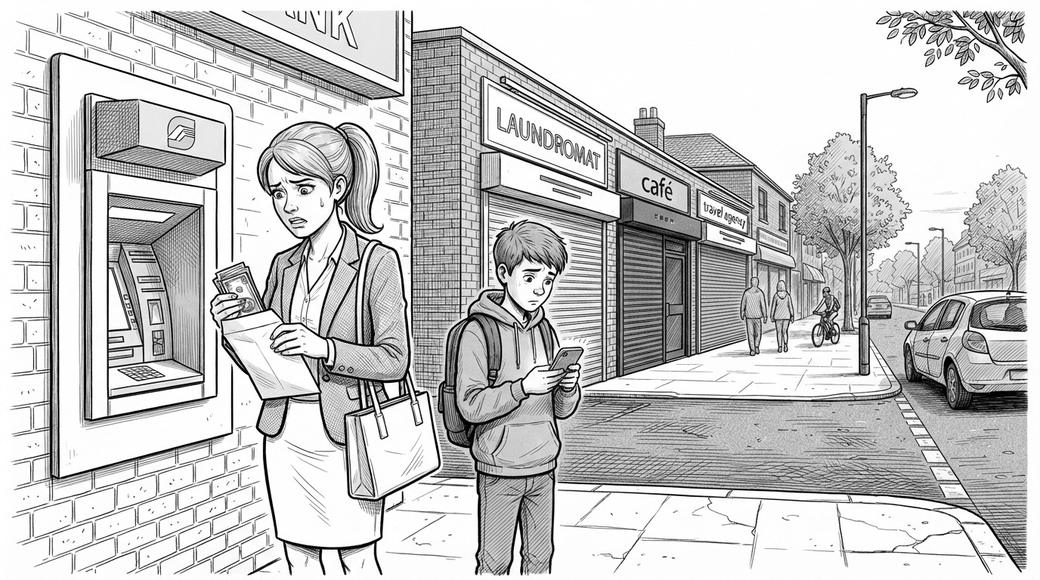
She was not paid at all until she complained. Then, the court found, money had to come from her side first. Bank records showed $1,700 in cash withdrawn from her or her brother's account, then $1,426 in wages paid to her the next day, three pay cycles in a row. Judge Forbes was satisfied she was required to make payments to Mr Rajput "to cover KPG's costs of employing her".
The judge found neither side was fully candid, and did not rule out that she and her brother went along with it at first. That made no difference: "no amount of consent can lawfully relieve an employer of its obligation to pay an employee". Her claim that she was asked for $50,000 was not proved. Her job ended on 21 May 2019. She was not a strong performer, but the refusal to keep paying was the true catalyst for her dismissal, the judge found.
The court ordered KPG to pay penalties of $169,860 and Mr Rajput $33,972, both payable to Ms Kaur, plus $17,280.81 for lost pay and $15,000 for hurt and humiliation. The scheme was opportunistic rather than systematic, so the higher penalties for serious contraventions did not apply, but the judge said the respondents "should count themselves lucky". Each side paid its own costs.
An employer cannot make you fund your own wages, even when your visa depends on the job and even if you went along with it at first. Bank records of money going out and coming back can help prove it.
The penalties and compensation were decided on 27 March 2026; no appeal had been found when this was checked on 1 October 2026. The findings on liability are in [Kaur v P & G Accounting Solution Pty Ltd [2025] FedCFamC2G 30](https://www.austlii.edu.au/cgi-bin/viewdoc/au/cases/cth/FedCFamC2G/2025/30.html). Asking for or receiving a benefit in return for a sponsorship is also an offence under the Migration Act 1958 (Cth) s 245AR, and since 1 January 2025 deliberate underpayment can be a crime under the Fair Work Act. Neither was in issue in this civil case, and the Fair Work offence does not apply to earlier conduct.
A published decision of the Federal Circuit and Family Court of Australia (Division 2), retold in plain English. Lawcaptain did not act in this case. Every outcome depends on its own facts. General information, not legal advice about your situation.
Talk to us.
Call 1300 967 552, or leave your details and we will call you.
Underpayment
 Cash envelopes, pay-back slips and $15.3 million in penaltiesFederal Court of Australia · 5 August 2024Read the case study
 Buy your own truck or lose your job: decades later, still contractorsHigh Court of Australia · 9 February 2022Read the case study
 Never paid for one shift at a dog festival, he went to courtFederal Circuit and Family Court of Australia (Division 2) · 24 November 2025Read the case study