HomeEmployment lawContract disputes
Common law · breach of contract

Your employer broke the contract? Know what it is worth.

Separate from unfair dismissal, your contract gives you rights of its own: to the notice it promises, to the pay and bonuses it guarantees, and to the job you agreed to do. A breach is a claim for damages in court.

Notice periodwhat wrongful dismissal damages usually cover — or the rest of a fixed term
Generally no damagesfor hurt feelings or the way you were dismissed
6 yearsto start a contract claim in WA, from when it arose
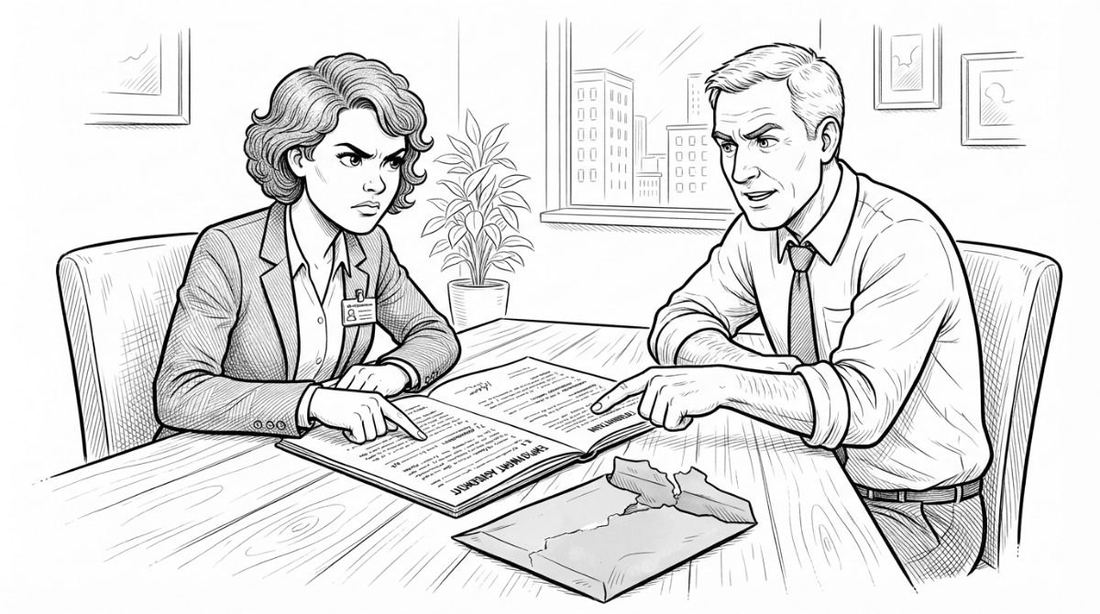
An employee and her boss point at different clauses of one contract

Time limit 21 days if you also have an unfair dismissal or general protections claim — that deadline does not wait for the contract claim. The contract claim itself must be started within six years of the breach in WA; other states and territories set their own limitation periods.

Every employee has a contract, written or not, and a breach of it is a claim in its own right. It is not the same as unfair dismissal. Unfair dismissal asks whether the dismissal was fair; a contract claim asks only whether your employer did what it promised. That makes contract claims matter most to people the Fair Work system does not help much: senior staff above the high income threshold, people part-way through a fixed-term contract, people with a long notice period or a large bonus at stake, and anyone whose employer changed the job, cut the pay or withheld money the contract promised.

Wrongful dismissal: sacked without the notice you were owed

Wrongful dismissal is a dismissal in breach of the contract — most often without the notice the contract requires, or part-way through a fixed term the employer had no right to cut short. It does not matter whether the dismissal was fair. What matters is whether the employer had the contractual power to do it the way it did.

Read moreShow less

How much notice were you owed?

Where the notice comes fromWhat it means
Your contract states a periodThat period, and it cannot be less than the statutory minimum
The National Employment Standards (s 117)A floor, not a ceiling: 1 week (up to 1 year's service), 2 weeks (1–3 years), 3 weeks (3–5 years), 4 weeks (over 5 years), plus 1 week if you are over 45 with at least 2 years' service
Your contract says nothingThe law usually implies reasonable notice — assessed on your seniority, salary, length of service, age, qualifications and how long it is likely to take you to find comparable work
A fixed-term contract with no early-termination rightPay and benefits to the end of the term

Reasonable notice can be far longer than the statutory minimum. Courts have found around six months for senior, highly paid roles, and as little as two months for a truck driver. It is judged on the circumstances when notice was, or should have been, given. Where an award or the National Employment Standards already fix the notice, courts have held there may be no room to imply a longer period — so this matters most for award-free employees.

Your employer can pay you in lieu of notice only if the contract gives it that power. Without one, an immediate dismissal is a breach sounding in damages. The Fair Work Act separately requires the minimum notice to be given or paid out, except for serious misconduct.
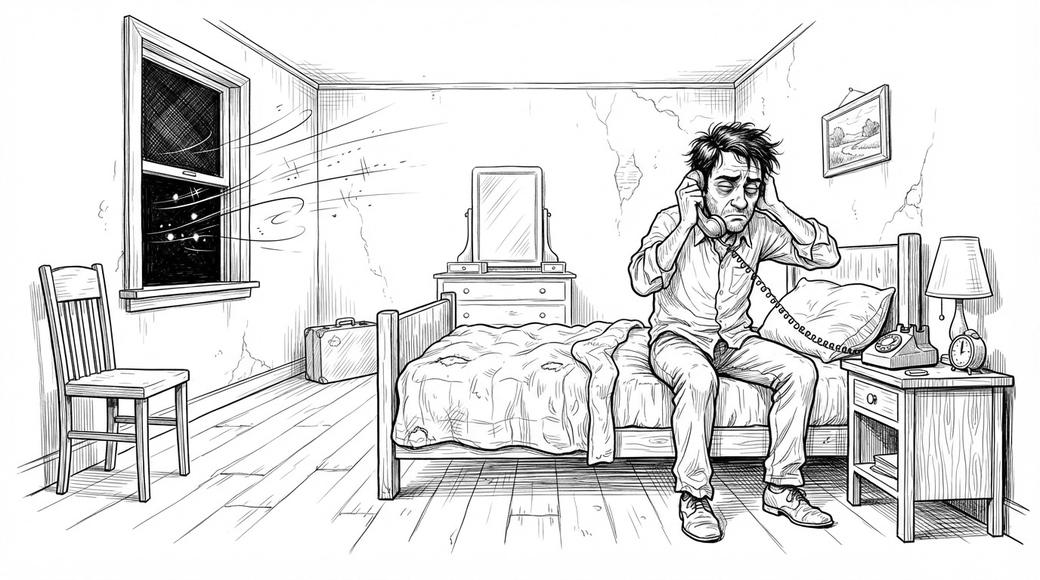
A tired man sits on a hotel bed late at night, phone to his ear, covering his other ear against noise from outside.
Case study
$1,442,404.50 damages restoredHigh Court of Australia · 11 December 2024

A hotel noise complaint, a 'sham' hearing and $1.44 million

Adam Elisha was sacked over a hotel noise complaint after a disciplinary process the trial judge called a sham. The High Court held that his employer's own disciplinary policy was part of his contract, and that breaking it could cost damages for psychiatric injury.

Read the full storyShow less

Adam Elisha had worked for Vision Australia since 2006 as an adaptive technology consultant, setting up technology for people with vision impairment. In March 2015, staying at a country hotel for work, he rang reception at around 12.30am to complain about noise outside his room. The hotel's proprietor later alleged he had been aggressive and intimidating.

Vision Australia stood him down and gave him a letter setting out the hotel allegations, which he denied at a disciplinary meeting. But the managers deciding his fate had also been told by his own manager, with whom his relationship was strained, that he had a history of aggression. That was never put to him. He was dismissed for serious misconduct, without notice pay, and was later diagnosed with a major depressive disorder. He settled an unfair dismissal claim for $27,248.68, the most the law allowed.

He then sued for breach of contract. The trial judge found he had not been aggressive at the hotel, that the claimed history of aggression 'lacked any proper foundation', and that the process was 'nothing short of a sham and a disgrace'. He awarded $1,442,404.50. The Victorian Court of Appeal set that aside, holding that damages for psychiatric injury were not available and were too remote.

The High Court restored the award, six judges to one. His contract said his conditions would be in accordance with Vision Australia's policies and procedures, so the disciplinary policy, which promised a written outline of the allegations before any meeting, bound the employer. The old English case of Addis v Gramophone Co Ltd did not bar damages for psychiatric injury, and a serious psychiatric injury from a breach like this was a serious possibility the parties should have contemplated.

What it means for you

If your contract says you must follow your employer's policies, its disciplinary policy may bind your employer too. A dismissal that ignores the promised process can be a breach of contract, not only an unfair dismissal.

Decided six to one, with Steward J dissenting. This is now the leading case: damages for psychiatric injury caused by a breach of an employment contract in the course of a dismissal can be recovered, subject to the usual rules on remoteness.

Summary dismissal and serious misconduct

An employer can dismiss without notice only for conduct serious enough to go to the root of the contract — a repudiation, or a fundamental breach. Dishonesty usually qualifies. Poor performance rarely does. Fear that you might misbehave in future is never enough; the conduct must already have happened.

Read moreShow less
  • The employer carries the burden. In a wrongful dismissal claim, it must prove the misconduct justified summary dismissal. It is an objective question, decided on the facts as the court finds them.
  • Later-discovered misconduct can still count. An employer can justify a summary dismissal with serious misconduct it only found out about afterwards. But once it has validly dismissed you on notice or paid you out, it cannot later recast that as a summary dismissal.
  • Knowing and ignoring misconduct can waive it. An employer that keeps you on, with full knowledge, may lose the right to dismiss for that conduct.
  • "In the employer's opinion" clauses are read carefully. Usually the employer need only have genuinely formed the opinion. But where the rest of the contract points the other way, courts have required the misconduct to be proved, treating the opinion as going only to how serious it was.

Demotion, pay cuts and changing the job

Your employer cannot change the terms of your contract on its own. A variation needs your agreement and something given in return, though keeping your job can itself count. Without an express power in the contract, award or agreement, an employer generally cannot:

Read moreShow less
  • demote you, or take away a promotion already given
  • cut your pay
  • significantly change your agreed responsibilities or hours

Not every change is a variation. An employer can direct you to do the job differently, adopt new systems, or make changes within the scope of what you were employed to do. A significant loss of status or responsibility can be a breach even without any change in title or pay; ordinary give-and-take is not.

Repudiation, and your choice

A serious unauthorised change — a demotion, a real pay cut, a different job — can be a repudiation: conduct showing the employer no longer intends to be bound by the contract. It does not end the contract by itself. You choose:

What happens
Accept the repudiationTreat the contract as ended, by words or clear conduct, and claim damages. This is the common law's constructive dismissal. It can also free you from post-employment restraints — see restraints and confidentiality
Affirm the contractKeep it on foot and hold the employer to it. Carrying on as though nothing happened can be treated as affirming the contract, and an employer will argue it shows you agreed to the change
Work under protestContinuing to work while clearly objecting and considering your position is not, on its own, affirmation. Put the objection in writing
An older call-centre worker with a headset round her neck walks out past her colleagues as a manager waits by the open door.
Case study
$45,933.92, including interestFederal Circuit and Family Court of Australia · 8 November 2024

After 30 years at Telstra, sent home over a hearing test

After a hearing test, Telstra told a long-serving emergency call operator to stay away until medically cleared, then stopped paying her. The court held that suspending her without pay broke her contract, but most of her other claims failed and the damages were modest.

Read the full storyShow less

Valerie Martin joined Telstra in 1989 and from around 2000 answered Triple Zero calls. Since 2012 Telstra had known she had mild to moderate high-frequency hearing loss, and she worked with a headset covering both ears. From late 2017 Telstra considered her performance unsatisfactory. It put her on four performance plans and gave her two written warnings over slow answering and mishandled calls, including an ambulance call connected to the wrong suburb. The court also found she had altered the time on a call ticket.

In November 2019 an audiologist reported good speech discrimination, but Telstra's occupational doctor then reported that she was unsuitable for Triple Zero work. On 7 November 2019 her manager told her not to come back until she was medically cleared. Telstra paid her discretionary leave for a time, then nothing from 14 February 2020, the day she started her case. It later back-paid her base salary for those months, without admission. In May 2020 an ear specialist found her fit to return, but she did not go back. Her doctor certified her unfit for work, and she resigned in May 2021.

Her claims under the enterprise agreement, the Fair Work Act's pay rules and disability discrimination law all failed. But the court held that at common law an employer has no right to suspend an employee without pay. Doing so repudiated her contract, so whether the direction was reasonable did not matter. The court accepted that it materially contributed to a persistent depressive disorder.

Given her performance history, the court put the chance she would have stayed until her planned retirement at only 15%. That left $11,994.41 in lost wages after what Telstra had already paid. It awarded $30,000 for the psychiatric injury, and with interest the final judgment, in February 2025, was $45,933.92.

What it means for you

Being told to stay home while your employer checks your fitness is not the same as being lawfully stood down. Unless your contract or an agreement allows it, an employer that keeps you away from work and stops paying you may be breaching your contract.

Decided a month before the High Court's decision in Elisha v Vision Australia Limited [2024] HCA 50, which confirmed that damages for psychiatric injury can be recovered for breach of an employment contract. Final orders were made in Martin v Telstra Corporation Ltd (No 3) [2025] FedCFamC2G 274.

Unpaid bonuses and commission

Whether you can sue for a bonus depends on what the contract says about it.

Read moreShow less
TypeCan you claim it?
Commission or bonus calculated by formulaYes. It is a contractual entitlement like salary. Failing to follow a direction does not forfeit it unless the contract links the two
Bonus assessed against set objectives, with a discretionOften. A bargained-for discretion must be exercised honestly and not capriciously or arbitrarily. If the objectives were met, the employer has to have said clearly that it could still refuse
Genuinely discretionary or ex gratia bonusRarely. The employer can attach almost any condition, provided it does not act in bad faith
Share plans, options and "bad leaver" rulesDepends on the plan rules. A "bad leaver" clause usually turns on whether the conduct actually happened, not on what the employer believed

On a wrongful dismissal, you can also recover bonuses and benefits you would have received during the notice period. A purely discretionary benefit is much harder to recover than one the contract required.

What you can get

Contract damages aim to put you where you would have been if the contract had been performed. For a wrongful dismissal that usually means the pay and benefits for the notice period you should have been given, or for the rest of a fixed term.

Read moreShow less
How it works
Lost pay and benefitsSalary, superannuation and other contractual benefits over the notice period or unexpired term, assessed on gross pay
Looking for workYou are expected to mitigate by seeking comparable work, and earnings in the period come off. The employer has to prove you failed to mitigate
Hurt, distress and the manner of dismissalNot recoverable, on the orthodox Australian position. The High Court's 2014 decision in Barker also rejected any implied term of mutual trust and confidence
Punishing the employerNot available. There are no exemplary damages for breach of contract
ReinstatementCourts will not order an ordinary employment contract to be performed. The remedy is money

Some statutory claims fill the gaps contract leaves. Distress can be compensated in a general protections or discrimination claim, and unfair dismissal can look at fairness where contract law will not. See general protections and discrimination.

Where to bring it, and what it can cost

A contract claim goes to the ordinary civil courts. That brings the ordinary costs rule: the losing party is usually ordered to pay a large part of the winner's legal costs. That risk is one of the biggest differences from the Fair Work system, where each side generally bears its own costs.

Read moreShow less
  • Fair Work Act claims are largely costs-protected. In the Commission (s 611) and in court (s 570), each party bears its own costs unless a narrow exception applies — for example, a claim brought vexatiously or without reasonable cause.
  • A contract claim joined with a genuine Fair Work Act claim. Where they are run in the one federal proceeding, the courts have held that the s 570 costs rule cannot be split between the causes of action.
  • The costs of running an unfair dismissal claim are not recoverable as damages in a contract claim.
Free discussion · no obligation

Talk to us.

Call 1300 967 552, or leave your details and we will call you.

Case studies

More cases like yours.

Real decisions of the Fair Work Commission and the courts, retold in plain English from the published judgments. Lawcaptain did not act in these cases.

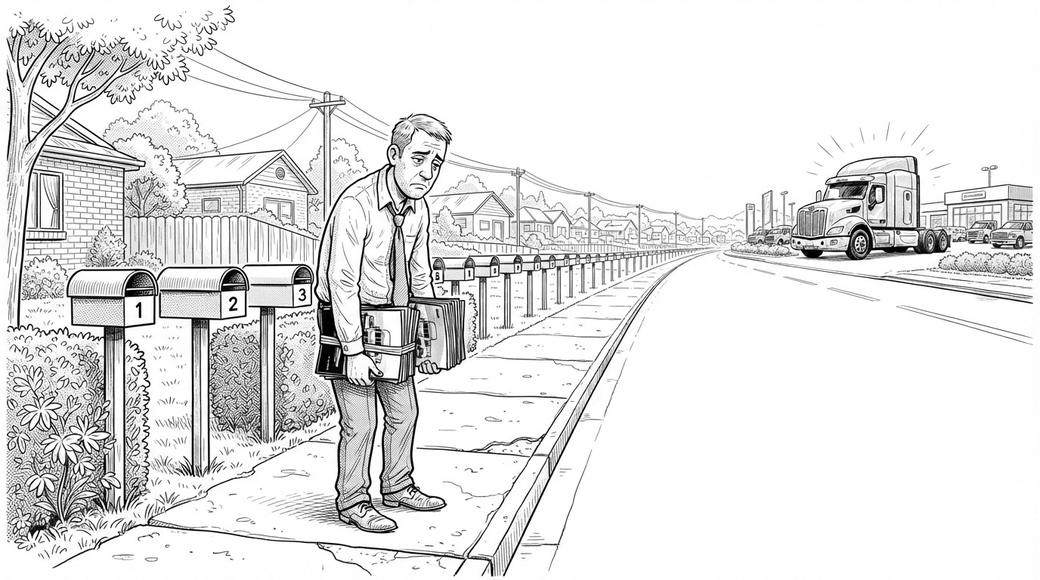
A man in a shirt and tie holds a stack of truck brochures on a suburban street, looking along a row of letterboxes.
$20,000 (the small claims limit)Federal Circuit Court of Australia · 21 November 2018

Truck sales manager gave notice and was told to drop leaflets

When a Geelong truck sales manager gave four weeks' notice, he was driven home, his phone was cut off and he was told to spend his notice letterboxing. The court found a constructive dismissal and ordered his unpaid wages, commission and bonus.

Read the full storyShow less

Peter Willigen sold new Fuso trucks in Geelong from 2012, later as General Manager, Fuso Sales. In 2017 the business ended its Fuso dealership and moved to Hino trucks. Mr Willigen, whose customers were Fuso buyers, decided to leave. After checking with the Fair Work Ombudsman, he gave four weeks' notice on 22 September 2017.

The director wanted him to finish on the Monday. That Friday another employee was told to drive him home, and his mobile phone was disconnected. On Monday morning an email directed that he work out his notice canvassing Geelong and dropping off brochures. He left the showroom within 15 minutes. At 9.37am an email agreeing to finish up 'by mutual agreement' was sent from his computer. The court found he did not send it.

The judge found Mr Willigen an honest and candid witness, while the director 'appeared to regard the witness box as a platform from which to make speeches'. There had been no agreement to end the job, and moving a general manager to leaflet drops was a constructive dismissal. He was owed four weeks' wages and the leave that would have accrued.

On his 26 commission claims, the employer said profits were wiped out because the manufacturer had not paid incentive payments, and that some orders had been passed to another dealer. The court rejected both as grounds for refusing commission. It also accepted that he had been promised a $10,000 bonus for selling two buses, half of it unpaid.

The total came to $24,784, cut to the $20,000 small claims limit. Judgment went against the company found to be his real employer, joined on the third day of the hearing, and the reasons were sent to the Fair Work Ombudsman.

What it means for you

If you resign and give the notice your contract requires, your employer cannot simply declare you gone, or give you demeaning work for the notice period. Commission on sales you secured can still be owed after you leave.

The small claims limit was $20,000 at the time. It has been $100,000 since 1 July 2023.

A young engineer holding his jacket pauses at an office door, looking back at colleagues cheering a pie chart on a wall screen.
Bonus claim dismissed; about $1,930 in pay, leave and interestFederal Circuit Court of Australia · 18 April 2019

He stayed the whole bonus year but left before payday

A senior software engineer left a few weeks before his employer paid its annual bonuses, after being told he would still get his. His contract said bonuses were entirely at the directors' discretion, and that decided the case.

Read the full storyShow less

Patrik Varga joined PaperCut, a Melbourne software company, as a senior software engineer in February 2016. His contract put him in the employee bonus scheme but said 'the amount, terms and schedule of any bonus are entirely at the discretion of the employer and as determined by PaperCut Directors'. Company presentations described the bonus as profit share, under the heading 'Share the success'.

On 14 September 2017 he resigned, effective 13 October. The company asked him to withdraw his resignation, and a letter lifted his salary to $125,000 from 1 September; he still left. People at the company told him he would receive the full bonus for 2016/17 despite resigning, and the company did not dispute that. But the directors then decided that only people still employed when bonuses were paid would get one, and the bonus was paid on 31 October 2017. Seven people who had left before the payment date missed out, Mr Varga among them.

He brought a small claim. The court found the letter had varied his contract, so he was owed the difference in wages from 1 September at $125,000 and in his annual leave payout, plus $150 instead of interest: about $1,930 in all.

The bonus claim failed. Whatever he had been told, the bonus was for the directors to decide, and they had not finally decided who would be eligible until after the assurance was given. When they did decide, he was no longer employed on the payment date.

What it means for you

If your contract says a bonus is at your employer's discretion, a manager's assurance may not turn it into an entitlement. Before resigning with a bonus due, check whether you must still be employed on the payment date.

The small claims limit was $20,000 at the time. It has been $100,000 since 1 July 2023.

Show more case studies (3)Show fewer
A couple in an auction warehouse full of paintings and antiques read a single sheet of paper beside an auctioneer's gavel.
$1,380,251 damages plus interestFederal Circuit and Family Court of Australia · 27 August 2025

Auction house ordered to pay $1.38 million on a loosely worded bonus

An auction house recruited a husband and wife to build a fine art division, promising them 20% of its profit above $200,000. They left six years later and sued, and the court rejected every argument the company made for not paying.

Read the full storyShow less

Shane and Amanda Benson ran their own business buying, restoring and selling fine art, antiques, jewellery and luxury goods. In 2017 Lloyds Auctioneers recruited them to set up a Fine Arts and Luxury Goods division. Heads of agreement signed on 30 June 2017 gave each of them a salary of $100,000 and a bonus: Lloyds kept the first $200,000 of profit, and the bonus was 20% of profit after that.

They built and ran the division for six years. In early 2023 Lloyds raised their salaries to $150,000, then offered new contracts that left out the bonus scheme. The Bensons declined them, resigned in June 2023 and sued for the unpaid bonus.

Lloyds argued the bonus term was void for uncertainty, that 'profit' meant the profit of the whole company, and that the bonus had been abandoned by 2020. The court rejected all three. The agreement was 'inexpertly written' but had a commercial meaning: the profit of the division the Bensons ran. Lloyds called no witnesses from the business, and its accountant's figures showed the division losing millions, which made little sense for a company that kept it going and gave the couple pay rises. The court preferred the Bensons' forensic accountant and took the lower of his two estimates, $1,380,251.

Lloyds was also ordered to pay a $23,475 penalty for underpaying their annual leave when they left. It won one point on its cross-claim: without permission, Ms Benson had used a discount attached to a digital collectible she bought to cut her company's selling commission to 2.75%. That amount was left for the parties to work out.

What it means for you

A bonus promised in a short or informal document can still be enforced, even if it is loosely worded. An employer offering a new contract without the bonus does not, by itself, bring the old promise to an end.

Decided in August 2025. Before the trial, Lloyds was refused leave to appeal a ruling that kept the hearing dates ([2025] FCA 324). Interest and the amount of the cross-claim were left for the parties to agree.

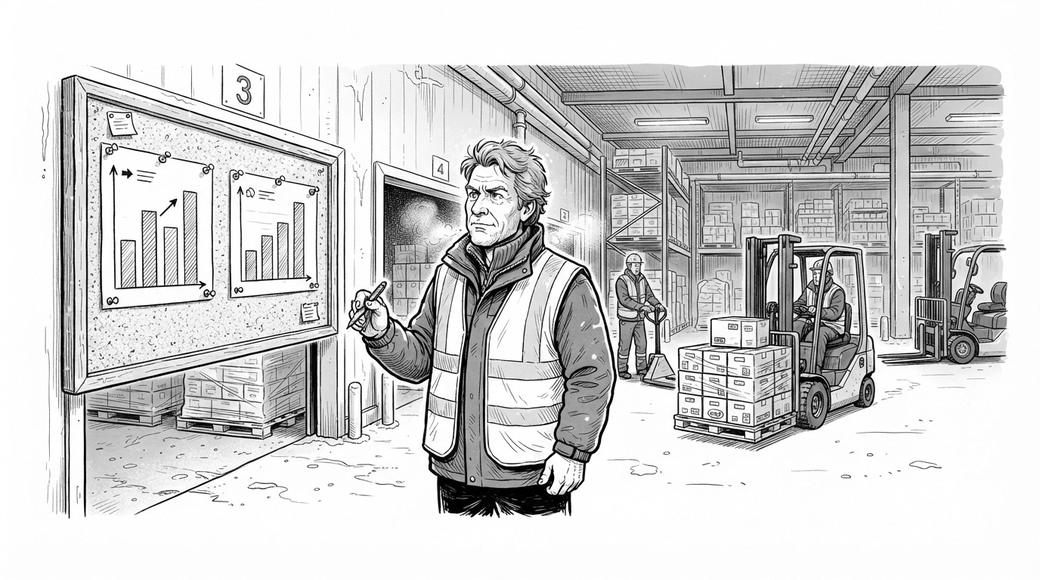
A manager in a hi-vis vest studies two bar charts in a chilly cold-storage warehouse as forklifts move pallets.
$34,000 in unpaid incentive bonusesFederal Court of Australia · 2 August 2018

Hitting a budget that forecast a loss still earned the bonus

A transport manager moved from Perth to Adelaide on a promise of $3,400 a month for achieving the state budget. Made redundant three years later, he sued for that and much more. He won ten months of bonuses and lost everything else.

Read the full storyShow less

Anthony Heldberg joined Rand Transport, a refrigerated freight and cold storage company, in 2002 as a night shift storeperson in Perth, and worked his way up. In 2014 he moved to Adelaide as SA State Manager, responsible for about 150 employees. His contract offered a '$3,400 per month bonus (paid two months in arrears) for achieving the SA state budget', with the first three months guaranteed. After those three months he was never paid it again.

In March 2017 his job was made redundant. Rand paid him five weeks' pay in lieu of notice and 12 weeks' severance. He sued for the bonuses, extra severance under a 2003 policy, damages for not getting reasonable notice, and compensation for being misled about the bonus.

Rand said the bonus depended on the annual budget. Justice White disagreed: a bonus expressed 'per month', paid two months in arrears, with the first three months guaranteed, pointed to the monthly budget. Rand's South Australian budgets forecast a loss every month, so the state could achieve budget while still losing money, as long as the loss was smaller than planned. That happened in ten months, and he was awarded $34,000.

The rest failed. His 2014 contract replaced the earlier ones, so the old severance policy no longer applied. His contract required him to abide by company policies, which brought in the policy manual's notice table, and he had been paid that notice. The judge said six months would have been reasonable notice had the common law rule applied. The claim of being misled failed because he could not show any loss: counting what he went on to earn in a new job after Rand, he was better off than if he had stayed in Perth.

What it means for you

Read a bonus clause closely: how the amount is expressed, when it is paid and what is guaranteed can show which target it is measured against. A term requiring you to follow company policies can also bring a policy's notice periods into your contract.

The judge left open whether the minimum notice in s 117 of the Fair Work Act displaces the common law right to reasonable notice.

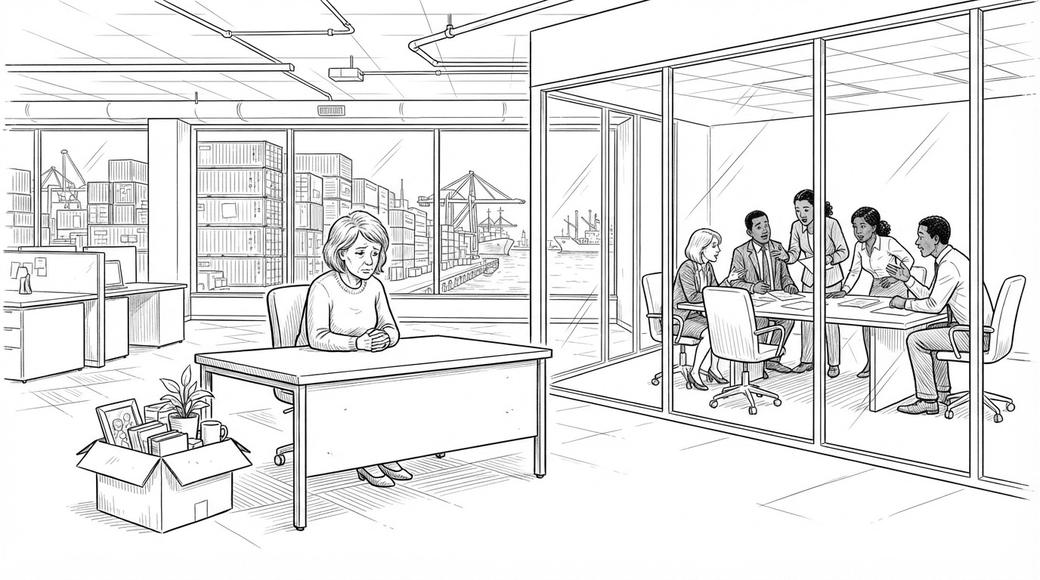
A woman sits alone at a bare open-plan desk with a box at her feet while managers meet behind a glass wall.
Nine months' notice, less five weeks paidFederal Circuit Court of Australia · 25 June 2021

Accused of misconduct after 19 years, she won nine months' notice

A 54-year-old manager who helped set up a fertiliser company's Australian business was dismissed for serious misconduct over two documents she signed. The court found she had authority to sign both, had done nothing seriously wrong, and was owed nine months' notice.

Read the full storyShow less

Janelle McAlister helped set up the Australian arm of a Norwegian fertiliser group in 1996 and worked for Yara Australia for almost 19 years, rising to administration, logistics and human resources manager. In April 2015 a new managing director restructured the business. Ms McAlister learned at a meeting that her role had changed; most of her duties were taken away, and she was left with 'an empty title'.

In October 2015 Yara decided to stop using a customs broker whose owner was married to a Yara employee, a relationship long known in the company. The broker asked whether Yara was ending a contract running to November 2015, which Ms McAlister had signed in February. She had also signed a routine shipping authority for the broker's new owner. On 16 October 2015 Yara summarily dismissed her for serious misconduct, paying five weeks in lieu of notice.

The court found she had authority to sign both documents and had spoken to the former managing director about the contract. The contract caused Yara no loss, and the authority saved it detention charges. Matters Yara relied on were never put to her, and the disciplinary interview was a formality. Her minor slips did not warrant summary dismissal.

Her 1996 contract said nothing about notice, so the court implied a term of reasonable notice, and held that the minimum in the National Employment Standards did not displace it. She was 54, had served 19 years, had narrow experience and no formal qualifications, and had struggled for years to find comparable work. The court fixed nine months, valued on her $191,200 package, less the five weeks paid. Her claims for redundancy pay, and that she was dismissed because of her age, back surgery or complaints, failed.

What it means for you

If your contract sets no notice period, you may be entitled to reasonable notice, which for long-serving or older staff can be many months rather than the statutory minimum. An employer that dismisses for serious misconduct must be able to prove it.

Courts have differed on whether the minimum notice in s 117 of the Fair Work Act displaces the common law right to reasonable notice. This judgment held that it does not.

Leading cases

The decisions that set the rules.

Australian law does not imply a term of mutual trust and confidence into employment contracts. Whether to create one is for Parliament, not the courts.

An award is not implied into the employment contract; it operates alongside it by force of statute. The case also sets the strict test for implying terms into a contract.

Show all leading cases (4)Show fewer

Summary dismissal needs misconduct serious enough to justify ending the contract, and an employer may rely on serious misconduct it discovered only after the dismissal.

An employer's repudiation — there, an attempt to demote — does not end or change the contract unless the employee accepts it. An employee who made plain he did not accept the demotion, and kept working, had not agreed to it.

A wrongfully dismissed employee cannot sit out the contract and sue for the wages. The claim is for damages, and the duty to look for other work applies.

Read with the rest of the contract, a power to dismiss for misconduct "in the bank's opinion" still required the misconduct to be proved; the bank's opinion went only to how serious it was.

Questions

The things people ask.

What is the difference between wrongful dismissal and unfair dismissal?

Wrongful dismissal is a breach of your contract, usually a dismissal without the notice it requires, and it is a claim for damages in court. Unfair dismissal is a Fair Work Act claim about whether the dismissal was harsh, unjust or unreasonable, lodged with the Commission within 21 days. You can have one without the other, and sometimes both.

I earn above the high income threshold. Can I still sue?

Yes. The threshold limits unfair dismissal, not contract claims. If you were dismissed without the notice your contract required, or part-way through a fixed term, a wrongful dismissal claim is open whatever you earn.

My contract doesn't say how much notice I get. What am I owed?

Usually reasonable notice, which the law implies where the contract is silent. It depends on your seniority, pay, length of service, age and how long it is likely to take to find comparable work. It is never less than the minimum in the National Employment Standards.

My employer cut my pay. Did I agree by staying?

Not necessarily. A pay cut without your agreement is a breach, and courts do not find consent to one lightly. But carrying on for months without objecting gives your employer an argument that you agreed. If you do not agree, say so in writing. Whether to keep working under protest or treat the contract as ended depends on your circumstances, so consider getting professional advice on your options.

Can I claim for the stress of being sacked?

Generally not in a contract claim. On the orthodox Australian position, courts do not award contract damages for distress or the way a dismissal was handled. Distress can be compensated in a general protections or discrimination claim, which is one reason to check which claims you have.

Do I have to pay my employer's legal costs if I lose?

In an ordinary contract claim in court, usually yes — the loser generally pays a large part of the winner's costs. Fair Work Act claims are different: each side generally pays its own. That difference is a big part of choosing the right claim.

General information about Australian employment law, not legal advice about your situation. Updated September 2026.