Breached orders, missing records, and 73% of the pool to her
- Together
- 16 years, married
- Children
- Four, living with her
- Net pool
- About $1.94 million
- Split
- 73% her / 27% him
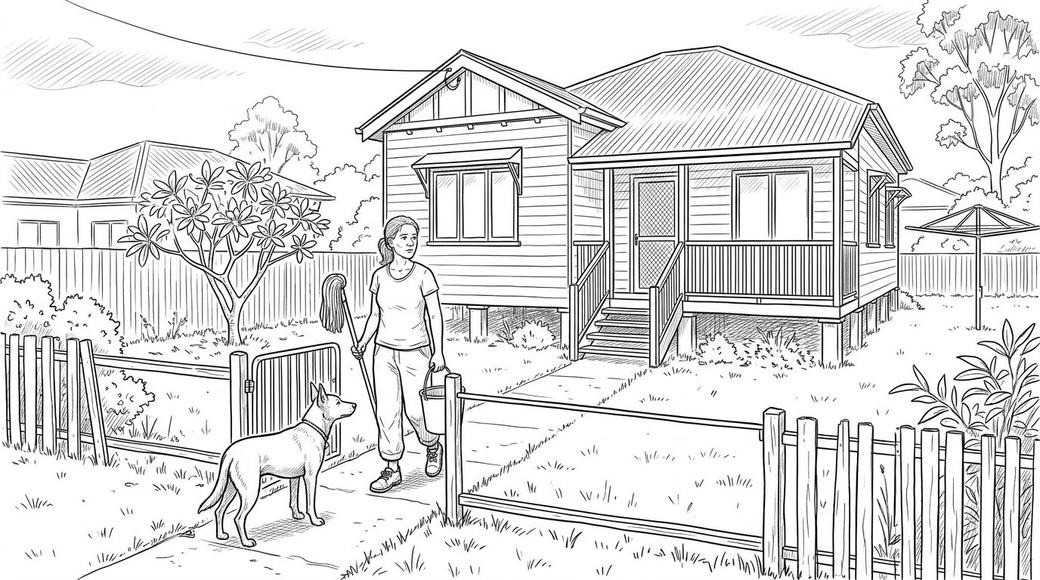
Ms and Mr Gronow lived together from 2007, married in 2010 and separated in July 2023. They have four children, three of whom have additional needs. They owned two houses in Queensland, one rented out. He ran his own business and earned more. She works part-time as an educator on about $48,000 a year.
After the separation, the judge found, Mr Gronow engaged in family violence towards Ms Gronow. He repeatedly breached a protection order and was charged several times. He paid only about $9,500 towards joint expenses and the children's needs before the case began, and did not pay his court-ordered half share of the mortgages and outgoings. She kept both properties going with her wages, an insurance payout, loans from her parents and borrowing.
The case was decided under the amendments in force from 10 June 2025. The pool was $1,943,143, including superannuation. Judge Beckhouse found contributions during the marriage equal, but Ms Gronow had brought in more at the start, and the violence made her contributions after separation significantly more onerous. Because that period was only two and a half years of an 18-year financial relationship, the adjustment was modest: 58% to her.
Mr Gronow had not disclosed his recent tax returns, bank statements or business accounts, and kept withdrawing money from the rental account despite orders. The judge found his attitude led to wastage or a smaller pool. Looking at their current and future circumstances, the judge then made a further 15% adjustment for Ms Gronow because of the large income gap, which would continue while she cared for the children for at least 13 more years, her need to house and pay for the four children, and her $69,462 litigation loan.
The final split was 73% to her, valued at $1,418,494, and 27% to him, valued at $524,648. It also settled what he owed her under earlier orders. She is to keep the family home if she can refinance its mortgage, and the rental is to be sold. By agreement, the family dog stays with her and the children.
Since 10 June 2025, the court must consider how family violence affected a person's contributions and their current and future circumstances. A party who withholds financial records or ignores orders also risks a smaller share.
The court was not satisfied that any family violence before separation affected the wife's contributions; the adjustment rested on what happened after separation. The orders were corrected under the slip rule on 25 March 2026.
A published decision of the Federal Circuit and Family Court of Australia (Division 2), retold in plain English. Lawcaptain did not act in this case. Every outcome depends on its own facts. General information about Australian family law, not legal advice about your situation.
Sort out your own property split.
Agreed on a split? Make it binding with consent orders. Call 1300 967 552, or get an instant quote online.
Debts, spending & hidden assets
 He said he owed $440,000, mostly to family. The court left it outTogetherDe facto, from 2004ChildrenThree, living with herNet poolAbout $628,000Split58% her / 42% himFederal Circuit and Family Court of Australia (Division 2) · 29 March 2023Read the case study
 His gambling cost about $155,000, and the house split moved her wayTogetherAbout 16 years, marriedChildrenTwo, now adultsNet pool$649,000 plus superSplit67.5% her / 32.5% himFederal Circuit and Family Court of Australia (Division 2) · 8 October 2021Read the case study
 He traded shares on borrowed money, so he bore the lossesTogetherOver 20 years, de factoChildrenTwo, now adultsNet poolAbout $180,000SplitAll to her bar his toolsFederal Circuit and Family Court of Australia (Division 2) · 9 May 2022Read the case study