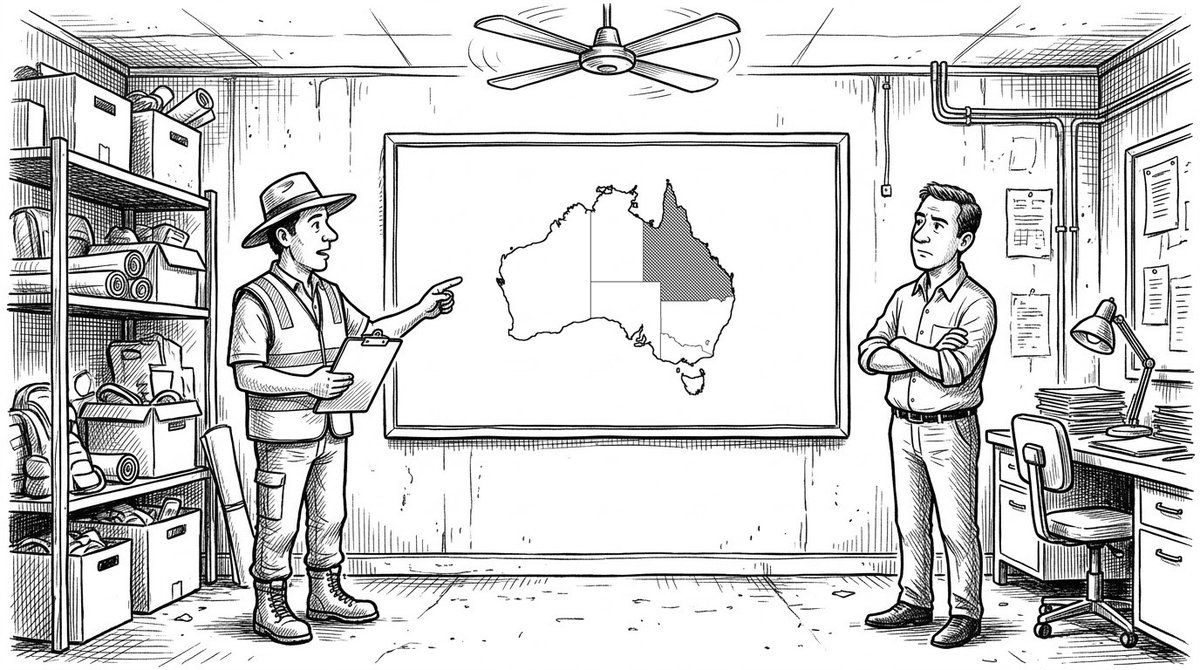
Who is in the Queensland state system
The question is asked about your employer's legal entity — not the place you work or the job you do. A nurse in a public hospital is in the state system; a nurse in a private hospital is in Fair Work.
Read moreShow less
| Your employer | System |
|---|---|
| A Queensland Government department (for example teachers and public servants) | Queensland state system |
| Queensland Health or a Hospital and Health Service (nurses, doctors, health practitioners, operational staff) | Queensland state system |
| Queensland Police Service, Queensland Fire Department, Queensland Ambulance Service | Queensland state system |
| One of the 77 Queensland local governments, including Brisbane City Council | Queensland state system |
| A declared body such as TAFE Queensland, Trade and Investment Queensland, Tourism and Events Queensland or the Queensland Curriculum and Assessment Authority | Queensland state system |
| A parents and citizens association | Queensland state system |
| A company or business unit owned by a council | Check — state system only if specifically declared |
| A government owned corporation (for example in energy, water, rail or ports) | Fair Work |
| A university | Fair Work |
| A private company, sole trader, partnership or trust, including private schools and private hospitals | Fair Work |
The traps
- Labour hire into a government workplace. If an agency placed you in a department or hospital, the agency is your employer. A company agency is in Fair Work, so your claim is against the agency in the Fair Work system, not against the State (Manning v State of Queensland (Queensland Health) [2026] QIRC 196).
- Elected councillors are not employees, even if they are paid through the council payroll, so they can't bring a reinstatement claim (Wendt & Ors v Ipswich City Council [2020] QIRC 2).
- A council or State body that trades. Don't assume a council-related or State employer is in the state system. A trading body is in Fair Work unless it has been specifically declared out of it and the declaration has been endorsed by the Commonwealth Minister.
- School councils are not named in the Act's list, and whether they are in the state system is not settled. Consider getting professional advice.
- One claim, one system. If you're unsure which system you're in, keep both 21-day limits in view: the QIRC (Industrial Relations Act s 317(2)) and the Fair Work Commission (Fair Work Act s 394(2)).
How to tell which system you're in
- Find the exact legal name of your employer on your payslip or letter of appointment.
- Is it a Queensland Government department, Queensland Health or a Hospital and Health Service, the police, fire or ambulance service, or a council? If yes, you're almost certainly in the state system — unless one of the next three questions applies.
- Is it a company or business unit that a council or the State owns? Then check whether it has been declared. If not, it's probably Fair Work.
- Were you placed there by an agency? Then the agency is your employer, and it's probably Fair Work.
- Is it a government owned corporation or a university? Then it's Fair Work. Go to the Fair Work system.
The laws and the bodies
- The Industrial Relations Act 2016 (Qld) — the Queensland Employment Standards, awards, certified agreements, unfair dismissal (reinstatement), general protections, stop-bullying orders and wage recovery.
- The Public Sector Act 2022 (Qld) — public sector employment, discipline, suspension and public service appeals. It replaced the Public Service Act 2008 (Qld) on 1 March 2023.
- The Queensland Industrial Relations Commission (QIRC) — hears reinstatement and general protections claims, public service appeals, disputes, wage claims up to $100,000, stop-bullying applications, workers' compensation appeals and work-related discrimination complaints.
- The Industrial Court of Queensland — hears appeals from the QIRC and from industrial magistrates.
- The Industrial Magistrates Court — wage claims, offences, and Fair Work claims that don't settle at the QIRC.
- Appeals. An appeal from the QIRC goes to the Industrial Court, and must be started within 21 days after the decision is announced or released. The Court can extend that time.
- You can appeal as of right for an error of law, or because the QIRC acted outside its jurisdiction.
- On any other ground you need leave, which is given only in the public interest.
- From the Industrial Court, an appeal goes to the Court of Appeal.
Unfair dismissal in the QIRC: the reinstatement application
The state unfair dismissal claim is called an application for reinstatement. A dismissal is unfair if it is harsh, unjust or unreasonable (Industrial Relations Act s 316). There is no filing fee.
Read moreShow less
- Who can't apply (s 315(1)):
- an employee dismissed in the first 3 months (the probation period), unless you agreed in writing to a shorter period or none;
- an employee serving a longer probation agreed in writing before the job started, if the period is reasonable;
- a short term casual — one not engaged on a regular and systematic basis over at least 6 months with a reasonable expectation of more work;
- an employee engaged for a specific period or task, unless the main purpose of that was to avoid the unfair dismissal laws; and
- an employee not covered by an award or agreement, who is not a tenured public service officer, and whose annual wages are at or above the high income threshold — $190,100 for a dismissal on or after 1 July 2026.
- There is no small business code, and no minimum employment period beyond the 3-month probation. A tenured public service officer is never caught by the income threshold, whatever the salary.
- Public sector termination goes here. A decision to terminate can't be the subject of a public service appeal (Public Sector Act s 132(1)(e)), so a dismissed public sector employee applies for reinstatement.
How the claim runs
- Apply within 21 days after the dismissal takes effect (provided you have a claim with merit), on the QIRC's Form 12 (s 317(2)). A union entitled to represent you can apply for you with your consent.
- Conciliation conference. The Commission must try conciliation first. If it fails, the Commission gives its view of the merits and may recommend you discontinue. The claim lapses if you take no action for 6 months after that (s 318).
- Hearing. The Commission must consider (s 320):
- whether you were told the reason for the dismissal;
- whether it related to the employer's operational requirements, or to your conduct, capacity or performance;
- if it related to conduct, capacity or performance, whether you were warned or given a chance to respond; and
- any other matter it considers relevant.
That list is shorter than the Fair Work checklist, and there is no express "valid reason" step. How the Commission weighs the reason for the dismissal under "any other matter" has not been settled by a leading decision. Consider getting professional advice. A dismissal for conduct at work or in connection with the job that was unlawful, or was sexual harassment or sex or gender-based harassment, may be found fair (s 320(2), for dismissals from 3 November 2022).
Late claims. The Commission can allow a further period, and the Act states no test. In Drage v State of Queensland (Queensland Health) [2023] ICQ 22 the Industrial Court described as "completely conventional" an approach that weighed the length of the delay, the explanation, prejudice to each side and the merits. Don't rely on an extension.
What you can get
- Reinstatement to your former job, or re-employment in another suitable job, usually with back pay less what you've earned since (s 321).
- Compensation, but only if reinstatement or re-employment would be impracticable (s 322). It is capped at:
- if an award or agreement covers you, 6 months' wages at your pre-dismissal rate; or
- if none covers you, the lesser of 6 months' wages and half the high income threshold — $95,050 for a dismissal on or after 1 July 2026.
- If an employer wilfully fails to reinstate you, the Commission can order up to 50 penalty units ($8,635 from 1 July 2026) plus lost wages (s 323).
- Costs: each side usually pays its own, unless a claim or response was vexatious, without reasonable cause or plainly without prospects (s 545).
Lawyers. In a dismissal claim a lawyer can appear only with every party's consent or the Commission's leave (s 530). A lawyer employed by your union isn't treated as a lawyer for this rule, so a union's in-house lawyer can appear for a member.
General protections and other dismissal claims
- State general protections. The Queensland Act has its own general protections, modelled on the Fair Work Act: adverse action because of a workplace right, industrial activity, a discriminatory reason or temporary absence for illness or injury. The employer must prove its reason wasn't a prohibited one (s 306). For a dismissal, apply within 21 days (provided you have a claim with merit); an extension is allowed only in exceptional circumstances (s 310). No cap on compensation is stated (s 314).
- Choosing between them. The general protections part doesn't apply to "an action for unfair dismissal" (s 281). Whether you can run a general protections claim and a reinstatement claim about the same dismissal is not settled. Consider getting professional advice before lodging either.
- Severance and mass dismissals. If 15 or more employees are dismissed for economic, technological or structural reasons, the employer must notify and consult the unions first. Applications are due before or within 21 days after the dismissal (ss 326–331).
- Police officers. How a sworn officer's dismissal fits with the reinstatement claim, given police discipline review in QCAT, is not settled. Consider getting professional advice.
Public sector employment
Most of the state system is public sector employment. On top of the award and agreement, the Public Sector Act 2022 (Qld) and the Public Sector Commission's directives set the rules on performance, discipline, suspension and appeals.
Read moreShow less
- Discipline. The chief executive may discipline you if reasonably satisfied of a ground in s 91 — among them misconduct, repeated unsatisfactory performance, absence without approved leave, or contravening a direction or the code of conduct without reasonable excuse. Disciplinary action can be termination, demotion, transfer, a pay reduction, a monetary penalty or a reprimand (s 92).
- The usual sequence is allegations, a show cause notice, a finding, a second show cause notice on the proposed action, then a decision on the action.
- Each decision is a separate decision for appeal purposes.
- Performance can't be dealt with as discipline until the Positive performance management directive (02/24) has been followed (s 86).
- Suspension. Before suspending you, the chief executive must consider reasonable alternatives such as other duties or another location (s 101(3)). Suspension is on normal pay unless normal pay is inappropriate given the likely discipline. A suspension without pay can be appealed.
- Fixed term and casual employees. Permanent employment is the default. You can ask for a review of your status after 1 year of continuous employment, and the chief executive must review it after 2 years (ss 113–115).
- Acting at a higher level. After 1 year of continuous acting you can ask to be appointed at that level. A refusal can be appealed only once you've acted for at least 2 years (ss 120, 129, 132(1)(k)).
Public service appeals
- What can be appealed: a conversion decision, a disciplinary decision other than termination (including a disciplinary finding on its own), a suspension without pay, a transfer, a promotion, a decision under a directive, and a "fair treatment" decision if nothing else fits (Public Sector Act s 131).
- What can't: termination, probation, superannuation or workers' compensation decisions, most classification decisions, and decisions of the Governor in Council or a Minister (s 132).
- Where and when: to the QIRC on Form 89, within 21 days after the decision is given (provided you have a claim with merit). For many decisions the QIRC may decline to hear the appeal unless you have used the internal grievance process first (Industrial Relations Act s 562A).
- What the QIRC does: it reviews the decision to decide whether it was fair and reasonable, in the ordinary meaning of those words. It is a review, not a rehearing, and most appeals are decided on the papers.
- No outside lawyers. You can't be represented by an external lawyer in a public service appeal (Industrial Relations Act s 530A). In practice your union represents you. The public sector entity pays the costs of the appeal.
The main public sector workforces
All of these are in the Queensland state system. Their agreements are certified by the QIRC. Union names are as registered with the QIRC; agreement details as on the QIRC's register on 18 November 2026.
| Workforce | System | Main agreement | Tribunal | Registered union(s) |
|---|---|---|---|---|
| Teachers (state schools) | Queensland state | Department of Education State School Teachers' Certified Agreement 2022 — expired 30 June 2025; the replacement is in QIRC arbitration, with an interim 3% increase from 7 September 2026 | QIRC; public service appeals to the QIRC | Queensland Teachers Union of Employees; Together Queensland, Industrial Union of Employees |
| Nurses and midwives | Queensland state | Nurses and Midwives (Queensland Health and Department of Education) Certified Agreement (EB12) 2025 — to 31 March 2028 | QIRC; public service appeals to the QIRC | Queensland Nurses and Midwives' Union of Employees; The Australian Workers' Union of Employees, Queensland |
| Police | Queensland state | Queensland Police Service Certified Agreement 2025 — to 30 June 2028 | QIRC for industrial disputes. Discipline is reviewed by QCAT, and Public Sector Act appeals don't apply to sworn officers | Queensland Police Union of Employees; The Queensland Police Commissioned Officers' Union of Employees |
| Firefighters | Queensland state | Queensland Fire Department Certified Agreement 2025 — to 31 July 2028 | QIRC; Public Sector Act discipline and appeals | Queensland Professional Firefighters' Union, Industrial Union of Employees; Queensland Fire and Rescue – Senior Officers Union of Employees; Together Queensland |
| Paramedics | Queensland state | Queensland Ambulance Service Certified Agreement 2025 — to 31 August 2028 | QIRC for disputes. The discipline appeal route is not settled | United Workers' Union, Industrial Union of Employees, Queensland |
| Other health workers | Queensland state | Queensland Public Health Sector Certified Agreement (No. 12) 2025 (to 31 August 2028); doctors: Medical Officers' (Queensland Health) Certified Agreement (No. 7) 2025 (to 30 June 2028); health practitioners: the 2022 agreement expired 16 October 2025 and its replacement is before a QIRC Full Bench | QIRC; public service appeals to the QIRC | Together Queensland, Industrial Union of Employees; United Workers' Union, Industrial Union of Employees, Queensland; The Australian Workers' Union of Employees, Queensland; Australian Salaried Medical Officers' Federation Queensland, Industrial Organisation of Employees (doctors) |
| Public servants | Queensland state | State Government Entities Certified Agreement 2023 — expired 30 June 2026; a new agreement is being bargained and the 2023 agreement continues until replaced | QIRC; public service appeals to the QIRC | Together Queensland, Industrial Union of Employees (lead union), with twelve other registered unions |
Their private sector counterparts — teachers in non-government schools, private hospital nurses, private ambulance and patient transport — are in Fair Work.
Pay, awards and certified agreements
- The Queensland Employment Standards are the floor: the minimum wage, maximum weekly hours, flexible working requests, annual, personal, parental and domestic and family violence leave, long service leave, public holidays, notice and redundancy pay, and superannuation (Industrial Relations Act s 21).
- State awards, made by the QIRC, must be at least as favourable as the Employment Standards.
- Certified agreements are the state version of enterprise agreements. Where an award and an agreement both apply and conflict, the agreement wins (s 19(2)). To be certified, an agreement must pass a no-disadvantage test — a different test from the Fair Work better off overall test.
- An agreement doesn't end at its nominal expiry date. It keeps operating until it is terminated under the Act (s 216).
- The 2026 State Wage Case. From 1 September 2026, state award wages rose by 4.75% and the Queensland minimum wage for a full-time employee is $1,004.90 a week (Declaration of General Ruling (State Wage Case 2026) [2026] QIRC 280).
Read moreShow less
- Unpaid wages. A state-system employee or union can claim in the QIRC up to $100,000, within 6 years after the amount became payable (provided you have a claim with merit). Lawyers can't appear in that claim. Larger claims can go to an industrial magistrate, also within 6 years (ss 475, 476, 379).
Laws for every Queensland worker, and what federal law still does
Some Queensland laws were never handed to the Commonwealth, so they apply whichever system you're in. A private sector worker in Fair Work can still end up in the QIRC on these.
Read moreShow less
- Workers' compensation (Workers' Compensation and Rehabilitation Act 2003 (Qld)) — WorkCover Queensland is the State insurer.
- Lodge a claim within 6 months after the entitlement arises (provided you have a claim with merit). If you lodge more than 20 business days after, compensation is usually limited to the period starting 20 business days before you lodged.
- Ask the Workers' Compensation Regulator for a review within 3 months of the decision and reasons, then appeal to the QIRC within 20 business days of the review decision.
- A psychological injury caused by reasonable management action taken in a reasonable way — a disciplinary process, a performance plan, a dismissal — is excluded.
- First responders such as police, paramedics and fire officers diagnosed by a psychiatrist with PTSD are presumed to have a work injury, and the management action exclusion doesn't defeat that. Firefighters have a presumption for 23 listed diseases after a qualifying period of 5, 10 or 15 years.
- Within 12 months after your injury, your employer must not dismiss you solely or mainly because the injury makes you unfit for your job (s 232B). That is an offence for the employer; it doesn't itself give you a compensation claim.
- Discrimination and sexual harassment (Anti-Discrimination Act 1991 (Qld)) — complain to the Queensland Human Rights Commission within 1 year (provided you have a claim with merit; later only with good cause). If conciliation fails, a work-related complaint can be referred to the QIRC within 28 days of being told. There is no cap on compensation. Most of the 2024 Respect at Work reforms, including a 2-year time limit and a positive duty, have not commenced.
- Long service leave under the Industrial Relations Act reaches Fair Work employees too, and a claim goes to the QIRC within 6 years.
- Stop-bullying orders. A state public servant applies to the QIRC, not the Fair Work Commission. The QIRC can order the bullying to stop but can't award money, and you must show a risk it will continue.
What federal law still does for a state-system employee
- Notice of termination, or pay in lieu, under the Fair Work Act (s 759). The Queensland Employment Standards also have notice and redundancy provisions; how the two fit together is not settled.
- Unpaid parental leave (s 744) and paid family and domestic violence leave (s 757B). The Queensland Act also gives 10 days' paid domestic and family violence leave (s 52); whether the two add together is not settled.
- Unlawful termination (s 772) — dismissal for a prohibited reason such as temporary absence for illness or injury, union membership or activity, or race, sex, age, disability, pregnancy or family responsibilities. Apply to the Fair Work Commission within 21 days (provided you have a claim with merit). A QIRC reinstatement application that is still on foot blocks a later unlawful termination application about the same dismissal (Fair Work Act ss 725, 732), so the order of filing matters. Consider getting professional advice.
- Sexual harassment in connection with work (Fair Work Act Part 3-5A) reaches state-system workers. A Queensland Human Rights Commission complaint about the same conduct closes the Fair Work damages route, and the reverse (s 734B) — so choose the forum before you lodge anything.
- Federal discrimination laws and the superannuation guarantee apply to everyone.
The law changes that trip people up
Much of what you'll find online about Queensland employment law is out of date, or describes changes that aren't law yet.
Read moreShow less
| Date | What changed |
|---|---|
| 2009 to 2014 | Queensland referred its private sector industrial powers to the Commonwealth, keeping the public sector, local government and police. Brisbane City Council (1 January 2010), the Hospital and Health Services (1 August 2012) and the other councils (1 January 2013) were then declared out of Fair Work. |
| 3 November 2022 | A dismissal for conduct that was unlawful, or was sexual harassment or sex or gender-based harassment, may be found fair (Industrial Relations Act s 320(2)). |
| 1 March 2023 | The Public Sector Act 2022 (Qld) replaced the Public Service Act 2008 (Qld). Many QIRC decisions still cited were made under the old Act — check the section before relying on one. |
| 1 December 2024 | Part of the Respect at Work reforms to the Anti-Discrimination Act 1991 commenced, including complaints by a union for its members. The rest — a positive duty, new attributes and a 2-year time limit — was deferred to a date to be fixed and has not commenced. The time limit is still 1 year and the complainant still carries the burden of proof. |
| 1 September 2026 | State Wage Case: 4.75% for award wages, and a Queensland minimum wage of $1,004.90 a week. |
| 14 October 2026 | The Industrial Relations and Other Legislation Amendment Bill 2026 was introduced. It is not law. See below. |