





HomeIndustrial hubUnions in the Fair Work system

Industrial hub · Unions · Fair Work system

Unions in the Fair Work system. Your rights, your duties and your time limits.

Bargaining and enterprise agreements, industrial action and disputes, right of entry, running a registered union, members and delegates, and awards, wages, labour hire and gig work. For union officials, permit holders, delegates and members in any industry in the federal system. Every point cites the Act, the regulation or the decision it comes from.

Your first job is free. No card, no obligation.

Time limits that cannot be missed

  • 21 daysto apply to the Commission after a dismissal, for unfair dismissal or general protectionsFW Act s 394(2); s 366(1)
  • 30 daysto start ballot-authorised protected action, from the day the result is declaredFW Act s 459(1)(d)
  • 24 hours to 14 daysthe window for an entry notice before the entryFW Act s 487(3)
  • 14 daysto apply for approval of an agreement after the voteFW Act s 185(3)
  • 6 yearsto bring a court claim for an underpaymentFW Act s 544
  • 12 monthsfor a union to sue a member for unpaid duesRO Act s 178

6 guides

Start with the job in front of you

Each one cites the Act, the clause or the decision for every point.

Bargaining and enterprise agreementsHow bargaining starts, the notice of representational rights, good faith bargaining and bargaining orders, the multi-employer streams, intractable bargaining, approval and the better off overall test, variation, termination and old agreements.FW Act s 173 · s 228 · s 235 · s 185Read the guideIndustrial action and disputesProtected industrial action, ballot orders, the 30-day window and the notice of action, stop orders, suspension and termination, pay and stand downs, secondary boycotts, and disputes under s 739 and s 240.FW Act s 413 · s 437 · s 459 · s 739Read the guideRight of entryGetting and keeping an entry permit, the two entry purposes, the Form 2 entry notice, conduct on site, entry disputes, misuse and action against permits, and safety entry, including in WA.FW Act s 481 · s 484 · s 487 · s 500 · s 512Read the guideRunning a registered unionRegistration and cancellation, rules and eligibility, membership and resignation, elections, officers' duties, financial reporting, amalgamation and withdrawal, and administration.RO Act s 174 · s 265 · s 285 · s 323Read the guideMembers, delegates and enforcing for membersWhen the union can sue in its own name, which court and what it can order, penalties paid to the union, small claims, dismissal cases, workplace delegates' rights and protection, and freedom of association from the union's side.FW Act s 539 · s 540 · s 350A · s 350CRead the guideAwards, wages, labour hire and gig workMaking and varying modern awards, the annual wage review, work value and gender undervaluation, same job same pay orders for labour hire, and minimum standards and unfair deactivation for gig and owner-driver workers.FW Act s 157 · s 285 · s 306E · s 536LURead the guide

For unions and industrial officers

Send us the job. Get back cited research and a first draft.

Agreement interpretation, disputes, FWC applications and show-cause replies. Built on more than 400,000 Australian decisions, with a separate checking pass on every draft.

Which system are you in?

Who employs your members decides which law applies: the federal Fair Work system or the WA state system. Find the employer's type, then the guides below.

System
National (Fair Work) system (FW Act s 14(1)(a))
The Act and tribunal
FW Act and RO Act; the Commission, the Federal Court and the FCFCOA
How bargaining works
Enterprise agreements under Part 2-4, with protected action under Part 3-3 while bargaining, once any agreement that covers the employees has passed its nominal expiry date
If a member is dismissed
Unfair dismissal: 21 days after the dismissal took effect (s 394(2)). General protections: 21 days, and a union entitled to represent the member may apply (ss 365, 366(1))

A company (Pty Ltd or Ltd) or other constitutional corporation, anywhere in Australia, including WA. In WA this is mainly private sector companies. Whether a company counts depends on its being a constitutional corporation (s 14(1)(a)). Read about this system

Snapshot

  1. Who this is for: union officials and organisers (including entry permit holders), workplace delegates and members, in any industry in the national (Fair Work) system. It is not written for any one union. It also covers what the law asks of a union as an organisation.
  2. The system: the federal system, which covers national system employers and their employees. In Western Australia that means mainly incorporated employers. The WA state public sector (apart from any State body that is itself a national system employer: see the chooser), WA local governments listed in the State regulations since 1 January 2023, and unincorporated WA employers are in the WA state system, which this guide does not cover yet. The chooser below sorts employers by type.
  3. The main Acts:
    1. the Fair Work Act 2009 (Cth) (FW Act), read as at compilation No. 73 (compilation date 7 July 2026), for bargaining, industrial action, right of entry, members' rights, awards and regulated workers;
    2. the Fair Work (Registered Organisations) Act 2009 (Cth) (RO Act), for registration, rules, elections, officers' duties and financial reporting.
  4. The forums: the Fair Work Commission (the Commission), the Federal Court, the Federal Circuit and Family Court of Australia (Division 2) and, for some pay claims, State and Territory magistrates courts. The General Manager of the Commission regulates registered unions' governance and finances, and the Australian Electoral Commission runs their elections unless an exemption applies.
  5. Last checked: 13 November 2026. Every pay figure carries its date.

General information, not legal advice. Several of the time limits below are short and can be extended only in exceptional circumstances, or not at all.

Which system are you in?

Who employs the members decides which law applies. Find the employer's type in the first column. "WA system: not this guide yet" means the row places the employer in the right system, but this guide does not explain the WA law.

Employer typeSystemThe Act and tribunalHow bargaining worksIf a member is dismissed: route and time limitNote
A company (Pty Ltd or Ltd) or other constitutional corporation, anywhere in Australia, including WANational (Fair Work) system (FW Act s 14(1)(a))FW Act and RO Act; the Commission, the Federal Court and the FCFCOAEnterprise agreements under Part 2-4, with protected action under Part 3-3 while bargaining, once any agreement that covers the employees has passed its nominal expiry dateUnfair dismissal: 21 days after the dismissal took effect (s 394(2)). General protections: 21 days, and a union entitled to represent the member may apply (ss 365, 366(1))In WA this is mainly private sector companies. Whether a company counts depends on its being a constitutional corporation (s 14(1)(a))
The Commonwealth or a Commonwealth authorityNational (Fair Work) system (s 14(1)(b), (c))FW Act and RO Act; the Commission and the courtsEnterprise agreements under Part 2-4Unfair dismissal or general protections, each within 21 days (s 394(2); s 366(1))Safety entry at a Commonwealth workplace runs under Part 7 of the Work Health and Safety Act 2011 (Cth)
Any employer in the ACT, the Northern Territory or another TerritoryNational (Fair Work) system (s 14(1)(e), (f))FW Act and RO Act; the Commission and the courtsEnterprise agreements under Part 2-4Unfair dismissal or general protections, each within 21 daysCovers incorporated and unincorporated employers in a Territory
An unincorporated employer (sole trader, partnership, trust with individual trustees) in a State other than WANational only if the State is a referring State: ss 30D and 30N extend the meaning of national system employer for a referring State (s 14(1), note 2)If national: FW Act; the CommissionIf national: enterprise agreements under Part 2-4If national: unfair dismissal or general protections, each within 21 daysThis guide does not set out which States have referred. Check before relying on a row
An unincorporated WA employer (sole trader, partnership, trust with individual trustees)WA system: not this guide yetThe Industrial Relations Act 1979 (WA); the Western Australian Industrial Relations CommissionWA industrial agreements under the WA ActNot this guide yetWA has made no referral, so the referral extension does not bring these employers into the national system. Exception: a person who, in connection with constitutional trade or commerce, employs flight crew officers, maritime employees or waterside workers is a national system employer for them (s 14(1)(d))
A WA local governmentWA system: not this guide yetThe Industrial Relations Act 1979 (WA); the Western Australian Industrial Relations CommissionWA industrial agreements under the WA ActNot this guide yetSince 1 January 2023 the local governments and regional local governments listed in Schedule 4 of the Industrial Relations (General) Regulations 1997 (WA) are declared not to be national system employers (reg 7, made under IR Act s 80A), as FW Act s 14(2) and (4) allow, even where they are constitutional corporations
The WA state public sector: government departments and State agenciesWA system: not this guide yet, unless the body is itself a national system employer (see the note)The Industrial Relations Act 1979 (WA); the Western Australian Industrial Relations CommissionWA industrial agreements under the WA ActNot this guide yetNo paragraph of s 14(1) names a State, and WA has made no referral. A State body set up as a corporation is in the national system if it is a constitutional corporation (s 14(1)(a)) and has not been declared out under s 14(2). A body that supplies electricity, gas or water, or runs a rail service or a port, cannot be declared out (s 14(6)), and nor can a State university (s 14(7)). Which WA bodies are in which system is not covered by this guide. When State public sector work moves to a national system employer, see Part 6-3A on Bargaining and enterprise agreements
A company (Pty Ltd or Ltd) or other constitutional corporation, anywhere in Australia, including WASystem: National (Fair Work) system (FW Act s 14(1)(a))
The Act and tribunal
FW Act and RO Act; the Commission, the Federal Court and the FCFCOA
How bargaining works
Enterprise agreements under Part 2-4, with protected action under Part 3-3 while bargaining, once any agreement that covers the employees has passed its nominal expiry date
If a member is dismissed: route and time limit
Unfair dismissal: 21 days after the dismissal took effect (s 394(2)). General protections: 21 days, and a union entitled to represent the member may apply (ss 365, 366(1))
Note
In WA this is mainly private sector companies. Whether a company counts depends on its being a constitutional corporation (s 14(1)(a))
The Commonwealth or a Commonwealth authoritySystem: National (Fair Work) system (s 14(1)(b), (c))
The Act and tribunal
FW Act and RO Act; the Commission and the courts
How bargaining works
Enterprise agreements under Part 2-4
If a member is dismissed: route and time limit
Unfair dismissal or general protections, each within 21 days (s 394(2); s 366(1))
Note
Safety entry at a Commonwealth workplace runs under Part 7 of the Work Health and Safety Act 2011 (Cth)
Any employer in the ACT, the Northern Territory or another TerritorySystem: National (Fair Work) system (s 14(1)(e), (f))
The Act and tribunal
FW Act and RO Act; the Commission and the courts
How bargaining works
Enterprise agreements under Part 2-4
If a member is dismissed: route and time limit
Unfair dismissal or general protections, each within 21 days
Note
Covers incorporated and unincorporated employers in a Territory
An unincorporated employer (sole trader, partnership, trust with individual trustees) in a State other than WASystem: National only if the State is a referring State: ss 30D and 30N extend the meaning of national system employer for a referring State (s 14(1), note 2)
The Act and tribunal
If national: FW Act; the Commission
How bargaining works
If national: enterprise agreements under Part 2-4
If a member is dismissed: route and time limit
If national: unfair dismissal or general protections, each within 21 days
Note
This guide does not set out which States have referred. Check before relying on a row
Show all 7 rowsShow fewer
An unincorporated WA employer (sole trader, partnership, trust with individual trustees)System: WA system: not this guide yet
The Act and tribunal
The Industrial Relations Act 1979 (WA); the Western Australian Industrial Relations Commission
How bargaining works
WA industrial agreements under the WA Act
If a member is dismissed: route and time limit
Not this guide yet
Note
WA has made no referral, so the referral extension does not bring these employers into the national system. Exception: a person who, in connection with constitutional trade or commerce, employs flight crew officers, maritime employees or waterside workers is a national system employer for them (s 14(1)(d))
A WA local governmentSystem: WA system: not this guide yet
The Act and tribunal
The Industrial Relations Act 1979 (WA); the Western Australian Industrial Relations Commission
How bargaining works
WA industrial agreements under the WA Act
If a member is dismissed: route and time limit
Not this guide yet
Note
Since 1 January 2023 the local governments and regional local governments listed in Schedule 4 of the Industrial Relations (General) Regulations 1997 (WA) are declared not to be national system employers (reg 7, made under IR Act s 80A), as FW Act s 14(2) and (4) allow, even where they are constitutional corporations
The WA state public sector: government departments and State agenciesSystem: WA system: not this guide yet, unless the body is itself a national system employer (see the note)
The Act and tribunal
The Industrial Relations Act 1979 (WA); the Western Australian Industrial Relations Commission
How bargaining works
WA industrial agreements under the WA Act
If a member is dismissed: route and time limit
Not this guide yet
Note
No paragraph of s 14(1) names a State, and WA has made no referral. A State body set up as a corporation is in the national system if it is a constitutional corporation (s 14(1)(a)) and has not been declared out under s 14(2). A body that supplies electricity, gas or water, or runs a rail service or a port, cannot be declared out (s 14(6)), and nor can a State university (s 14(7)). Which WA bodies are in which system is not covered by this guide. When State public sector work moves to a national system employer, see Part 6-3A on Bargaining and enterprise agreements

What do you need?

Find your role, then the guide.

Your roleWhat you will most often needGuide
Official or organiserStarting bargaining, the notice of representational rights, good faith bargaining, approval and the Form F18; protected action ballots and notices; disputes under s 739 and s 240Bargaining and enterprise agreements; Industrial action and disputes
Entry permit holderGetting and keeping a permit, the two entry purposes, the Form 2 entry notice, conduct on site, entry disputes, safety entryRight of entry
Workplace delegateThe rights in s 350C, the delegates' rights term in every award and agreement, protection under s 350AMembers, delegates and enforcing for members
MemberDismissal time limits, the union suing for an underpayment, resigning and dues, elections, members' access to financial information, pay rises under awardsMembers, delegates and enforcing for members; Running a registered union; Awards, wages, labour hire and gig work
The union as an organisationRegistration, rules, elections, officers' duties, financial reporting, amalgamation; suing in its own name; award variations, same job same pay and minimum standards applicationsRunning a registered union; Members, delegates and enforcing for members; Awards, wages, labour hire and gig work
Official or organiserWhat you will most often need: Starting bargaining, the notice of representational rights, good faith bargaining, approval and the Form F18; protected action ballots and notices; disputes under s 739 and s 240
Entry permit holderWhat you will most often need: Getting and keeping a permit, the two entry purposes, the Form 2 entry notice, conduct on site, entry disputes, safety entry
Workplace delegateWhat you will most often need: The rights in s 350C, the delegates' rights term in every award and agreement, protection under s 350A
MemberWhat you will most often need: Dismissal time limits, the union suing for an underpayment, resigning and dues, elections, members' access to financial information, pay rises under awards
The union as an organisationWhat you will most often need: Registration, rules, elections, officers' duties, financial reporting, amalgamation; suing in its own name; award variations, same job same pay and minimum standards applications

Key time limits

These are the limits that come up most across the guides. Each guide has its full table.

WhatTime limitSource
Unfair dismissal application (the dismissed person only)21 days after the dismissal took effect, or a further period the Commission allows in exceptional circumstancesFW Act s 394(2), (3)
General protections dismissal application (the person, or a union entitled to represent them)21 days after the alleged dismissal took effect, or a further period in exceptional circumstancess 366(1), (2)
Court application after the Commission certifies a general protections dispute could not be resolved14 days after the certificate is issued, or a longer period the court allowss 370(a)
Court claim for an underpayment or another civil remedy contravention6 years after the contraventions 544
Employer gives the notice of representational rightsAs soon as practicable, and no later than 14 days after the notification times 173(3)
Application for approval of an agreement after the voteWithin 14 days after the agreement is made, or longer if the Commission considers it fairs 185(3)
Start of ballot-authorised protected actionWithin 30 days starting on the date the ballot result is declared; the Commission may extend once, by up to 30 dayss 459(1)(d), (3)
Written notice of employee claim actionAt least 3 working days; 120 hours for a multi-enterprise agreement; or up to 7 working days if the ballot order says sos 414(2); s 443(5)
Entry notice to investigate or to hold discussionsGiven during working hours, at least 24 hours and not more than 14 days before the entrys 487(3)
Unfair deactivation or unfair termination application (gig worker or road transport contractor)21 days after the deactivation or termination took effect, or a further period in exceptional circumstancess 536LU(3), (4)
Union suing a member for unpaid dues, levies or finesProceedings must start within 12 months of the day the amount became payableRO Act s 178
Office holder convicted of a prescribed offenceLeaves office 28 days after conviction unless an application for leave is made to the Federal Court in that timeRO Act s 215(2)
Unfair dismissal application (the dismissed person only)Time limit: 21 days after the dismissal took effect, or a further period the Commission allows in exceptional circumstances
Source
FW Act s 394(2), (3)
General protections dismissal application (the person, or a union entitled to represent them)Time limit: 21 days after the alleged dismissal took effect, or a further period in exceptional circumstances
Source
s 366(1), (2)
Court application after the Commission certifies a general protections dispute could not be resolvedTime limit: 14 days after the certificate is issued, or a longer period the court allows
Source
s 370(a)
Court claim for an underpayment or another civil remedy contraventionTime limit: 6 years after the contravention
Source
s 544
Show all 12 rowsShow fewer
Employer gives the notice of representational rightsTime limit: As soon as practicable, and no later than 14 days after the notification time
Source
s 173(3)
Application for approval of an agreement after the voteTime limit: Within 14 days after the agreement is made, or longer if the Commission considers it fair
Source
s 185(3)
Start of ballot-authorised protected actionTime limit: Within 30 days starting on the date the ballot result is declared; the Commission may extend once, by up to 30 days
Source
s 459(1)(d), (3)
Written notice of employee claim actionTime limit: At least 3 working days; 120 hours for a multi-enterprise agreement; or up to 7 working days if the ballot order says so
Source
s 414(2); s 443(5)
Entry notice to investigate or to hold discussionsTime limit: Given during working hours, at least 24 hours and not more than 14 days before the entry
Source
s 487(3)
Unfair deactivation or unfair termination application (gig worker or road transport contractor)Time limit: 21 days after the deactivation or termination took effect, or a further period in exceptional circumstances
Source
s 536LU(3), (4)
Union suing a member for unpaid dues, levies or finesTime limit: Proceedings must start within 12 months of the day the amount became payable
Source
RO Act s 178
Office holder convicted of a prescribed offenceTime limit: Leaves office 28 days after conviction unless an application for leave is made to the Federal Court in that time
Source
RO Act s 215(2)

The short version

Bargaining and enterprise agreements

Bargaining starts at the notification time. For a replacement agreement within 5 years of the old one's nominal expiry date, a union's written request is enough to start it (FW Act s 173(2A)). For a first agreement or a new group, a majority support determination makes an unwilling employer bargain (s 237).

The main points:

  1. a union is the default bargaining representative of each member who will be covered, unless the member appoints someone else or revokes its status in writing (s 176(1)(b); s 178A(2));
  2. every bargaining representative must bargain in good faith, but no one has to make concessions or agree (s 228). A bargaining order needs a written notice of concerns and a reasonable time to respond first (s 229(4));
  3. after the minimum bargaining period (9 months after bargaining started or, where an agreement already applies, 9 months after its nominal expiry date if that is later), and once the Commission has dealt with the dispute under s 240, it may declare bargaining intractable and then arbitrate a workplace determination (s 235(1), (2), (5));
  4. the Commission approves an agreement only if it was genuinely agreed and passes the better off overall test. A union that was a bargaining representative is covered only if it gives notice before approval (s 183);
  5. an expired agreement runs on until it is replaced or terminated (s 54(2)).

Read: Bargaining and enterprise agreements.

Industrial action and disputes

Industrial action has legal protection in the federal system only in a narrow lane: protected industrial action, while members are bargaining for a new agreement and any agreement that covers them has passed its nominal expiry date (s 417). To be protected, employee claim action needs:

  1. a protected action ballot order from the Commission (s 437);
  2. a ballot in which at least half the employees on the roll vote, and more than half of the valid votes approve the action (s 459(1)(b), (c));
  3. a start within 30 days of the result, unless extended (s 459(1)(d), (3));
  4. written notice to the employer of the nature of the action and the day it will start (s 414);
  5. a union that is genuinely trying to reach an agreement and has not contravened any order relating to the agreement (s 413).

Action outside the lane is unprotected: the Commission must order it to stop (s 418), and a court can impose penalties for action during an agreement's nominal term (s 417) or for breaching a stop order (s 421). Disputes under an agreement or award go through its dispute clause and then to the Commission under s 739; bargaining disputes go under s 240. In both, the Commission can arbitrate only if the parties have agreed.

Read: Industrial action and disputes.

Right of entry

Part 3-4 of the FW Act gives an official a right to enter a workplace only while the official holds an entry permit, and only for a purpose the Act names:

  1. the Commission issues a permit on the union's application if satisfied the official is a fit and proper person to hold it (s 512). A permit lasts 3 years (s 516(1));
  2. the two entry purposes are to investigate a suspected contravention affecting a member (s 481) and to hold discussions with employees who wish to take part (s 484);
  3. each entry needs an entry notice in Form 2, unless the Commission has issued an exemption certificate (s 487);
  4. on site the holder must not hinder, obstruct or act in an improper manner (s 500), and no one may refuse or unduly delay entry by a holder who is entitled to enter, or hinder or obstruct the holder (ss 501, 502).

Safety entry is different: the right comes from State or Territory law, and the FW Act only regulates how an official uses it (s 494). In WA the right is in s 49I of the Industrial Relations Act 1979 (WA).

Read: Right of entry.

Running a registered union

A union registered under the RO Act is a body corporate with rights under the FW Act, in return for standards of democracy, accountability and financial reporting:

  1. the rules must cover set matters and must not be oppressive, unreasonable or unjust, and members can enforce them in the Federal Court;
  2. the eligibility rules decide whom the union may represent, and so where it may enter, bargain and sue;
  3. members may resign by written notice, and the Act fixes when a resignation takes effect (RO Act s 174);
  4. elections are run by the Australian Electoral Commission unless an exemption applies, and the Federal Court can inquire into irregularities;
  5. officers owe statutory duties in financial management, and each reporting unit must prepare audited financial reports, give them to members, present them to a meeting and lodge them, on fixed times (ss 265, 266, 268).

Read: Running a registered union.

Members, delegates and enforcing for members

A registered union can do more for its members than advise them. Under the FW Act it can:

  1. sue an employer in its own name for most underpayments and breaches of awards, enterprise agreements and the National Employment Standards (s 539(2)), and usually receive any penalty the court imposes;
  2. bring or support a member's general protections dismissal claim (s 365), and have its own officers or employees represent a member in an unfair dismissal claim without needing the Commission's permission (s 596(4)(b));
  3. rely on the rights the Act gives its workplace delegates (s 350C), and the protection against an employer who unreasonably refuses to deal with them or hinders them (s 350A).

The Act also binds the union. It must not coerce anyone to join (s 348), demand bargaining services fees (s 353), or tell workers they must be members to work (s 349).

Read: Members, delegates and enforcing for members.

Awards, wages, labour hire and gig work

Minimum pay in the federal system is set in four ways, and a union can take part in each:

  1. modern awards: a union can apply to vary an award. Wages can be varied between annual reviews only for "work value reasons", which now include gender undervaluation (s 157(2A), (2B));
  2. the annual wage review: the 2026 review raised modern award minimum wages by 4.75 per cent and the national minimum wage to $1,004.90 a week ($26.44 an hour), from the first full pay period starting on or after 1 July 2026 (Annual Wage Review 2026 [2026] FWCFB 3500 at [4], [5], [143], [146]);
  3. same job, same pay: an order requires a labour hire employer to pay its workers at least what the host's enterprise agreement would pay them, and a union can apply for one (s 306E(7); s 306F(2));
  4. regulated workers: gig and owner-driver workers who are "employee-like" or "regulated road transport contractors" can be covered by minimum standards orders and collective agreements, and some can challenge an unfair deactivation (ss 15P, 15Q, 536JZ, 536LD).

Read: Awards, wages, labour hire and gig work.

What is happening now

From the public record only, as at 13 November 2026. No view on any outcome, and no prediction. Dates marked "computed" were worked out from the section cited.
Parliament, the Minister and the High CourtThe CFMEU Construction and General Division administrationThe Fair Work (Registered Organisations) Amendment (Administration) Act 2024 (Cth) inserted Part 2A of Chapter 11 (ss 323A to 323T) into the RO Act. The Construction and General Division of the CFMEU and each of its branches were placed under administration once a ministerial scheme and an administrator's appointment were both in force. The scheme and actions under it have effect despite the RO Act, Part 2-4 of the FW Act and the union's rules (s 323F). This guide makes no comment on the conduct that led to the administration or on how it will end. A person removed or suspended as an officer, employee or workplace delegate of the Division as a result of the scheme, or who left one of those roles from 1 July 2024 in the circumstances in s 323MA(2), must not stand for or be appointed to office in any registered union, or start to be employed or engaged by one, without a certificate from the Commission (ss 323MA, 323MB).
  1. 22 August 2024 The amending Act was enacted. [2025] HCA 25 at [1]
  2. 23 August 2024 The administration began. [2025] HCA 25 at [4], [7]
  3. 18 June 2025 The High Court answered "No" to each question challenging the validity of Part 2A, the related FW Act provision, the amending Act and the scheme. [2025] HCA 25, order of 18 June 2025
  4. 23 August 2027 (computed) Third anniversary. Before it, the Minister must not end a branch's administration or revoke the scheme unless the administrator gives written notice that the branch, or the Division and each branch, is functioning lawfully and effectively. RO Act s 323D(2A)
  5. 23 August 2029 (computed) Fifth anniversary: the administration ends, unless ended sooner. RO Act s 323A(2)
The CommissionOld agreements and the 6 December 2027 dateAgreements made under the Workplace Relations Act 1996 (Cth), Division 2B State employment agreements and agreements made in the 2009 bridging period terminated at the end of their grace period unless extended. For an instrument never extended, that ended at the end of 6 December 2023. The Explanatory Memorandum to the 2022 Bill says an extension may be for no more than 4 years "at a time" and that "there is no limit to the number of extensions" if the requirements are met each time (at [669]-[670]). The Full Bench decisions do not discuss that passage. No decision settles whether successive extensions can run past 6 December 2027.
  1. End of 6 December 2023 Instruments not extended terminated, and can never again cover anyone. The modern award, the National Employment Standards and any later enterprise agreement then apply. Suncoast Scaffold Pty Ltd [2023] FWCFB 105 at [6], [7]; Fair Work (Transitional Provisions and Consequential Amendments) Act 2009 (Cth) Sch 3 item 21
  2. 2025 On second and third applications, Full Benches extended instruments only to 6 December 2027, described as "the maximum permissible life" of an instrument ([2025] FWCFB 269) and "the maximum period permissible" ([2025] FWCFB 242). AMWU [2025] FWCFB 269 at [7], [12]; Australian Education Union and Health Services Union [2025] FWCFB 242 at [10]
  3. 6 December 2027 The latest date to which Full Benches have treated an instrument as extendable. Suncoast at [8]
The Commission's Expert PanelMinimum standards for gig and delivery workersThe regulated workers scheme took effect on 26 August 2024 ([2026] FWCFB 167 at [1]). These matters are live. As at 13 November 2026 no decision determining MS2024/1 or MS2024/2 was found.
  1. 28 August 2024 The Transport Workers' Union of Australia (TWU) filed applications for an employee-like worker order for "last mile" parcel delivery (MS2024/1), a road transport order for the same work (MS2024/2), and an employee-like worker order for on-demand food and beverage delivery through platforms (MS2024/3). Application by Transport Workers' Union of Australia [2026] FWCFB 154 at [3]
  2. 30 June 2026 The Panel dismissed an application to vacate the hearing listings in MS2024/1 and MS2024/2. [2026] FWCFB 154 at [2]
  3. 8 July 2026 In MS2024/3, the Panel decided to publish a notice of intent to make an order "broadly consistent with the TWU's proposed MSO", to operate on an interim basis pending the last mile applications. Application by Transport Workers' Union of Australia [2026] FWCFB 167 at [14]
  4. 14 July 2026 On a preliminary question in MS2024/1 and MS2024/2, the Panel held that the TWU's proposed insurance term was not a prohibited term. Application by Transport Workers' Union of Australia [2026] FWCFB 171 at [31]
  5. From 20 July 2026 MS2024/1 and MS2024/2 listed for a three-week hearing. [2026] FWCFB 171 at [2]
  6. 11 August 2026 The Panel made the Interim On-Demand Delivery Employee-Like Worker Minimum Standards Order (MS900103), order PR813107 (the interim on-demand delivery order). Application by Transport Workers' Union of Australia [2026] FWCFB 211
The Commission's Expert PanelThe 2026 annual wage reviewModern award minimum wages up 4.75 per cent, subject to floors, and the national minimum wage to $1,004.90 a week, or $26.44 an hour, from the first full pay period starting on or after 1 July 2026.
  1. 2 June 2026 The Panel decided the review: modern award minimum wages up 4.75 per cent, subject to floors; the national minimum wage to $1,004.90 a week, or $26.44 an hour. Annual Wage Review 2026 [2026] FWCFB 3500 at [4], [5], [142]-[146]
  2. First full pay period starting on or after 1 July 2026 The increases apply. [2026] FWCFB 3500 at [143], [146]
  3. 2026 review onwards The Panel decided to phase out the C13 award classification level in three stages, so that the C12 level becomes the lowest rate for ongoing employment. The first stage was part of the 2026 review. [2026] FWCFB 3500 at [5]
The Full Court of the Federal Court and the CommissionThe delegates' rights term in every awardThe Full Court quashed the Commission's original delegates' rights term in the awards before it, and a Full Bench then varied every modern award to include a re-made term, operating from 1 July 2024.
  1. December 2025 The Full Court quashed the Commission's original delegates' rights term in the awards before it, finding three errors. Construction, Forestry and Maritime Employees Union v Australian Industry Group [2025] FCAFC 187 at [109]-[112]
  2. 23 January 2026 A Full Bench varied every modern award to include a re-made term, operating from 1 July 2024. Variation of modern awards to include a delegates' rights term [2026] FWCFB 5 at [35]-[37] and Attachment 3
The Commission and the Full Court of the Federal CourtSame job, same pay and supported bargainingThese are the decisions read for this guide, not a full list of applications.
  1. 7 July 2025 A Full Bench made regulated labour hire arrangement orders against all three labour hire groups supplying workers to three Queensland coal mines. Applications by the Mining and Energy Union re: Goonyella Riverside Mine, Peak Downs Mine and Saraji Mine [2025] FWCFB 134 at [346]
  2. 19 December 2025 The Full Court dismissed the application for judicial review. BHP Coal Pty Ltd v Mining and Energy Union [2025] FCAFC 194 at [8]
  3. 7 July 2026 New supported bargaining rule in force: the Commission must make an authorisation to replace an earlier supported bargaining agreement on a qualifying union's application, "as quickly as possible". No decision applying it was found for this guide. FW Act s 243(2C), (2D)

The full stories are on Bargaining and enterprise agreements, Running a registered union, and Awards, wages, labour hire and gig work

Decided cases

What the Commission and the courts decided.

Published decisions, retold in plain English from the decision itself. Each links to the full text. Lawcaptain did not act in these cases.

Won by the unionFair Work Commission, Full Bench (Vice President Gibian, Deputy President Dean, Deputy President Wright) · 14 November 2024

A vote of two employees for an agreement meant for many: a union's appeal had the approval quashed

An agreement covering plumbing and related work was approved after a vote of just two employees. A union that had known nothing of it found out later, appealed, and brought new evidence.

Read the full storyShow less

Result. Won by the appellant union. Permission to appeal granted, the approval quashed and the application for approval dismissed.

The agreement was made by a vote of two employees on 4 June 2024, and another union applied for its approval (at [2]). The employer's declaration said the notice of representational rights had gone to "all team members to be covered by the Agreement"; that class was two people (at [3]-[4]). The AMWU "was not involved in the bargaining or aware of the application for approval of the Agreement until after it had been approved" (at [5]).

On appeal the AMWU was allowed to put further evidence. The Full Bench drew the inference that bargaining was undertaken "so as to deliberately confine voting on the Agreement to two employees in circumstances in which it was known and intended that the Agreement would apply to a wider group of employees" then employed by a related business (at [30]). It found the process "entirely lacking in authenticity and moral authority" (at [29]), not the product of an authentic exercise in agreement-making under principle 18 of the Statement of Principles, and that the two voters were not sufficiently representative (at [30], [33]). It added that it would also not have been satisfied the terms were properly explained (at [34]).

In the decision's words: "The course of events demonstrates that the process adopted to make the Agreement was entirely lacking in authenticity and moral authority..." (at [29])

What it means for you

Since June 2023, s 188(2) makes sufficient interest and representativeness express conditions of genuine agreement. A union that was not at the table can still challenge an approval on appeal, and further evidence can decide it.

Esso's appeal allowedHigh Court of Australia · 6 December 2017

One breach of a stop order cost the union its protection for the whole bargaining round

In a long campaign over Esso's Bass Strait platforms and Gippsland plants, the Commission ordered the union to stop organising certain bans. The bans went on for about ten more days. The High Court held that the union could not take protected action for those agreements again.

Read the full storyShow less

Result. Esso's appeal allowed: action organised after the union breached a Commission order was not protected. The union's appeal on coercion dismissed.

The union and Esso were bargaining for agreements covering Esso's offshore platforms in Bass Strait, its onshore plants at Longford and Long Island Point, and the Barry Beach marine terminal. From 2 March 2015 the union's bans included equipment testing, air freeing and leak testing. Esso said those bans fell outside the union's notice, which described a ban on the "de-isolation of equipment" (the joint reasons, "The facts").

On 6 March 2015 the Commission made an order under s 418 requiring the union to stop organising those bans. The union continued to organise them, in some form, until 17 March 2015 (the joint reasons, "The facts").

The question was what s 413(5) means. It requires that the union "must not have contravened any orders that apply to them and that relate to ... the agreement". The majority held that the provision "mandates that there have been no past contraventions of any such order", whether or not the order was still in operation ([36], [52]). The Court declared that industrial action the union organised after its contravention on 6 March 2015 was not protected (orders, matter M185/2016). Gageler J dissented on this point.

On the union's own appeal, the Court held that coercion under ss 343 and 348 does not require that the person know or intend that the action is unlawful ([2]).

In the decision's words: "The denial of what the AWU calls the 'right' to engage in protected industrial action is not a punishment." ([53])

What it means for you

Protection is lost for every later action in the bargaining round once the union has breached an order relating to the agreement, even if the order has since expired. That is why complying with every order (stop orders, interim orders and bargaining orders) matters for the rest of the campaign, whatever the union thinks of the order.

Lost on discretionary groundsFull Court of the Federal Court (North, Flick and Bromberg JJ) · 29 April 2015

A permit refused for past unlawful action: the Full Court said conditions should have been considered in deciding fitness

A union applied for an entry permit for an assistant branch secretary with two past contraventions for unlawful industrial action. The Commission refused. The Full Court agreed the past contraventions counted, but said the Commission had been wrong to think conditions could only come after a fit and proper finding.

Read the full storyShow less

Result. Application dismissed (against the union), but on discretionary grounds. The Court found jurisdictional error in how the Commission dealt with conditions under s 515, and refused relief because the point had not been argued below and the union could apply again.

The Maritime Union of Australia applied for a permit for one of its assistant branch secretaries. A delegate of the Commission refused it in 2013 and a Full Bench affirmed the refusal in 2014 ([2]). The delegate relied on two contraventions: organising a strike contrary to the Workplace Relations Act 1996 (Cth) in May 2009, found to be "deliberate", and a 24-hour withdrawal of labour in March 2010, and on two permit revocations in 2001 and 2002 ([10]).

The union argued that only misuse of entry rights could count against an official. The Court rejected that. The words "fit and proper person" in s 512 are "confined to an inquiry as to fitness and propriety for the purposes of holding an entry permit" ([18]), but contraventions of any industrial law may be relevant, and the weight given to each is for the Commission ([19]-[25]).

The union's second argument succeeded. The Full Bench had held that conditions under s 515 arise only once an official has been found fit and proper. The Court held that construction was wrong: the assessment of fitness is made "by reference to all of the applicable conditions upon the exercise of rights conferred by the grant of a particular permit, including any imposed under s 515" ([32]-[35]).

Relief was still refused. The union had not put the conditions argument to the delegate, and it was common ground that it could make a fresh application, which would be considered "without the need for [the official] to first be found a 'fit and proper' person" before conditions were considered ([39]-[41]).

In the decision's words: "Conditions may be imposed pursuant to that section to remedy or address deficiencies or reservations in respect to an officer of an applicant, which deficiencies or reservations could otherwise lead to the conclusion that the person was not 'fit and proper'." ([43])

What it means for you

Past contraventions of any industrial law can count against a permit, not only misuse of entry. But a union applying for an official with a record may ask the Commission to consider conditions as part of deciding fitness, and should put that argument at the first hearing.

Won by the unionHigh Court of Australia (Kiefel CJ, Keane, Nettle, Gordon and Edelman JJ) · 13 December 2017

Eligible to join is enough: a union can sue for workers who are not members

An airline wrote to its cadet pilots about their accommodation rights under the pilots' agreement. The pilots' union sued, although none of the pilots was said to be a member. The airline said the union had no right to bring the case.

Read the full storyShow less

Result. Won by the union: the airline's appeal was dismissed, and the union had standing.

The airline sent letters to a group of cadet pilots. The union, a registered organisation, alleged that the letters breached the general protections. It was not alleged that any of the pilots was a member of the union, but it was common ground that they were eligible to join under its rules.

The airline asked for the claim to be thrown out because the union lacked standing. Under s 540(6), an industrial association may apply only if the person affected is someone whose "industrial interests" it is "entitled to represent". The trial judge and the Full Court of the Federal Court rejected the airline's argument, and so did the High Court.

The High Court framed the question as whether eligibility for membership under the union's rules "is sufficient", and answered that for a union registered under the Fair Work (Registered Organisations) Act, "it is sufficient".

The case decided only who could bring the claim. Whether the letters breached the Act was a separate question.

In the decision's words: "the question should be answered that, in the case of an industrial association which is registered as an organisation under the Fair Work (Registered Organisations) Act 2009 (Cth) ... it is sufficient." (at [1])

What it means for you

A registered union does not need a membership card in hand to sue for a worker. It needs a worker who is affected and who falls within its eligibility rule. That rule, in the union's registered rules, is the first document to check.

Won by the unionsFair Work Commission Full Bench (Vice President Asbury, Vice President Gibian, Commissioner Durham) · 7 July 2025

Same job, same pay at three Bowen Basin coal mines

Labour hire workers from three groups worked alongside BHP Coal's own employees at three Queensland coal mines. The Mining and Energy Union and the AMWU applied for orders that they be paid at least the host's agreement rates. The labour hire entities said they were providing a service, not labour.

Read the full storyShow less

Result. Won by the unions: regulated labour hire arrangement orders made on every application. Judicial review dismissed by the Full Court of the Federal Court ([2025] FCAFC 194)

The mines are run for a joint venture in which BHP group entities hold half ([2]). The unions applied for orders covering employees of the BHP-owned OS entities, WorkPac and Chandler Macleod ([1]).

The Full Bench began with the structure of s 306E: subsection (1) "imposes an obligation on the Commission ('must')" to make an order if its conditions are met, and the service and fairness tests then qualify it ([16]).

On the service question, it said cases about "labour hire" under insurance policies were of limited help ([48]). It gave little weight to the specialist nature of the work, because "BHP Coal employees perform the same work, involving the same skills and expertise, and the performance of that work is part of the usual operations of the mines" ([266]).

It made orders on each application ([346]). The Full Court of the Federal Court later dismissed BHP's application for judicial review (BHP Coal Pty Ltd v Mining and Energy Union [2025] FCAFC 194 at [8]).

In the decision's words: "Section 306E(1) imposes an obligation on the Commission ('must') to make a regulated labour hire order if it is satisfied that the matters in subsections (a), (b) and (c) are met." (at [16])

What it means for you

Where supplied workers do the same work as the host's employees, as part of the host's ordinary operations, it is hard to call the arrangement a service. Evidence from workers about who rosters, directs and equips them goes to the heart of the case.

Show more case studies (3)(3)Show fewer
Questions

The things people ask.

Which system are our members in?

It depends on the employer, not the industry. A company or other constitutional corporation, the Commonwealth, and any employer in a Territory are national system employers, so the FW Act applies (FW Act s 14(1)). In Western Australia, the State public sector (apart from any State body that is itself a national system employer), the local governments listed in the State regulations since 1 January 2023, and unincorporated employers are in the WA state system, which this guide does not cover yet.

Our members work for a WA local council. Does this guide apply?

No. Since 1 January 2023 the WA local governments and regional local governments listed in Schedule 4 of the Industrial Relations (General) Regulations 1997 (WA) are declared not to be national system employers, even where they are constitutional corporations (reg 7; FW Act s 14(2), (4)). Their employees bargain and bring claims in the WA system.

Can a union sue for a worker who is not a member?

Yes, for most claims. For a union registered under the RO Act, it is enough that the worker is eligible to join under the union's eligibility rules and is affected (Regional Express Holdings Limited v Australian Federation of Air Pilots [2017] HCA 55 at [1]; FW Act s 540(2), (6)). A claim for breach of an enterprise agreement is different: the agreement must apply to the union (s 539(2) item 4).

How long does a dismissed member have?

21 days after the dismissal took effect, for both an unfair dismissal application (s 394(2)) and a general protections dismissal application (s 366(1)). The Commission can extend either only in exceptional circumstances. A union entitled to represent the member may make the general protections application itself (s 365); an unfair dismissal application can be made only by the person dismissed (s 394(1)).

Do we need a ballot before members stop work?

For employee claim action, yes: it must be authorised by a protected action ballot held under a Commission order (s 409(2)). Employee response action, taken in response to the employer's lockout, needs no ballot but still needs written notice (ss 410, 414(4)). Action is not protected at all while an agreement is in its nominal term (s 417).

Once notice of action is given, do members have to take it?

No. Section 414 does not require the notified action to be taken, and employees who choose to work normally are not taking industrial action (Thiess Pty Ltd v Construction, Forestry, Mining and Energy Union [2015] FWCFB 5530 at [69]-[70], [78]).

How much notice does an official have to give before entering a workplace?

For an entry to investigate or to hold discussions, an entry notice in Form 2 must be given during working hours at least 24 hours and not more than 14 days before the entry (s 487(3)), and the official may enter only on a day specified in it (s 490(3)). The exception is an exemption certificate for an entry to investigate (s 519).

Is the union covered by an enterprise agreement automatically?

No. A union that was a bargaining representative is covered if it gives the Commission written notice, with a copy to each employer, before approval (s 183), and the Commission then notes it in the decision (s 201(2)). After approval it is too late under s 183.

What paid training is a workplace delegate entitled to?

Under the delegates' rights term in modern awards, unless the employer is a small business employer, up to 5 days of paid time for initial training and at least one day each later year, with at least 5 weeks' notice unless the employer agrees to less. An employer need not give paid training time to more than one delegate per 50 eligible workers each year ([2026] FWCFB 5, Attachment 3, cl XX.8).

Can an old agreement be extended past 6 December 2027?

Full Benches have treated 6 December 2027 as "the maximum permissible life" of such an instrument ([2025] FWCFB 269 at [7]) and the "maximum period permissible" ([2025] FWCFB 242 at [10]), including on second and third applications. The Explanatory Memorandum to the 2022 Bill says each extension may be up to 4 years "at a time" with no limit on their number (at [669]-[670]). No decision settles which reading is right.

Is the CFMEU administration still in force?

As at 13 November 2026, on the text of the Act it runs for five years from 23 August 2024 unless ended sooner, and it cannot be ended before the third anniversary unless the administrator gives notice that the Division or branch is functioning lawfully and effectively (RO Act ss 323A(2), 323D(2A)). The High Court has held Part 2A valid ([2025] HCA 25).

Has a minimum standards order been made for gig workers?

Yes, one: the interim on-demand delivery order, made on 11 August 2026 (PR813107). As at 13 November 2026 no decision determining the last mile delivery applications (MS2024/1 and MS2024/2) was found.

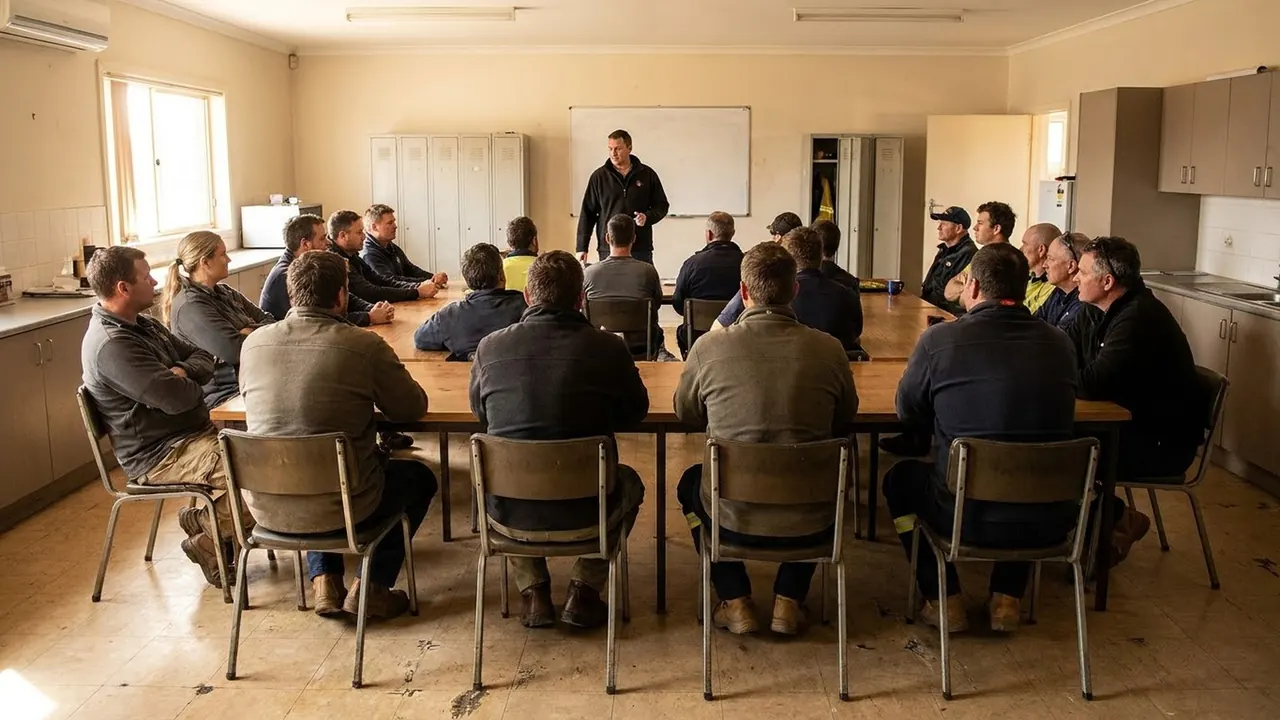
Members of the Lawcaptain and MKI Legal team talking in the office

Who's behind it

A real law firm

Backed by MKI Legal, a registered Australian law firm practising employment law since 2012. Have a live matter? Send us a test job and see what comes back.