
HomeInformation hubWA firefighters
Information hub · Firefighters · Western Australia

Firefighters and the people beside them. Know your rights at work.

Your agreement, your award, discipline, cancer and PTSD cover, and what is before the Commission now. Every point is linked to the Act, the clause or the decision it comes from.

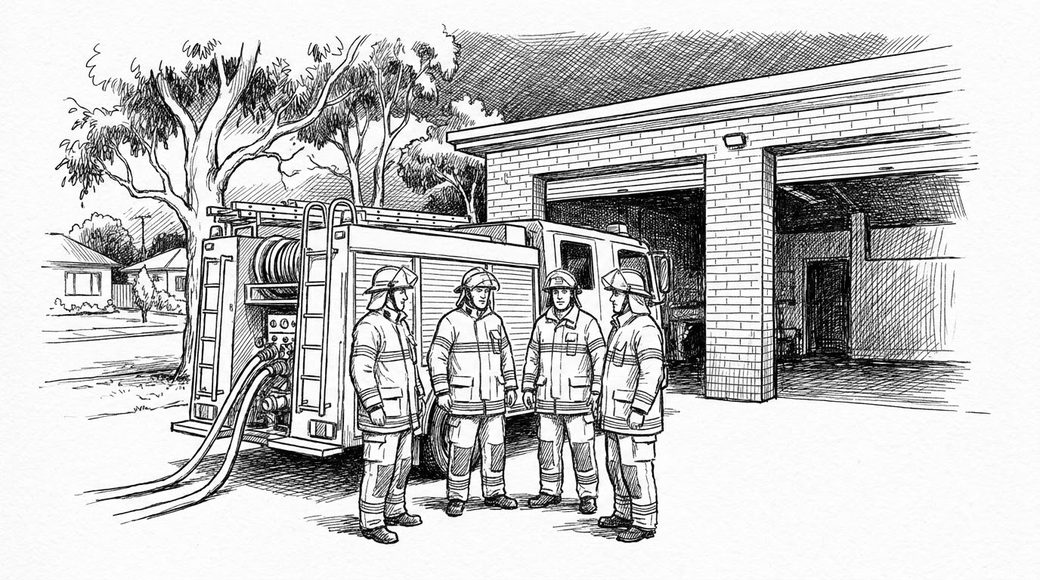
A crew of four firefighters beside a fire engine outside a suburban fire station

Who do you work for?

Your employer decides your system, your agreement, your union and your time limits.

System
WA state (WAIRC)
Agreement or award
WES335 agreement, read with the FIR003 award
Union
UPFUWA
If you are dismissed
Appeal within 7 days (r 137G(3))

A disciplinary dismissal very likely cannot go to the WAIRC as unfair dismissal (IR Act s 23(3)(d)). Read about your group

Time limits that cannot be missed

7 daysto appeal a DFES disciplinary decision · r 137G(3)
21 daysFair Work unfair dismissal (Ventia, Airservices, private) · FW Act s 394(2)(a)
28 daysWAIRC unfair dismissal, where it is open · IR Act s 29(2)(a)
12 monthsto make a workers’ compensation claim · WCIM Act s 25(1)

Which applies to me?

Find your employer in the first column. Each instrument is linked to its official text.

Your employerSystemMain instrumentUnionIf you are dismissed: route and time limit
DFES, career firefighter (Trainee to Chief Superintendent)WA state (WAIRC)WES335, read with the award FIR003 (cl 6(1))UPFUWAA dismissal as disciplinary action goes to the FES Commissioner or the Appeal Board within 7 days (Fire Brigades Regulations 1943 (WA) r 137F(3), r 137G(3)). The WAIRC very likely cannot hear an unfair dismissal claim about it (IR Act s 23(3)(d)). See discipline and dismissal
DFES, trainee firefighterWA state (WAIRC)WES335, Trainee classification (cl 12(2))UPFUWAAs for career firefighters if the termination is disciplinary action with an appeal under the Regulations. If there is no such appeal, a WAIRC unfair dismissal claim within 28 days may be open (IR Act s 29(2)(a)), but whether s 23(3)(d) also blocks it is not settled, so a trainee may need to protect both time limits
DFES, Communications Systems Officer (Levels 1 to 4)WA state (WAIRC)WES335 (cl 12(4), Schedule 1)UPFUWADepends on whether you are engaged as operational staff. The Regulations' discipline code applies only to operational staff (r 96). Check your letter of appointment
DBCA (Parks and Wildlife) fire service staffWA state (WAIRC); public sectorYour general agreement, plus a fire service provisions agreement: DEP142 (AWU), DEP144 (United Voice, rangers) or DEP145 (CSA). All three are past their nominal expiry and still listed "In Force"AWU, United Workers Union (formerly United Voice) or CSA, as the agreement namesWAIRC, 28 days. For a public service officer disciplined under the Public Sector Management Act 1994 (WA), 28 days from the decision (IR Act s 29(2)(c)). See WA public sector
Ventia, Defence-base fire and rescue (RAAF Pearce, Gingin, HMAS Stirling and other WA sites)Federal (Fair Work Commission)Ventia and UFUA (WA Branch) Fire and Rescue Enterprise Agreement 2023, AE523802, nominal expiry 12 March 2027UFUA WA Branch, the federal counterpart of UPFUWAFair Work Commission unfair dismissal, 21 days (FW Act s 394(2)(a)).
Airservices Australia, aviation rescue and firefighting (Perth and regional WA airports)Federal (Fair Work Commission)Airservices Australia (ARFF) Enterprise Agreement 2024-2027, AE525449, nominal expiry 21 February 2027UFU Aviation Branch (cl 2(r))Fair Work Commission, 21 days
Mining or resources company, or its contractor: mine-site emergency services officerFederal (Fair Work Commission)Depends on the employer's agreement.Depends on the siteFair Work Commission, 21 days, if the employer is a national system employer
Private fire-protection companyFederal (Fair Work Commission)Needs checking for your job. Sprinkler fitting is covered by the Plumbing and Fire Sprinklers Award 2020 (MA000036). The Fire Fighting Industry Award 2020 (MA000111) covers equipment work only for an employer that also fights fires, and not fixed or semi-fixed systems (cl 4.2(d))Depends on the tradeFair Work Commission, 21 days
Volunteer (bush fire brigade, volunteer fire and rescue, SES)No employment relationshipNone. Volunteers are not employeesNot applicableNo unfair dismissal claim.
DFES, career firefighter (Trainee to Chief Superintendent)System: WA state (WAIRC)
Main instrument
WES335, read with the award FIR003 (cl 6(1))
Union
UPFUWA
If you are dismissed: route and time limit
A dismissal as disciplinary action goes to the FES Commissioner or the Appeal Board within 7 days (Fire Brigades Regulations 1943 (WA) r 137F(3), r 137G(3)). The WAIRC very likely cannot hear an unfair dismissal claim about it (IR Act s 23(3)(d)). See discipline and dismissal
DFES, trainee firefighterSystem: WA state (WAIRC)
Main instrument
WES335, Trainee classification (cl 12(2))
Union
UPFUWA
If you are dismissed: route and time limit
As for career firefighters if the termination is disciplinary action with an appeal under the Regulations. If there is no such appeal, a WAIRC unfair dismissal claim within 28 days may be open (IR Act s 29(2)(a)), but whether s 23(3)(d) also blocks it is not settled, so a trainee may need to protect both time limits
DFES, Communications Systems Officer (Levels 1 to 4)System: WA state (WAIRC)
Main instrument
WES335 (cl 12(4), Schedule 1)
Union
UPFUWA
If you are dismissed: route and time limit
Depends on whether you are engaged as operational staff. The Regulations' discipline code applies only to operational staff (r 96). Check your letter of appointment
DBCA (Parks and Wildlife) fire service staffSystem: WA state (WAIRC); public sector
Main instrument
Your general agreement, plus a fire service provisions agreement: DEP142 (AWU), DEP144 (United Voice, rangers) or DEP145 (CSA). All three are past their nominal expiry and still listed "In Force"
Union
AWU, United Workers Union (formerly United Voice) or CSA, as the agreement names
If you are dismissed: route and time limit
WAIRC, 28 days. For a public service officer disciplined under the Public Sector Management Act 1994 (WA), 28 days from the decision (IR Act s 29(2)(c)). See WA public sector
Show all 9 rowsShow fewer
Ventia, Defence-base fire and rescue (RAAF Pearce, Gingin, HMAS Stirling and other WA sites)System: Federal (Fair Work Commission)
Union
UFUA WA Branch, the federal counterpart of UPFUWA
If you are dismissed: route and time limit
Fair Work Commission unfair dismissal, 21 days (FW Act s 394(2)(a)).
Airservices Australia, aviation rescue and firefighting (Perth and regional WA airports)System: Federal (Fair Work Commission)
Main instrument
Airservices Australia (ARFF) Enterprise Agreement 2024-2027, AE525449, nominal expiry 21 February 2027
Union
UFU Aviation Branch (cl 2(r))
If you are dismissed: route and time limit
Fair Work Commission, 21 days
Mining or resources company, or its contractor: mine-site emergency services officerSystem: Federal (Fair Work Commission)
Main instrument
Depends on the employer's agreement.
Union
Depends on the site
If you are dismissed: route and time limit
Fair Work Commission, 21 days, if the employer is a national system employer
Private fire-protection companySystem: Federal (Fair Work Commission)
Main instrument
Needs checking for your job. Sprinkler fitting is covered by the Plumbing and Fire Sprinklers Award 2020 (MA000036). The Fire Fighting Industry Award 2020 (MA000111) covers equipment work only for an employer that also fights fires, and not fixed or semi-fixed systems (cl 4.2(d))
Union
Depends on the trade
If you are dismissed: route and time limit
Fair Work Commission, 21 days
Volunteer (bush fire brigade, volunteer fire and rescue, SES)System: No employment relationship
Main instrument
None. Volunteers are not employees
Union
Not applicable
If you are dismissed: route and time limit
No unfair dismissal claim.

Key time limits

These are short. Missing one can end a claim.

Read moreShow less
WhatTime limitSource
Appeal against a DFES disciplinary finding or decision7 days after you receive notice of itFire Brigades Regulations r 137F(3), r 137G(3)
WAIRC unfair dismissal claim (state system, where it is open)28 days after the day the employment endsIR Act s 29(2)(a)
Fair Work Commission unfair dismissal claim (Ventia, Airservices, private industry)21 days after the dismissal takes effectFW Act s 394(2)(a)
Workers' compensation claim in WA12 months after the injury. A late claim is not invalid if the delay came from mistake, absence from the State or another reasonable cause, or would not prejudice the employer's defenceWorkers Compensation and Injury Management Act 2023 (WA) s 25(1), (5)
Appeal against a DFES disciplinary finding or decisionTime limit: 7 days after you receive notice of it
WAIRC unfair dismissal claim (state system, where it is open)Time limit: 28 days after the day the employment ends
Fair Work Commission unfair dismissal claim (Ventia, Airservices, private industry)Time limit: 21 days after the dismissal takes effect
Workers' compensation claim in WATime limit: 12 months after the injury. A late claim is not invalid if the delay came from mistake, absence from the State or another reasonable cause, or would not prejudice the employer's defence

For a DFES career firefighter, a disciplinary dismissal very likely cannot go to the WAIRC as an unfair dismissal claim. The Commission has held that s 23(3)(d) of the IR Act "operates to prevent the Commission from regulating discipline in relation to firefighters" ([2023] WAIRC 00399 at [49]). The 7-day appeal is the route.

Your group at a glance

DFES career firefighters

You are operational staff of the Department of Fire and Emergency Services, not public service officers (Fire and Emergency Services Act 1998 (WA) s 20(1)(b), (2)(a)). The FES Commissioner engages, transfers, promotes and manages you (s 21(2)). Your pay and conditions may not be less favourable than the applicable award, industrial agreement or the Minimum Conditions of Employment Act 1993 (WA) (s 21(3)).

Your agreement is WES335 and your award is FIR003. The agreement prevails where they are inconsistent (WES335 cl 6(1); IR Act s 41(9)). A Senior Firefighter's total weekly rate is $2,148.60 from 9 June 2024 (WES335 Schedule 1). Shiftworkers average 42 hours a week on two day shifts, two night shifts and four days off (cl 16(2)).

Discipline runs under the Fire Brigades Regulations, with a 7-day appeal to the Appeal Board (r 137G). Twenty cancers (12 listed in s 11 of the WCIM Act and 8 added by r 11 of the WCIM Regulations) are presumed to come from firefighting employment, unless the employer proves otherwise, once you have served the qualifying period and the employer is satisfied you have done enough hazardous firefighting service (s 11(2), (3)).

DFES trainee firefighters

Trainee is the first classification in WES335. A trainee moves to 5th Class Firefighter on attaining the trainee skills and competencies (cl 12(2)(a)(i)). The trainee total weekly rate is $1,631.40 from 9 June 2024 (Schedule 1).

Operational staff may be engaged permanently or for a period of up to 5 years (FES Act s 21(4)(b)). If a trainee's employment ends, the route depends on whether it ended as disciplinary action under the Regulations. That question decides whether the 7-day appeal or the 28-day WAIRC claim applies, and the law on the second is not settled. A trainee in this position may need to protect both time limits.

DFES Communications Systems Officers

WES335 covers Communications Systems Officers at Levels 1 to 4 (cl 12(4)). Total weekly rates run from $1,714.60 (Level 1) to $1,998.50 (Level 4) from 9 June 2024 (Schedule 1). Delta shift staff average 42 hours over an eight-day cycle, in 12-hour shifts within a 14-hour spread (cl 16(7)(c)).

The PTSD presumption names communications systems officers expressly (Workers Compensation and Injury Management Regulations 2024 (WA) r 10(2)(e)).

Parks and Wildlife (DBCA) fire service staff

DBCA's bushfire crews work under three fire service provisions agreements, made when the department was called the Department of Parks and Wildlife:

(a) the AWU Fire Service Provisions Agreement 2014 (DEP142), nominal expiry 30 September 2016 (cl 6.1);

(b) the Rangers United Voice Fire Service Provisions Agreement 2014 (DEP144), nominal expiry 30 September 2016 (cl 6.1);

(c) the CSA Fire Service Provisions Agreement 2015 (DEP145), nominal expiry 30 September 2017 (cl 6.1).

All three were listed "In Force" on the WAIRC's register when we read it on 19 October 2026, so they continue until replaced (IR Act s 41(6)). They set no wage rates. They add fire conditions, such as a Fire Line Allowance (set at $7.08 an hour when the agreements were made in 2014 and 2015, and to be adjusted in line with State Wage Case movements) and fire availability payments, to the general agreement that sets your pay (DEP142 cl 19.1, 19.3; DEP145 cl 16.1, 16.3).

Defence-base firefighters (Ventia)

Ventia's fire and rescue crews at HMAS Stirling, RAAF Base Pearce, Gingin and other WA sites are covered by AE523802 (cl 2). Its nominal expiry is 12 March 2027. Ventia is a national system employer, so the Fair Work Act applies, and an unfair dismissal claim must be lodged within 21 days (FW Act s 394(2)(a)).

The WA cancer presumption applies only to employment "by or under the Crown in right of the State" (WCIM Act s 11(1)), so on its text it does not reach Ventia crews.

Airport firefighters (Airservices Australia)

Aviation rescue and firefighting crews at Perth and the regional WA airports are covered by AE525449, nominal expiry 21 February 2027 (cl 3.2). The union party is the UFU Aviation Branch, not the WA Branch (cl 2(r)). A remote locality allowance applies at Broome, Port Hedland, Karratha and Newman (cl 36.1).

Mine-site emergency services officers

Emergency services officers on WA mine and resources sites are usually employed by a company, so they are in the federal system if that company is a national system employer. Which award or agreement applies depends on the employer and the site agreement.

Private fire-protection industry

The Fire Fighting Industry Award 2020 covers employers that suppress fires, provide rescue services at emergencies or handle hazardous spills. It extends to fire protection equipment work only by an employer already in that industry, and it excludes fixed and semi-fixed fire protection systems (MA000111 cl 4.2). Sprinkler fitting is covered by the Plumbing and Fire Sprinklers Award 2020 (MA000036 cl 4.1). For alarm, detection and other trades, the award needs checking job by job.

Volunteers

Volunteer bush fire brigade members, volunteer fire and rescue members and SES volunteers are not employees. Unfair dismissal law and the agreements above do not apply to them. The workers' compensation cancer presumption requires "firefighting employment" (WCIM Act s 11(1)), but a parallel presumption applies to registered volunteers whose duties involve responding to hazardous fires, subject to the same qualifying periods, for compensation under Part 6B of the FES Act (FES Act s 36ZN). A volunteers guide is coming.
What is happening now

From the public record only, as at 1 November 2026. No view on any outcome.
WA CommissionEnterprise order application (APPL 22 of 2026)Bargaining for a replacement for WES335 was declared ended. The union has asked the Commission to set the terms. No trial date has been set.
  1. 8 June 2025 WES335 reaches its nominal expiry. cl 5(2)
  2. 12 December 2025 Consent order: 13 bans lifted until 9 June 2026, and a 5% administrative payment. [2025] WAIRC 00984
  3. 13 March 2026 Bargaining declared ended. [2026] WAIRC 00142
  4. 30 November 2026 The union files its witness statements and expert reports. [2026] WAIRC 00756
  5. 24 March 2027 DFES files its evidence. [2026] WAIRC 00756
Court and CommissionBuilt Environment Branch restructureThree proceedings brought by the union. Interim orders were refused on 18 September 2026; the claim and the interpretation application are undecided.
  1. 29 July 2026 Building Fire Safety Officer and Senior Building Fire Safety Officer positions abolished. [2026] WAIRC 00891 [31]
  2. 13 August 2026 A s 83 claim lodged in the Industrial Magistrates Court (M 122 of 2026). [2026] WAIRC 00891 [8]
  3. 18 September 2026 Interim orders refused. The claim itself is undecided. [2026] WAIRC 00891 [85]
  4. Pending A s 46 application on what cl 8 and cl 12(5) of WES335 mean (APPL 37 of 2026). [2026] WAIRC 00773
WA CommissionCrewing and appliances on restricted dutiesIn October 2025 the Commission ordered a crewing ban lifted, and expressly did not decide whether the practice is permitted or safe.
  1. October 2025 DFES seeks s 44 orders lifting the union’s ban (C 28 of 2025). [2025] WAIRC 00866
  2. 11 December 2025 The order is extended to this date. [2025] WAIRC 00965

The full story, with every order and direction: Bargaining, and what is happening now

20 cancers presumed to come from firefighting

For State firefighting employment, these cancers are taken to come from the job unless the employer proves otherwise, once you have served the qualifying period (WCIM Act s 11, WCIM Regulations r 11). Registered volunteers have a parallel presumption (FES Act s 36ZN).

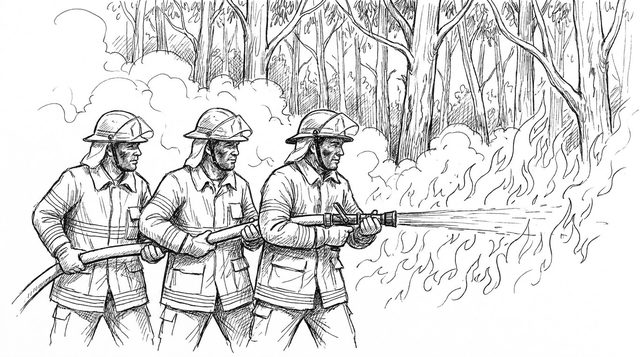
Cancer, PTSD and workers' compensation →Three firefighters on a hose at a bushfire
Brain5 years' service
Bladder15 years' service
Kidney15 years' service
Non-Hodgkin’s lymphoma15 years' service
Leukaemia5 years' service
Breast10 years' service
Testicular10 years' service
Multiple myeloma15 years' service
Prostate15 years' service
Ureter15 years' service
Colorectal15 years' service
Oesophageal15 years' service
Mesothelioma15 years' service
Cervical10 years' service
Lung15 years' service
Ovarian10 years' service
Pancreatic10 years' service
Penile15 years' service
Skin15 years' service
Thyroid10 years' service
Decided cases

What the Commission and the courts decided.

Published decisions, retold in plain English from the decision itself. Each links to the full text. Lawcaptain did not act in these cases.

Application dismissedWestern Australian Industrial Relations Commission · 27 July 2023

Disciplined over a social media post: the Commission could not step in

A senior firefighter received a "Please Explain" letter about comments on social media. The union asked the Commission to pause the process. The Commission held it had no power to do so.

Read the full storyShow less

On 21 February 2023 a senior firefighter was served with a "Please Explain" letter from the FES Commissioner. It alleged that comments on social media might be an offence under the Fire Brigades Regulations and asked for an explanation before any action was decided ([2]).

The union said the comments were directed at the union, not DFES, and that the disciplinary process was being used to limit communication between the union and its members ([3]). It asked the Commission to hold a conference and pause the process.

DFES objected that the Commission had no jurisdiction. The Commission agreed. The Fire Brigades Regulations give the FES Commissioner disciplinary powers and an avenue of appeal ([47]). Where another Act provides for both, s 23(3)(d) of the IR Act "operates to prevent the Commission from regulating discipline in relation to firefighters" ([49]).

Earlier conferences on similar letters, held without objection, made no difference: "the parties cannot confer jurisdiction on the Commission where it is excluded by statute" ([55]).

Whether the post was a breach of discipline at all was a question of fact yet to be decided. Asking the Commission to stop the disciplinary process was asking it to regulate discipline ([58]). The application was dismissed ([59]).

What it means for you

For a DFES firefighter, a disciplinary process is fought inside the Fire Brigades Regulations: the representation right during investigation, the reply to a charge and the 7-day appeal. The WAIRC is not a way to stop it.

Relocation stayed for four weeksWestern Australian Industrial Relations Commission · 26 March 2021

Moving an appliance and its crew: a four-week stay to finish consulting

DFES planned to move a 3-4 urban tanker and at least 12 firefighters from Canning Vale to the new Cockburn station. The union said it had not been properly consulted.

Read the full storyShow less

DFES planned to relocate the 3-4 urban tanker at Canning Vale to Cockburn once Cockburn was commissioned, with at least 12 firefighters to crew it ([1]-[2]).

The Commission found that the documentation of the industrial relations considerations was "almost non-existent", and that what existed was "cursory and dismissive of the Union's concerns" ([47]). It could not conclude that the consultation had been genuine ([48]).

Because DFES treated consultation as finished and meant to start the relocation, interim orders were "necessary to preserve the status quo" ([54]). Cockburn was not yet operational, so a short stay cost little ([55]).

The Commission also set a limit: "consultation cannot enable a veto", and the process could not be open-ended ([56]). It stayed the transfer or relocation for four weeks to allow conciliation ([57]).

What it means for you

An operational decision about crews and stations can still be an industrial matter the Commission will deal with. The relief is usually time to consult properly, not a block on the decision.

Show more case studies (1)Show fewer
4% Enhanced Rescue Allowance, $1.35 an hour first aid allowance and a 4% allowance for Communications Systems OfficersWestern Australian Industrial Relations Commission · 22 May 2007

Rescue and first aid skills worth paying for

When bargaining for the 2006 agreement stalled on three allowances, the parties asked the Commission to arbitrate. The union won two of the three claims in full.

Read the full storyShow less

The parties referred the unresolved matters to the Commission under s 42G of the IR Act for inclusion in the 2006 agreement ([1]).

The Commission preferred the evidence of the union's front-line witnesses, who dealt with operational and training issues day to day ([375]).

It found the enhanced rescue skills firefighters had gained were "a significant and additional productivity gain" and awarded 4% on the total rate ([404]), as an all-purpose allowance ([410]). "There is no exact science when determining a quantum" ([405]).

On first aid, WA and Victorian firefighters held "roughly equivalent" skills ([423]), but the Commission discounted the $1.70 an hour claimed and set $1.35 an hour, because the skills were recent ([425]).

Communications Systems Officers received a 4% allowance for the "substantial additional and more complex work" they had taken on since 1996 ([433]).

What it means for you

Arbitrated pay rises for firefighters have turned on evidence: what the work now requires, who gives that evidence, and how it compares with other services.

The Advanced First Aid Allowance is now built into the WES335 total rates (cl 76).

Beyond DFES

Crews in the federal system, and volunteers.
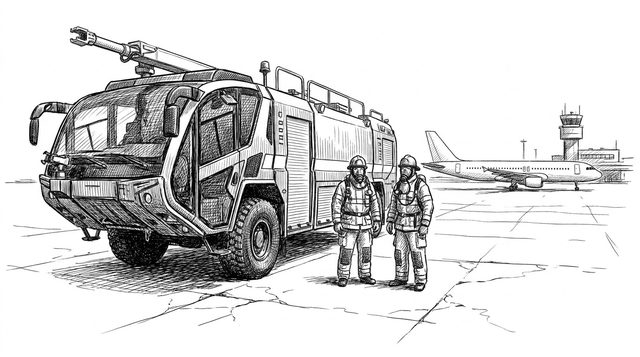
An airport rescue fire truck and two firefighters on the apronDefence and airport crewsThe Fair Work system: AE523802 (Ventia) and AE525449 (Airservices), and 21 days to lodge a dismissal claim.Guide coming
A mine-site emergency services officer beside a rescue vehicleMine-site emergency services officersUsually the Fair Work system. Your employer and the site agreement decide the rest.Guide coming
Three volunteer brigade members with a light tanker at a rural shedVolunteersNot employees, but a parallel cancer presumption applies to registered volunteers (FES Act s 36ZN).Guide coming
Case studies

Beyond DFES: crews and volunteers.

Decisions about Defence-base, airport and mine-site crews, and volunteers. Cases from outside WA say where they come from and how WA law differs.

Defence and airport crews

ReinstatedFair Work Commission Full Bench · 1 November 2023

Defence base: a leading firefighter sacked over posts in a private Facebook group was reinstated, and the Full Bench upheld it

Ventia dismissed a Qualified Leading Firefighter at a Navy air station after finding he had shared offensive material in a private Facebook group whose members included current and former Ventia employees. The Commission accepted Ventia had a valid reason, but found the dismissal unfair because Ventia had attributed posts to him that were not his and treated him more harshly than another leading firefighter. The Full Bench refused to disturb the reinstatement.

Read the full storyShow less

The firefighter worked for Ventia from 31 July 2017 as a Qualified Leading Firefighter at HMAS Albatross, Nowra ([2023] FWC 907 at [2]), and was dismissed on 20 September 2022 for misconduct ([2023] FWC 907 at [1]) after an investigation into posts in private Facebook groups involving current and former Ventia employees ([2023] FWCFB 201 at [1]).

Commissioner Riordan found Ventia had a valid reason to dismiss ([2023] FWC 907 at [140]), and that he had breached two of its policies ([2023] FWC 907 at [161]). But the decision-maker had misunderstood the evidence and attributed more posts to him than he had made ([2023] FWC 907 at [141]), and he had been treated substantially differently from another Qualified Leading Firefighter for similar conduct, so the dismissal was unjust and unreasonable ([2023] FWC 907 at [142]; [2023] FWCFB 201 at [2]). Most of the posts were made out of hours, and he was "entitled to a private life" ([2023] FWC 907 at [145]). He was reinstated with continuity of service and back pay, less one month's pay and any money earned since ([2023] FWC 907 at [159]-[161]).

The Full Bench granted permission to appeal because the case raised a question of general importance about out-of-hours social media conduct among co-workers ([2023] FWCFB 201 at [10]). It accepted that most posts in the group were sexist, pornographic or disparaging of women, and could create a hostile environment, but held that the nature of the posts alone could not create the connection to employment ([2023] FWCFB 201 at [108]). Out-of-hours conduct is a valid reason only where it has the requisite connection with employment ([2023] FWCFB 201 at [101]). The reinstatement finding was reasonably open ([2023] FWCFB 201 at [130]), and the appeal was dismissed ([2023] FWCFB 201 at [132]).

The facts were not the same for everyone in the group. A second Ventia firefighter dismissed at the same base failed in his claim, because he had distributed pornography while on shift, which the Commissioner found was serious misconduct ([2023] FWC 904 at [124]-[125], [151]-[152]).

What it means for you

For a Defence-base firefighter in the Fair Work system, what happens on shift and what happens in a private group off shift are judged differently. A member facing allegations of this kind may be able to challenge how posts were attributed and how other crew members were treated, as well as whether there is a real link to the job.

Outcome: Won by the firefighter. Reinstatement, continuity of service and back pay (less one month's pay and any money earned since the dismissal) were ordered, and Ventia's appeal was dismissed. Where this comes from: Commonwealth (Fair Work Act 2009 (Cth); the crew was at HMAS Albatross, Nowra, NSW, under the Ventia and UFU VIC and NSW Fire and Rescue Enterprise Agreement 2022). The same Act applies to Ventia's WA Defence-base crews, who have their own agreement with the UFUA WA Branch (AE523802).

Show more (3)Show fewer
Interim reinstatementFederal Court of Australia · 20 December 2024

Airport: an aviation firefighter recruit with type 1 diabetes was put back on the job until his discrimination case is heard

Airservices hired a recruit aviation rescue firefighter who had disclosed type 1 diabetes, and whose pre-employment examination by an aviation medical examiner recorded that he had passed the required medical standard. Ten days into the recruit course he was pulled out, and three months later he was dismissed. The Federal Court ordered that he be reinstated and allowed to do the next course while his general protections claim goes to trial.

Read the full storyShow less

The recruit applied in August 2023, disclosed his type 1 diabetes during the application, and started work and the 15-week recruit course on 2 September 2024 [2]. A designated aviation medical examiner had examined him before he started and recorded that he "passed the medical standard required" [23]. After about 10 days of the course he was told he could no longer take part, and on 10 December 2024 he was dismissed [3], [30]. He alleged the dismissal was because of his diabetes, contrary to s 351 of the Fair Work Act [4].

An endocrinologist's report said that, with an appropriate workplace protocol, he would not be likely to endanger the safety of air navigation [27], [57], and the protocol was not meaningfully attacked [59]. Airservices said the reason was his inability to meet the CASA medical standard, not his disability [60]. For an interim application the Court rejected any distinction between the "safety concerns" and the diabetes itself [62], and found serious questions of reasonable strength on whether he had passed the medical and met the Class 2 standard [64].

On the balance of convenience, the Court weighed the move from Cairns, the mortgage and the importance of work in his favour, giving the move only some weight [66]-[70], and found the safety concerns much reduced during training in a controlled environment [74]. It ordered that he be reinstated until the final hearing and be allowed to undertake the course starting in January 2025 [76], [78], [80].

What it means for you

A firefighter dismissed because of a medical condition may be able to bring a general protections claim and, if acting quickly, ask the Federal Court to restore the job until trial. Specialist evidence that the condition can be safely managed may carry real weight.

Outcome: For the recruit, at the interim stage only. The Court found a serious question to be tried and ordered interim reinstatement and a place on the January 2025 recruit course; the claim itself had not been decided. Where this comes from: Commonwealth (Fair Work Act 2009 (Cth) general protections, s 351, and the Civil Aviation Safety Regulations 1988 (Cth)). The same law applies to Airservices crews at Perth and other WA airports.

Dismissal not unfairFair Work Commission · 12 May 2025

Airport: a lead aviation firefighter who had not worked for five years was lawfully dismissed for incapacity

A lead aviation firefighter at Coffs Harbour had a hand injury and then a psychological injury after a code of conduct investigation, and had not worked for about five years. When an aviation medical examiner said he could not safely return, Airservices dismissed him. The Commission held there was a valid reason and a fair process.

Read the full storyShow less

The firefighter had worked for Airservices since 2005 and was a Lead Aviation Firefighter at Coffs Harbour aerodrome [4]. He injured his right hand in February 2019, which was an accepted workers' compensation claim [5], and suffered a psychological injury in 2020 after a code of conduct investigation [6]. He had not worked since November 2019 and was receiving workers' compensation at 75% of his normal weekly earnings for both claims [7]-[8].

A psychologist reported in May 2023 that he had no capacity for work for the foreseeable future, and a designated aviation medical examiner reported in October 2024 that he could not return to his role and that a return would raise significant safety issues [9]-[10]. Airservices wrote to him on 23 October 2024 proposing termination and inviting a response within 14 days, his lawyer responded, and on 5 December 2024 Airservices communicated its decision to dismiss [11]-[13].

The Commission found a valid reason related to capacity: he had been unable to do any work for about five years and the medical evidence was clear [25]-[26]. He was told the reason and his lawyer's response was considered [30]-[31]. The dismissal was not harsh, unjust or unreasonable, and the application was dismissed [38].

What it means for you

In this federal case, being on workers' compensation did not stop a fair dismissal for incapacity once the medical evidence said a return was not possible. A member in this position may be able to influence the outcome by responding to a show-cause letter with up-to-date medical evidence, and by checking the time limits and notice rules that apply in their own scheme.

Outcome: Lost by the firefighter. The dismissal was not harsh, unjust or unreasonable. Where this comes from: Commonwealth (Fair Work Act 2009 (Cth) unfair dismissal; the decision does not say which workers' compensation scheme paid him). For DFES firefighters, the WCIM Act requires the employer to provide the pre-injury or a suitable position for 12 months from first incapacity, unless the worker is lawfully dismissed, and in that period forbids dismissal solely or mainly because of the incapacity and requires 28 days' notice in the approved form before any dismissal (s 166(1)-(3), s 168(2)-(4)).

Service countedFair Work Commission · 18 October 2019

Defence base: a retained firefighter's paid service with Fire and Rescue NSW counted towards promotion to Qualified Firefighter

A Defence-base firefighter at RAAF Base Wagga had also been a paid retained firefighter with Fire and Rescue NSW for years. The agreement required 36 months' service "as a paid Firefighter within the fire and rescue industry" to become a Qualified Firefighter. The company said that meant full-time service only. The Commission said it did not.

Read the full storyShow less

The employer provides firefighting services at Defence bases [2]. The firefighter started at RAAF Base Wagga in July 2016 as a watchroom operator, moved to firefighting in December 2016, and sought reclassification as a Qualified Firefighter on the strength of his retained firefighter service with Fire and Rescue NSW [3]. He had been a retained firefighter since 19 December 2012, paid for attendance at fire calls and training [7].

The agreement made a Qualified Firefighter someone who had completed at least 36 months' service as a paid firefighter in the fire and rescue industry and the required modules [33]. The company's evidence was that only full-time paid service was meant to count, and that the wording had been copied from its Victorian agreement without anyone considering retained firefighters, who do not exist in Victoria [9].

The Commission held that "service" carries the meaning the Fair Work Act gives it in s 22, a period during which the employee is employed by the employer [43], that a "paid Firefighter" is one who is paid for the work [44], and that the fire and rescue industry plainly includes Fire and Rescue NSW [45]. Retained service therefore counted; he had 36 months of it and had completed the modules [47]. The Commission also held it still had jurisdiction even though a new agreement had replaced the 2015 agreement after the dispute began [4], [48].

What it means for you

Where an agreement's classification rules turn on prior service, the words used decide what counts, not what the employer says it meant. A member with paid service elsewhere, including retained or part-time service, may be able to ask the union to raise a dispute under the agreement if it has been disregarded.

Outcome: Won by the firefighter (represented by the United Firefighters' Union of Australia). His retained firefighter service was to be counted. Where this comes from: Commonwealth (Fair Work Act 2009 (Cth) s 739 dispute under the Transfield Services Defence Base Services (NSW) Fire and Rescue Enterprise Agreement 2015). WA Defence-base crews are under their own agreement, and the result depends on its wording.

Mine-site emergency services officers

No jurisdictionFair Work Commission · 6 June 2024

Mine site: a senior emergency services officer could not claim unfair dismissal, because no award covered him and he earned just over the threshold

A senior emergency services officer and paramedic at a copper mine was dismissed after almost 14 years with the company and its subsidiaries. He could claim unfair dismissal only if an award or enterprise agreement covered him or he earned less than the high income threshold. The Commission found the Firefighting Industry Award did not cover a mining company's emergency team, and that he earned $1,686 a year too much.

Read the full storyShow less

The officer had worked for OZ Minerals and its subsidiaries since April 2010 and, from January 2020, was the Senior Emergency Services Officer and Paramedic at the Carrapateena mine [12]-[13]. He was dismissed for cause on 21 March 2024 [29]. The company objected that he was not protected from unfair dismissal because his earnings exceeded the high income threshold [2].

The Commission explained that a person is covered by an award if the principal purpose of their employment is work within its coverage [44]. It found he was not covered by the Mining Industry Award, because his emergency and paramedic work fell outside its classifications [52]-[54]. The Firefighting Industry Award is an industry award, and an employer is "in" an industry according to its substantial character [58]-[59]; a mining company is not in the firefighting industry just because a few employees do not do mining work [60]-[62]. Nor was he covered by the ambulance or health professionals awards [66]-[68], [74]-[75].

Without an award, he was protected only if his earnings were below the threshold, which was then $167,500 [77], [79]. A site allowance and a former incentive payment had been folded into his salary in 2021, so they counted as earnings [97]-[98], [103]. His earnings were $169,186 a year, above the threshold, so he was not protected and the application was dismissed [102], [104]-[108].

What it means for you

A well-paid mine-site emergency services officer on a contract salary may have no unfair dismissal right unless an award or enterprise agreement covers the role, so the award question matters as much as the dollar figure. A member in this position may also wish to consider claims that have no earnings cap, such as general protections, within the 21-day limit.

Outcome: Lost by the emergency services officer. The application was dismissed for want of jurisdiction, without any finding on whether the dismissal was fair. Where this comes from: Commonwealth (Fair Work Act 2009 (Cth) s 382; the mine is in South Australia). The same rules apply to mine-site emergency services officers in WA employed by incorporated mining companies, which are national system employers.

Volunteers

No jurisdictionWestern Australian Industrial Relations Commission · 26 June 2026

A bush fire brigade volunteer could not bring a stop-bullying claim, because he was not doing volunteer work at the time, and any work he did was for the brigade, not the council

A member of a volunteer bush fire brigade said he had been bullied within his brigade and asked the WAIRC for stop-bullying orders against the City of Kalamunda. The Commission held it had no power to hear him. Volunteers can be "workers" under the WA bullying laws, but only while carrying out volunteer work for a business or undertaking. There was no evidence he was doing volunteer work at the time of the alleged bullying, and any work he did was for the brigade, not the City. The Commission added that this brigade, none of whose members it employs, was a volunteer association and so could not be a business or undertaking either.

Read the full storyShow less

The applicant was a member of the Pickering Brook Bush Fire Brigade and alleged he had been bullied within it [1]. To have standing he had to be a "worker" under s 51BH of the IR Act, which means carrying out work for a person conducting a business or undertaking (PCBU), and volunteer associations are excluded from being a PCBU [4]. It was not in dispute that a volunteer can be a worker, or that the City is a PCBU [5].

The Commission looked at the Bush Fires Act 1954 (WA), the City's Bush Fire Brigades Local Law 2025 and the brigade's constitution [16]-[19], [25]. It found the brigade was an unincorporated association registered with the City, distinct from the City and managed independently of it [24], [26]. The City appointed a Chief Bush Fire Control Officer for the brigade, as its local law required; that officer had managerial and organisational responsibility for the brigade, but exercised it as a DFES employee [41].

On the facts, the volunteer had last attended a fire call in November 2023, and since then had attended only working group meetings [14], [29]-[32]. The Commission held that attending meetings was not "work" [34]; the work of a volunteer is the performance of the volunteer's duties, such as shifts, training, fitness tests and hazard reduction burns [35]. With no evidence of volunteer activity when the bullying was said to be happening, he was not carrying out work, so he was not a "worker" [37], [39]. Even if it had been work, it was work for the brigade, not the City [43].

That was enough to dispose of the application [44]. For completeness, and although it was not strictly necessary to decide, the Commission found on the evidence that none of the brigade's members are employed by it, so the brigade is a "volunteer association" and cannot be a PCBU [44], [46]-[47]. The application was dismissed [49].

What it means for you

A bush fire brigade volunteer can obtain a stop-bullying order only if they were carrying out volunteer work, such as shifts, training or burns, for a business or undertaking when the bullying happened. Attending meetings did not count here, and work for an all-volunteer brigade may not count at all. A volunteer in this position may wish to keep a record of the volunteer work being done when the conduct happened, and may need to use the local government's or the brigade's own grievance process, or another forum.

Outcome: Lost by the volunteer. The application was dismissed for want of jurisdiction.

Show more (1)Show fewer
Claim can go aheadQueensland Industrial Relations Commission · 8 August 2017

Queensland: the claim for a rural fire brigade volunteer who died in the Grantham flood could go ahead, because she had become a member

A woman who had been doing volunteer firefighting with her local rural fire brigade died in the January 2011 Grantham flood. WorkCover refused her husband's claim because, it said, she had never formally become a member: her paperwork had not been signed off. The Commission held that the brigade's vote had made her a member.

Read the full storyShow less

The claim for compensation arose from her death on 10 January 2011 during the Grantham flood event [1], on the basis that she was a member of the Grantham Rural Fire Brigade performing brigade duties [2]. The only issue on appeal was whether she was a member of the brigade at the time [5]. It was common ground that the insurance contract covered her if she was a member and performing duties [10].

WorkCover and the Regulator said she was not a member [4], and argued that a completed application form was a precondition to the members' vote under the brigade's constitution [23]. The Commission found she had submitted all the documents the brigade's procedures required [14], [18], and that a majority of members at a general meeting on 30 September 2010 had voted to accept her [15], [34]. It did not matter that the newly elected first officer had not signed the brigade endorsement, because the brigade's constitution did not require it [15], [21].

Some steps were undone: she had not been formally issued with protective clothing, the endorsed application had not been sent to the area office for validation, the Commissioner's approval had not been obtained and she had no volunteer number, though she had performed some firefighting duties before and after the vote [22]. The Commission held none of these went to whether she had been accepted as a member [22], and rejected the argument that a statement in her form was a misrepresentation that undid the vote [29]-[31]. She was a member from 30 September 2010 [34], and the appeal was allowed [36]. Whether she was performing brigade duties when she died had not been considered by the Regulator and was left to WorkCover Queensland [5], [36].

What it means for you

In Queensland, whether a volunteer was covered turned on brigade paperwork. WA's scheme is wider, because it also covers unregistered volunteers working under the direction of a registered volunteer or DFES operational staff. Even so, a new volunteer, or a brigade officer signing one up, may wish to make sure the membership vote, the application form and the registration are completed and recorded, since the responsible agency and the cover can depend on them.

Outcome: Won by the husband on the only question decided. The Regulator's decision was set aside, the claim was sent back to WorkCover Queensland to decide compensation, including whether she was performing brigade duties, and the Regulator was ordered to pay costs. Where this comes from: Queensland (Workers' Compensation and Rehabilitation Act 2003 (Qld) s 14, insurance for rural fire brigade members). WA law is different: the insurance a responsible agency must hold under Part 6B of the Fire and Emergency Services Act 1998 (WA) covers registered volunteers (members of bush fire brigades, volunteer fire brigades, FES Units, SES Units and VMRS Groups) and also unregistered volunteers working under the direction of a registered volunteer or of DFES operational staff (s 36ZM definitions of "registered volunteer", "unregistered volunteer" and "volunteer"; s 36ZQ(2), s 36ZR). So in WA a gap in registration paperwork does not by itself take a volunteer outside the scheme.

Worked examples

How it plays out, step by step.

Illustrative example, not a real case

A Ventia Defence-base firefighter in WA is dismissed

Alex has worked for Ventia for four years as a firefighter at a WA Defence base, covered by the Ventia (Australia) Pty Ltd and United Firefighters' Union of Australia (WA Branch) Fire and Rescue Enterprise Agreement 2023 (AE523802). Alex is dismissed on a Friday after raising a safety complaint and is told it was for "performance".

Walk through itShow less

The system. Ventia is a private company, so Alex is in the federal Fair Work system, not the WA state system. The time limits are short.

Unfair dismissal. Alex is protected from unfair dismissal if Alex has completed the minimum employment period and an enterprise agreement applies to the employment (or an award covers Alex, or Alex earns under the high income threshold) (Fair Work Act 2009 (Cth) s 382). The application must be made within 21 days after the dismissal took effect (s 394(2)). The Commission may allow more time only if there are exceptional circumstances (s 394(3)). The question is whether the dismissal was harsh, unjust or unreasonable, as in the Ventia case above ([2023] FWCFB 201).

General protections. An employee who is able to make a complaint in relation to their employment has a workplace right (s 341(1)(c)(ii)). If Alex believes the real reason was the safety complaint, Alex may instead apply to the Commission to deal with a dismissal dispute alleging adverse action because of that workplace right (s 340(1), s 365). That application also has a 21-day limit, running from when the alleged dismissal took effect (s 366(1)), extendable only for exceptional circumstances (s 366(2)). In a general protections claim, the employer's reason is presumed to be the one alleged unless the employer proves otherwise (s 361(1)), although not for an interim injunction (s 361(2)), as the Federal Court noted in the Airservices recruit case ([2024] FCA 1507 at [11]).

One or the other. A person who has been dismissed generally cannot pursue more than one of these kinds of application about the same dismissal (s 725). Choosing between them is one of the first decisions to make, within the same 21 days.

What it means for you

A Defence-base firefighter who is dismissed may have only 21 days to choose between an unfair dismissal claim and a general protections claim and to lodge it.

Your union

DFES career firefighters: the United Professional Firefighters Union of WA. Defence-base crews (Ventia): the UFUA WA Branch, its federal counterpart. Airport crews: the UFU Aviation Branch.

If you are facing discipline or a claim, talk to your union first.

Need a lawyer?

We act for employees in the WA Commission, the Industrial Magistrates Court and the Fair Work Commission.

Questions

The things people ask.

Which industrial system am I in as a WA firefighter?

It depends on your employer. DFES and DBCA are WA government employers, so their staff are in the WA state system and deal with the WAIRC. Ventia, Airservices Australia and private companies are national system employers under s 14(1) of the Fair Work Act 2009 (Cth), so their staff deal with the Fair Work Commission.

My DFES agreement has expired. Does it still apply?

Yes. WES335 reached its nominal expiry on 8 June 2025 (cl 5(2)). Under s 41(6) of the IR Act an industrial agreement continues in force for all its parties, except any who retire from it, until a new agreement or award replaces it. The agreement and award page explains how retirement under s 41(7) works.

Can a DFES firefighter take an unfair dismissal claim to the WAIRC?

Very likely not, for a dismissal that is disciplinary action under the Fire Brigades Regulations. The Regulations provide for discipline and an appeal, and the Commission has held that s 23(3)(d) of the IR Act "operates to prevent the Commission from regulating discipline in relation to firefighters" ([2023] WAIRC 00399 at [49]). The route is an appeal within 7 days. That decision was about a dispute over a disciplinary process, not an unfair dismissal claim, but the same reasoning would very likely apply. For a termination with no appeal under the Regulations, whether a WAIRC claim is open is not settled.

How long do I have to appeal a DFES disciplinary decision?

Seven days after you receive notice of the finding or decision. Written notice of the appeal goes to the FES Commissioner (Fire Brigades Regulations r 137F(3), r 137G(3)). The notice must give details of the decision, set out the grounds and be signed, and it must be given personally or by registered post (r 137H).

Does the cancer presumption apply to me?

It applies to "firefighting employment", meaning employment by or under the Crown in right of the State, a substantial part of which is firefighting duties, covered by a firefighting industrial instrument (WCIM Act s 11(1)). DFES career service counts. On its text it does not reach Ventia or Airservices crews. Volunteers are not in firefighting employment, but a parallel presumption covers service as a registered volunteer responding to hazardous fires (FES Act s 36ZN). The cancer and PTSD page lists the 20 cancers and their qualifying periods.

I work at a Defence base for Ventia. Is my union the same as DFES firefighters'?

The Ventia agreement covers the United Firefighters' Union of Australia, WA Branch (AE523802). That federal Branch is the counterpart federal body of the state union, UPFUWA ([2025] WAIRC 00074 at [1]). They are two registered bodies. The Commission found their membership rules substantially the same and a corresponding office in the federal Branch for each office in UPFUWA ([12], [29]). Airport firefighters at Airservices are covered by a different branch, the UFU Aviation Branch.

Are DBCA fire crews covered by the DFES agreement?

No. WES335 binds DFES and UPFUWA only (cl 3(1)). DBCA fire crews are covered by their general agreement plus a fire service provisions agreement: DEP142 (AWU), DEP144 (United Voice) or DEP145 (CSA).

I am a volunteer firefighter. Do I have employment rights?

Volunteers are not employees, so unfair dismissal law and the industrial agreements do not apply. A volunteers guide is coming.

How long do I have to make a workers' compensation claim in WA?

A claim must be made within 12 months after the injury. A late claim is not invalid if the delay came from mistake, absence from the State or another reasonable cause, or if it would not prejudice the employer's defence (WCIM Act s 25(1), (5)).

For unions and industrial officers

The same research agent can work through your members' agreement, its history in the Commission, and the decisions on it.

We use our software to generate this content with AI assistance. General information about the law, not legal advice. It takes no side in any current proceeding. Last checked 1 November 2026.