Education · Supervision and child safety

The question is what you did, not how bad the incident was.

Early learning centres treat any supervision lapse as serious, and an educator can lose a job over one incident. This page covers ratios, phones and cameras, working with children checks, and how the Fair Work Commission decides a supervision dismissal.

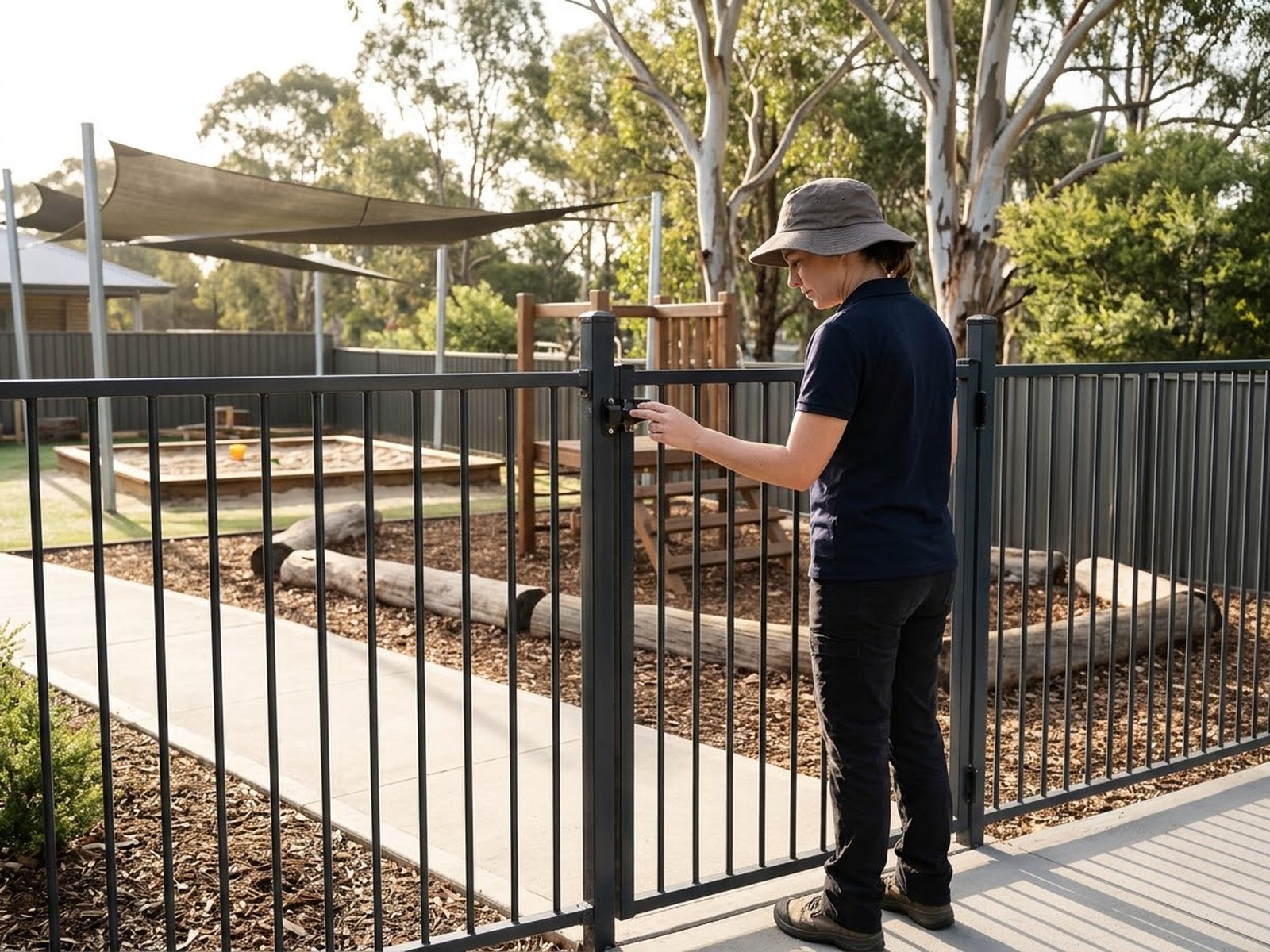
An educator checks the gate of an empty outdoor play area.
21 daysto apply for unfair dismissal, whatever the regulator is doing
1 to 4educators to children from birth to 24 months (national ratio)
$6,600maximum fine for a staff member who photographs a child on a personal device (NSW, Qld)

Time limit Dismissed? You have 21 days from the day the dismissal took effect to apply to the Fair Work Commission, even if the regulator is still investigating (Fair Work Act s 394(2)).

Every early learning centre operates under the Education and Care Services National Law and the National Regulations. The approved provider and the nominated supervisor must each ensure that every child is adequately supervised at all times (National Law s 165(1)-(2)), and a regulator can suspend a service's approval (s 70). So employers treat a lapse as serious. The Fair Work Commission asks something different: not how serious the incident was, but what this educator actually did ([2026] FWC 3204 at [11]). This page is for educators, room leaders, directors and early childhood teachers in long day care, OSHC and kindergartens.

The ratios

ChildrenNational ratio (reg 123(1))NSWWA
Birth to 24 months1 educator to 4 childrenSameSame
Over 24 months and under 36 months1 to 5SameSame
36 months to preschool age1 to 111 to 10 for 36 months to under 6 years (reg 271)1 to 10 (WA reg 123(1)(c))
Over preschool age (OSHC)1 to 15Check the NSW regulationsPer the table to WA reg 369
Read moreShow less
  1. In a mixed-age room the ratios must be met "at all times" (reg 123(2)).
  2. In WA, an educator who is on the premises, immediately available and away from working with children for no more than 30 minutes a day can still be counted (WA reg 123(2A)).
  3. In WA, a child may be treated as up to 6 months older or younger for the ratio if that is developmentally appropriate, recorded and agreed in writing by a parent (WA reg 123(7), inserted 2026).
  4. The other states may have their own provisions. Check your state regulator's figures before relying on a ratio.

Complaining that a room is out of ratio is likely to be the exercise of a workplace right: a complaint in relation to your employment (Fair Work Act s 341(1)(c)(ii)). Action taken against you because of it may found a general protections claim. Raise it in writing.

Case study
No valid reason: unfair dismissalFair Work Commission · 21 August 2026

A child slipped out of the room. Six educators missed it; one was sacked.

A child sneaked out of a toddler room in a NSW long day care centre and was found in a play area about 10 minutes later. All six educators were disciplined. The room leader, who had an earlier warning, was the only one dismissed.

Read the full storyShow less

Result. No valid reason; dismissal unfair; $4,047 compensation plus $485.64 superannuation, about three weeks' pay, because she had found better-paid work.

None of the six staff in the room noticed the child leave. The centre disciplined all of them: two casuals were given no more shifts, three permanent staff were given written warnings, and the room leader was dismissed because she had a written warning for inadequate supervision 10 months earlier ([1]).

She had come back from lunch and was busy with other duties in the room when the child left ([12]). The Commission said its job was to assess her conduct, not the severity of the incident ([11]). She had not deliberately failed to supervise, the evidence did not show negligence, and the failure to notice was "an inadvertent case of human error" ([13]). The earlier warning did not turn that into a valid reason ([16]).

The Commission added that the result would likely have been different if she had been on a personal phone or in a non-work conversation ([14]). And even with a valid reason, dismissal would have been harsh: "I do not consider an educator should generally lose their job for inadvertently failing to notice a child leaving a room because they were busy performing other duties" ([34]).

She had found better-paid work outside childcare, so compensation was limited to about three weeks' pay ([37]-[40]).

What it means for you

Being in the room and doing your job when a child slips away is not misconduct. Say exactly where you were and what you were doing, and point out how others present were treated.

Phones, photos and CCTV

In 2026 a new Part 6A on personal devices was inserted into the National Law. The rules below are from the NSW and Queensland texts, read on 27 November 2026; it may not yet apply in WA, so check your own state's text. A personal device is any device you own or control that can capture, store or transmit an image: a phone, tablet, camera, smartwatch or USB drive (s 175A).

Read moreShow less
  1. The approved provider and nominated supervisor must take every reasonable precaution to ensure staff and volunteers capture, store or transmit images of children only on a service-supplied device (in family day care, a service-authorised device) (ss 175D, 175E).
  2. A staff member or volunteer personally commits an offence by capturing, storing or transmitting an image of a child at the service other than on such a device for the purposes of the service (s 175F(5)-(8); up to $6,600).
  3. Images captured by security cameras installed and authorised by the approved provider are excluded (s 175F(9)).

So photographing a child on your own phone may now risk both a prosecution and a valid reason for dismissal. Before Part 6A, using a personal phone on the floor against a centre's policy was already a valid reason, though in one OSHC case it was not serious enough to justify dismissal ([2019] FWC 5574 at [74], [96], [99]). Check the centre's device policy and whether a service-supplied device was available.

CCTV is evidence, not a verdict

"That which appears to be one thing might very well be another" ([2018] FWC 2883 at [2]). If you are accused on the strength of footage, ask to see all of it, not only the clip the employer chose, and ask for the room context. Ask the centre in writing to keep the footage: in one case it was deleted after the educator asked to rely on it ([2026] FWC 3204 at [15]).

How the Commission decides a supervision dismissal

The employer needs a valid reason related to your conduct, and the Commission decides for itself, on the evidence, what you did. It then weighs everything in s 387, including whether you were told the reason and given a chance to respond. The decisions show a pattern:

Read moreShow less
  1. Inadvertence is not misconduct. A room leader busy with her duties when a child slipped out unnoticed by all six educators had no valid reason to answer for: "an inadvertent case of human error" ([2026] FWC 3204 at [13]). The result "would likely have been different" if she had been on a personal phone or in a non-work conversation (at [14]).
  2. Supervision is a standard applied to the facts. A director who stepped about 5 metres away for a few seconds to answer the phone, still able to hear the child, had not failed to supervise; the centre's policy said carers "should" avoid the phone, not "must" ([2013] FWCFB 762 at [32]).
  3. Footage must be shown. An assistant dismissed for "gross misconduct" on CCTV she was never shown had no valid reason and was not given a proper chance to respond ([2018] FWC 2883 at [65], [67]-[72]).
  4. Once you have handed children over, a later escape may not be your conduct ([2021] FWC 110 at [31]-[32]).
  5. A lapse may warrant a warning, not dismissal. A centre manager who reported a parent's complaint late was found unfairly dismissed; the Full Bench overturned the refusal of any remedy and ordered $6,045 ([2020] FWCFB 550 at [20]-[24], [40]-[41]).
  6. A valid reason plus a bad process is still unfair, but the money can be small. After two child-safety incidents and no proper chance to respond, compensation was cut for the misconduct and for lack of insight to $355.20 ([2019] FWC 5850 at [3], [23], [30]-[31], [33]).
  7. A serious safety failure plus a shifting account is very hard to defend. A lead educator who served food containing egg to a child with a known egg allergy, missed the symptoms, had not stocked the emergency bag and gave an inconsistent account was not unfairly dismissed ([2016] FWC 1228 at [45], [49], [84]-[85]).
  8. Threats of violence at the centre are likely to be serious misconduct. A worker who challenged a co-worker to a fight near a parent and a child was not unfairly dismissed: the Full Bench upheld her appeal for an error in the first decision, but on rehearing found the dismissal not harsh, unjust or unreasonable ([2019] FWCFB 6914 at [41]-[42], [51]-[52]).

Working with children checks and the regulator

Holding a current working with children check is a legal requirement for child-related work in every state. Losing one, or being refused one, usually means you cannot do the job, which the Commission treats as a valid reason related to capacity. The fairness questions are then the process, whether the suspension is temporary, and whether other work was available. The school decisions on lost clearances are on Allegations, investigations and dismissal, and each state's screening scheme is on What changes by state.

Read moreShow less

Two more points:

  1. The regulator can act against you personally. A family day care educator who left five children unsupervised at home while collecting another child was given a prohibition notice barring family day care work, which the Queensland tribunal confirmed; it did not stop her applying for other child care work ([2026] QCAT 320 at [1]-[2]).
  2. A regulator's investigation does not stop the 21-day clock. A teacher who waited for the outcome of a regulator's investigation before filing was 37 days late and refused an extension; the approach was "misguided" ([2020] FWC 5136 at [70]-[74]).

If you are facing a supervision allegation

  1. Get the incident report, the room roster and ratio records, the supervision plan and policy, the device policy, any CCTV and your previous warnings.
  2. Separate the incident from your conduct: what were you doing, where, and for how long? Were the ratios met? Who else was in the room, and what happened to them?
  3. Check the process: were you shown the footage, were the specific allegations put to you, and did you have a chance to respond?
  4. Write down your account while it is fresh, and ask in writing for the footage to be kept.
  5. If you are dismissed, file within 21 days, whatever the regulator is doing.
Decided cases from education

More cases from the industry.

Published decisions of the Fair Work Commission and the courts, retold in plain English from the decision itself. Lawcaptain did not act in these cases. Each links to the full decision.

Appeal upheld: no valid reasonFair Work Commission (Full Bench) · 5 March 2013

After 21 years at the centre, she was sacked for answering the phone.

The director of a small community-run centre, 21 years there and 12 as director, was alone early in the morning with a distressed child when the phone rang in reception.

Read the full storyShow less

Result. Appeal upheld; no valid reason; dismissal unfair; $16,000 gross plus superannuation (reinstatement not appropriate)

She went into reception, about 5 metres from the middle of the room, and the child was out of sight for no more than a few seconds while she could still hear her ([6], [25]-[26]). She was dismissed for inadequate supervision, and at first instance the Commission found against her.

The Full Bench granted permission to appeal because the case concerned how the National Law and its guidelines apply across the industry ([35]). The finding of inadequate supervision was not open: knowing the phone was ringing did not mean she had stopped attending to the child, and the centre's policy said carers "should" avoid the phone, not "must" ([32]).

There was no valid reason ([40], [42]) and the dismissal was unfair despite the small, volunteer-run employer ([56]-[58]). Reinstatement was not appropriate, and compensation of $16,000 gross plus superannuation was ordered, reduced for limited evidence of looking for work and for an earlier lapse ([73]-[76], [89], [91]).

What it means for you

Adequate supervision is judged on the facts: distance, time, whether you could hear the child, and what the policy actually says. Ask for the policy wording.

Unfair dismissalFair Work Commission · 7 June 2018

Dismissed over CCTV she was never allowed to see.

A child care assistant was summarily dismissed for "gross misconduct" on the strength of CCTV footage of how she handled children. She asked to see it and was refused.

Read the full storyShow less

Result. No valid reason and no proper chance to respond; dismissal unfair; remedy left to a further hearing.

The centre relied on footage of the assistant's handling of children. She was never shown it, despite asking ([4], [8], [67]).

The Commission watched it. It showed treatment of some children that was "less than optimal and unprofessional" ([3]), but the conduct was neither misconduct nor serious misconduct, so there was no valid reason ([65]).

Without the footage she had not been properly told the reason or given a real chance to respond ([68]-[72]). The dismissal was unfair ([83]); the remedy was left to a further hearing ([84]).

What it means for you

If footage is the case against you, ask to see all of it before you answer. Context can change what it shows.

For employers

If you investigate a supervision incident

  • Investigate what each educator did, not only what happened. Treat like cases alike: where six staff were present, outcomes from a warning to dismissal invite a challenge.
  • Keep the CCTV once a dispute is foreseeable. And show the employee the footage, and put each allegation, before deciding.
  • Reserve dismissal for the clear cases. Deliberate breaches, distraction (phones, personal conversations), repeated failures after training, or dishonesty in the investigation.
  • Write policies with care. A policy that says staff "should" avoid something may be read as guidance, not a prohibition.
  • Supply devices for photos. Under Part 6A in NSW and Queensland, images of children belong on service-supplied devices. Report to the regulator as the National Law requires, but make the employment decision on the employment evidence.
For unions and delegates

For unions and delegates

  • Ratio complaints are likely to be protected. Complaints and requests for more staff are likely to be workplace rights (s 341(1)(c)(ii)). United Workers' Union delegates can raise them in writing.
  • Disparity is the first argument. Where one educator is dismissed after a room-wide incident and others are warned, ask why.
  • Get the footage early. Ask in writing for it to be kept and shown to the member before any meeting.
Leading cases

The decisions that set the rules.

A room leader who did not notice a child slip out while busy with her duties had made an inadvertent error, not misconduct; no valid reason.

Stepping 5 metres away for seconds to answer the phone, still able to hear the child, was not inadequate supervision.

Show all leading cases (3)Show fewer

A dismissal on CCTV the worker was never shown was unfair; the footage did not show misconduct.

Overturned a refusal of any remedy to a centre manager found unfairly dismissed, and ordered $6,045 compensation.

An allergy incident, an unstocked emergency bag and an inconsistent account together were a valid reason; not unfair.

Questions

The things people ask.

A child got out of the room and I was sacked. Is that fair?

It may not be. The Commission looks at what you did, not how serious the incident was. In a 2026 NSW case, a room leader busy with her duties when a child slipped out had made "an inadvertent case of human error", not misconduct, and was unfairly dismissed ([2026] FWC 3204 at [13]). It would likely have been different if she had been on her phone. Apply within 21 days.

Can I be sacked for having my phone in the room?

Using a personal phone on the floor against the centre's policy can be a valid reason, although in one OSHC case it was not serious enough on its own to justify dismissal ([2019] FWC 5574). Since Part 6A of the National Law, in NSW and Queensland a staff member who photographs a child on a personal device also commits an offence (s 175F(5); up to $6,600).

They sacked me over CCTV but wouldn't show me. Can they do that?

Not fairly, as a rule. In [2018] FWC 2883 an assistant dismissed on footage she was never shown had no proper chance to respond, and the footage did not show misconduct. Ask to see all of it, and ask for it to be kept.

What are the childcare ratios?

Nationally: 1 educator to 4 children from birth to 24 months, 1 to 5 from 24 to 36 months, 1 to 11 from 36 months to preschool age and 1 to 15 over preschool age (reg 123(1)). NSW and WA are 1 to 10 from 36 months to preschool age (in NSW, from 36 months to under 6 years). Ratios must be met at all times in a mixed-age room.

Can I complain that my room is out of ratio?

Yes. A ratio complaint is likely to be a workplace right under the Fair Work Act (s 341(1)(c)(ii)), so adverse action because of it may found a general protections claim. Put it in writing and keep a copy.

The regulator is investigating me. Should I wait before filing?

No. The 21-day limit runs from the dismissal regardless. A teacher who waited for a regulator's investigation was 37 days late and refused an extension ([2020] FWC 5136).

Free discussion · no obligation

Talk to us.

Call 1300 967 552, or leave your details and we will call you.

Do it yourself with AI

General information about Australian employment law, not legal advice about your situation. Updated November 2026.