
Employment law · Construction

Building and civil sites: your rights at work.

For labourers, carpenters, formworkers, concreters, scaffolders, steel fixers, plumbers, electricians, crane crews, apprentices and labour hire workers on building and civil sites. Your award and the allowances that lift your hourly rate, what agreements pay, ABNs and sham contracting, redundancy when the project ends, safety, and what changes in your state.

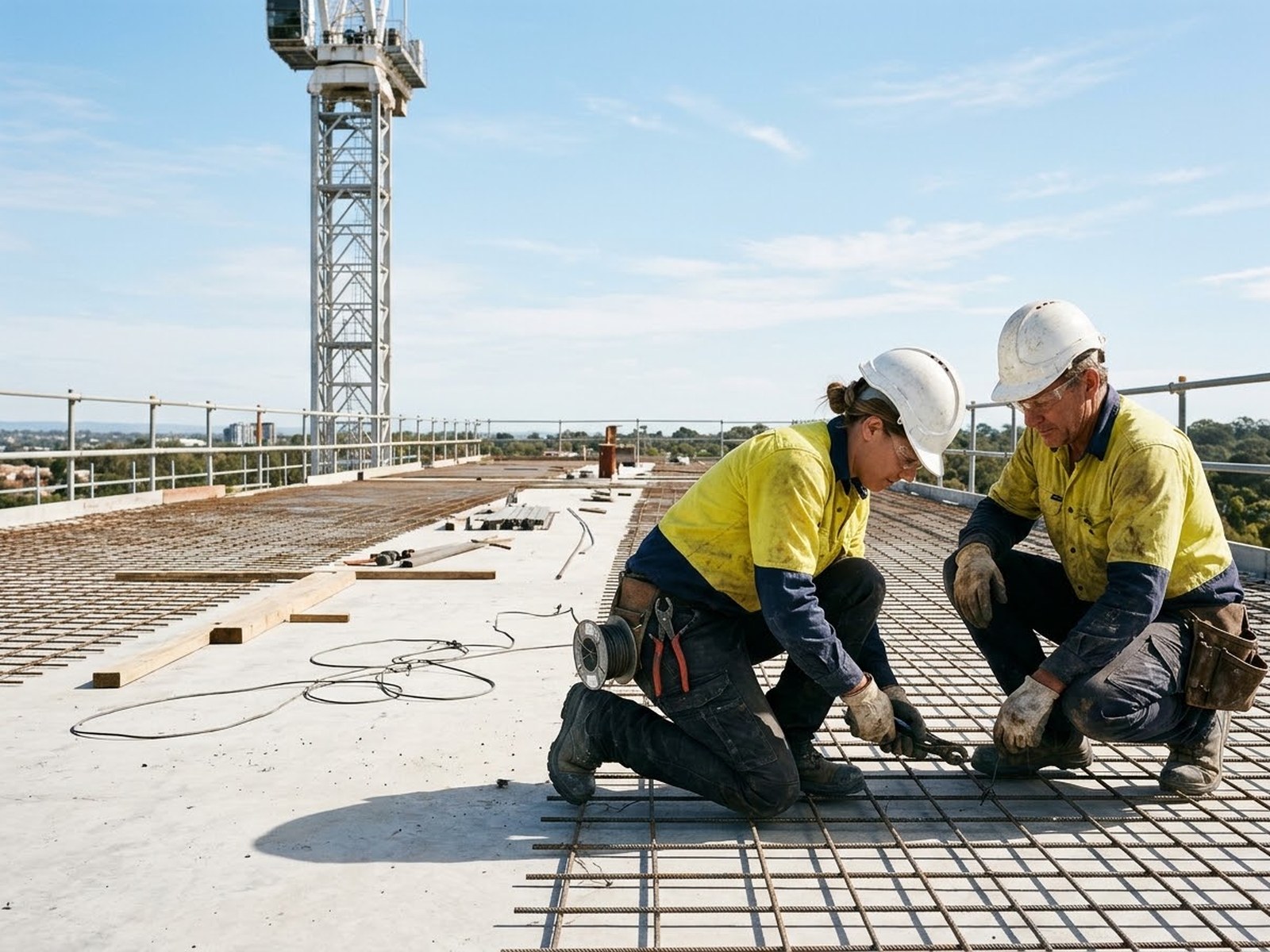
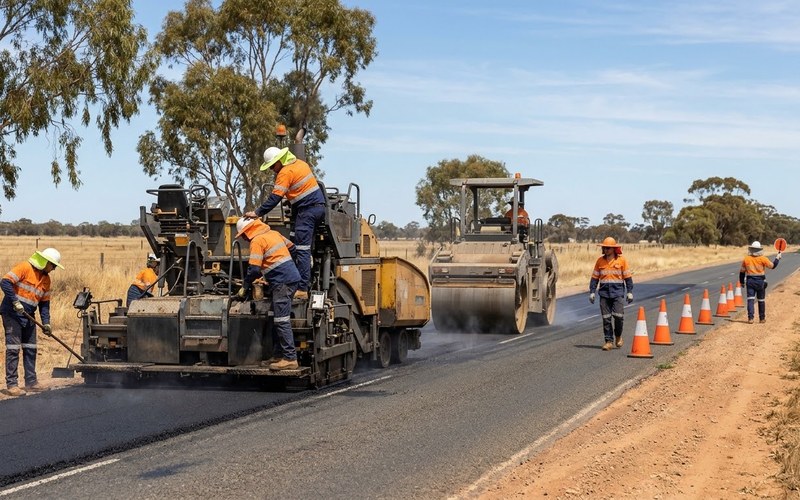
A formworker and a steel fixer tie reinforcing steel on a building deck under a blue sky.
$1,119.10a week, an On-site award tradesperson from 1 July 2026, before allowances
8 weeksOn-site award redundancy pay after 4 years, on most exits including resigning
21 daysto lodge an unfair dismissal or general protections dismissal claim

Time limit Dismissed, or made redundant at the end of a project and think it was not genuine? You have 21 days from the day the dismissal took effect to apply to the Fair Work Commission, for unfair dismissal or a general protections dismissal claim (Fair Work Act 2009 (Cth) ss 394(2), 366(1)).

Which job, which rules?

Your award, your system and your options depend on who employs you, not whose name is on the site sign. Pick the closest.

System
Fair Work, in every state. Builders and civil contractors are companies.
Award or agreement
The builder's enterprise agreement if it has one; otherwise the Building and Construction General On-site Award 2020, which is also the floor for the agreement's base rate (s 206).
Union
The large builders' agreements in our sample cover the CFMEU, whose construction and general division has been under administration since August 2024.
If you are dismissed
Unfair dismissal or general protections at the Fair Work Commission, within 21 days.

Your ordinary hourly rate includes the industry allowance and any tool allowance. Paid the table rate as your hourly rate? You are probably underpaid. Read about coverage and labour hire

Award snapshot

The clauses that matter most at work. Full detail in Awards and pay.
Award snapshot

Building and Construction General On-site Award 2020 (MA000020)

Building, civil and metal and engineering construction on site, including labour hire and group training placements.

New entrant labourer (CW/ECW 1 level a)
$1,013.50 a week ($26.67 an hour)cl 19.1(a)
Scaffolder, steelfixer, traffic controller (CW/ECW 2)
$1,087.50 a week ($28.62 an hour)cl 19.1(a)
Tradesperson (CW/ECW 3)
$1,119.10 a week ($29.45 an hour)cl 19.1(a)
Industry allowance (all purposes)
$67.15 a week general building and civil; $53.72 residentialcl 22.1
Tool allowance (all purposes)
$9.89 (painter) to $41.22 (carpenter, joiner, tiler) a weekcl 21.1(a)
Casual
25% loading; minimum 4 hours plus fares and travelcll 12.3, 12.4
Overtime
Monday to Friday 150% for 2 hours, then 200%; Sunday 200%; public holiday 250%cll 29.4, 30.1
Fares and travel pattern allowance
$22.41 a daycl 26.1(a)

Rates from 1 July 2026. Check today's rate in the Fair Work Ombudsman's Pay and Conditions Tool.

Award snapshot

Plumbing and Fire Sprinklers Award 2020 (MA000036)

Plumbers, gasfitters, drainers, roof plumbers and fire sprinkler fitters.

Worker Level 1(a), new entrant
$1,013.60 a week ($26.67 an hour)cl 18.1
Tradesperson Level 1
$1,119.10 a week ($29.45 an hour)cl 18.1
Advanced tradesperson Level 2
$1,283.10 a week ($33.77 an hour)cl 18.1
All-purpose allowances
Industry $41.41; plumbing trade $33.57; registration $44.76 a weekcl 21.3
Casual
25% loading, minimum 3 hourscl 12.2
Overtime Monday to Friday
150% for 2 hours, then 200% (casual 175%, 225%)cl 22.1(a)
Inclement weather
Up to 32 hours in each 4-week periodcl 21.11(d)
Redundancy
Industry scheme, up to 8 weeks, after 12 months' servicecl 34

Rates from 1 July 2026. Check today's rate in the Fair Work Ombudsman's Pay and Conditions Tool.

Award snapshot

Electrical, Electronic and Communications Contracting Award 2020 (MA000025)

Electricians and electrical workers of electrical, electronics and communications contractors.

Electrical worker grade 1 (labourer)
$1,004.90 a week ($26.44 an hour)cl 16.2
Electrical worker grade 5 (electrician)
$1,119.10 a week ($29.45 an hour)cl 16.2
Electrical worker grade 10
$1,415.00 a week ($37.24 an hour)cl 16.2
All-purpose allowances
Industry $41.41; tool $22.31 (grade 5 and above); licence $40.29 a weekcl 18.3
Casual
25% loading, minimum 2 hourscll 11.2, 11.6
Overtime
150% for 2 hours, then 200% (casual 187.5%, 250%)cl 20.1
Inclement weather
Paid while the conditions last, no 32-hour capcl 15.4(a)
Redundancy
National Employment Standards scalecl 31

Rates from 1 July 2026. Check today's rate in the Fair Work Ombudsman's Pay and Conditions Tool.

Award snapshot

Joinery and Building Trades Award 2020 (MA000029)

Joinery, shopfitting, prefabricated building, stonemasonry and glazing, mainly off site.

Level 1 (induction, up to 3 months)
$978.10 a week ($25.74 an hour)cl 19.1
Level 5 (carpenter and joiner, stonemason)
$1,119.10 a week ($29.45 an hour)cl 19.1
Level 7 (carver)
$1,189.40 a week ($31.30 an hour)cl 19.1
Industry allowance (all purposes)
$41.94 a week; glaziers off factory work $1.12 an hourcl 21.3(b)
Tool allowance (all purposes)
$41.22 a week for carpenters and joiners, unless all tools are providedcl 21.4(a)
Casual
25% loading; minimum engagement 7.6 hourscll 11.2, 11.3
Accident pay
Top-up to the 38-hour award rate for 26 weekscl 22.3

Rates from 1 July 2026. Check today's rate in the Fair Work Ombudsman's Pay and Conditions Tool.

Awards and pay in full →

What a typical agreement says

Many larger employers have an enterprise agreement on top of the award.

What we usually see

From a sample of 14 current construction agreements approved between March 2023 and November 2026: large builders in NSW, WA and Victoria, civil and rail projects in WA, NSW and Queensland, electrical and plumbing contractors, a labour hire company and a plumbing group training organisation. Each was read at a high level for the terms described, not end to end. A sample, not every agreement: most construction agreements cover one subcontractor, project or joint venture. Always read your own.

  • TypicalPay Far above the award on builders' agreements: a Level 3 tradesperson $59.03 an hour from 1 July 2026 (Multiplex NSW) and $62.21 from February 2026 (Hutchinson Victoria), against about $31.22 an hour under the award in general building with the industry allowance. Civil and utilities agreements sit lower: CW3 $43.85 (Laing O'Rourke WA civil), $37.94 (BMD NSW minor works) and $36.31 (Fulton Hogan Queensland utilities), all from 1 July 2026.
  • TypicalHours and RDOs A 36-hour week: 8 hours a day, 7.2 paid and 0.8 accrued toward a rostered day off, on a calendar in the agreement (Multiplex cl 14.1; Lendlease WA cll 35.2, 37.1; Hutchinson cl 36.1). The award is 38 hours with 0.4 a day accruing. Utilities and sprinkler agreements sit closer to the award.
  • VariesSite and productivity allowances Paid by the hour, by project value: Multiplex a productivity allowance of $4.25 an hour and a site allowance of $2.40 to $4.95; Lendlease WA $2.20 to $5.50. Usually not paid when you go home for wet weather, or only for hours actually worked (Multiplex cll 17, 18; Lendlease WA cl 25).
  • VariesWet weather and heat No work at or above 37.5°C under one WA builder's agreement (Lendlease WA cl 34.4(g)); 35°C is inclement weather in Greater Melbourne under a Victorian one (Hutchinson cl 32.3(b)); a conference within 30 minutes (Multiplex cl 9.8). BMD caps wet weather pay at 32 hours each calendar month, against the award's 32 hours in any 4 weeks.
  • Watch forLeaving site early Leaving site before the consultation step can forfeit the wet weather payment (Lendlease WA cl 34.4(a), (f)).
  • VariesRedundancy Usually through an industry fund with weekly contributions (Incolink, ReddiFund, ACIRT, PROTECT), paid when employment ends; in one, "redundancy" means the end of employment for any reason (Multiplex cl 11.2.1(a)). Others use the National Employment Standards scale and may exclude casuals, "limited tenure" employees and apprentices (Fulton Hogan cll 5.3, 10.1.1).
  • VariesProject completion payments A Queensland rail greenfields agreement accrues a Project Legacy Payment of $125 to $350 for each completed week, paid in full on demobilisation, 20% to 50% on resignation after 6 months, and nothing on dismissal (CPB and Acciona cl 6.2).
  • VariesAccident pay Can be longer than the award's 26 weeks: Hutchinson pays the gap between workers' compensation and the 36-hour rate for up to 52 weeks (cl 35.2).
  • Watch forAll-inclusive rates Section 206 lifts only the base rate, which excludes allowances, but the award's industry allowance is all-purpose. So an agreement can pay more than the award base rate and still less than the award's ordinary hourly rate: one labour hire agreement printed a CW/ECW 3 rate of $29.78 at approval that "incorporate[s] all allowances" (Skilled cll 7.1, 7.2). Check your payslip and any annual review.
  • TypicalDrug and alcohol testing An appended testing programme, often by oral fluid (Multiplex Appendix 6); one bars testing or discipline until the worker has done the initial training (TFG Appendix M cl 3.6).
  • TypicalDisputes Ending in binding arbitration by the Fair Work Commission (Multiplex cl 8; Lendlease WA cl 10.4), or in Victoria by the Victorian Building Industry Disputes Panel (Hutchinson cl 11.3).
  • Watch forExpiry Many builders' agreements reach their nominal expiry in July 2027. Nominal expiry is not the end: an agreement keeps operating until it is replaced or terminated.
See the agreements we read (14)
AgreementApprovedNominal expiry
Multiplex Australasia Pty Ltd / CFMEU Collective Agreement 2024-2027 (AE526331)8 October 20244 July 2027
Lendlease Construction and CFMEU (WA) Collective Agreement 2024-2027 (AE529262)18 June 20252 July 2027
J Hutchinson Pty Ltd and the CFMEU (Victorian Construction and General Division) Enterprise Agreement 2024 - 2027 (AE526122)19 September 20242 July 2027
CPB Contractors & Acciona Construction Australia – Logan and Gold Coast Faster Rail (Rail Package) Greenfields Agreement 2026–2030 (AE532314)16 March 202615 March 2030
Laing O'Rourke Australia Construction Pty Ltd Western Australia Metro Civil Agreement 2026 (AE532918)20 May 202620 May 2030
BMD Constructions Pty Ltd New South Wales Enterprise Agreement 2023 (AE519812)24 April 202331 March 2027
Fulton Hogan Utilities Queensland Enterprise Agreement 2026-2030 (AE532605)17 April 202617 April 2030
Stowe Australia Pty Ltd Sydney Projects Division County of Cumberland Construction Projects & ETU NSW/ACT Construction Union Agreement 2025-2029 (AE533923)28 August 2026October 2029
Fredon (WA) Electrical Pty Ltd Construction Enterprise Agreement 2023 (AE525575)26 July 202412 May 2028
Infinity Fire Protection Pty. Ltd. Plumbing & Sprinkler Fitting Employee Collective Agreement 2026-2029 (AE534466)3 November 2026 (with undertakings)10 November 2029
TFG Group Pty Ltd and CEPU – Plumbing Division (Vic) Plumbing Enterprise Agreement 2024 – 2027 (AE534672)16 November 202631 October 2027
The Trustee for BNC Workforce NSW Unit Trust t-as BNC Workforce NSW Pty Ltd / CFMEU Collective Agreement 2024-2027 (AE530683)7 October 20254 July 2027
Plumbing Apprenticeships Victoria and CEPU – Plumbing Division (Vic) Group Training Enterprise Agreement 2025 (AE529393)18 June 2025 (with undertakings)28 February 2028
Skilled Resources Group Enterprise Agreement 2022 (AE519398)8 March 20238 March 2027

Check your own agreement

Four steps. You can do the first two in five minutes.

  1. Find itSearch the Fair Work Commission's agreement search by the employer's legal name and, for a big job, the project name. Ask the site office or payroll which agreement applies; it must be available at the workplace.
  2. Read the approval decision firstThe first pages of the PDF are the decision: operative date, nominal expiry, any undertakings and added model terms.
  3. Compare it with the awardBase rate, all-purpose industry and tool allowances, RDO accrual, wet weather, fares and travel, accident pay and redundancy.
  4. Check the fundsAsk the redundancy fund, the portable long service leave scheme and your super fund for the contribution history. A missing contribution is an underpayment.

What changes in your state

The work is the same; some of the law around it is not.

Construction law in each state

Same everywhere. The construction awards, enterprise agreements, the National Employment Standards, unfair dismissal and general protections are the same in every state for a company employer.

Western Australia

Safety Act
Work Health and Safety Act 2020 (WA)
Stopping unsafe work
s 84: a serious risk to you or any other personDiffers
Industrial manslaughter
s 30A: up to 20 years and $5,000,000 for an individual
Workers' compensation claim
Within 12 months after the injury (Workers Compensation and Injury Management Act 2023 s 25(1))Differs
Portable long service leave
Construction Industry Portable Paid Long Service Leave Act 1985: 8 2/3 weeks after 10 years
Subcontractors in the portable scheme
No: employees and apprentices onlyDiffers
State system for private builders
A sole trader, partnership of individuals or individual trustee; 28 days to the WAIRCDiffers
Employment law in WA →

New South Wales

Safety Act
Work Health and Safety Act 2011 (NSW)
Stopping unsafe work
s 84: a serious risk to your own health or safety
Industrial manslaughter
s 34C, for conduct from 16 September 2024: up to 25 years; $20,000,000 for a body corporate
Workers' compensation claim
Within 6 months, or within 3 years for a reasonable cause such as ignorance or mistake (Workplace Injury Management and Workers Compensation Act 1998 s 261)
Portable long service leave
Building and Construction Industry Long Service Payments Act 1986: a payment after 10 years
Subcontractors in the portable scheme
Yes: any worker under a contract
State system for private builders
No: Fair Work for all private employers
Employment law in NSW →

Victoria

Safety Act
Occupational Health and Safety Act 2004 (Vic)Differs
Stopping unsafe work
No individual s 84 right: the employer or the health and safety representative may direct work to stop (ss 74, 75)Differs
Industrial manslaughter
s 39G workplace manslaughter, from 1 July 2020: up to 25 years
Workers' compensation claim
Notice of injury to the employer within 30 days of becoming aware of it (Workplace Injury Rehabilitation and Compensation Act 2013 s 18(1))Differs
Portable long service leave
Construction Industry Long Service Leave Act 1997, administered by CoINVEST (LeavePlus)
Subcontractors in the portable scheme
By election: a working subcontractor can pay a charge and join
State system for private builders
No: Fair Work for all private employers
Employment law in Victoria →

Queensland

Safety Act
Work Health and Safety Act 2011 (Qld)
Stopping unsafe work
s 84, and a health and safety representative's cease work notice (s 85)
Industrial manslaughter
ss 34C and 34D: up to 20 years
Workers' compensation claim
Within 6 months; lodged more than 20 business days late, the insurer's liability usually starts later (Workers' Compensation and Rehabilitation Act 2003 s 131)
Portable long service leave
Building and Construction Industry (Portable Long Service Leave) Act 1991: 8.67 weeks after 10 years
Subcontractors in the portable scheme
Yes: labour-only and similar contractors (s 3A)
State system for private builders
No: Fair Work for all private employers
Employment law in Queensland →
Decided cases from construction

What the Commission and the courts decided.

Published decisions of the Fair Work Commission and the courts, retold in plain English from the decision itself. Lawcaptain did not act in these cases. Each links to the full decision.

A labourer sweeps debris on the slab of an apartment block under construction.
Photo is illustrative
Sham contractingWA
Employee, not a contractorHigh Court of Australia · 9 February 2022

Signed up as a "self-employed contractor", he was an employee all along.

A Perth labour hire company signed up a backpacker labourer on a "self-employed contractor" agreement and sent him to a builder's high-rise sites.

Read the full storyShow less

Result. Appeal allowed: the labourer was the labour hire company's employee ([90], [91])

The labour hire company supplied workers to builders. The worker, a British backpacker with a white card and his own hard hat, boots and hi-vis, signed an agreement describing him as a "self-employed contractor" ([1], [2]).

He was sent to the builder's sites, inducted under the builder's rules and supervised by the builder's leading hand. He signed nothing with the builder ([3]). He and the union sought award entitlements under the On-site award on the basis that he was an employee ([6]).

The High Court said what matters is the right to control the work, not who gives the day-to-day directions. The labour hire company had the right to decide who he worked for and to require him to cooperate with the builder; that right was "the key asset" of its business ([74] to [76]). The three-party labour hire structure did not change that ([78]).

The "contractor" label was "of no moment". His work was "dependent upon, and subservient to" the company's business, so he was its employee ([79], [89], [90]).

What it means for you

Signing a contractor agreement, getting an ABN or bringing your own boots and hard hat does not make you a contractor. If you were placed on a site to do labouring work as directed, paid by the hour, with no business of your own, you are very likely an employee of the company that pays you.

For Fair Work Act claims from 26 August 2024, s 15AA also looks at how the contract was performed in practice, which is likely to help a worker in this position.
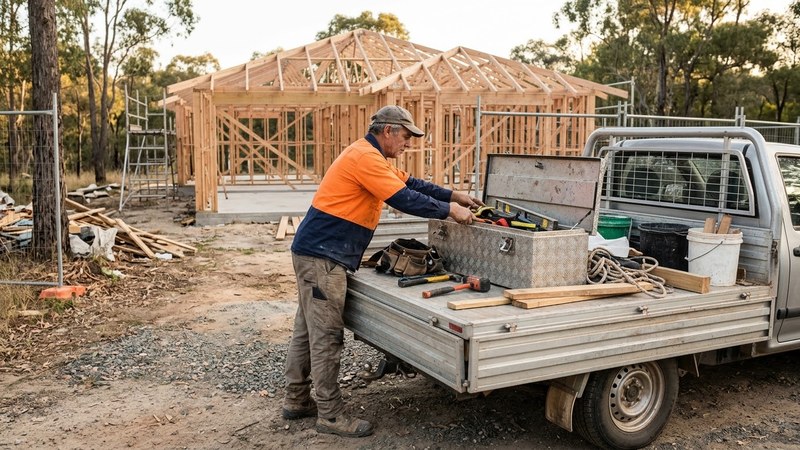
A carpenter packs his tools into a ute beside a finished house frame.
Photo is illustrative
RedundancyWA
8 weeks' redundancy pay eachFederal Circuit Court of Australia · 25 February 2021

Two workers resigned, and were still owed 8 weeks' redundancy pay each.

A maker of steel girders and lintels that places its steelwork on building sites asked the Court to set aside a compliance notice that required it to pay redundancy pay to two employees who had resigned.

Read the full storyShow less

Result. The Fair Work Ombudsman's compliance notice was confirmed: 8 weeks' redundancy pay for each employee.

The employer argued that, in its ordinary meaning and in the National Employment Standards, redundancy cannot include a resignation ([26] to [28]).

The Court disagreed. Because an employee under an industry redundancy scheme is outside the National Employment Standards redundancy provisions, the Standards' definition "is of no assistance" ([33], [34]). The employer's agreement picked up the award scheme, so the award's definition governed: any end of employment other than for misconduct or refusal of duty. The Court called it "very specific and wide" ([47], [48]).

Accepting that the two employees had resigned, each was entitled to 8 weeks' redundancy pay, the top of the scale for 4 years' service or more, and the compliance notice was confirmed ([49] to [51]).

What it means for you

Under the On-site award, redundancy pay can follow a resignation once you have 12 months' continuous service. In the first 12 months a resignation gets nothing, and casual service does not count. If a redundancy fund paid you, it counts against the award amount.

The scheme was cl 17 of the 2010 award and is now cl 41 of the 2020 award, with the same definition. The result also depended on the agreement's own redundancy clause.

Show more cases (2)Show fewer
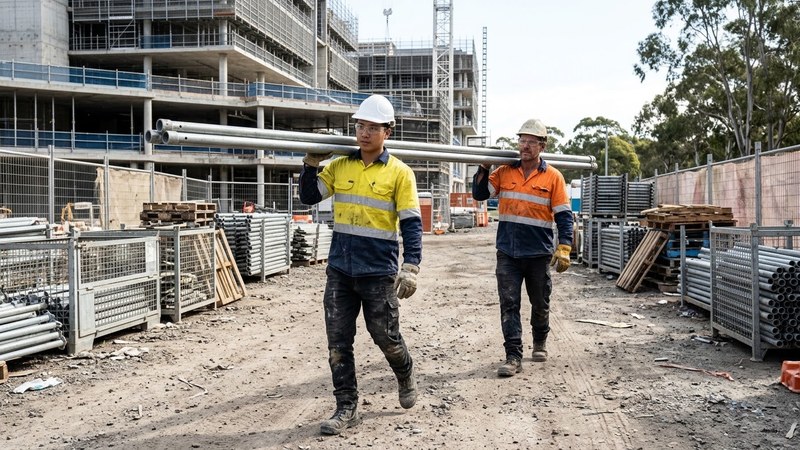
Two scaffolders carry scaffold tubes across a laydown yard on a hospital project.
Photo is illustrative
Safety breach
Unfair: 2 weeks' pay plus superFair Work Commission · 22 October 2025

A scaffolder skipped a catch deck. Valid reason, but the dismissal was still harsh.

A casual leading hand scaffolder on a hospital upgrade was seen working without the 1 metre catch deck the safe work method statement required.

Read the full storyShow less

Result. Valid reason, but harsh for want of a fair process; reinstatement refused; compensation of 2 weeks' pay plus superannuation.

The employer supplies scaffold and labour to construction projects. The worker, a former site supervisor, was a casual leading hand scaffolder on a hospital upgrade ([4] to [9]). The employer said another of its scaffolders had earlier fallen through a void with no catch deck, and that a toolbox meeting on the 1 metre catch deck rule had been held about 10 days before ([65], [66], [73]). The Commission found he had been retrained on the safe work method statement in the previous fortnight ([203]).

He was seen working without the required catch deck and, after two meetings, was dismissed for serious misconduct three days later. His partner had been rushed to hospital that day and he was sleep-deprived through the process ([10] to [12], [194]).

The Commission found serious misconduct: as a very experienced scaffolder and leading hand he could not have been ignorant of the rule ([186], [187]). A co-worker who got a final warning for a similar breach was not unfair disparity, given his seniority and recent retraining ([201]).

But "every employee is entitled to 'a fair go', which includes an opportunity to respond to a set of written allegations", and that did not happen. The dismissal was harsh ([204] to [206]). Reinstatement was refused, and compensation was limited to the time a proper process would have taken: 2 weeks' pay plus superannuation ([215] to [221]).

What it means for you

A fall-protection breach is treated as serious on site, and the more senior you are the less a co-worker's lighter penalty helps. If you are stood down, ask for the allegations in writing and answer them. If they are never put to you, that can make a dismissal unfair even where the breach happened.

A carpenter checks the edge protection on a scaffold around a roof frame.
Photo is illustrative
FallsNSW
Convicted; $120,000 fineIndustrial Court of New South Wales · 10 July 2026

A carpenter fell six metres through a roof frame. The subcontractor could not blame the builder.

A builder used a broker to find carpentry contractors. The broker placed a carpentry company, which engaged a carpenter to work on the roof frame of a two-storey townhouse.

Read the full storyShow less

Result. Convicted on a plea of guilty; fined $120,000, with $36,000 costs.

The carpenter stood on a ceiling joist, which collapsed. He fell about six metres to the concrete below and was seriously injured (particulars 12, 17).

The only fall protection was an internal scaffold that had not been erected by a qualified person and was unsuitable for roof work. There were no working decks or planks, no edge protection and no fall arrest; induction and instruction were informal, and the safe work method statement was not made known to the carpenter (agreed facts [27] to [33]; reasons [30]).

The Court said the company's obligations "are not diminished by the notion that another entity may have contributed to the risk", and called the failures "frankly, egregious". A safe work method statement is of little use unless it is adequate for its purpose, and the steps taken after the fall, such as elevated work platforms and supervision at height, showed how easily the risk could have been dealt with (reasons [28], [29], [32], [33]).

The company was fined $120,000, with its early guilty plea taken into account, and ordered to pay $36,000 costs (reasons [18], [34], [35]).

What it means for you

Before you work at height you are owed working decks, edge protection, void covers or fall arrest by every business directing your work, not just the builder. Whether you are an employee or a subcontractor, you are a worker under the safety Act and may refuse work that exposes you to a serious and imminent risk.

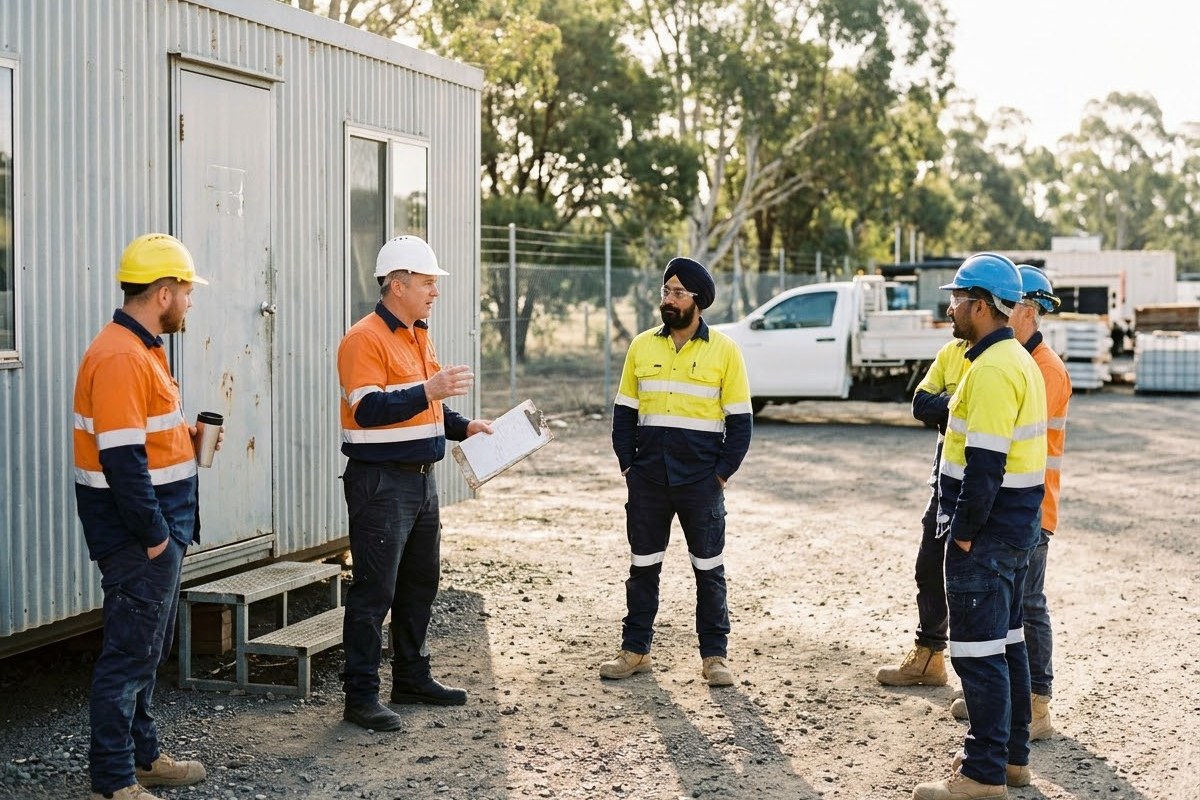
A site supervisor runs a morning pre-start meeting with his crew beside the site shed.
For employers

If you run a construction business

Builders, civil contractors, subcontractors, trade contractors and labour hire firms. These are the most common construction exposures.

  • Pay to the ordinary hourly rate. The table rate plus the industry allowance and every other all-purpose allowance, with the daily hire loading, for every overtime, penalty and leave hour. Awards and pay →
  • Budget for award redundancy pay on exits after 12 months' service. Under the On-site and Plumbing awards that includes resignations, other than for misconduct or refusal of duty; in the first year only where you end the job; casual service does not count. Small business status does not help. Redundancy and the end of a project →
  • Do not put labour on an ABN. A worker paid by the hour, directed by your foreman, with only hand tools, is very likely an employee; the sham contracting defence now needs a reasonable belief. Sham contracting and the ABN trap →
  • Put safety breaches in writing before you decide. A proved breach can be a valid reason, but a dismissal without written allegations and a chance to answer can still be harsh. Dismissed for a safety breach, a drug test or conduct →
For unions and delegates

A note for delegates

The CFMEU's construction and general division and its branches have been under administration since 23 August 2024, for five years unless the scheme is revoked earlier; the High Court upheld the law in June 2025 (Ravbar v Commonwealth of Australia [2025] HCA 25). Its agreements remain in force. This guide does not cover union organising.

  • Delegates' rights are in each award. On-site award cl 36A, Plumbing award cl 29A and Electrical Contracting award cl 26A, with the consultation and dispute clauses. Awards and pay →
  • Same job, same pay. A union can apply for a regulated labour hire arrangement order for labour hire workers on a builder's site (s 306E). Which system, which award, and labour hire →
Leading cases

The decisions that set the rules.

A labourer placed on building sites on a "self-employed contractor" agreement was an employee; the label did not decide it.

Under the construction award's wide definition of redundancy, two employees who resigned were owed 8 weeks each.

Show all leading cases (1)Show fewer

A scaffolder's catch deck breach was a valid reason, but the dismissal was harsh without written allegations.

Questions

The things people ask.

Which award covers me?

Building, civil and engineering construction workers on site: the Building and Construction General On-site Award 2020. Plumbers, gasfitters and sprinkler fitters of a plumbing contractor: the Plumbing and Fire Sprinklers Award 2020. Electricians of an electrical contractor: the Electrical, Electronic and Communications Contracting Award 2020. Joiners and shopfitters mainly off site: the Joinery and Building Trades Award 2020. Crane hire crews: the Mobile Crane Hiring Award 2020. Most large builders have an enterprise agreement instead.

What is the industry allowance?

An all-purpose weekly allowance under the On-site award: $67.15 for general building, civil and metal and engineering construction, and $53.72 for residential building, from 1 July 2026 (cl 22.1). Because it is all-purpose, it is part of the ordinary hourly rate used for overtime, penalties, leave and redundancy.

Do I get redundancy pay when the job finishes or I resign?

Under the On-site and Plumbing awards, after 12 months' continuous service, yes: any end of employment other than for misconduct or refusal of duty, from 2.4 weeks at 1 year to 8 weeks after 4 years. In the first 12 months a resignation gets nothing, and casual service does not count.

My builder told me to get an ABN. Am I a contractor?

Not because of the ABN. Under the Fair Work Act the real substance and practical reality of the relationship decides (s 15AA). Paid by the hour, told where and when to work, with only hand tools and no business of your own: you are very likely an employee.

I'm labour hire on site. Who employs me?

Usually the labour hire company that pays you, even though the builder directs your work. You are paid under the award of the industry you are placed in, and a regulated labour hire arrangement order can give you the builder's agreement rate (s 306E).

How far back can I claim unpaid wages?

6 years from each underpaid pay day under the Fair Work Act (s 544).

Free discussion · no obligation

Talk to us.

Call 1300 967 552, or leave your details and we will call you.

Do it yourself with AI

General information about Australian employment law, not legal advice about your situation. Updated November 2026.