Construction · Sexual harassment

"Banter" in the sheds can be sexual harassment under the Fair Work Act.

Every worker on a site with many employers is protected against every other, and the employer is liable for its workers' harassment unless it took all reasonable steps to prevent it. What you can do, how fast, and what employers must do before anything happens.

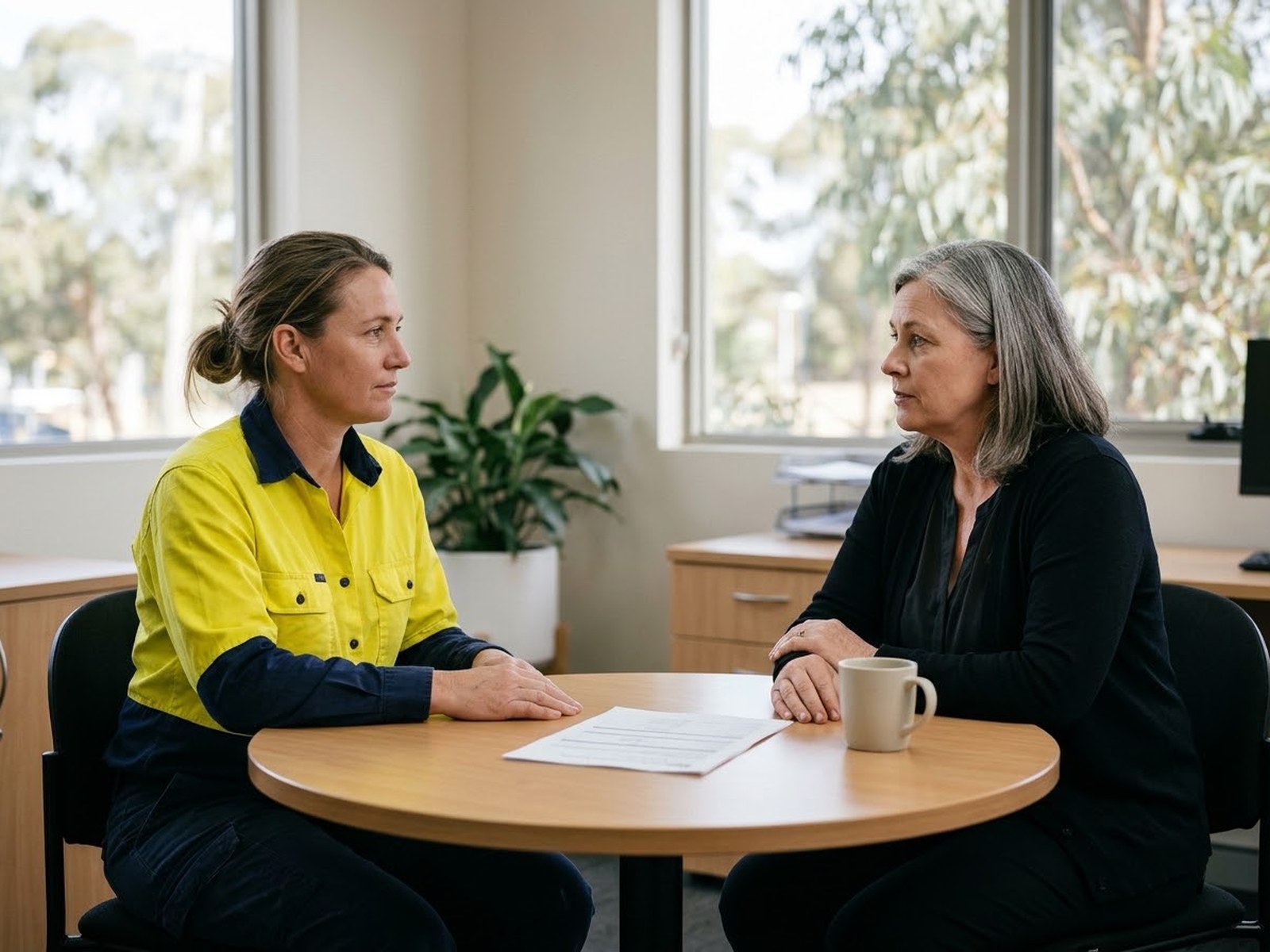
A tradeswoman and an HR officer go through a form in an office.
14 daysfor the Commission to start dealing with a stop sexual harassment order application
Every workeris protected: employees, subcontractors, apprentices and labour hire
All reasonable stepsis the employer's only defence to liability for its workers' harassment

Time limit If you were dismissed, a general protections claim must be lodged within 21 days (Fair Work Act s 366(1)). A sexual harassment dispute application to the Fair Work Commission may be dismissed if it is made more than 24 months after the last alleged contravention (s 527G), so apply well within that.

A person must not sexually harass another person who is a worker in a business or undertaking, a person seeking to become one, or a person conducting a business or undertaking, where the harassment is in connection with that (s 527D(1)). "Worker" has its safety law meaning, so it includes employees, contractors, subcontractors, apprentices, trainees and labour hire workers (s 527D(2)). On a site with many employers, every worker is protected against every other.

What it looks like in construction

  • a worker isolated on a crew or a remote site;
  • sexual comments or requests passed off as "banter" in the sheds, on group chats or in shared accommodation;
  • a complaint that goes to a foreman who is part of the culture;
  • the worker who complained being moved, given worse tasks or not given more shifts afterwards.
Read moreShow less

Harassment by a co-worker makes the employer liable as if it had done it, unless the employer proves it took all reasonable steps to prevent it (s 527E). Separately, every employer and business must take reasonable and proportionate measures to eliminate, as far as possible, sexual harassment by itself, its workers and agents, and by third parties (Sex Discrimination Act 1984 (Cth) s 47C(1)). The Australian Human Rights Commission enforces that positive duty.

What you can do

  1. Write down each incident: date, time, place, the words or actions, and who saw it. Keep messages and images.
  2. Report it in writing to your employer and, if different, the head contractor running the site, and ask what will be done to stop it.
  3. If it continues, or you are punished for complaining, you can:
    1. apply to the Fair Work Commission for a stop sexual harassment order. The Commission must start dealing with it within 14 days and can make any order, other than for money, to prevent further harassment where there is a risk it will continue (s 527J). A union entitled to represent you can apply for you (s 527F);
    2. ask the Commission to deal with the dispute, and then go to court for compensation and penalties (s 527F, 527T);
    3. make a general protections claim if you were dismissed or punished for complaining: making a complaint is a workplace right (s 340). A dismissal claim must be lodged within 21 days;
    4. complain to the Australian Human Rights Commission or your state anti-discrimination body, or to the safety regulator, because sexual harassment is a psychosocial hazard. Where the conduct is repeated, a stop bullying order is another route (s 789FD).
  4. Workers' compensation for a psychological injury is available in each state, within that state's time limits: see What changes by state.

If you are the one accused

Ask for the allegations in writing and answer them, with a support person or delegate. Dismissals of harassers are often upheld where the conduct is proved and the employer's policy and training were clear. Conduct at a work function or in company accommodation can be connected with work. See Dismissed for a safety breach, a drug test or conduct.

Decided cases from construction

What the Commission and the courts decided.

Published decisions of the Fair Work Commission and the courts, retold in plain English from the decision itself. Lawcaptain did not act in these cases. Each links to the full decision.

Two contraventions; builder liableFederal Court of Australia · 12 June 2026

Sexual questions from a co-worker on a remote site: the builder was liable.

An apprentice carpenter was sent to work on a remote lodge construction site. She alleged two co-workers made unwelcome comments and requests of a sexual nature, and that she was taken off the site because of her sex.

Read the full storyShow less

Result. Two sexual harassment contraventions established, with the employer vicariously liable; the other allegations and the adverse action claims failed; award underpayments declared; remedies to be decided later.

The worker was employed by a builder from April 2023 to work on a remote lodge construction site and in Adelaide. In May 2023 the director told her she would not be returning to the remote site ([1]). The employer accepted it would be vicariously liable if the conduct she alleged had happened ([3]).

The Court found that one co-worker sexually harassed her twice: by asking her a sexual question about another worker, and by asking her for a sexual act. Her evidence that the request was unwelcome was accepted. The builder was vicariously liable ([151]; [427]).

Her other allegations were not proved. Her claim that she was taken off the remote site because of her sex also failed: the Court accepted there were performance issues and that the director acted partly on a co-worker's reports about the effect of a workplace relationship, and did not accept that her sex was a reason ([262], [264] to [269]; [427]).

The Court also declared that the builder had underpaid her under the award, including travel time to and from the remote site, the travel pattern allowance on 32 days worked on Adelaide-area sites, the tool and industry allowances, superannuation and leave loading, and had not given her payslips or the Fair Work Information Statement (declarations 3 to 7). Compensation and penalties were left for a later hearing.

What it means for you

Sexual comments and requests from co-workers on site can be sexual harassment under the Fair Work Act, and the employer is liable unless it took all reasonable steps beforehand. Write down what was said, when and who heard it. If you are moved off a site after complaining, say so in writing straight away.

Compensation and penalties were left for a later hearing. No later decision had been found when this page was written; check for one.

For employers

If you run a construction business

  • Your defence is what you did beforehand. A policy, induction training that covers harassment specifically, a reporting route that bypasses the crew, prompt investigation, and action (s 527E).
  • The positive duty is proactive. Assess the risks on your sites, such as isolation, shared accommodation, remote travel and alcohol at events, and act on them (Sex Discrimination Act s 47C).
  • Do not move the complainant instead of the harasser. That invites a general protections claim. Record the real reasons for any change to a worker's site or crew.
  • On multi-employer sites, agree who investigates what. With the head contractor and the other subcontractors, before an incident.
  • Pay remote and regional travel properly. Travel time and travel allowances under the award were among the underpayments in the case above (On-site award cl 25.6, 26.1).
For unions and delegates

For unions and delegates

  • Delegates are often the first people told. A union entitled to represent the worker can make the stop order application to the Commission (s 527F).
Leading cases

The decisions that set the rules.

Two contraventions of s 527D by a co-worker on a remote construction site; the employer vicariously liable; award underpayments declared.

Questions

The things people ask.

I'm the only woman on site and getting sexual comments. What can I do?

Write down each incident, report it in writing to your employer and the head contractor, and ask what will be done. If it continues, you can apply to the Fair Work Commission for an order to stop it; the Commission must start dealing with it within 14 days (s 527J). You can also go to court for compensation, or complain to the Australian Human Rights Commission or your state body.

Is my employer responsible for what a co-worker says?

Yes, unless it proves it took all reasonable steps to prevent it (Fair Work Act s 527E). On a site with several employers, each worker is protected against every other (s 527D).

I'm a subcontractor, not an employee. Am I protected?

Yes. The prohibition protects anyone who is a worker in a business or undertaking, which includes contractors, subcontractors, apprentices and labour hire workers (s 527D(2)).

How long do I have?

A sexual harassment dispute application may be dismissed if it is made more than 24 months after the last contravention (s 527G). If you were dismissed, a general protections claim must be lodged within 21 days.

What must my employer do to prevent harassment?

Take reasonable and proportionate measures to eliminate it as far as possible (Sex Discrimination Act s 47C): a clear policy, training, a safe way to report that does not go through the crew, prompt investigation, and attention to risks like remote sites and shared accommodation.

Free discussion · no obligation

Talk to us.

Call 1300 967 552, or leave your details and we will call you.

Do it yourself with AI

General information about Australian employment law, not legal advice about your situation. Updated November 2026.