

Employment law · Transport and logistics

Trucks, couriers, warehouses and buses: your rights at work.

For truck and delivery drivers, couriers, long-distance drivers, warehouse and 3PL workers, bus and coach drivers, garbage truck crews, cash in transit, port and rail workers, and drivers on apps or an ABN. Your award and grade, what agreements usually say, cameras, testing and fatigue, real decisions from the industry, and what changes in your state.

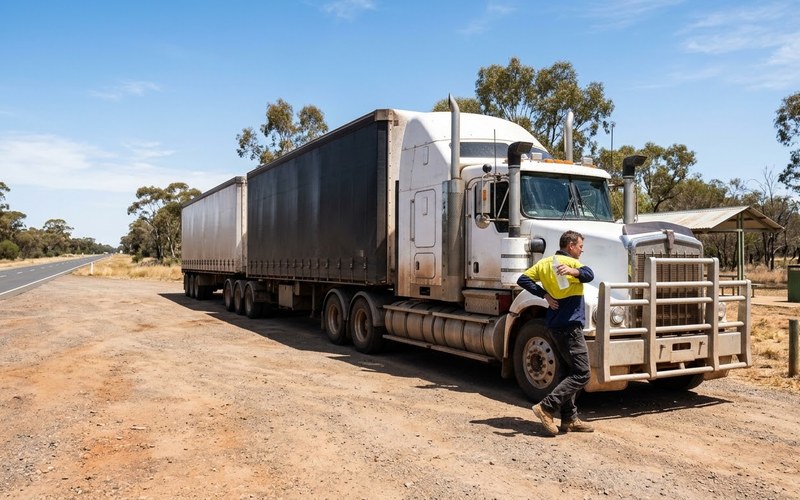
A truck driver in plain hi-vis walking towards an unbranded prime mover, a forklift loading a trailer behind, subject on the right third of the frame, open sky on the left.
$29.42an hour, a B-double driver's award minimum from 1 July 2026
8 awardscover transport work, chosen by the job, not the job title
21 daysto challenge a dismissal, a deactivation or the end of a contractor's run

Time limit Dismissed? You have 21 days from the day the dismissal took effect to apply to the Fair Work Commission, for unfair dismissal or a general protections dismissal claim (Fair Work Act 2009 (Cth) ss 394(2), 366(1)). A platform deactivation or the end of an owner-driver's contract also has a 21-day limit (s 536LU(3)).

Which job, which rules?

Your award, your system and your options depend on the work you do and who engages you, not the logo on the truck. Pick the closest.

System
Fair Work, in every state, unless your employer is a WA sole trader or partnership.
Award or agreement
Road Transport and Distribution Award 2020 for local and regional work; Road Transport (Long Distance Operations) Award 2020 for interstate runs over 200 km or return runs over 500 km. Large carriers usually have an agreement above the award.
Union
The TWU is covered by the big road transport agreements.
If you lose the job or the work
Unfair dismissal or general protections at the Fair Work Commission, within 21 days.

Your grade is set by the vehicle you drive. Two grades in one day means the higher grade for the day. Read about coverage

Award snapshot

The clauses that matter most at work. Full detail in Awards and pay.
Award snapshot

Road Transport and Distribution Award 2020 (MA000038)

Local and regional truck drivers, employed couriers, tanker drivers, forklift drivers and distribution facility workers of a road transport business.

Grade 2 (van up to 4.5 t)
$1,045.50 a week ($27.51 an hour; casual $34.39)cl 17.1
Grade 6 (semi-trailer)
$1,102.00 a week ($29.00 an hour; casual $36.25)cl 17.1
Grade 7 (B-double)
$1,118.00 a week ($29.42 an hour; casual $36.78)cl 17.1
Distribution facility
Level 1 $27.83 to level 4 $30.78 an hourcl 17.1(b)
Ordinary hours
8 a day, 5.30 am to 6.30 pm, Monday to Fridaycll 13.5, 13.6
Overtime
150% for the first 2 hours, then 200%cl 21.1
Weekends
Saturday 150%, Sunday 200%, 4-hour minimumcl 23.1
Casual
25% loading, 4-hour minimumcll 11.2, 11.3

Rates from 1 July 2026. Check today's rate in the Fair Work Ombudsman's Pay and Conditions Tool.

Award snapshot

Waste Management Award 2020 (MA000043)

Waste and recycling collection, transfer stations, landfill and resource recovery for a waste business.

Industry allowance
$122.98 a week, paid for all purposescl 16.2(b)
Level 2 (offsider)
$30.75 an hour with the allowanceSch A.2.1
Level 5 (rear-loader, hook-lift)
$31.91 an hour with the allowanceSch A.2.1
Level 9 (B-double)
$36.68 an hour with the allowanceSch A.2.1
Ordinary hours
4.00 am to 5.00 pm, Monday to Friday, 8 a daycll 13.1, 13.2
Overtime
150% for 2 hours, then 200%; Saturday is overtime, 4-hour minimumcll 19.1, 21.3
Sunday
200%, 4-hour minimumcl 21.4

Rates from 1 July 2026. Check today's rate in the Fair Work Ombudsman's Pay and Conditions Tool.

Award snapshot

Storage Services and Wholesale Award 2020 (MA000084)

Warehouses, cold stores and 3PL sites not run as part of a road transport business.

Storeworker grade 1
$27.08 an hour on commencement, $27.41 after 3 months, $27.72 after 12 monthscl 15.1
Grade 2 (licensed forklift)
$1,062.80 a week ($27.97 an hour; casual $34.96)cl 15.1
Grade 4 (leading hand of more than 10)
$1,125.30 a week ($29.61 an hour)cl 15.1
Ordinary hours
7.00 am to 5.30 pm, Monday to Fridaycl 13.1
Weekends and holidays
Saturday 150%, Sunday 200%, public holiday 250%cll 22.1-22.3
Casual
25% loading, 4-hour minimumcll 11.1, 11.2

Rates from 1 July 2026. Check today's rate in the Fair Work Ombudsman's Pay and Conditions Tool.

Award snapshot

Passenger Vehicle Transportation Award 2020 (MA000063)

Bus, coach, school bus, hire car and limousine drivers, and tram and light rail employees.

Grade 1
$1,038.80 a week ($27.34 an hour)cl 15.1
Grade 4 (route bus)
$1,162.40 a week ($30.59 an hour; casual $38.24)cl 15.1
Grade 6 (driver trainer)
$1,280.50 a week ($33.70 an hour)cl 15.1
Penalties
Before 6 am or after 7 pm 115%; Saturday 150%; Sunday 200%; public holiday 250%cl 20.1
Overtime
150% for the first 3 hours, then 200%cl 19.2
Casual minimum
3 hours a shift, or 2 hours for each school runcl 11.3(a)

Rates from 1 July 2026. Check today's rate in the Fair Work Ombudsman's Pay and Conditions Tool.

Awards and pay in full →

What a typical agreement says

Many larger employers have an enterprise agreement on top of the award.

What we usually see

From a sample of 14 current transport agreements approved between December 2023 and November 2026: road transport and parcels (Toll, Team Global Express, Linfox, StarTrack, Australia Post, FedEx, DHL Supply Chain), a 3PL warehouse agreement, two bus agreements, a cash processing agreement, a council waste contract, a container terminal and a bulk rail operator. Each was read at a high level for the terms described, not end to end. A sample, not every agreement: the Commission lists well over a thousand approved agreements in road transport, storage and waste, most for one depot, customer or site. Always read your own.

  • TypicalPay above the award The road transport agreements in the sample pay well above the award. Toll and Team Global Express guarantee at least 10% above the award rate for the classification (Toll cl 34.1(d); TGE cl 37.1(c)): from 1 July 2026 that is at least $1,123.10 a week for Grade 1. StarTrack NSW Grade 1 is $37.02 an hour from September 2026 and DHL NSW Grade 3 $35.70 from 6 July 2026, against the award's $26.87 and $27.83.
  • Watch forRates kept outside the agreement Toll and Team Global Express rates are in site Local Agreements, Linfox's in an "Exhibit 1", Australia Post's in a Rates of Pay Booklet. Each is part of the agreement and enforceable. The Commission held Linfox's exhibit had to be published, over Linfox's objection that competitors keep their rates private ([2026] FWCA 3149 at [6], [8], [19]-[25]).
  • VariesOutside hire and owner-drivers The TWU agreements set outside hire targets, usually subject to commercial needs (Toll no more than 40% of hours by state; TGE 30% by site; FedEx at least 75% of courier and driver positions for its own workers and owner-drivers, cl 10.4), and require or seek that fleet operators pay their drivers at least 10% above the award (Toll cl 52.2(a); Linfox cl 76.3(c); FedEx cl 10.7).
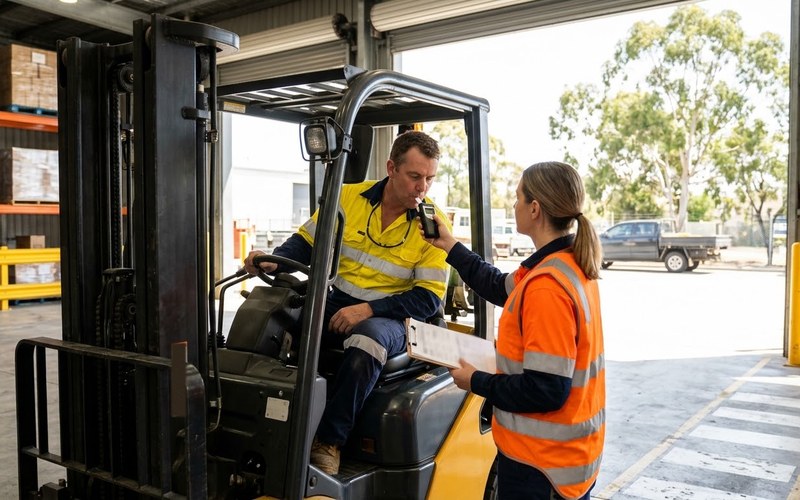
  • VariesDrug and alcohol testing Most agreements in the sample have random testing under company policy (Linfox cl 28.1; Toll cl 41; DHL cl 31.1; Transdev cl 5.8.4). Australia Post's and Cleanaway's have no testing term. DP World sets the method: oral swab with urine confirmation, breath tests, and no hair testing (cl 35.3).
  • TypicalDisputes Most in the sample end in Fair Work Commission arbitration either side can trigger (Toll cl 15(d); Linfox cl 33(e); DHL cl 37.6; Kinetic cl 9.5). Australia Post requires mediation and union or company authorisation first (cl 40.6.2, 40.7).
  • VariesRedundancy In most of the road transport and port agreements, about 3 weeks a year capped at 52 weeks (Toll cl 26(f), rising to 60 weeks after 25 years; Linfox cl 57.5; DP World cl 43.5.1); StarTrack and FedEx count notice within the 52 weeks. The bus and waste agreements pay less: Kinetic the NES only (cl 25.1), Cleanaway a table rising to 26 weeks at 13 years (cl 27.3).
  • VariesNew technology and cameras Consultation before new technology: truck monitoring devices and biometrics (Linfox cl 31), algorithmic management and data sharing (Linfox 2026 cl 73.5), artificial intelligence and automation (DHL cl 28.4). Aurizon's is the only express camera term found in the sample, by a keyword search: no in-cab train safety recorders during the agreement unless the law requires them (cl 97.1).
  • TypicalLegal costs after a crash An indemnity for drivers sued after a fatal or serious crash, except for serious and wilful misconduct or a drug and alcohol breach, usually for permanent drivers and capped (Toll cl 33; TGE cl 35; Linfox cl 26.1; FedEx cl 39, $20,000 an incident).
See the agreements we read (14)
AgreementApprovedNominal expiry
Toll - TWU Enterprise Agreement 2023 - 2026 (AE522665)12 December 202330 June 2026 (still operating)
Team Global Express – TWU Enterprise Agreement 2023- 2026 (AE523095)11 January 202430 June 2026 (still operating)
Linfox and Transport Workers Union Road Transport and Distribution Centres Agreement 2026 (AE534651)25 November 202630 June 2029
StarTrack - Transport Workers' Union Enterprise Agreement 2025 (AE529538)11 July 20251 September 2027
Australia Post Enterprise Agreement 2024 (AE526228)11 October 20249 October 2027
FedEx Express Australia – TWU Fair Work Agreement – 2026 - 2029 (AE534748)20 November 202630 June 2029
DHL Supply Chain Transport Networks - NSW Enterprise Agreement 2026 (AE534136)17 September 202630 June 2029
Linfox and UWU (Retail and FMCG) National Distribution Centres Agreement 2025 (AE529710)29 July 20251 September 2027
Kinetic and Transport Workers Union Melbourne Bus Driver Enterprise Agreement 2025 (AE531054)7 November 202530 June 2028
Transdev Queensland Bus Operator Enterprise Agreement 2024 (AE526936)27 November 202431 December 2026
Armaguard Cash (NSW) Agreement 2024 (AE527325)19 December 20241 July 2027
Cleanaway Central Coast (Municipal) Depot Drivers Enterprise Agreement 2025 (AE531566)17 December 20251 October 2029
DP World Sydney Enterprise Agreement 2024 (AE524232)16 April 2024 (an appeal against the approval, C2024/2835, was lodged; its outcome was not found)31 January 2028
Aurizon Bulk (Queensland) Enterprise Agreement 2024 (AE523832)15 March 202422 March 2027

Check your own agreement

Four steps. You can do the first two in five minutes.

  1. Find itSearch the Fair Work Commission's agreement search by employer name or site.
  2. Check it still appliesLook at the approval date and the nominal expiry, and whether it has been replaced or terminated.
  3. Compare the parts that matterHold the roster, travel and pay clauses against the award snapshot.
  4. Not sure? Send it to usA free discussion will tell you which rules apply to you.

What changes in your state

The work is the same; some of the law around it is not.

What changes for transport workers in each state

Same everywhere. Your award, enterprise agreement, the National Employment Standards, unfair dismissal and general protections are the same in every state, except for an unincorporated WA employer.

Western Australia

Safety law and the right to stop unsafe work
Work Health and Safety Act 2020 (WA). A worker may stop work on a reasonable concern of a serious risk to themselves or any other person (s 84(1))Differs
Heavy vehicle and fatigue law
Not part of the HVNL. Fatigue is regulated by the WHS (General) Regulations 2022 (WA): fatigue management plans, driver medicals and work and rest recordsDiffers
Injured on the drive to work
Not covered: a journey to or from home is excluded (WCIM Act 2023 s 9(2)(a))
Workers' compensation claim time
12 months (WCIM Act 2023 s 25(1))
Long service leave
Long Service Leave Act 1958 (WA); no portable scheme for transport
Labour hire licensing
No licensing scheme found
Cameras and tracking
No workplace surveillance Act; general Surveillance Devices Act 1998 (WA) s 6
Owner-driver law
Owner-Drivers (Contracts and Disputes) Act 2007 (WA): 90 days' notice, guideline rates, Road Freight Transport Industry TribunalDiffers
State industrial system
A sole trader, partnership of individuals or trust without a corporate trustee; 28 days to the WAIRC. The Public Transport Authority (Transperth trains) is in the state systemDiffers
Employment law in WA →

New South Wales

Safety law and the right to stop unsafe work
Work Health and Safety Act 2011 (NSW): stop work on a serious risk to your own health or safety (s 84); industrial manslaughter up to 25 years (s 34C)
Heavy vehicle and fatigue law
Heavy Vehicle National Law, applied as NSW law; prosecutions in the Local Court
Injured on the drive to work
Only with a real and substantial connection between the employment and the accident (Workers Compensation Act 1987 s 10(3A))Differs
Workers' compensation claim time
6 months, or within 3 years with reasonable cause (WIM Act 1998 s 261)
Long service leave
Long Service Leave Act 1955 (NSW): 2 months after 10 years; no portable scheme for transport
Labour hire licensing
No licensing scheme found
Cameras and tracking
Workplace Surveillance Act 2005 (NSW): 14 days' written notice, and a visible notice on a tracked vehicle (ss 10, 13)Differs
Owner-driver law
Industrial Relations Act 1996 (NSW) ch 6: contract determinations and reinstatement for carriersDiffers
State industrial system
Private transport employers are in Fair Work. Councils are in the NSW state system
Employment law in NSW →

Victoria

Safety law and the right to stop unsafe work
Occupational Health and Safety Act 2004 (Vic): no individual right to stop work in the WHS form; the employer or a health and safety representative may direct that work cease (s 74)Differs
Heavy vehicle and fatigue law
Heavy Vehicle National Law, applied as Victorian law
Injured on the drive to work
Not covered for the ordinary commute (WIRC Act 2013 s 46(2)(b)); for a driver with no fixed workplace, the place of employment includes the whole area of the job (s 46(2)(a))
Workers' compensation claim time
Notice of injury to the employer within 30 days (WIRC Act 2013 s 18(1))
Long service leave
Long Service Leave Act 2018 (Vic): from 7 years, at 1/60th of service
Labour hire licensing
Licence required (Labour Hire Licensing Act 2018 (Vic) ss 13, 15)Differs
Cameras and tracking
No workplace notice Act; devices banned in toilets, change rooms and lactation rooms (SDA 1999 s 9B)
Owner-driver law
Owner Drivers and Forestry Contractors Act 2005 (Vic): booklet, rates schedule, 1 or 3 months' noticeDiffers
State industrial system
Every transport employer, public or private, is in Fair Work
Employment law in Victoria →

Queensland

Safety law and the right to stop unsafe work
Work Health and Safety Act 2011 (Qld): stop work on a serious risk to your own health or safety (s 84); industrial manslaughter up to 20 years (s 34C)
Heavy vehicle and fatigue law
Heavy Vehicle National Law (Queensland is the host jurisdiction)
Injured on the drive to work
Covered: a journey between home and work, and home includes a motel on a long run (WCR Act 2003 s 35), unless drink or drug driving or dangerous driving was the major significant factor (s 36)Differs
Workers' compensation claim time
6 months (WCR Act 2003 s 131)
Long service leave
Industrial Relations Act 2016 (Qld): 8.6667 weeks after 10 years; no portable scheme for transport
Labour hire licensing
Licence required (Labour Hire Licensing Act 2017 (Qld) ss 10, 11)Differs
Cameras and tracking
No workplace surveillance Act; listening devices (Invasion of Privacy Act 1971 s 43)
Owner-driver law
Industrial Relations Act 2016 (Qld) ch 10A: independent couriers; unfair termination within 21 daysDiffers
State industrial system
Private transport employers and Queensland Rail are in Fair Work. The State, councils and declared bodies are in the Queensland system
Employment law in Queensland →
Decided cases from transport and logistics

What the Commission and the courts decided.

Published decisions of the Fair Work Commission and the courts, retold in plain English from the decision itself. Lawcaptain did not act in these cases. Each links to the full decision.

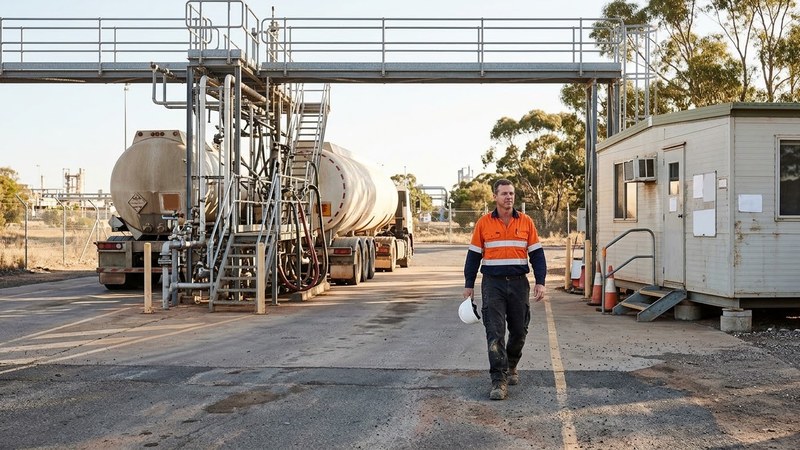
A gas terminal loading bay on a bright morning, an unbranded tanker at the gantry and a sign-in hut, a driver in hi-vis walking away from the truck holding his hard hat.
Photo is illustrative
Smart glasses
General protections claim dismissedFederal Circuit and Family Court of Australia (Division 2) · 13 November 2026

A tanker driver wore smart glasses at a gas terminal. His complaints came after.

An LPG tanker driver took photographs with smart glasses at a terminal that bans devices that can spark. He was locked out, then complained, then was suspended and dismissed. He said it was for the complaints.

Read the full storyShow less

The driver worked on Toll's LPG contract with Origin Energy, loading at a terminal run by Esso, which bans electronic devices that are not intrinsically safe because they can ignite the gas ([14]-[15]).

On 17 June 2025, after a dispute about a truck's vibration, he took photographs at the terminal with his smart glasses, including of a control panel, and sent them to two managers. Esso locked his loading tag and the customer asked for him to be removed from its work. He did no work after 18 June ([17]-[21]).

He complained on 20 and 25 June about safety, his health and his treatment. He was suspended on 30 June and dismissed on 25 July 2025 after a show cause process ([24]-[35]).

The Court found he was off the roster before he complained, that the incident was objectively very serious (he had covered the smart glasses with safety glasses), and that Toll acted because of the incident, not the complaints ([45], [59]-[63], [75]-[79]).

What it means for you

A complaint made after a serious site breach does not protect you if the breach is the real reason. Whether dismissal was too harsh is an unfair dismissal question, and the 21 days apply.

Decided 13 November 2026. No appeal found as at 27 November 2026, but it is too recent to rule one out. The driver was unrepresented, and the Court did not decide whether the dismissal was fair ([10]).
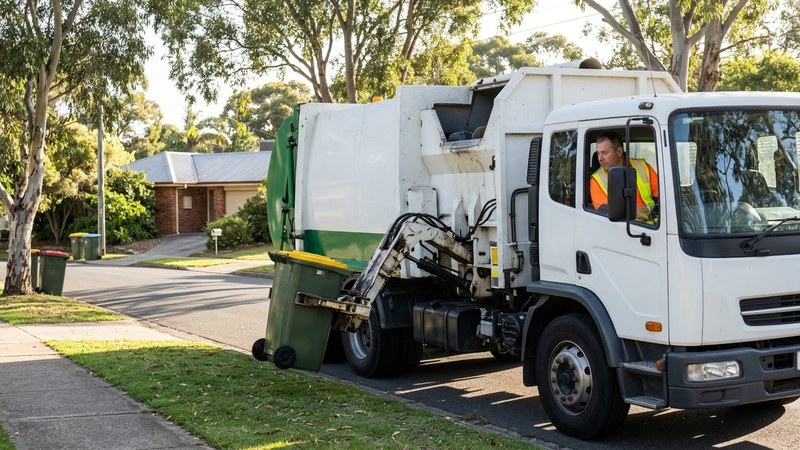
A side-loader garbage truck lifting a wheelie bin on a leafy suburban street in early-morning sun, the adult driver visible in the cab in plain hi-vis with a neutral, focused expression.
Photo is illustrative
Crash and warnings
Reinstated on appealFair Work Commission (Full Bench) · 10 July 2025

Minor crashes, a speeding allegation and a 0.007 reading. He got his job back.

A side-loader garbage truck driver of 16 years, a union delegate and health and safety representative, had minor accidents and two written warnings. Then an early-morning alcohol test read 0.013, confirmed at 0.007, and he was dismissed.

Read the full storyShow less

Result. Appeal allowed; reinstatement with continuity; he was directed to file evidence so that lost pay can be quantified.

Between October 2023 and July 2024 there were minor accidents and other safety incidents leading to two written warnings ([3]). On 21 June 2024 a test read 0.013, confirmed at 0.007, about 8 hours after social drinking ([4], [114]). The Commissioner found the dismissal fair.

The Full Bench allowed his appeal. The Commissioner had relied on conduct the employer had not relied on and that he had no fair chance to answer, had not considered s 387(b) and (c) for it, and had made findings about his driving that were not open on the evidence ([26], [46], [48], [65], [73], [78] to [79]).

Deciding the case itself, the Full Bench held the crashes and the speeding were not valid reasons ([98], [100]). The alcohol breach was ([107]). But the reading was low, it was his first breach, he could lawfully have driven his own car at 0.007, and two other employees had received lesser sanctions under the same policy. A written warning and further testing would have been the appropriate outcome ([114] to [115]). Dismissal was harsh, and he was reinstated ([119], [124] to [125]).

What it means for you

A run of minor incidents is not automatically a valid reason. Ask which incidents the employer actually relies on, insist on answering each one, and find out how others were treated under the same policy.

The Full Bench described his remorse as "tepid at best" ([118]). The result turned on the low reading, a first breach and how others were treated.

Show more cases (2)Show fewer
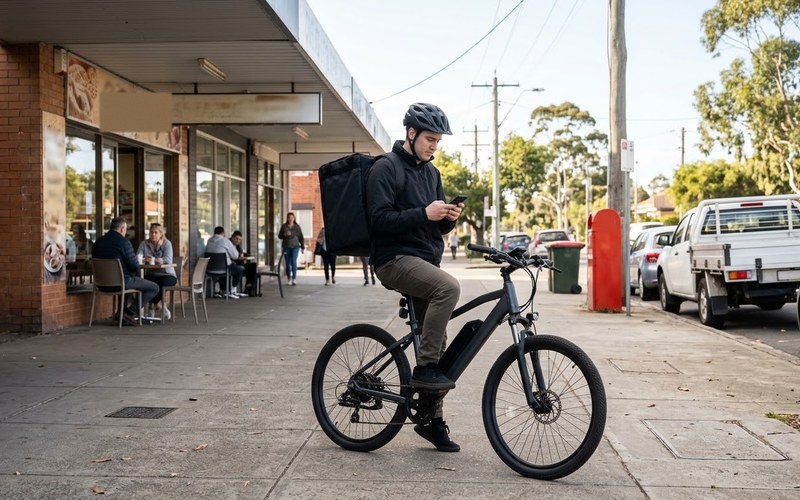
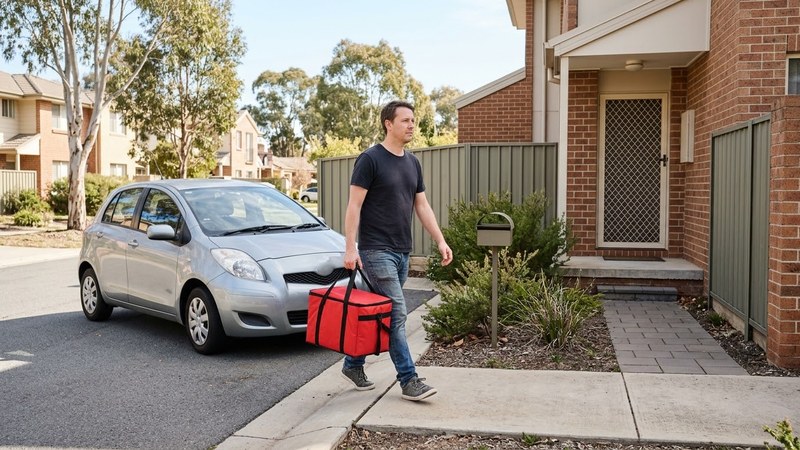
A delivery driver in plain clothes carrying an insulated food bag from a small hatchback to a townhouse door on a bright Canberra street.
Photo is illustrative
Deactivation
Reactivated; $40,768.87 lost payFair Work Commission, Full Bench · 10 April 2026

Deactivated by an automated ratings process. Reactivated, with lost pay.

An Uber Eats driver in Canberra with more than 5,856 deliveries was cut off for falling below an 85% customer satisfaction minimum he had not been told about. Only about 7.2% of deliveries were rated at all.

Read the full storyShow less

Result. Deactivation unfair and not consistent with the Code; reactivation ordered ([2026] FWCFB 81); lost pay of $40,768.87 ordered later ([2026] FWCFB 135, 11 June 2026)

The driver worked on the Uber platform from 2018, first on UberX and then delivering for Uber Eats in his own car ([2]-[3], [7]). In February 2025 he was told he was below an 85% minimum satisfaction rating for Canberra; his rating was 81% ([5]-[6]).

Warnings followed, then a preliminary deactivation notice suspending his access on 30 May 2025, and deactivation on 8 July 2025 ([6]-[7]). The process up to and including the preliminary notice was fully automated ([42]). The TWU represented him.

The Full Bench held the Code must be followed completely. Uber's warnings did not say a union delegate could help, no person decided the preliminary notice was justified, his response was not genuinely considered, and the final notice came five weeks late ([90]-[91], [116]-[140]).

The 85% requirement, as applied, was not reasonable: it was triggered retrospectively, ignored more objective measures and the reasons for ratings, and negative ratings were only 1 to 2% of his trips ([145]-[151]). Reactivation was ordered, and later $40,768.87 in lost pay, net of other earnings and fuel not spent ([2026] FWCFB 135 at [20]).

What it means for you

Missing union-support wording, an automated decision, a token review of your response or a late final notice can each make a deactivation inconsistent with the Code. Apply within 21 days.

A courier in a plain polo loading parcels into the back of a white unbranded van outside a small suburban depot on the NSW Central Coast in bright morning light.
Photo is illustrative
Unfair terminationNSW
Unfair termination; new contract orderedFair Work Commission · 26 October 2026

Back from agreed leave, her courier run had been given to someone else.

A subcontract parcel driver ran a delivery area for a small courier business that holds an Australia Post contract. While she was on agreed leave, the owner found a full-time driver for her area.

Read the full storyShow less

She had worked for the business on and off for about four years, partly through her own company ([6], [11]). She took agreed leave from 12 January to 6 February 2026. On 5 February the owner messaged that a full-time driver had been found for her area ([18], [20]). No other work was offered to her until after the proceedings began ([25]-[26]).

An earlier decision found the contract was terminated on 5 February 2026 by the business replacing her, and that an unwritten subcontract was still a services contract ([2026] FWC 2769 at [19]-[20]).

The Commission found she was a regulated road transport contractor with at least 6 months' service, so she was protected ([3]). There was no valid reason: delivery complaints had been dealt with internally without discipline, and no warning or show cause process took place. The termination was not consistent with the Code and was unfair ([5], [28]-[33]).

Because work was available and the relationship was workable, the Commission ordered a new contract rather than compensation ([34]-[36]).

What it means for you

A courier or owner-driver with 6 months' work for a road transport business who loses a run without warning may have an unfair termination remedy. Apply within 21 days.

A single-member decision; both sides represented themselves. Decided 26 October 2026; no appeal found as at 27 November 2026, but one cannot yet be ruled out.

A transport operations manager in a plain shirt and hi-vis vest running a pre-start briefing with four drivers beside a row of unbranded trucks in a bright depot yard.
For employers

If you run a transport business

Carriers, couriers, 3PLs, bus operators, waste contractors and platforms. These are the most common transport exposures.

  • Grade by the vehicle driven. Not the job title. And decide the award site by site and trip by trip: road transport, long distance or storage. Awards and pay →
  • Contractors with 6 months' service. Follow the Road Transport Industry Termination Code before ending a contract, and pass fuel recovery down the chain from 23 November 2026. Owner-drivers and subcontract couriers →
  • Cameras and telematics. Give notice (14 days in NSW), consult, and use footage only for the purposes in your written procedure. Cameras, telematics and smart glasses →
  • Platforms. A person, not an automated process, must decide a deactivation is justified, and every warning must mention union support. Delivery and rideshare platforms →
For unions and delegates

Delegates at the depot

The TWU covers drivers, couriers, owner-drivers and platform workers; the UWU many warehouse workers; the RTBU rail and many bus workers; the CFMEU (MUA Division) waterside workers. Every modern award has a workplace delegates' rights term (for example the road transport award cl 29A).

  • Agreements past nominal expiry. The Toll and Team Global Express agreements passed nominal expiry on 30 June 2026 and still apply until replaced. Once bargaining for a replacement is under way, protected action is available, subject to the ballot rules. Enterprise agreements →
  • Camera procedures. Bargain for written limits on use, access and retention of footage, rather than opposing safety technology outright. Cameras, telematics and smart glasses →
  • Platform test cases. The TWU's case on Uber Eats' ratings process won reactivation after self-represented workers had lost on the same point. Delivery and rideshare platforms →
Leading cases

The decisions that set the rules.

Smart glasses used at an LPG terminal that bans devices were an objectively very serious breach; the driver's general protections claim was dismissed.

An Uber Eats driver deactivated by an automated ratings process was reactivated: the Code must be followed completely.

Show all leading cases (1)Show fewer

A subcontract courier whose run was given away without warning was unfairly terminated; a new contract was ordered.

Questions

The things people ask.

Which award covers me?

Local and regional truck drivers and employed couriers: the Road Transport and Distribution Award 2020. Interstate runs over 200 km or return runs over 500 km: the Road Transport (Long Distance Operations) Award 2020. Warehouses not run by a road transport business: the Storage Services and Wholesale Award 2020. Buses: the Passenger Vehicle Transportation Award 2020. Waste: the Waste Management Award 2020. Cash in transit, stevedoring and rail each have their own award.

What is the minimum pay for a truck driver in 2026?

From 1 July 2026 under the Road Transport and Distribution Award 2020: $27.51 an hour for a van or small rigid (Grade 2), $29.00 for a semi-trailer (Grade 6) and $29.42 for a B-double (Grade 7). On a long-distance run, a B-double driver is paid at least 58.14 cents a km or $43.60 an hour of driving.

I'm on an ABN. Can I still claim unfair dismissal?

If you are really an employee, yes: since 26 August 2024 the Commission looks at how the work is actually done, not just the contract (Fair Work Act s 15AA). If you are a contractor, you may have an unfair termination remedy after 6 months with a road transport business, or a state owner-driver law.

Uber or DoorDash deactivated me. What can I do?

If you have worked regularly through the platform for 6 months and earn under the contractor high income threshold, you can apply to the Fair Work Commission for an unfair deactivation remedy within 21 days. The remedy is reactivation with lost pay.

Can my employer put a camera in my cab?

Usually, where safety justifies it and a written procedure limits how the footage is used. In NSW the employer must give 14 days' written notice first. What you can challenge is how the footage is used against you.

Does an enterprise agreement replace my award?

Yes, if one covers you, but its base rate can never be lower than the award's; if it is, the agreement operates as if its base rate were the award rate (Fair Work Act s 206). Many large carriers, bus operators, stevedores and rail operators have one, so check first.

Free discussion · no obligation

Talk to us.

Call 1300 967 552, or leave your details and we will call you.

Do it yourself with AI

General information about Australian employment law, not legal advice about your situation. Updated November 2026.