









Employment law · Education

Schools, childcare and universities: your rights at work.

For teachers and support staff in Catholic, independent and other non-government schools, early childhood educators and teachers, university academics, casual tutors and professional staff, and college and RTO trainers. Your award and level, what agreements usually say, real decisions from the sector, and what changes in WA, NSW, Victoria and Queensland.

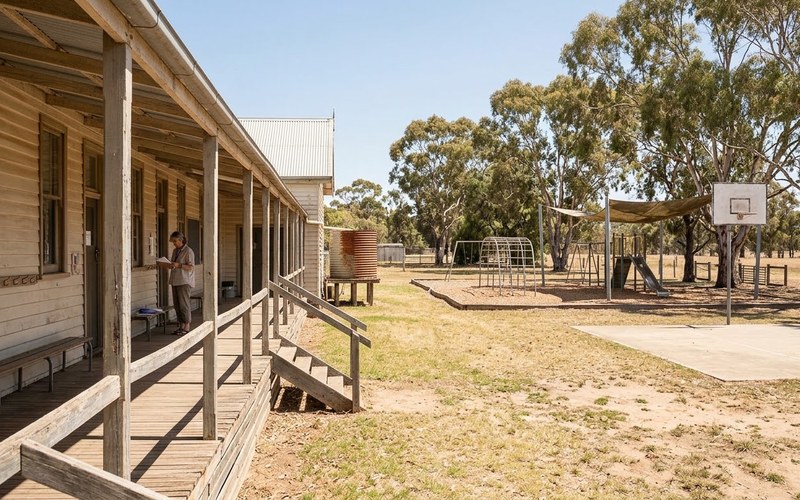
Two teachers talk as they walk along a covered walkway at a school.
$75,941a year, a Level 1 teacher under the Teachers award from 1 July 2026
$32.47an hour, a Certificate III educator under the Children's Services Award
21 daysto lodge an unfair dismissal or general protections dismissal claim

Time limit Dismissed? You have 21 days from the day the dismissal took effect to apply to the Fair Work Commission, for unfair dismissal or a general protections dismissal claim (Fair Work Act 2009 (Cth) ss 394(2), 366(1)). A regulator's or registration body's investigation does not stop the clock.

Which job, which rules?

Schools, early learning and universities each have their own award, union and guides on this site. Pick the closest.

System
Fair Work, in every state. Catholic systems and independent schools are companies or similar bodies.
Award or agreement
Usually the system's or school's enterprise agreement; the Educational Services (Teachers) Award 2020 is the floor (s 206). Small schools often pay the award directly.
Union
The Independent Education Union (IEU).
If you are dismissed
Unfair dismissal or general protections at the Fair Work Commission, within 21 days.

Your guides are under Catholic and independent schools below: the Teachers award, allegations and dismissal, and religious schools. See your guides below

Award snapshot

The clauses that matter most at work. Full detail in Awards and pay.
Award snapshot

Educational Services (Teachers) Award 2020 (MA000077)

Teachers in Catholic, independent and other non-government schools and school-run preschools, and early childhood teachers. Not principals or deputy principals.

Level 1 (graduate, provisional)
$75,941 a year ($1,455.40 a week)cl 17.1
Level 2 (proficient)
$83,004 a yearcll 14.1, 17.1
Levels 3 and 4
$90,362 and $97,720, each after 3 years' service at the level belowcll 14.1, 17.1
Level 5 (Highly Accomplished or Lead)
$105,076 a yearcl 17.1
Casual relief, full day
$363.85 (Level 1) to $503.43 (Level 5); capped at $432.93 (Level 3) for fewer than 5 consecutive dayscl 17.5, Sch B
Attendance cap
No more than 205 days a school year; 6 months' notice of non-term dayscll 15.5, 15.8
Notice from a school
7 term weeks, or pay in lieucl 32.1

Rates from 1 July 2026. Check today's rate in the Fair Work Ombudsman's Pay and Conditions Tool.

Award snapshot

Educational Services (Schools) General Staff Award 2020 (MA000076)

Everyone in a non-government school who is not a teacher or the principal: aides, education assistants, office, IT, library, lab, grounds, canteen, boarding, nursing and school-run OSHC staff.

Level 1.1 (cleaner, kitchen hand, grounds assistant)
$26.44 an hour ($1,004.90 a week)cll 17.1, 17.2(c)
Level 1.3 (teacher aide starts here)
$28.03 an hourcll 17.1, 17.2(c)
Level 3.1 (student services coordinator, tradesperson)
$29.47 an hourcl 17.1
Level 6.1 (school nurse, psychologist)
$36.61 an hourcl 17.1
Level 8
$46.64 an hourcl 17.1
Casual
25% loading; minimum engagement 2 hourscll 11.1, 11.4
Weekends and public holidays
Saturday 150%, Sunday 200%, public holiday 250% for most staff (casual 175%, 225%, 275%)cl 22.3
School holidays
Unpaid only if your written contract says so; salary can be spread over the yearcl 12

Rates from 1 July 2026. Check today's rate in the Fair Work Ombudsman's Pay and Conditions Tool.

Award snapshot

Children's Services Award 2010 (MA000120)

Educators, room leaders, assistant directors, directors, cooks and support workers in long day care, OSHC, vacation care, kindergartens and preschools. Not early childhood teachers employed as teachers.

Level 1 Introductory Educator (under 12 months' experience)
$1,094.80 a week ($28.81 an hour; casual $36.01)cl 14.1(b)
Level 3 Qualified Educator (Certificate III)
$1,233.90 a week ($32.47 an hour; casual $40.59)cl 14.1(b)
Level 5 Advanced Educator (Diploma)
$1,389.50 a week ($36.57 an hour; casual $45.71)cl 14.1(b)
Level 6 Room Leader
$1,453.50 a week ($38.25 an hour; casual $47.81)cl 14.1(b)
Level 8 Director
$1,752.70 a week ($46.12 an hour; casual $57.65)cl 14.1(b)
Support workers (kitchen, cleaning, laundry, administration)
$26.44 an hour (Level 1.1) to $29.45 an hour (Level 3.1)cl 14.2
Casual
25% loading on the full-time hourly rate; at least 2 hours' pay each engagementcl 10.5
Sunday and public holidays
All Sunday work 200%; all public holiday work 250%; at least 4 hours' paycl 23.5

Rates from 1 July 2026. They take effect from your first full pay period on or after 1 July 2026, and further increases are due each 30 June until 2029. Check today's rate in the Fair Work Ombudsman's Pay and Conditions Tool.

Award snapshot

Higher Education Industry—Academic Staff—Award 2020 (MA000006)

Lecturers, tutors, researchers and casual academics at universities and other providers that teach accredited degrees. Most public universities pay under an enterprise agreement built on it.

Level A step 1
$68,991 a year ($34.80 an hour)cl 16.1
Level A step 6: the floor with a doctorate or full subject coordination
$81,432 a year ($41.08 an hour)cl 16.1, note 2
Level B step 1
$89,382 a year ($45.09 an hour)cl 16.1
Level C step 1, Level D step 1, Level E
$104,940, $122,225 and $151,614 a yearcl 16.1
Casual basic lecture (1 hour of delivery and 2 hours of associated working time)
$173.99 a lecture, casual loading includedcl 16.4(a)
Casual tutorial (1 hour of delivery and 2 hours of associated working time)
$135.76; $154.09 with a relevant doctoratecl 16.4(a)
Casual standard marking
$45.22 an hour; $51.36 with a relevant doctoratecl 16.4(a)
Casual minimum engagement
2 hours each time you are required to attend, counting the associated working time in the ratecl 12.2

Rates from 1 July 2026. Check today's rate in the Fair Work Ombudsman's Pay and Conditions Tool.

Awards and pay in full →

What a typical agreement says

Many larger employers have an enterprise agreement on top of the award.

What we usually see

From a sample of 14 current education agreements approved between June 2023 and October 2026: Catholic systemic and Catholic independent schools, independent, Anglican and Christian schools, an international school, two English language and pathway colleges and two early childhood agreements. Each was read at a high level for the terms described, not end to end. A sample, not every agreement: the Commission lists hundreds of current agreements in educational services, many for a single school. Always read your own.

  • TypicalTeacher pay Well above the award, in bands tied to accreditation. The NSW Catholic Independent Schools (Teachers–Model A) agreement pays Band 1 $99,354 and Band 3 (Accomplished) $140,767 from the first full pay period on or after 1 February 2026; the award is $75,941 at Level 1 and $105,076 at Level 5.
  • VariesRelease time Set by employer, not across a whole system. The NSW and ACT Catholic systemic agreement gives full-time primary teachers of the Canberra and Goulburn archdiocese 2 hours' release from face-to-face teaching each term week, in Annexure C, which applies to that employer only. Check your own diocese's annexure.
  • VariesSupport staff and the holidays Separate support staff agreements set their own term-time, reduced working year, stand-down and averaging rules: the WA Catholic and AngliSchools WA support staff agreements each have them, and the International School of WA gives general staff up to 4 weeks' non-term leave at half pay.
  • TypicalFixed-term teachers Every school agreement read has a fixed-term or "temporary" clause, usually requiring the reason or need to be stated in the letter of appointment.
  • Watch forDisputes Most let the Fair Work Commission arbitrate if a dispute is not resolved. But the Deakin College and International School of WA agreements allow arbitration only if both parties agree, and the NSW Christian Schools and Navitas English agreements give conciliation and recommendations only, unless the parties agree. Read your clause.
  • TypicalUnions covered The IEU in every school and ELICOS agreement in the sample; also the ANMF in the Victorian Catholic, Queensland Catholic, WA Catholic support staff and Brisbane Grammar agreements, and the UWU in the Queensland Catholic and WA Catholic support staff agreements. The Deakin College agreement covers the NTEU, not the IEU.
  • Watch forEarly learning: the 15% The Early Childhood Education and Care Multi-Employer Agreement 2024-2026 builds the worker retention payment into the ordinary rate while the employer is in the grant, and says it ceases on 1 December 2026 unless the grant continues in the same form or to the same effect. See the worker retention payment.
  • Watch forExpiry Three in the sample were past their nominal expiry on 27 November 2026: the Victorian Catholic agreement, the Queensland Catholic diocesan agreement and the Deakin College agreement. They keep operating until replaced or terminated.
See the agreements we read (14)
AgreementApprovedNominal expiry
The NSW and ACT Catholic Systemic Schools Enterprise Agreement 2025 (AE531578)17 December 20259 October 2027
NSW Catholic Independent Schools (Teachers-Model A) Multi-Enterprise Agreement 2025 (AE533287)2 July 202631 December 2028
Catholic Education Multi-Enterprise Agreement 2022: Diocese of Ballarat, Diocese of Sandhurst, Archdiocese of Melbourne and Lavalla Catholic College, Traralgon (AE520953)31 July 202331 December 2025 (past)
Catholic Employers Single Enterprise Collective Agreement – Diocesan Schools of Queensland 2023-2026 (AE522955)17 January 202430 June 2026 (past)
WA Catholic School Support Staff Enterprise Agreement 2024 (AE533958)1 September 20261 September 2030
AngliSchools WA Support Staff Enterprise Agreement (AE532564)10 April 202631 December 2028
Brisbane Grammar School Enterprise Bargaining Agreement 2026 (AE534420)22 October 202631 December 2028
Lauriston Girls' School Agreement 2026 - 2028 (AE533835)26 August 202631 January 2029
NSW Christian Schools Teaching Staff Multi-Enterprise Agreement 2024 (AE531806)20 January 202631 March 2027
International School of Western Australia Enterprise Agreement 2025-2028 (AE534187)24 September 20261 July 2028
Navitas English Services Perth Teachers' Enterprise Agreement 2023 (AE520376)16 June 202316 June 2027
Deakin College (Teachers) Enterprise Agreement 2024 (AE527857)11 February 202530 June 2026 (past)
Early Childhood Education and Care Multi-Employer Agreement 2024-2026 (AE527165)10 December 202430 November 2026
Goodstart Early Learning Enterprise Agreement 2024 (AE526850)22 November 202430 November 2026

Check your own agreement

Four steps. You can do the first two in five minutes.

  1. Find itSearch the Fair Work Commission's agreements database by your employer's legal name from your payslip, the school's name or the system agreement's title. The PDF starts with the approval decision, which gives the operative date, nominal expiry and unions covered.
  2. Check you are coveredRead the coverage clause and the list of participating employers or schools. A central office, a shared services unit or a new entity may be covered by a different agreement, or none.
  3. Compare it with the awardCheck your base rate against the award rate for your level every 1 July (s 206), and read the clauses that matter to you: hours, release time, fixed-term reasons, holidays and the dispute clause.
  4. Not sure? Ask usSend us your agreement and your question through the free discussion form.

What changes in your state

The work is the same; some of the law around it is not.

Education: what changes by state

Same everywhere. For non-government schools, early learning services, colleges and universities, the award, the enterprise agreement and Fair Work claims (21 days for unfair dismissal) are the same in every state.

Western Australia

Public school teachers
WA state system: WA Industrial Relations CommissionDiffers
Working with children check
Working with Children (Screening) Act 2004 (WA): an assessment notice (WWC card) lasts 3 years unless cancelled; a negative notice continues until cancelled (s 14)Differs
Teacher registration
You must not teach at an educational institution, or be employed to, unless registered (Teacher Registration Act 2012 (WA) ss 6, 7)Differs
Early childhood ratio, 3 to 5 year olds
1 to 10 under the WA regulations' reg 123(1)(c)Differs
An employer that is not a trading corporation
In the WA state system: an unfair dismissal claim goes to the WAIRC within 28 days, not the Fair Work CommissionDiffers
WA state system →

New South Wales

Public school teachers
NSW state system: Industrial Relations Commission of NSWDiffers
Working with children check
Child Protection (Working with Children) Act 2012 (NSW): a clearance lasts 5 years unless cancelled or surrendered; renew from 3 months before expiry (s 22)Differs
Teacher registration
You must not teach in a school or early childhood education centre, or be employed to, unless accredited, including provisionally (Teacher Accreditation Act 2004 (NSW) s 28)Differs
Early childhood ratio, 3 to 5 year olds
1 to 10 for children aged 36 months to under 6 years (reg 271)Differs
An employer that is not a trading corporation
Fair Work: NSW referred its powers, so a private employer in NSW is in Fair Work whatever its form
Employment law in NSW →

Victoria

Public school teachers
Fair Work, under the Victorian government schools award and agreement
Working with children check
Worker Screening Act 2020 (Vic): a clearance lasts 5 years unless revoked or surrendered (s 71). An exclusion bars an application for early childhood teacher registration or permission to teach for 5 yearsDiffers
Teacher registration
Early childhood teachers are registered by the Victorian Institute of Teaching and must not be employed as one unless registered or holding a temporary approval (Education and Training Reform Act 2006 (Vic) s 2.6.56A)Differs
Early childhood ratio, 3 to 5 year olds
Check with the regulator: the national ratio is 1 to 11
An employer that is not a trading corporation
Fair Work: every private employer in Victoria is in Fair Work, whatever its form
Employment law in Victoria →

Queensland

Public school teachers
Queensland state system: Queensland Industrial Relations CommissionDiffers
Working with children check
Working with Children Check Act 2000 (Qld): a working with children authority (formerly the blue card) lasts 3 years unless cancelled (s 238)Differs
Teacher registration
Teachers in schools are registered with the Queensland College of TeachersDiffers
Early childhood ratio, 3 to 5 year olds
Check with the regulator: the national ratio is 1 to 11
An employer that is not a trading corporation
Fair Work: Queensland referred its powers, so a private employer in Queensland is in Fair Work whatever its form
Employment law in Queensland →
Decided cases from education

What the Commission and the courts decided.

Published decisions of the Fair Work Commission and the courts, retold in plain English from the decision itself. Lawcaptain did not act in these cases. Each links to the full decision.

A teacher walks out of the school gate at the end of the day.
Photo is illustrative
Classroom discipline
Unfair: maximum compensationFair Work Commission · 5 June 2025

Sacked for raising her voice at misbehaving students.

A high school teacher and pastoral coordinator was summarily dismissed for raising her voice at misbehaving students and related policy breaches, weeks after she emailed the college's director criticising his leadership.

Read the full storyShow less

Result. No valid reason; dismissal contrived; reinstatement refused; compensation at the cap, $55,786.90 plus $6,415.49 superannuation; the college's appeal was dismissed ([2025] FWCFB 187)

The college's leadership had supported her discipline of two persistently misbehaving students by email in October 2023 ([1], [38]). In November she emailed the director and other staff criticising his leadership at a school event ([22]). The college then began compiling evidence against her, stood her down and, in December, summarily dismissed her ([45]-[60]).

The Commission found it "absurd" that a teacher could commit serious misconduct simply by raising her voice at misbehaving students ([1]). Nothing showed the code of conduct was meant to stop teachers raising their voices, and the college's witnesses had "retrospectively exaggerated" her behaviour ([48]-[50]). There was no valid reason ([67]).

The dismissal was contrived: it was driven by the director's reaction to her email ([88]). Even if there had been genuine issues, observing other teachers, training or removal from the coordinator role would have been fairer than summary dismissal ([92]).

She was not reinstated, because she had deliberately kept the college's confidential student information after the dismissal for use in the case ([94]-[95]). Compensation was set at the cap ([130]). The college's appeal was dismissed ([2025] FWCFB 187).

What it means for you

Raising your voice at misbehaving students is not, by itself, serious misconduct. Keep the emails that show leadership backed your discipline, and never keep student data when you leave.

An educator locks the door of a childcare centre at the end of the day.
Photo is illustrative
Child left the roomNSW
No valid reason: unfair dismissalFair Work Commission · 21 August 2026

A child slipped out of the room. Six educators missed it; one was sacked.

A child sneaked out of a toddler room in a NSW long day care centre and was found in a play area about 10 minutes later. All six educators were disciplined. The room leader, who had an earlier warning, was the only one dismissed.

Read the full storyShow less

Result. No valid reason; dismissal unfair; $4,047 compensation plus $485.64 superannuation, about three weeks' pay, because she had found better-paid work.

None of the six staff in the room noticed the child leave. The centre disciplined all of them: two casuals were given no more shifts, three permanent staff were given written warnings, and the room leader was dismissed because she had a written warning for inadequate supervision 10 months earlier ([1]).

She had come back from lunch and was busy with other duties in the room when the child left ([12]). The Commission said its job was to assess her conduct, not the severity of the incident ([11]). She had not deliberately failed to supervise, the evidence did not show negligence, and the failure to notice was "an inadvertent case of human error" ([13]). The earlier warning did not turn that into a valid reason ([16]).

The Commission added that the result would likely have been different if she had been on a personal phone or in a non-work conversation ([14]). And even with a valid reason, dismissal would have been harsh: "I do not consider an educator should generally lose their job for inadvertently failing to notice a child leaving a room because they were busy performing other duties" ([34]).

She had found better-paid work outside childcare, so compensation was limited to about three weeks' pay ([37]-[40]).

What it means for you

Being in the room and doing your job when a child slips away is not misconduct. Say exactly where you were and what you were doing, and point out how others present were treated.

Show more cases (2)Show fewer
A casual lecturer carries a bag of assignments across a university lawn.
Photo is illustrative
Marking
Marking paid at the marking rateFederal Court of Australia (Full Court) · 17 March 2026

Paid to lecture, not to mark: the Full Court said marking is extra.

A casual lecturer in a university design faculty planned, delivered and assessed whole subjects. She was paid the lecture rate and nothing for marking her own students' work.

Read the full storyShow less

Result. Appeal allowed; the Fair Work Ombudsman's compliance notice confirmed; special leave to appeal refused by the High Court on 6 August 2026.

The university paid the casual basic lecture rate, and paid separately for marking only late submissions and the work of students she did not teach ([6]). A Fair Work Inspector issued a compliance notice on 19 March 2024. The university went to court, and the judge at first instance cancelled the notice, holding that associated working time covered all marking in subjects she taught ([2]-[3]).

The Full Court allowed the Ombudsman's appeal. The award draws a line between lecturing and tutoring, with their associated time, and marking, which has its own rate ([35]). Reading associated time to cover all marking of your own students would confine the marking rate to a narrow set of cases that the award's text does not support ([34]).

Associated working time does not ordinarily include marking. The lecture rate covers delivery and a limited body of work around it, principally preparation, and perhaps marking a test given during the lecture; ordinary marking of assessment tasks is paid at the marking rate, even when the marker also lectured in the subject ([5], [46]). The compliance notice was confirmed.

The High Court refused the university special leave to appeal on 6 August 2026, finding no reason to doubt the Full Court's decision ([2026] HCADisp 169).

What it means for you

If you mark assignments or exams in your own subject as a casual, claim those hours at the marking rate unless the marking was part of the class itself. Check whether your agreement uses the award's words.

Decided under the award. An enterprise agreement with different wording needs its own reading.

An education assistant waters plants at home in the school holidays.
Photo is illustrative
School holidaysVic
No holiday pay under the agreementFair Work Commission · 23 October 2025

Three teacher assistants had been paid in the holidays for years. Then the school stopped.

Three teacher assistants at a Victorian independent school did not work in the holidays but had been paid for them, under an old award and agreement. When that agreement ended, the question was which pay table applied.

Read the full storyShow less

Result. The school could not require unpaid leave, because the contracts did not say so in writing, but as term-time employees the assistants were not entitled to be paid for non-term time under the agreement.

The three teacher assistants had been employed since 2006, 2011 and 2016 ([2]). They had been paid for the holidays in the past, apparently under an old school assistants award carried through an agreement that was terminated in 2024 ([60]-[62]).

The school could not require them to take unpaid leave in the non-term weeks under its agreement, because their contracts did not say so in writing, and they had refused to vary them ([68]).

But that did not make them full-year employees. The agreement had no clause paying for school holidays not worked, and any claim based on their contracts or past practice was outside the Commission's power in this dispute ([69]-[72]).

Only an employee engaged to work in non-term time is paid under the full-year table. These assistants had been engaged as term-time employees, so they were not entitled to holiday pay under the agreement ([73]-[74]).

What it means for you

Get your letter of appointment and your agreement's pay tables. Whether you are full-year or term-time decides holiday pay, and a claim based on past practice may need a court, not the Commission.

A principal talks with two staff in a school office before the day starts.
For employers

If you run a school, centre, university or college

Catholic and independent schools, early learning providers, universities, colleges and RTOs. These are the most common exposures in education.

  • Classify on appointment and on time. Teachers by accreditation and service, aides by stream and duties, educators by the 2026 levels. Missing the review or the evidence date costs back pay. Teachers award →
  • Put term-time and part-time patterns in writing. Support staff can be required to take unpaid leave in the holidays only if the contract says so. General Staff award →
  • Fixed-term contracts need a stated, permitted reason. Under the Teachers award and the Fair Work Act's 2-year limit; universities have their own categories.
  • Investigate conduct towards children fairly. Make the reports the state schemes require, and run the employment process separately and consistently. Allegations, investigations and dismissal →
  • Pay casual academics for the work required. Marking, consultation and meetings, with records that show it. Casual academics →
For unions and delegates

Delegates in schools, centres and universities

The Independent Education Union covers non-government school and college staff and many early childhood teachers; the United Workers Union many early childhood educators and some school support staff; the National Tertiary Education Union university staff. Delegates have award rights to communicate, use facilities and train (Teachers award cl 28A; General Staff award cl 28A).

  • Classification audits. The Teachers award's deeming rules favour the member where the school has not done the review. Teachers award →
  • Agreements and expiry. System-wide bargaining, expired agreements that keep applying, and back pay for former staff. Enterprise agreements →
  • Casual academic claims. The marking and consultation cases, and how to build a claim for casual staff. Casual academics →
Leading cases

The decisions that set the rules.

Backdated increases in a Catholic school agreement were owed to teachers who left before it started.

Casual academics' marking is generally paid at the marking rate; special leave to the High Court was refused.

Show all leading cases (1)Show fewer

The Children's Services Award was restructured into eight levels from 1 March 2026, with increases phased to 2028 or 2029.

Questions

The things people ask.

Which award covers me?

Teachers in non-government schools and early childhood teachers: the Educational Services (Teachers) Award 2020. Aides and school support staff: the Educational Services (Schools) General Staff Award 2020. Early childhood educators: the Children's Services Award 2010. College and RTO trainers: the Educational Services (Post-Secondary Education) Award 2020. University staff: the Higher Education Industry Academic Staff or General Staff award. Most Catholic systems, universities and big providers have an enterprise agreement instead.

Does the award still matter if I'm on an agreement?

Yes. The agreement's base rate can never be lower than the award's (Fair Work Act s 206), and the agreement had to leave you better off overall than the award when it was approved.

Is the 15% childcare pay rise ending?

The Commonwealth has extended the worker retention payment to 30 June 2028. Whether your 15% continues after 1 December 2026 depends on your employer staying in the grant and on the instrument that gives it to you; see the worker retention payment guide.

I teach at a public school. Do these pages apply?

No. Public school teachers in WA, NSW and Queensland are in their state systems, and Victorian government teachers are under their own agreement. See Which system for your state's page.

How far back can I claim unpaid wages?

6 years from each underpaid pay day under the Fair Work Act (s 544). That includes a wrong teacher level, an aide on the wrong grade and unpaid casual academic marking.

Free discussion · no obligation

Talk to us.

Call 1300 967 552, or leave your details and we will call you.

Do it yourself with AI

General information about Australian employment law, not legal advice about your situation. Updated November 2026.