Construction · Sham contracting

An ABN does not make you a subcontractor.

Told to get an ABN to start on a crew, then paid a flat hourly rate with no leave, super or overtime? What decides whether you are really an employee, what the law says about sham contracting, and what you can claim back.

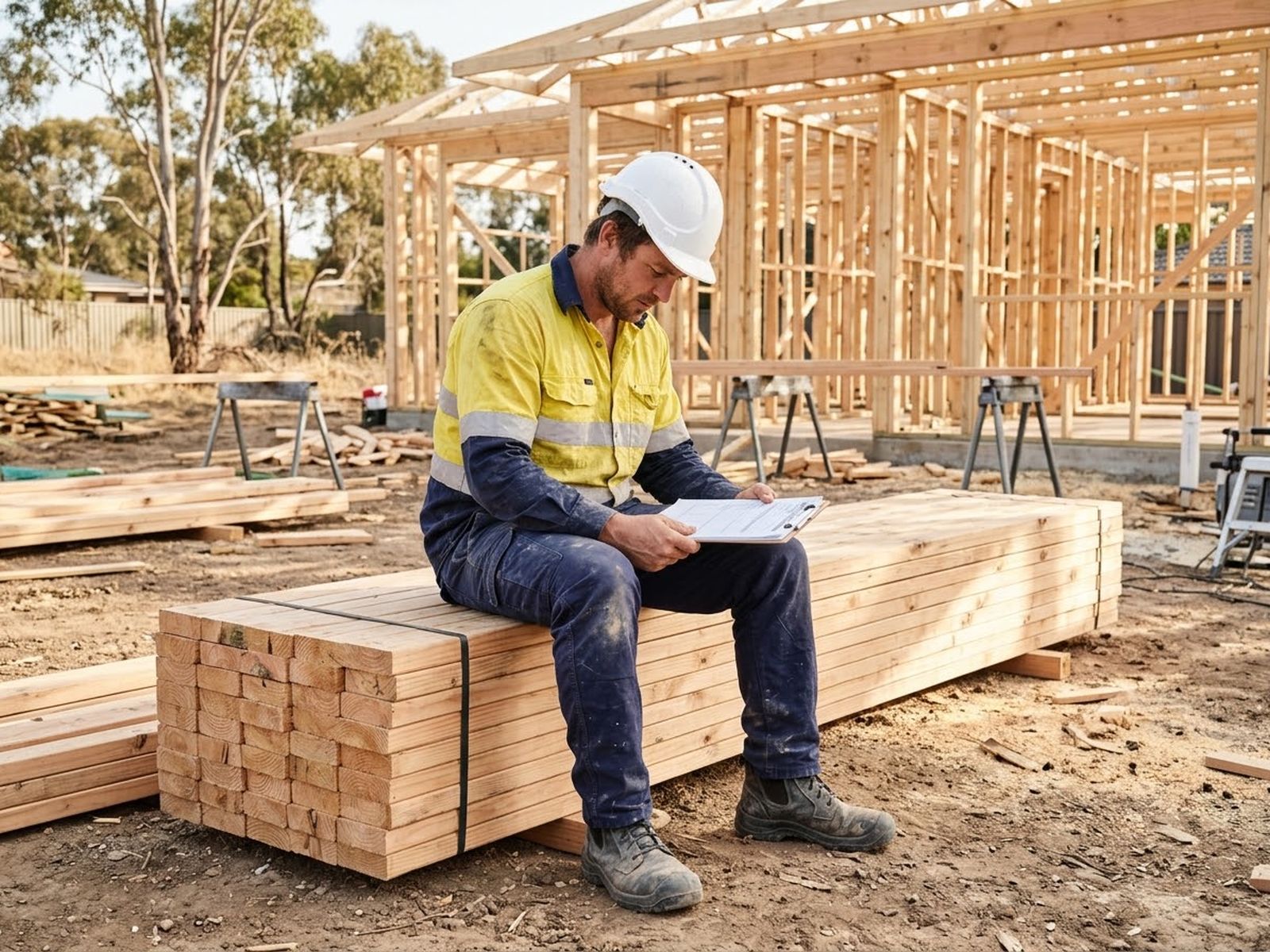
A labourer reads a form on a clipboard at a house frame site.
s 15AAfrom 26 August 2024: the real substance and practical reality of the relationship decides
s 357an employer must not tell an employee they are a contractor
Personallydirectors and managers involved can be liable (s 550)

Time limit If you were dismissed, you have 21 days from the day it took effect to apply to the Fair Work Commission for unfair dismissal or a general protections dismissal (Fair Work Act ss 394(2), 366(1)). Unpaid wages can be claimed in court for 6 years from each underpaid pay day (s 544).

Construction workers are often put on an ABN and told they are subcontractors. The usual pattern: a labourer or tradesperson starts on a site and is told to get an ABN "for tax" or "so you can claim your tools", then invoices weekly at a flat hourly rate. There is no leave, no super, no overtime, no wet weather pay and no redundancy pay. The worker has no business of their own, does not quote for jobs, cannot send someone else, and works the hours the foreman sets. That worker is very likely an employee.

The test: employee or contractor?

For Fair Work Act claims (award wages, leave, unfair dismissal, general protections) from 26 August 2024, whether you are an employee is decided by "the real substance, practical reality and true nature of the relationship", looking at the whole relationship and at how the contract was performed in practice, not only at what it says (s 15AA).

Read moreShow less

Before 26 August 2024, and still outside the Fair Work Act (common law claims and superannuation), a written contract that is not a sham decides the relationship, but the label counts for nothing: the High Court said so in a case about a labourer on building sites (see the case below).

The questions that decide most construction cases:

  1. Do you run your own business: quoting, pricing, carrying the risk if a job goes wrong, using your own plant and crew, working for several builders, advertising?
  2. Who controls the work: who sets the hours, the site, the tasks and the order of work?
  3. Can you really send someone else, or subcontract the work?
  4. How are you paid: by the hour or day (pointing to employment), or by the job or result?
  5. What do you supply: hand tools and PPE are consistent with employment (the award itself pays tool allowances, On-site award cl 21.1); an excavator or a truck points the other way.

An ABN, invoices, a contractor agreement, or owning your own hand tools and safety gear does not decide it. Contractors who earn above the contractor high income threshold can opt out of s 15AA (ss 15AB to 15AD); construction labourers and most trades will not be near it.

What the law says about sham contracting

Three civil penalty provisions protect workers:

Read moreShow less
  1. An employer must not represent to an employee, or someone it proposes to employ, that their contract of employment is a contract for services as an independent contractor (s 357(1)).
    1. The employer's defence is to prove that it reasonably believed the contract was a contract for services, judged against the size and nature of its business (s 357(2), (3)).
    2. That reasonable belief test applies from 27 February 2024. Before then the defence was that the employer did not know, and was not reckless about, the true nature of the contract.
  2. An employer must not dismiss, or threaten to dismiss, an employee in order to engage them as a contractor to do the same or substantially the same work (s 358).
  3. An employer must not make a statement it knows is false to persuade a current or former employee to become a contractor doing the same work (s 359).

A director or manager who is knowingly involved is personally liable (s 550). In the Federal Court's words, sham contracting "occurs where an employer disguises an employment relationship as an independent contracting relationship", and lets employers avoid payroll tax, workers' compensation premiums, employee entitlements and superannuation ([2012] FCA 499 at [13], [14]). In that case a steel fixing company that converted an employee to a contractor and engaged other steel fixers the same way paid penalties of $41,250 on the company alone, and agreed to repay $26,807.50 in annual leave.

What you can recover if you were really an employee

  1. Award wages for every hour, including the industry allowance and any tool allowance, overtime, weekend and public holiday rates, wet weather pay, and fares and travel allowances. See Awards and pay.
  2. Annual leave with the 17.5% loading, personal leave and public holidays.
  3. Redundancy pay under the award's industry scheme when the job ends: see Redundancy and the end of a project.
  4. Superannuation guarantee (through the ATO) and portable long service leave credits (through the state scheme): see Portable long service leave.
  5. Workers' compensation, which in most states also covers some contractors.
Read moreShow less

The employer will usually say the higher flat rate already covered everything. A payment is credited only against the entitlements it was shown to be for. In one Full Court appeal about ten renovation workers paid $22 to $35 an hour as "contractors", the payments were set off against ordinary time and overtime, but not against crib time, meal and travel allowances, superannuation, leave and redundancy pay, because the hourly rate did not show it was meant to cover them ([2015] FCAFC 99 at [74], [95] to [97]). The main holding was procedural: the employer could not raise a wider set-off argument for the first time on appeal ([69], [70]). Above-award payments also gave no set-off against leave in the plasterer's case below.

Evidence to collect

  • Bank statements and invoices, and who drafted them. Did the builder generate them for you?
  • Messages setting start times, sites and tasks; site sign-in records; induction forms naming you as the builder's or agency's worker.
  • Who supplied plant, materials, PPE and tools.
  • Whether you ever quoted, refused work, sent a substitute or worked for anyone else.
  • Any conversation about getting an ABN, and who suggested it.

Then put your claim in writing to the business, with your calculation. The Fair Work Ombudsman can investigate, and a court claim for unpaid wages can be brought within 6 years. Sham contracting often affects a whole crew on the same invoicing template, so a group claim may work better than one at a time.

Decided cases from construction

What the Commission and the courts decided.

Published decisions of the Fair Work Commission and the courts, retold in plain English from the decision itself. Lawcaptain did not act in these cases. Each links to the full decision.

Employee, not a contractorHigh Court of Australia · 9 February 2022

Signed up as a "self-employed contractor", he was an employee all along.

A Perth labour hire company signed up a backpacker labourer on a "self-employed contractor" agreement and sent him to a builder's high-rise sites.

Read the full storyShow less

Result. Appeal allowed: the labourer was the labour hire company's employee ([90], [91])

The labour hire company supplied workers to builders. The worker, a British backpacker with a white card and his own hard hat, boots and hi-vis, signed an agreement describing him as a "self-employed contractor" ([1], [2]).

He was sent to the builder's sites, inducted under the builder's rules and supervised by the builder's leading hand. He signed nothing with the builder ([3]). He and the union sought award entitlements under the On-site award on the basis that he was an employee ([6]).

The High Court said what matters is the right to control the work, not who gives the day-to-day directions. The labour hire company had the right to decide who he worked for and to require him to cooperate with the builder; that right was "the key asset" of its business ([74] to [76]). The three-party labour hire structure did not change that ([78]).

The "contractor" label was "of no moment". His work was "dependent upon, and subservient to" the company's business, so he was its employee ([79], [89], [90]).

What it means for you

Signing a contractor agreement, getting an ABN or bringing your own boots and hard hat does not make you a contractor. If you were placed on a site to do labouring work as directed, paid by the hour, with no business of your own, you are very likely an employee of the company that pays you.

For Fair Work Act claims from 26 August 2024, s 15AA also looks at how the contract was performed in practice, which is likely to help a worker in this position.

Employee; leave owed; director liableFederal Circuit Court of Australia · 28 May 2014

Told to get an ABN, he worked for one plasterer for eight years. He was an employee.

A plastering company's worker started as a trough hand, gained his trade certificate and became a supervisor. Early on, the director told him he needed an ABN.

Read the full storyShow less

Result. An employee, not a subcontractor or casual, from February 2004 to December 2011; leave owed; the director personally liable; compensation to be assessed.

The worker began with the plastering company in September 2003 as a trough hand, gained his plastering trade certificate and over time became a supervisor as well as doing trade work ([4]).

At a meeting in late September 2003 about the terms of his work, the director told him he needed an ABN so he could claim tool and fuel expenses as a tax deduction. The Court accepted that he took this at face value ([8]).

The Court found that from February 2004 to December 2011 he was an employee, not a subcontractor and not a casual, so he accrued annual leave and other leave throughout. Above-award payments gave the company no right to set them off against his leave ([81]).

The director was the company's "guiding mind" and was personally liable under the Fair Work Act ([80]). The matter was listed for the compensation to be assessed.

What it means for you

Years of steady work for one business, at an hourly rate, under its direction, usually means you are an employee even with an ABN and invoices. You can claim the leave you never got, and a director can be personally liable.

For employers

If you engage labour or trades

  • Run the s 15AA questions honestly before engaging anyone as a contractor. A worker paid by the hour, directed by your foreman, with nothing but hand tools, is almost always an employee.
  • The s 357 defence now needs a reasonable belief. It is judged against your size and nature; a builder that engages labour every day will find that hard to show.
  • Never move an existing employee onto an ABN to do the same work. That is a separate contravention (s 358).
  • Document genuine subcontracts. A genuine subcontractor quotes, prices the risk, controls how the job is done, can bring in its own workers and usually works for several builders. Pay by the job.
  • Directors and site managers are personally exposed. Anyone knowingly involved in setting up a sham is liable (s 550).
For unions and delegates

For unions and delegates

  • Shams come in groups. A crew on the same invoicing template is often better served by one group complaint to the Fair Work Ombudsman, or one court claim, than by individual complaints.
Leading cases

The decisions that set the rules.

A labourer placed on building sites on a "self-employed contractor" agreement was the labour hire company's employee; the label was of no moment.

A plasterer told to get an ABN was an employee for nearly eight years, owed his leave; the director was personally liable.

Show all leading cases (3)Show fewer

Flat hourly rates paid to "contractors" who were employees were set off against ordinary time and overtime only; the wider set-off argument could not be raised for the first time on appeal.

Sham contracting penalties for a steel fixing company and its director, and why the law prohibits it.

Formworkers told at interview to get an ABN and an invoice book: admitted sham contracting, with penalties on the company and two directors.

Questions

The things people ask.

My builder told me to get an ABN. Am I a contractor?

Not because of the ABN. Under the Fair Work Act the question is the real substance and practical reality of the relationship, including how the work was actually done (s 15AA). If you are paid by the hour, told when and where to work, use only hand tools and have no business of your own, you are very likely an employee.

Can my boss move me from employee to subcontractor?

Not to do the same or substantially the same work. Dismissing or threatening to dismiss an employee in order to re-engage them as a contractor is a contravention (s 358), and so is a knowingly false statement to persuade you to switch (s 359).

What can I claim if I was really an employee?

Award wages for every hour including allowances, overtime and penalties, annual leave with loading, personal leave, public holidays, redundancy pay under the award scheme, superannuation through the ATO and portable long service leave credits. Wages can be claimed in court within 6 years of each underpayment (s 544).

My flat rate was higher than the award. Does that cover everything?

Only the entitlements it was shown to be paid for. In a Full Court case about renovation workers wrongly treated as contractors, the flat rate was set off against ordinary time and overtime, but not against allowances, leave or redundancy pay ([2015] FCAFC 99 at [74], [95] to [97]).

Is the director personally liable?

A director or manager knowingly involved in a contravention, including underpayment or sham contracting, can be personally liable (s 550). That matters most when the company is about to fail.

Free discussion · no obligation

Talk to us.

Call 1300 967 552, or leave your details and we will call you.

Do it yourself with AI

General information about Australian employment law, not legal advice about your situation. Updated November 2026.