Aged care and disability · Which system

Who employs you decides where your rights run.

Most aged care and disability workers are in the Fair Work system. Workers at state-run services and council-run services outside Victoria are not. Which award and schedule apply, where agency staff stand, and whether a support worker on an ABN is really a contractor.

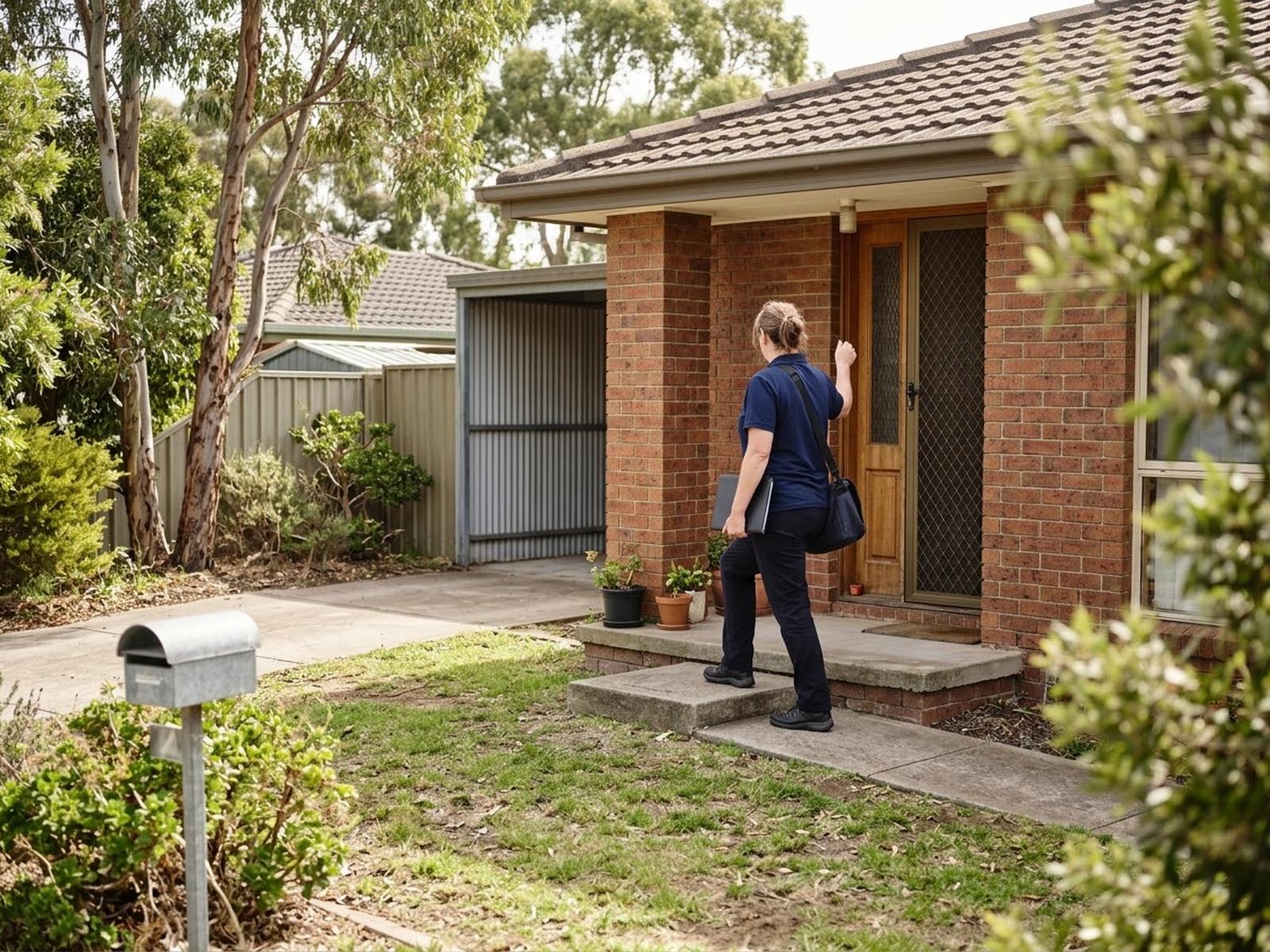
A support worker arrives at a client's home for a visit.
3awards cover most of the workforce: Aged Care, SCHADS and the Nurses Award
Fair Workfor private and not-for-profit providers in WA, NSW, Victoria and Queensland
$150,000bank guarantee ordered to fund back pay for home care workers labelled contractors

Check first Find your employer's legal name on your payslip or contract. A company or incorporated provider is almost always in the Fair Work system; a state health service, a state disability service or a council outside Victoria is in the state system, with a different tribunal and different time limits.

Your rights depend first on who employs you, not on where you work or who funds the care. A private or not-for-profit provider is in the Fair Work system in every state. State government aged care and disability services are in the state system in WA, NSW and Queensland, and so are council-run services outside Victoria. Then your award, and in SCHADS your schedule, depends on the setting and the people you support. And if you were engaged on an ABN, the label does not decide whether you are an employee.

Step 1: which system

EmployerSystemWhere disputes go
Private or not-for-profit providerFair Work, in all four statesFair Work Commission; Federal Circuit and Family Court; Federal Court
State government aged care or disability service (for example Queensland Health residential aged care, NSW Health multipurpose services, WA state disability services)The state system in WA, NSW and QueenslandThe state commission (WAIRC, IRC of NSW, QIRC)
Council-run aged care, home care or disability serviceState system in WA, NSW and Queensland; Fair Work in VictoriaThe state commission; in Victoria the Fair Work Commission
Victorian public sector health service running aged careFair Work (Victoria referred its powers); state laws such as nurse ratios still applyFair Work Commission
Read moreShow less

In NSW, council-run aged, disability and home care is covered by the Local Government, Aged, Disability and Home Care (State) Award and the Nurses' (Local Government) Residential Aged Care Consolidated (State) Award 2021, both lifted 4.75% in 2026 ([2026] NSWIRComm 20). In Queensland, a Queensland Health enrolled nurse at a state residential care facility appealed discipline to the QIRC, not the Fair Work Commission ([2026] QIRC 37). See What changes by state.

Step 2: which award (Fair Work employers)

WorkAward
Residential aged care: personal care workers, assistants in nursing, cooks, cleaners, laundry, lifestyle, maintenance, administrationAged Care Award 2010 (MA000018)
Home care for an older personSocial, Community, Home Care and Disability Services Industry Award 2010 (MA000100), Schedule F
Home care for a person with disability, in their own homeSCHADS Award, Schedule E
Disability support in group homes, supported independent living, day services, respite or the communitySCHADS Award, Schedule B, with the equal remuneration order
Registered and enrolled nurses, nurse practitionersNurses Award 2020 (MA000034)
Allied health professionalsHealth Professionals and Support Services Award 2020 (MA000027)

The Schedule B or Schedule E question is the biggest pay issue in disability work. See Awards and pay.

Step 3: are you an employee?

  1. Support workers on an ABN. Many NDIS support workers hold an ABN, but being called a contractor, holding an ABN or signing a contractor agreement does not decide it. You are likely an employee if:
    1. you work the rosters the provider sets;
    2. for the provider's clients; and
    3. in the provider's name.
  2. Sham contracting. An employer must not represent that a contract of employment is a contract for services (Fair Work Act 2009 (Cth) s 357(1)), and people involved in a contravention can be personally liable (s 550).
  3. Platforms. A genuine contractor who finds work through a digital labour platform (s 15M) may be protected from unfair deactivation once they have worked through it on a regular basis for at least 6 months (s 536LD).
  4. Agency staff. Agency nurses and carers are employed by the agency, which is covered by the award for the industry they work in: the Aged Care Award covers labour hire employees while they work in aged care (cl 4.5). Victoria and Queensland license labour hire providers.
  5. Casuals. Whether you are casual is decided by the Fair Work Act definition (s 15A), and the NES has a pathway to change to permanent employment (s 66A onwards).
Decided cases from aged care and disability

What the Commission and the courts decided.

Published decisions of the Fair Work Commission and the courts, retold in plain English from the decision itself. Lawcaptain did not act in these cases. Each links to the full decision.

Sham contracting penaltiesFederal Circuit Court of Australia · 21 December 2018

Home care workers were moved to 'contractor' terms by text message. They were employees.

Two labour supply companies sent in-home domestic assistants and personal care workers for an Adelaide home care business text messages saying their contracts were for services.

Read the full storyShow less

Result. Penalties of $125,874 and $77,112 on the two companies and $7,711.20 and $5,783.40 on two individuals, paid to the Commonwealth, plus a $150,000 bank guarantee for underpayments found on audit.

In October 2014 the companies required the workers to sign independent contractor agreements. The companies later admitted the workers were in fact part-time employees under the SCHADS Award, and that they had been reckless as to whether the contracts were employment.

The underpayments were the ordinary home care ones: no written part-time agreement, unpaid laundry and vehicle allowances, client-cancelled shifts not paid, weekend, overtime and public holiday rates short, no superannuation, unlawful deductions, and no records or payslips.

The court imposed penalties of $125,874 and $77,112 on the companies and $7,711.20 and $5,783.40 on two individuals involved, discounted by 30% for early admissions ([88]-[89]). It also required a $150,000 bank guarantee to fund rectification of underpayments found on audit (orders 5 to 11).

What it means for you

Being called a contractor, holding an ABN or signing a contractor agreement does not decide your status. If you work the rosters a provider sets, for its clients, in its name, you are likely an employee entitled to the award.

Appeal dismissedQueensland Industrial Relations Commission · 12 February 2026

At a state-run aged care home, discipline went to the state commission, not Fair Work.

A permanent part-time enrolled nurse worked at a Queensland Health residential care facility, a public aged care home.

Read the full storyShow less

Result. The disciplinary finding was confirmed and the stay lifted.

He was directed to leave the workplace and suspended in March 2024. Show cause notices followed, and in January 2025 two allegations were substantiated and termination proposed ([1]-[4]).

Because his employer was the State of Queensland, his appeal ran under the Queensland public sector law to the Queensland Industrial Relations Commission ([5]-[6]).

The QIRC confirmed the finding that the allegation he appealed was substantiated.

What it means for you

If your employer is a state health service, your rights run through the state public sector system and its time limits. Check who employs you before you file anything.

For employers

If you run an aged care or disability service

  • Write the award and schedule on the contract. Check, for each role, which award and which schedule applies, and tell the employee in writing (the Aged Care Award requires written notice of classification: cl 13).
  • Do not move employees to contractor terms. Labour supply structures in home care do not shift the risk: in [2018] FCCA 3771 two individuals were penalised as well as the companies, and directors and managers who approve contractor agreements are personally exposed (s 550).
  • Taking over a council or state service? Check which system its staff move into, and whether an agreement follows them. Enterprise agreements →
For unions and delegates

For unions and delegates

  • Ask for the employer's legal name first. Council-run and state-run aged care members are in a different system with different time limits.
  • Text-message conversions are evidence. Identical contractor agreements sent to a workforce by text are evidence of recklessness ([2018] FCCA 3771).
Leading cases

The decisions that set the rules.

Home care workers labelled contractors were part-time SCHADS employees; penalties for sham contracting and underpayment.

Public aged care in Queensland is in the state system: a nurse's discipline appeal went to the QIRC.

Show all leading cases (1)Show fewer

The NSW council aged, disability and home care awards were lifted 4.75% in 2026.

Questions

The things people ask.

I work for a council aged care service. Which tribunal do I use?

In WA, NSW and Queensland, council-run aged, disability and home care services are in the state system, so the state commission (WAIRC, IRC of NSW or QIRC). In Victoria, councils are in the Fair Work system.

I am an NDIS support worker on an ABN. Am I really a contractor?

Not necessarily. If you work the rosters a provider sets, for its clients, in its name, you are likely an employee. In [2018] FCCA 3771 home care workers moved to contractor agreements were part-time employees under the SCHADS Award, and the companies were penalised.

I work through an agency. Who is my employer?

The agency. It is covered by the award for the industry you work in: the Aged Care Award covers labour hire employees while they work in aged care (cl 4.5). In Victoria and Queensland the agency must hold a labour hire licence.

Free discussion · no obligation

Talk to us.

Call 1300 967 552, or leave your details and we will call you.

Do it yourself with AI

General information about Australian employment law, not legal advice about your situation. Updated November 2026.