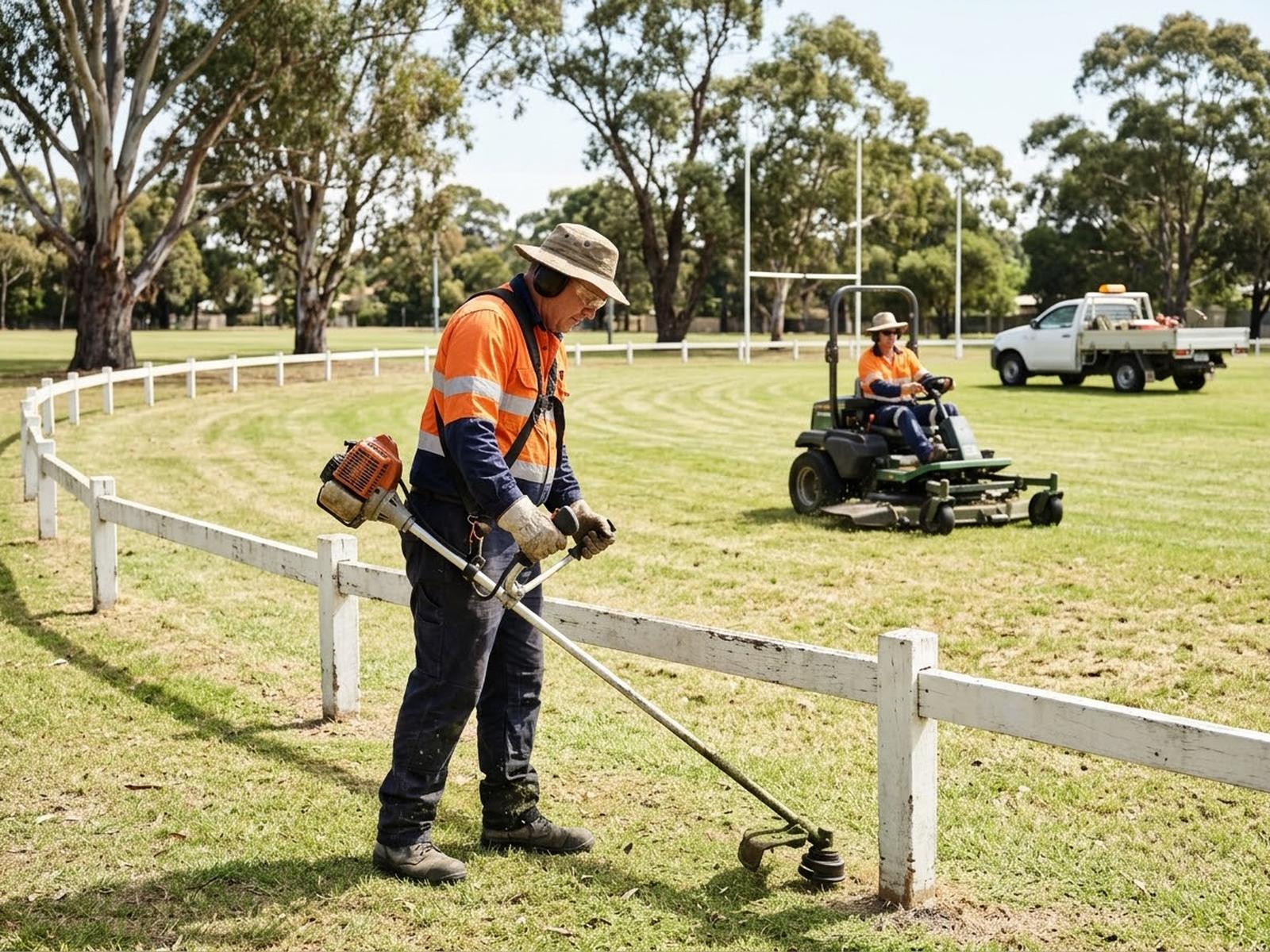
Hours and rosters
- Victoria and council-owned companies in the Fair Work system. Under the Victorian Local Government Award 2015 (MA000132) and the Local Government Industry Award 2020 (MA000112), ordinary hours for most outdoor work are Monday to Friday, 6.00 am to 6.00 pm. Garbage and sanitary services, local law enforcement and community safety, parking, recreation centres and caravan parks may work ordinary hours Monday to Sunday, between 5.00 am and 10.00 pm (MA000132 cll 19.2, 19.3; MA000112 cl 13.1).
- Penalties under those two awards: work outside the span on a weekday attracts 20% extra; weekend ordinary hours in the Monday-to-Sunday work areas are paid at 150% on Saturday and 175% on Sunday, except recreation centre and community services staff between 5.00 am and 10.00 pm (MA000132 cl 21; MA000112 cl 22).
- NSW. Outdoor staff work 38 hours a week under the Local Government (State) Award 2026. Road construction, depot, stores, saleyards, cemeteries and trades staff employed before 1 July 2014 on Monday-to-Friday hours cannot be compelled to work ordinary hours on weekends (cl 20A(iv)).
- WA. Under the Municipal Employees' (Western Australia) Award 2021, ordinary hours are Monday to Friday between 6.00 am and 5.00 pm, no more than 10 a day, unless the majority agrees otherwise (the WA Department's award summary, July 2026).
- Nine-day fortnights. Many council agreements put outdoor crews on a nine-day fortnight with 8.5-hour days and a Christmas close-down. See enterprise agreements.
Hid a licence suspension, lied about it, and still got his job back.
Read the full storyShow less
Result. Dismissal harsh and unjust; reinstatement ordered, no back pay. Leave to appeal refused ([2024] NSWIRComm 1011)
He had worked for the council since 1998 and led a small traffic facilities crew. His position description made a driver's licence an essential criterion ([1]-[2], [49]).
In May 2022 he was told his licence would be suspended for six months. He did not tell the council, which found out from another employee in September 2022, and he then gave an untrue account ([3], [44], [47]). He gave the council medical letters about his mental health. It summarily dismissed him in October 2022.
The Commission found his dishonesty was misconduct, but of limited consequence, and the council had not shown it warranted dismissal, much less summary dismissal ([47]-[51]). The council should have looked further into the medical letters instead of discounting them because of the dishonesty ([41]-[46]).
Because the dismissal was unjust, the council could not rely on the State Award clause that lets it skip the staged disciplinary procedure for serious misconduct ([52]-[54], [66]). His 24 years' service, age, regional location and health made dismissal harsh ([74]-[75], [83]).
Reinstatement is the primary remedy in the NSW system, and the council led no evidence that it was impracticable ([85]-[89]). No back pay was ordered ([90]). The Full Bench later refused the council leave to appeal.
Tell your council at once if you lose a licence or ticket your job needs. If you are dismissed in NSW, give the council your medical evidence during the process, and remember reinstatement is the primary remedy.
Leave to appeal refused: Griffith City Council v Romeo (No 2) [2024] NSWIRComm 1011.
Allowances for the work you do
The allowances below are the ones most often missed for outdoor crews. The dollar amounts are from the Victorian award and the Local Government Industry Award, from 1 July 2026; they apply to Victorian councils and council-owned companies in the Fair Work system. NSW, WA and Queensland staff should check their State award and agreement.
Read moreShow less
- Adverse working conditions, paid for each hour worked in them (MA000132 cl 15.9; MA000112 cl 19.2(c)):
- $1.03 an hour for outdoor and moderately dirty work, including toilets, animal shelters, dead animals, herbicides, non-putrescible waste and fighting fires;
- $1.47 an hour for sewer chokes, septic tanks and graves;
- $14.73 an hour for live sewers and digestion tanks.
- Leading hand. A Level 3 to 5 employee supervising others gets $32.40, $44.18 or $55.96 a week, depending on how many they supervise (MA000132 cl 15.7; MA000112 cl 19.2(a)).
- On-call and call-back. The Local Government Industry Award pays $29.45 a day on-call Monday to Friday, $44.18 on Saturday and $58.90 on a Sunday or public holiday, a minimum of three hours for a call-back, and a 10-hour break after overtime (MA000112 cll 19.2(e), 21.4, 21.5).
- Tools, vehicle and meals. A tradesperson's tool allowance is $22.79 a week under the Victorian award and $22.25 under the Local Government Industry Award; using your own vehicle is $1.00 a kilometre; the overtime meal allowance is $20.75.
- WA. The Municipal Employees' Award pays an industry allowance of $36.10 a week for construction and maintenance work (not for staff working mainly at depots, pools, nurseries or cemeteries), and location allowances in regional towns, doubled for an employee with a dependant (the WA Department's award summary, July 2026).
- Protective clothing and equipment. The employer must supply it for adverse conditions work.
The full award tables, by state, are on awards and pay.
Licences, tickets and conduct with the public
- A licence is often an essential requirement. Many outdoor positions make a driver's licence or ticket an essential criterion. Losing it handled honestly is usually managed by leave or other duties; hiding it turns it into a conduct case.
- Rangers and parking officers deal with angry members of the public every day. A single complaint rarely justifies dismissal, but one on top of a live final warning usually does.
- Public-facing outdoor staff, such as school crossing supervisors, are judged against the employee code of conduct for how they treat members of the public, and one credible complaint of serious misconduct can be enough.
- NSW councils must follow the State Award's staged disciplinary procedure (cl 37), and agreements often set steps up to a final written warning. See code of conduct complaints and investigations.
Safety on outdoor council work
Outdoor council work involves traffic, plant, heat, UV, noise, needles and sharps, dead animals, chemicals and aggressive members of the public, especially for rangers and parking officers. The council has the primary duty under its state's work health and safety Act, or Victoria's occupational health and safety Act.
Read moreShow less
- You may stop unsafe work where there is a serious risk from imminent exposure, under the work health and safety Acts in NSW, Queensland and WA. Victoria's Act has its own provisions. Check the Act for your state before relying on it.
- Noise damage from mowers and plant is compensable. A Queensland council mower operator who had earlier worked in a coal mine won his industrial deafness claim, because the council brought no medical evidence that its work was not a significant contributing factor. See what changes by state.
- Suspension after a complaint is not automatically a reprisal. A Queensland council electrician said his suspension was a reprisal for safety complaints; it failed because an SMS he sent was the real trigger (Byrd v Gladstone Regional Council [2026] QIRC 260).
Seasonal and casual work
Pools, beaches, leisure centres, events and summer crews rely on casuals. The protections differ by state.
Read moreShow less
- Short-term casuals often have no unfair dismissal claim. A short-term casual community bus driver at a NSW council (Tshuma v The Hills Shire Council [2026] NSWIRComm 1033) and a short-term casual at a Queensland city council (Lovelady v Townsville City Council [2021] QIRC 60) were both outside the unfair dismissal jurisdiction.
- Under the Local Government Industry Award a casual gets a minimum engagement of two consecutive hours (cl 11.3) and a 25% loading.
- Under the NSW State Award a casual is engaged day to day, not to replace permanent staff, with a 25% loading; a casual of more than 12 months may ask for a review of their engagement (cl 27).
- Casual conversion under the Fair Work Act applies to Victorian councils.