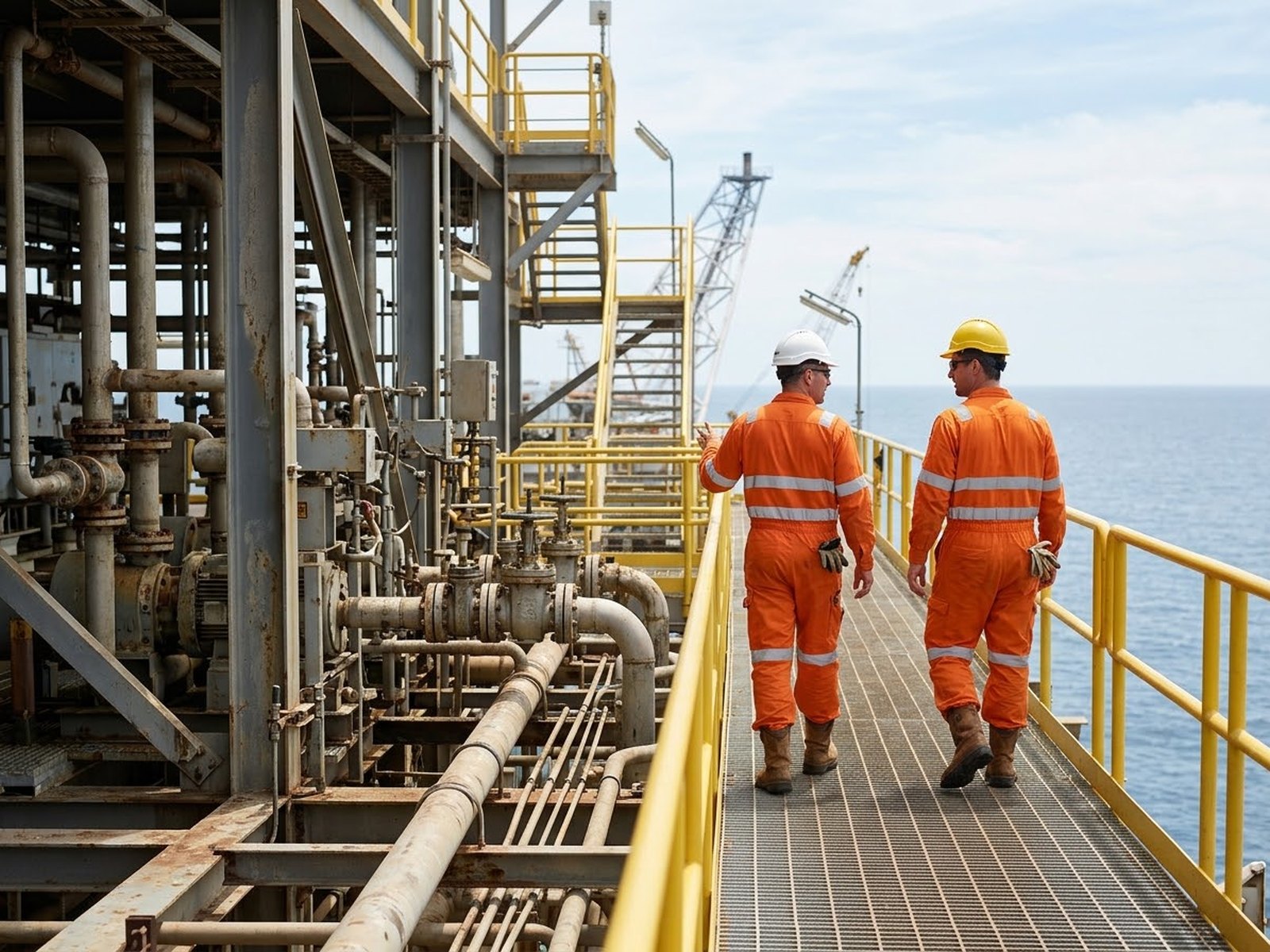
Almost every resources employer is a company, so its workers are in the Fair Work system wherever the site is. But the law that keeps you safe on site, the scheme that pays you if you are hurt, your long service leave and the licensing of labour hire all come from the state where you work. This page sets out what is the same, then what changes in Western Australia, New South Wales, Queensland and Victoria.
What stays the same, and what changes
- The industrial system. Awards, agreements, the National Employment Standards, unfair dismissal and the general protections are the same in all four states, because almost every resources employer is a company and so a national system employer (Fair Work Act 2009 (Cth) s 14(1)(a)). NSW, Victoria and Queensland have referred their powers for private sector employment; WA has not, so an unincorporated WA employer is in the WA state system. See which system and which award.
- Offshore. Facilities in Commonwealth waters are regulated for safety by the Offshore Petroleum and Greenhouse Gas Storage Act 2006 (Cth) Sch 3, with NOPSEMA as the regulator, whatever the state next to them.
- Black coal long service leave is a national portable scheme, the same in every state. See long service leave.
The four states side by side
Same everywhere. Your award, enterprise agreement, the National Employment Standards, unfair dismissal and general protections, and black coal long service leave are the same in every state.
Western Australia
- Safety law for mines
- Work Health and Safety Act 2020 (WA) with the Mines Regulations 2022
- Right to stop unsafe work
- Serious risk to you or any other person (s 84)Differs
- Workers' compensation time limit
- Claim within 12 months (s 25)Differs
- Travel between home and camp
- Not covered: travel to or from where you reside, even temporarily (s 9(2)(a))Differs
- Long service leave (not black coal)
- 8 2/3 weeks after 10 years (Long Service Leave Act 1958 (WA))
- State industrial system
- Applies to unincorporated employers, such as a sole trader or partnershipDiffers
New South Wales
- Safety law for mines
- Work Health and Safety Act 2011 (NSW) with the Mines and Petroleum Sites Act 2013
- Right to stop unsafe work
- Serious risk to your own health or safety (s 84)
- Workers' compensation time limit
- Claim within 6 months, or 3 years with reasonable cause (s 261)
- Travel between home and camp
- Covered between a camp the job requires and home, with a real and substantial connection to work (s 10(3)(e), (3A))
- Long service leave (not black coal)
- 2 months after 10 years (Long Service Leave Act 1955 (NSW))
- State industrial system
- None for private employers: all are in Fair Work
Victoria
- Safety law for mines
- Occupational Health and Safety Act 2004 (Vic)Differs
- Right to stop unsafe work
- No individual right in the WHS form; the employer or a health and safety representative may direct work to stop (s 74)Differs
- Workers' compensation time limit
- Notice of injury to your employer within 30 days (s 18)Differs
- Travel between home and camp
- Not covered for travel to and from work; travel for the job is (s 46)Differs
- Long service leave (not black coal)
- Long Service Leave Act 2018 (Vic); check the Act
- State industrial system
- None for private employers: all are in Fair Work
Queensland
- Safety law for mines
- Separate Acts: Coal Mining Safety and Health Act 1999 (coal) and Mining and Quarrying Safety and Health Act 1999 (other mines)Differs
- Right to stop unsafe work
- Coal: belief of immediate personal danger (s 274); other mines: reasonable belief of serious danger (s 253)Differs
- Workers' compensation time limit
- Claim within 6 months (s 131)
- Travel between home and camp
- Covered; home includes a place of temporary residence (s 35)
- Long service leave (not black coal)
- Industrial Relations Act 2016 (Qld); check the Act
- State industrial system
- None for private employers: all are in Fair Work
Case study
Hurt at a coal mine, but the coal insurer did not have to pay.
Read the full storyShow less
In NSW, coal industry employers are insured by a specialised coal insurer rather than a general workers' compensation insurer (WC Act s 7A; WIM Act s 9A).
A worker employed by a drilling contractor was injured at a NSW coal mine. The Supreme Court held that the contractor was not an employer whose business was in the coal industry, so the general insurer, not the coal insurer, was liable ([50], [54] to [55]).
What it means for you
Lodge your claim even if you are unsure which insurer covers your employer. The insurers sort out between them who pays.
Western Australia
- Safety. The Work Health and Safety Act 2020 (WA) applies, with the Work Health and Safety (Mines) Regulations 2022 (WA) at mines. You may cease unsafe work where there is a serious risk to any other person as well as to yourself (s 84(1)). Industrial manslaughter carries 20 years and $5 million for an individual and $10 million for a body corporate (s 30A).
- Drugs and alcohol. The mine operator must manage alcohol and drug risks (WHS (Mines) Regulations reg 641).
- Workers' compensation is under the Workers Compensation and Injury Management Act 2023 (WA), in force from 1 July 2024:
- claim within 12 months (s 25(1));
- journeys to or from where you reside, whether or not temporarily, are excluded (s 9(2)(a)), which matters for FIFO and DIDO travel;
- the employer must keep your pre-injury position or a suitable position available for 12 months from incapacity, unless you are lawfully dismissed (s 166).
- Long service leave is under the Long Service Leave Act 1958 (WA): 8 2/3 weeks after 10 years.
New South Wales
- Safety. The Work Health and Safety Act 2011 (NSW) applies with the Work Health and Safety (Mines and Petroleum Sites) Act 2013 (NSW) and its Regulation. You may cease work where there is a serious risk to your own health or safety (s 84). Industrial manslaughter by gross negligence carries 25 years, and $20 million for a body corporate (s 34C). The mine operator must manage fatigue, alcohol and drug risks (Regulation s 45). Union-nominated industry safety and health representatives have entry powers at coal mines (Mines Act ss 28 to 29).
- Workers' compensation is under the Workers Compensation Act 1987 (NSW) and the Workplace Injury Management and Workers Compensation Act 1998 (NSW):
- claim within 6 months, or within 3 years for reasonable cause (WIM Act s 261);
- journeys between a camp or temporary residence the job requires and your home are covered, if there is a real and substantial connection with the employment (WC Act s 10(3)(e), (3A));
- coal industry employers are insured by a specialised coal insurer (WC Act s 7A; WIM Act s 9A), but only an employer whose business is in the coal industry (Ashton Coal Operations [2014] NSWSC 1276 at [50], [55]);
- dismissing an injured worker for unfitness within six months is an offence (WC Act s 248), and a dismissed injured worker can seek reinstatement (ss 241 to 242).
- Long service leave is under the Long Service Leave Act 1955 (NSW): 2 months after 10 years. Black coal employees are under the national black coal scheme.
- Labour hire licensing: NSW has none as at 18 November 2026.
Queensland
- Safety. Coal mines are under the Coal Mining Safety and Health Act 1999 (Qld) and its 2017 Regulation; metalliferous mines and quarries under the Mining and Quarrying Safety and Health Act 1999 (Qld); onshore petroleum and gas operating plant under the Petroleum and Gas (Production and Safety) Act 2004 (Qld). The Queensland WHS Act does not apply to these sites (Sch 1 cl 2). In coal you may withdraw and refuse on a belief of immediate personal danger (CMSH Act s 274); in mines and quarries, on a reasonable belief of serious danger (MQSH Act s 253). Coal mines have union-appointed full-time industry safety and health representatives (CMSH Act ss 109 to 110). Industrial manslaughter carries 20 years and 100,000 penalty units (CMSH Act s 48C; WHS Act s 34C).
- Drugs, alcohol and medication. Coal mines must provide random and for-cause alcohol and drug testing, and workers must tell the site senior executive about medication that could impair them (CMSH Regulation ss 41 to 42).
- Health assessments. Coal mine workers must have a health assessment before starting work and at least every five years (CMSH Regulation s 46).
- Workers' compensation is under the Workers' Compensation and Rehabilitation Act 2003 (Qld):
- employment must be a significant contributing factor to the injury (s 32(1));
- a psychological injury from reasonable management action taken in a reasonable way is excluded (s 32(5)(a));
- journeys between home and work are covered, and home includes a place of temporary residence (s 35(1)(a), (4));
- claim within 6 months (s 131).
- Long service leave for non-coal employees is under the Industrial Relations Act 2016 (Qld); check the Act for the entitlement. Black coal employees are under the national scheme.
- Labour hire licensing. A labour hire provider must hold a licence, and a host must not use an unlicensed provider without a reasonable excuse (Labour Hire Licensing Act 2017 (Qld) ss 10 to 11). The maximum penalty for a corporation is 3,000 penalty units.
Victoria
- Safety. The Occupational Health and Safety Act 2004 (Vic) and its Regulations (mines part) apply. There is no individual statutory right to cease work in the WHS form; the employer or a health and safety representative may direct that work stop where there is an immediate threat (s 74). Workplace manslaughter carries 25 years and 100,000 penalty units (s 39G).
- Workers' compensation is under the Workplace Injury Rehabilitation and Compensation Act 2013 (Vic):
- give your employer notice of the injury within 30 days of becoming aware of it (s 18(1));
- travel to and from your place of employment is not covered, but travel for the purposes of the employment is (s 46(1)(b), (2)(b));
- the employer must provide suitable or pre-injury employment for the employment obligation period (s 103).
- Long service leave is under the Long Service Leave Act 2018 (Vic); check the Act for the entitlement.
- Labour hire licensing. A licensing scheme applies under the Labour Hire Licensing Act 2018 (Vic) (s 13). See labour hire and same job, same pay.
Recent changes to state law
- WA: the Work Health and Safety Act 2020 (WA) replaced the Occupational Safety and Health Act 1984 (WA) on 31 March 2022, and the WHS (Mines) Regulations 2022 apply at mines.
- WA: the Workers Compensation and Injury Management Act 2023 (WA) replaced the 1981 Act from 1 July 2024. Decisions on WA camp injuries before then applied the 1981 Act, so check the equivalent provision in the 2023 Act before relying on one.
- NSW: an offence of industrial manslaughter by gross negligence is now in the WHS Act (s 34C).
- Queensland: the coal mine safety Act was substantially amended by Acts passed in 2024 and 2026, including new provisions on remote operating centres, critical controls and board qualifications.