Resources · Labour hire

Same crew, same work, same pay.

If you are supplied by a labour hire company to a mine or gas site, a same job, same pay order can lift your pay to the host's enterprise agreement rate. Here is who can apply, the test, and what the coal cases decided.

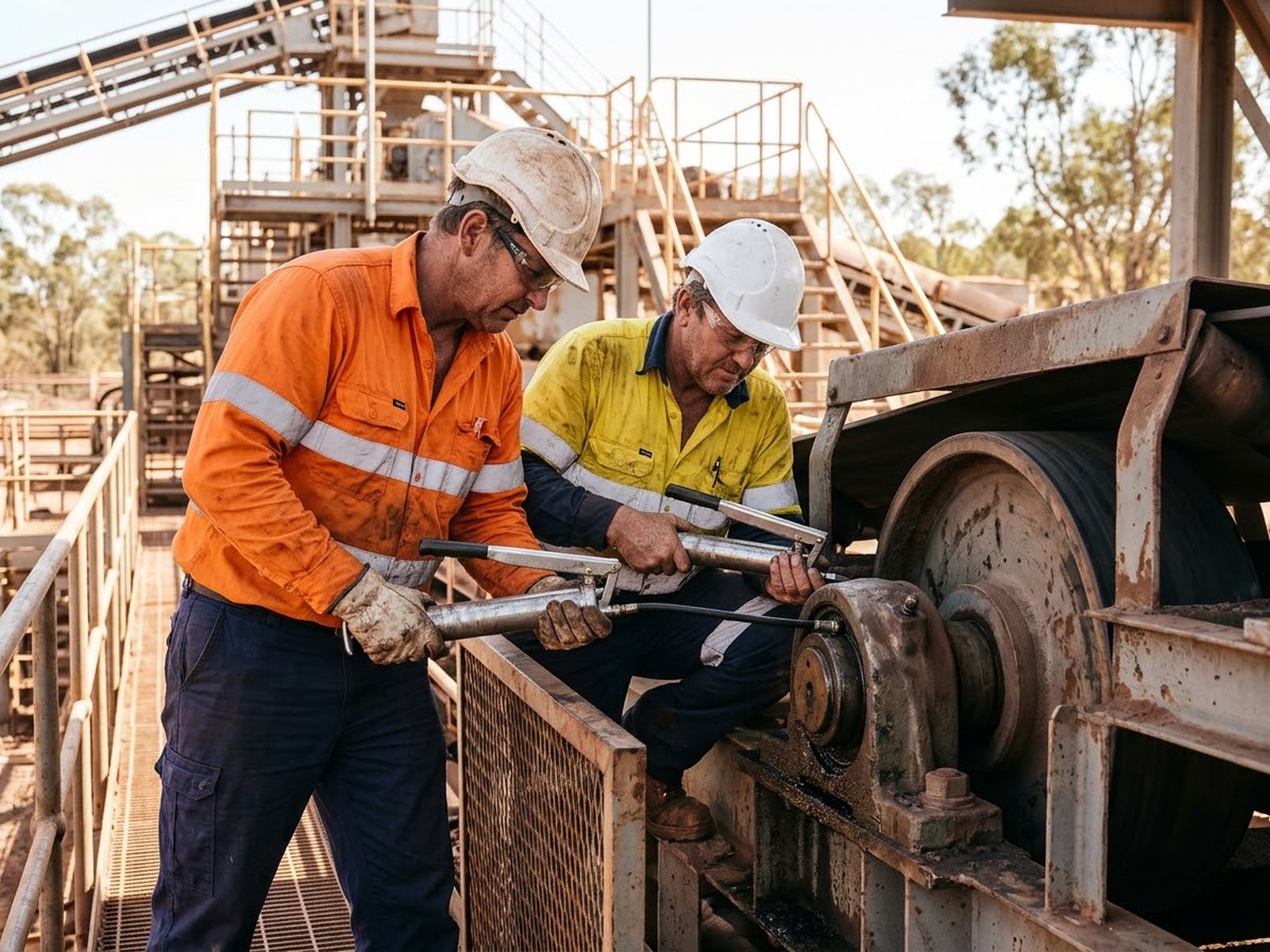
Two workers in different coloured hi-vis do the same job on a conveyor.
15 December 2023when same job, same pay orders began
3 monthsshort-term work exempt by default, unless the Commission sets another period
25%added to the host's permanent base rate for a casual where the host agreement has no casual rate

Check first Check which company pays you and which company runs the site. If the site's own employees are under an enterprise agreement that would cover your work, you may be able to seek the host's rates.

Labour hire is everywhere on mine sites, often with labour hire operators in the same crews as the host's own employees and paid less. Since 15 December 2023 the Fair Work Act has let the Fair Work Commission make a regulated labour hire arrangement order, known as a same job, same pay order, so that supplied workers are paid at least the host's agreement rate. This page covers who employs you, whether you are really a casual, how an order is made, what the coal mine decisions held, and what happens when the host wants you off site.

Who employs you

  1. The labour hire company is your employer. Claims for pay, leave, unfair dismissal and redundancy are against it, not the host.
  2. The award is the industry award for the site: the Mining Industry Award 2020 (MA000011) on a metalliferous mine (cl 4.2(e)); the Hydrocarbons Industry (Upstream) Award 2020 (MA000062) on an oil and gas site (cl 4.2(f)); and the Black Coal Mining Industry Award 2020 (MA000001) for black coal work within its cl 4.2.
  3. Most large labour hire companies in coal have their own agreement. For example, the WorkPac Coal Mining Agreement 2026 has base-rate and flat-rate streams and a clause dealing with a same job, same pay order (cl 10.5.6).
Case study
Order made from 1 November 2024Fair Work Commission (Full Bench) · 1 July 2024

The first same job, same pay order: 324 coal mine operators.

About 324 labour hire production workers at the Callide mine worked alongside the host's employees on the same machines, in the same uniforms.

Read the full storyShow less

At the Callide mine in Queensland, about 324 labour hire production workers attended the same pre-starts, did the same work on the same draglines, excavators and haul trucks, wore the same uniforms and followed the same instructions as the host's own employees ([4], [6]).

The union applied for a regulated labour hire arrangement order. There was no opposition, and the Full Bench held the order was required. It set out how s 306E works ([9] to [18]) and fixed 1 November 2024 as the date the order started ([24] to [25]).

What it means for you

Shared pre-starts, crews, equipment and instructions are the evidence that wins an order. Keep a record of how your work compares with the host's employees.

Casual or permanent

Under the law before 26 August 2024, the High Court held that a labour hire production worker on a 7/7 drive-in, drive-out roster at two Queensland coal mines for nearly four years was a casual, because his contracts contained no enforceable firm advance commitment to continuing work: WorkPac [2021] HCA 23 at [57], [69], [95].

The current definition in s 15A looks at the real substance, practical reality and true nature of the relationship. If you believe you are no longer a casual under s 15A, you may use the employee choice pathway to notify your employer that you want to be permanent (ss 66A to 66MA).

What a same job, same pay order does

  1. The labour hire company must pay each covered worker no less than the protected rate of pay: the full rate the worker would get if the host's enterprise agreement applied to them (s 306F(2), (4)).
  2. For a casual, where the host agreement has no casual rate, the protected rate is the host's permanent full rate with the base rate increased by 25% (s 306F(5)).
  3. The obligation applies despite the labour hire company's own agreement (s 306F(10)).
  4. An order starts on the day it specifies, and may specify when it ends (s 306E(9), (10)).

Who can apply, and the test

An application can be made by a supplied worker, an employee of the host, a union entitled to represent either, or the host (s 306E(7)).

Read moreShow less
  1. The Commission must make the order if it is satisfied that (s 306E(1)):
    1. an employer supplies, directly or indirectly, one or more of its employees to perform work for a regulated host (usually a corporation);
    2. an enterprise agreement that applies to the host would apply to those employees if the host employed them to do work of that kind; and
    3. the host is not a small business employer (the labour hire company may be one).
  2. First bar: the work must not be for the provision of a service rather than the supply of labour (s 306E(1A)). The Commission looks at (s 306E(7A)):
    1. the employer's involvement in matters relating to the performance of the work;
    2. how far, in practice, the employer directs, supervises or controls the workers, including managing rosters, assigning tasks or reviewing work;
    3. how far the workers use the employer's systems, plant or structures;
    4. how far the employer or another person is subject to industry or professional standards for the workers; and
    5. how far the work is specialist or expert.
  3. Second bar: the Commission must not make the order if satisfied it is not fair and reasonable to do so, considering matters raised in submissions, such as the pay arrangements of host and supplied workers, the history of industrial arrangements, the relationship between host and employer, joint ventures, the terms, length and location of the arrangement, the industry, and the number of workers (s 306E(2), (8)).

What the coal mine cases decided

  1. The first order: Application by the Mining and Energy Union [2024] FWCFB 299, at the Callide mine in Queensland. About 324 labour hire production workers attended the same pre-starts, did the same work on the same draglines, excavators and haul trucks, wore the same uniforms and followed the same instructions as the host's employees ([4], [6]). With no opposition, the order was required, and the Full Bench fixed 1 November 2024 as the start date ([24] to [25]).
  2. Companies inside the host's own group: in Applications by the Mining and Energy Union re Goonyella Riverside, Peak Downs and Saraji mines [2025] FWCFB 134, workers of two companies inside the BHP group were supplied as labour, not a service. The companies were paid by FTE, the host set the mine and maintenance plans, and the workers followed the host's procedures under its remote operations monitoring, used its plant and systems, and did the same specialised work as the host's employees ([267] to [268]). The unchallenged pay gap within crews was relevant to fairness ([306]). The Full Federal Court dismissed BHP's judicial review: BHP Coal v Mining and Energy Union [2025] FCAFC 194.
  3. The order must match the evidence: Skilled Workforce Solutions (NSW) v Mining and Energy Union [2025] FCAFC 195 quashed the Mt Arthur and Bengalla orders because they covered every labour hire employee on site who would be covered by the host agreement, while the Commission had been satisfied only about the employees supplied for production work ([101], [130] to [132]). Both applications were sent back to be decided again. The Bengalla order the Full Court quashed was the one made by a Full Bench in Application by the Mining and Energy Union re Bengalla Mining Company [2025] FWCFB 53.

Exemptions, the host's duties and licensing

  1. The protected rate does not apply to a worker under a training arrangement (s 306G(1)), or to work for a host for a short period, by default no longer than 3 months, unless the Commission sets a different exemption period (s 306G(2), (3); ss 306J, 306K).
  2. The host must, on the labour hire company's written request, give the information needed to work out the protected rate (s 306H). A labour hire company that reasonably relies on the host's information is protected if the information is wrong (s 306F(3)).
  3. It is unlawful to enter into or vary arrangements to prevent an order being made, or to avoid one (ss 306S, 306SA).
  4. Disputes about how the orders operate go to the Commission, which may arbitrate (ss 306P, 306Q).
Read moreShow less

Labour hire licensing

  1. Queensland: a person must not provide labour hire services without a licence, and a host must not use an unlicensed provider without a reasonable excuse; a register search showing the provider as licensed is a reasonable excuse (Labour Hire Licensing Act 2017 (Qld) ss 10 to 12).
  2. Victoria: the Labour Hire Licensing Act 2018 (Vic) requires a licence, and a host using an unlicensed provider faces a civil penalty. A new definition of "provides labour hire services" applies from 1 October 2026.
  3. NSW has no labour hire licensing scheme as at 18 November 2026.

Removed from site at the host's request

A host's request to remove a labour hire worker is a frequent trigger for dismissal. The labour hire company is still your employer and must have a valid reason and a fair process.

Read moreShow less

The host can also be liable itself. Where a labour hire truck operator refused to dump on an unlit ramp, took a test and was then banned by the host, the host contravened s 340: CFMMEU v BM Alliance Coal Operations (No 3) [2022] FCA 1345 at [48] to [52], [78], [133]. The Court later ordered $80,000 in penalties and $15,000 compensation (MEU v BM Alliance Coal Operations (No 4) [2023] FCA 1592, orders [1] to [2]).

Decided cases from resources

More cases from the industry.

Published decisions of the Fair Work Commission and the courts, retold in plain English from the decision itself. Lawcaptain did not act in these cases. Each links to the full decision.

Orders made; upheld on reviewFair Work Commission (Full Bench) · 7 July 2025

Workers of the host's own group companies were labour, not a service.

At three BHP coal mines, workers were employed by two companies inside the BHP group rather than by the mine operator itself.

Read the full storyShow less

Result. Orders made; the Full Federal Court dismissed BHP's judicial review in [2025] FCAFC 194.

The union sought orders for workers of two companies inside the BHP group who worked at the Goonyella Riverside, Peak Downs and Saraji mines.

The Full Bench held they were supplied as labour, not a service. The companies were paid by FTE, the host set the mine and maintenance plans, and the workers followed the host's procedures under its remote operations monitoring, used its plant and systems, and did the same specialised work as the host's employees ([267] to [268]). The unchallenged pay gap within crews was relevant to whether an order was fair ([306]).

BHP sought judicial review. The Full Federal Court dismissed it in [2025] FCAFC 194.

What it means for you

Being employed by a company in the host's own group does not stop an order. Who controls the work, whose plant you use and how the work is priced decide it.

Orders quashed; to be decided againFull Court of the Federal Court · 19 December 2025

Two orders quashed because they covered more workers than the evidence did.

At the Mt Arthur and Bengalla coal mines in the Hunter Valley, the Commission found production workers were supplied, then made orders for every labour hire employee on site who would be covered by the host agreement.

Read the full storyShow less

At both mines the Commission found that the labour hire company supplied production employees to the host, but made orders covering every employee of the labour hire company who worked at the mine and would be covered by the host's agreement if directly employed ([131] to [132]).

The Full Court quashed the Mt Arthur and Bengalla orders because they covered every labour hire employee on site who would be covered by the host agreement, while the Commission had been satisfied only about the employees supplied for production work ([101], [130] to [132]). Both applications were sent back to be decided again.

The Court said the Commission may be satisfied that every kind of employee covered by the host agreement is supplied, but there was no evidence of that here ([101] to [102]).

What it means for you

An order is only as wide as the evidence. Evidence is needed for each kind of work (production, maintenance, trades) the order is meant to cover.

Show more cases (1)Show fewer
Host contravened s 340Federal Court of Australia · 11 November 2022

A refusal to dump on an unlit ramp, a site ban, and a host that paid for it.

A labour hire truck operator refused to dump on an unlit ramp, took a test, and was then banned from site by the host mine.

Read the full storyShow less

Result. Host contravened s 340; $80,000 penalties and $15,000 compensation ordered in [2023] FCA 1592.

A labour hire truck operator at a coal mine refused to dump on an unlit ramp. The operator took a test, and the host then banned the operator from the site.

The Federal Court held that the host contravened s 340 of the Fair Work Act 2009 (Cth) ([48] to [52], [78], [133]). In a later judgment the Court ordered $80,000 in penalties and $15,000 compensation ([2023] FCA 1592, orders [1] to [2]).

What it means for you

A host that bans a labour hire worker for raising a safety concern can be liable itself, not just the labour hire company.

For employers

If you host or supply labour hire

  • Hosts: expect an application. Expect one wherever your agreement would cover the supplied workers' work. A genuine service contract needs the contractor's own plant, systems and methods, and pricing by outcome, not by head count.
  • Labour hire companies: pay from the start date. When an order is made, request the host's information in writing (s 306H) and pay the protected rate from the order's start date. Build the order into tender pricing.
  • Check the licence. In Queensland and Victoria, check the licence register before each engagement.
For unions and delegates

For unions and delegates

  • The evidence that wins. Shared pre-starts and crews, the host's equipment and procedures, the host's control systems, pricing by FTE, and the pay gap.
  • Draft the cohort to match the evidence. File evidence for each category of worker (production, maintenance, trades, CHPP) and draft the cohort to match it, following [2025] FCAFC 195.
Leading cases

The decisions that set the rules.

The first same job, same pay order, for about 324 labour hire production workers at the Callide mine, with the Full Bench's account of how s 306E works.

Workers of companies inside the host's group were supplied as labour, not a service; upheld in [2025] FCAFC 194.

Show all leading cases (4)Show fewer

The Full Federal Court dismissed BHP's judicial review of the Goonyella Riverside, Peak Downs and Saraji orders.

The Mt Arthur and Bengalla orders were quashed because they covered every labour hire employee on site while the Commission was satisfied only about production workers; both applications were sent back to be decided again.

Under the law before 26 August 2024, a labour hire worker on a fixed coal mine roster was a casual because there was no firm advance commitment to continuing work.

A host that banned a labour hire truck operator after a safety refusal contravened s 340.

Questions

The things people ask.

Can a labour hire worker get paid the same as the mine's employees?

Yes, if the Fair Work Commission makes a regulated labour hire arrangement order. The labour hire company must then pay at least the rate the host's enterprise agreement would give you (s 306F). You, the host's employees, a union or the host can apply (s 306E(7)).

Does same job, same pay apply if I am only on site for a few weeks?

Not by default. Work for a host for a short period, no longer than 3 months, is exempt unless the Commission sets a different period (s 306G(2), (3)).

Does a same job, same pay order cover maintenance workers as well as operators?

Only if the Commission was satisfied about that kind of work. In [2025] FCAFC 195 the Full Court quashed the Mt Arthur and Bengalla orders because they covered every labour hire employee on site while the Commission was satisfied only about production workers, and sent both applications back to be decided again. Check whether an order names your kind of work.

I have worked a fixed labour hire roster for years. Am I still a casual?

Possibly not. Since 26 August 2024, s 15A looks at the real substance, practical reality and true nature of the relationship, and you may use the employee choice pathway to notify your employer that you want to be permanent (ss 66A to 66MA). The older High Court decision in [2021] HCA 23 applied the earlier law.

The mine asked for me to be removed. Can the labour hire company sack me?

The labour hire company is still your employer and needs a valid reason and a fair process. A host that bans you for raising safety can itself be liable ([2022] FCA 1345). The time limit for an unfair dismissal or general protections dismissal application is 21 days.

Do labour hire companies need a licence?

In Queensland and Victoria, yes, and a host must not use an unlicensed provider (in Queensland, without a reasonable excuse). NSW has no licensing scheme as at 18 November 2026.

Free discussion · no obligation

Talk to us.

Call 1300 967 552, or leave your details and we will call you.

Do it yourself with AI

General information about Australian employment law, not legal advice about your situation. Updated November 2026.