Hospitality · Tips and till shortages

Short in the till? That is not automatically yours to pay.

When a hospitality employer may take money from your pay for shortages, breakages, meals or accommodation, why tips cannot stand in for award wages, and how the Commission decides dismissals over tips and cash.

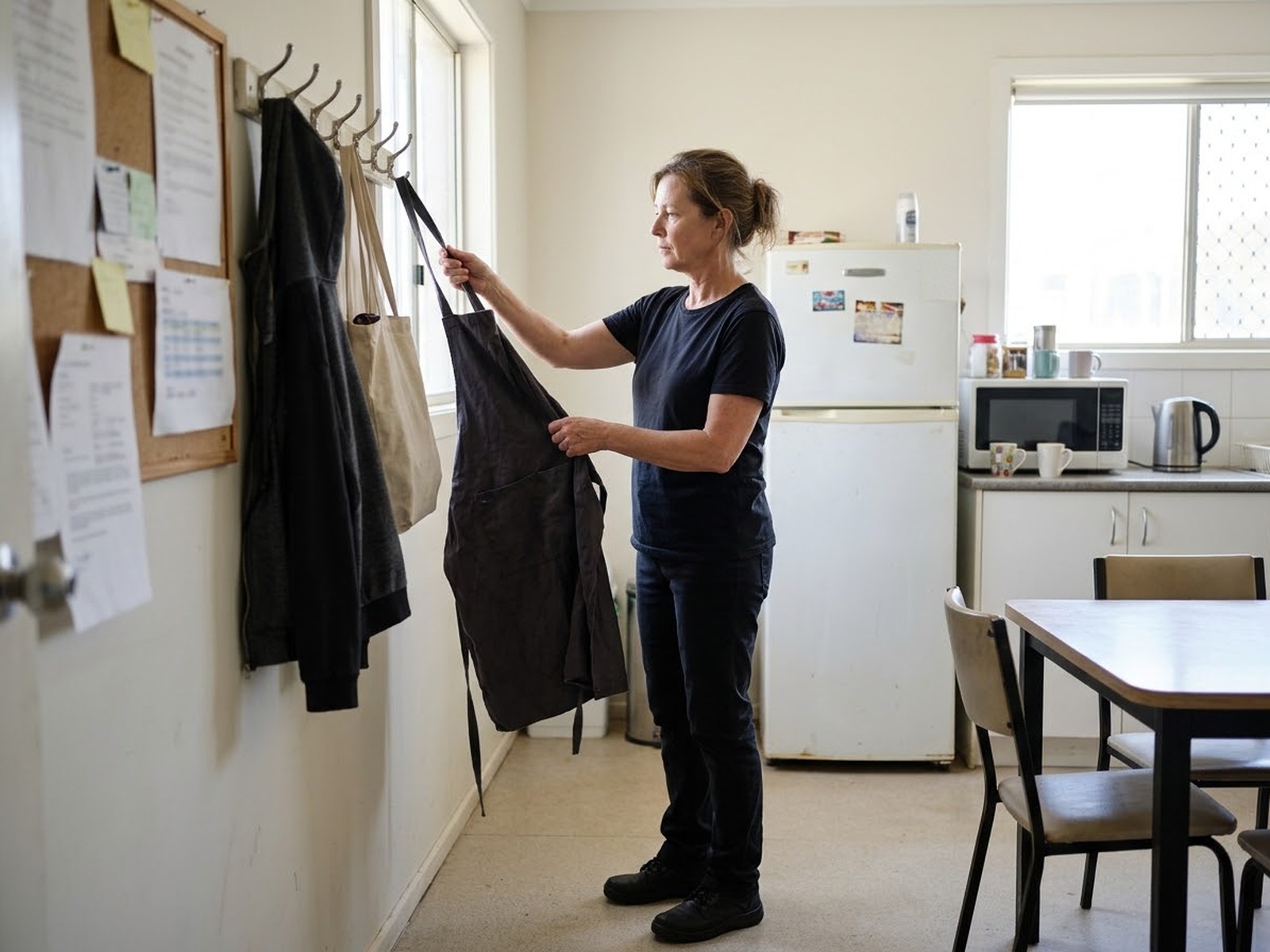
A waitress in her fifties hangs her plain apron on a hook in the bright staff room of a suburban cafe after her shift.
Wilful misconductthe only case in which the hotel and restaurant awards allow a till shortage deduction
Under 18no till shortage or breakage deduction without a parent's or guardian's written agreement
21 daysto apply to the Commission if you are dismissed

Time limit Dismissed over missing tips or cash? You have 21 days from the day the dismissal took effect to apply to the Fair Work Commission (Fair Work Act s 394(2)).

Hospitality workers handle cash, cards and tips every shift, and that is where many disputes start: a short till taken out of pay, a broken glass charged to a waiter, a tip pool nobody can account for, an accusation of theft. This page covers what the Hospitality Industry (General) Award 2020 (MA000009), the Restaurant Industry Award 2020 (MA000119) and the Fair Work Act allow your employer to deduct, and what the Commission looks for when someone is dismissed over tips or cash.

Tips do not count towards your award pay

The award sets the minimum your employer must pay you. None of the three main hospitality awards has a clause about tips, and a tip from a customer is not a payment by your employer, so tips cannot be counted towards the award minimum. An employer that pays below the award "because staff make good tips" is underpaying. See Cash pay, flat rates and wage theft.

Who is entitled to tips, card tips or a surcharge is a separate question that this page does not answer. If your employer told staff they would get the tips, keep a copy of what was said or written, and ask for the written tip policy.

Can my employer take a till shortage or breakage out of my pay?

Under the Hospitality award (cl 36) and the Restaurant award (cl 31), your employer:

Read moreShow less
  1. must not deduct anything for breakages or "cashiering underings" except for wilful misconduct;
  2. if there was wilful misconduct, may deduct only an amount that is reasonable and proportionate to the loss; and
  3. must not make any such deduction from a worker under 18 without a parent's or guardian's written agreement.

Outside those clauses, the Fair Work Act sets the limits. Your employer may deduct from your pay only with your written authorisation where the deduction is principally for your benefit, or where a law or order requires it (s 324). A deduction that is directly or indirectly for the employer's benefit and unreasonable has no effect (s 326). And your employer must not require you to pay an amount back where that is unreasonable and for its benefit (s 325): a cook made to hand back wages as "loan" repayments had his employer found in breach of ss 323 and 325 ([2022] FCA 712 at 17).

If you work in a club, check the Registered and Licensed Clubs Award 2020 (MA000058) for a clause on deductions; where it has none, the Fair Work Act rules above still apply.

Deductions for staff meals and accommodation

The Hospitality award sets maximum amounts an employer may deduct for meals and accommodation it provides. From 1 July 2026 they are $10.55 a meal (cl 37.7) and, for an adult, $279.78 a week for a single room with three meals (cl 37.5). Anything above those figures is not allowed under the award. Check the current figures in the Fair Work Ombudsman's Pay and Conditions Tool.

Accused of taking tips or cash

Theft is serious misconduct, but in an unfair dismissal case the employer must show the Commission that it happened. Allegations about tips and cash can fail on the evidence:

Read moreShow less
  1. no records: if nobody recorded how much was in the tip pool, how it was split and what each person got, it is hard to show anyone took more than their share;
  2. no witness and no footage: CCTV that was not kept cannot be relied on later;
  3. unreliable admissions: an answer given at the end of a long meeting, through a colleague acting as interpreter, may not be accepted as an admission; and
  4. a manager's approval: if a duty manager appeared to approve what you did, it may call for a warning rather than dismissal.

If you are called to a meeting about missing money, ask what the allegation is and what records the employer has, bring a support person, ask for a professional interpreter if you need one, and ask for a break in a long meeting. Answer honestly. Do not secretly record the meeting: in one case that cut the worker's compensation by half.

If you are dismissed

Apply to the Fair Work Commission within 21 days (s 394(2)). To claim unfair dismissal you need 6 months' service, or 12 months with a small business employer (s 383); casual service counts if it was regular and systematic with a reasonable expectation of continuing work. Start looking for other work straight away: compensation can be reduced if you do not. See Unfair dismissal and, for conduct dismissals behind the bar, RSA, liquor licensing and dismissal.

Decided cases from hospitality

What the Commission and the courts decided.

Published decisions of the Fair Work Commission and the courts, retold in plain English from the decision itself. Lawcaptain did not act in these cases. Each links to the full decision.

Unfair dismissal; $12,091.05Fair Work Commission · 20 September 2022

Sacked for taking tips from a pool nobody had recorded.

A chef de partie at a restaurant in a Melbourne casino complex, about six and a half years into the job, was summarily dismissed for keeping part of the back-of-house tips.

Read the full storyShow less

Result. No valid reason; reinstatement inappropriate; compensation cut by 70% for not taking reasonable steps to find work and a further 50% for covertly recording a conversation.

The employer alleged that she and other senior chefs kept part of the tips pool before distributing it ([66]). She said she had counted and distributed the back-of-house tips only about three times, when her manager asked ([8]).

There were no records of the total pool, the split between front and back of house, or what each person was paid ([67]), and a 2019 staff vote on how tips would be shared had not been shown to be communicated as the employer's own procedure required ([65]). No witness saw her take tips ([68] to [69]), and the CCTV had not been kept ([36]).

Her alleged admissions came at the end of a 3.5-hour meeting after 6 pm, translated by a colleague who was not a professional interpreter and at times used a phone app. The Commission was not satisfied she understood the questions ([72] to [75]).

There was no valid reason and the dismissal was unfair ([103]). Compensation was cut by 70% because she had not taken reasonable steps to find other work, and by a further 50% because she had secretly recorded a conversation, leaving $12,091.05 ([134], [140], [146]).

What it means for you

If you are accused of taking tips, ask what records exist of the pool and what each person received. Without them the allegation is hard to prove. But look for work straight away and do not record meetings covertly.

Unfair dismissal; $1,836 plus superFair Work Commission · 2 July 2020

A dinner on the manager's account was misconduct, but not a sacking offence.

A casual food and beverage attendant at a golf club was dismissed for "stealing" after he charged his dinner to a manager's house account.

Read the full storyShow less

Result. No valid reason; compensation reduced by 10% for the misconduct.

The club treated the charge to the house account as theft and dismissed him ([12] to [14]).

The Commission found that using the account without the owner's permission was misconduct ([82]). But the duty manager had probably approved it, so it was not necessarily stealing, and the proportionate response was a warning. There was no valid reason for dismissal ([83] to [85]).

He was awarded $1,836 plus 9.5% superannuation, after his later earnings were deducted and a 10% cut for the misconduct ([105], [108] to [109]).

What it means for you

If a manager approved what you did, say so at once and name them. Apparent approval can turn a "theft" into a matter for a warning, though your own misconduct can still reduce compensation.

For employers

If your staff handle cash and tips

  • Never deduct till shortages or breakages except under the award clause. Only for wilful misconduct, only a proportionate amount, and never from an under-18 without a parent's written agreement.
  • Write down the tip pool rules. Who shares, in what proportion, how often and who counts it. Tell staff, and keep a record of every distribution.
  • Keep the evidence before you allege theft. Keep the CCTV, the till and account records, and use a professional interpreter where one is needed.
  • Keep tips out of the wage calculation. A tip comes from the customer, not from you, and cannot make up any part of the award minimum.
For unions and delegates

For unions and delegates

  • Ask for the written tip policy and the distribution records. Tip practices are a good consultation and transparency issue for workplace delegates.
  • Audit deductions. Till shortage and breakage deductions can fall outside what the award allows.
Leading cases

The decisions that set the rules.

A tip theft dismissal was unfair where there were no records of the pool and the alleged admissions were made through an untrained interpreter.

Charging a meal to a manager's account was misconduct, but the duty manager's probable approval made a warning the proportionate response.

Show all leading cases (1)Show fewer

Requiring a cook to hand back part of his wages breached ss 323 and 325 of the Fair Work Act.

Questions

The things people ask.

Can my boss take a till shortage out of my pay?

Under the Hospitality and Restaurant awards, only for wilful misconduct, and only a reasonable amount proportionate to the loss. Otherwise a deduction needs your written authority and must be principally for your benefit (s 324), and being made to pay it back yourself can breach s 325.

I broke some glasses. Do I have to pay for them?

Not unless it was wilful misconduct. The Hospitality and Restaurant awards forbid deductions for breakages otherwise, and if you are under 18 no deduction can be made without a parent's or guardian's written agreement.

Can my boss pay me less because I get tips?

No. Tips come from customers, not your employer, and the award minimum must be paid by your employer in full.

I was accused of stealing tips. What should I do?

Ask what the allegation is and what records the employer has of the tip pool and each person's share. Bring a support person, ask for a professional interpreter if you need one, and answer honestly. If you are dismissed, apply to the Fair Work Commission within 21 days.

How much can my employer charge me for staff meals or accommodation?

Under the Hospitality award, from 1 July 2026, no more than $10.55 a meal, or $279.78 a week for an adult's single room with three meals (cl 37).

Free discussion · no obligation

Talk to us.

Call 1300 967 552, or leave your details and we will call you.

Do it yourself with AI

General information about Australian employment law, not legal advice about your situation. Updated November 2026.